


Belgium has recorded its first monkeypox death — the third in Europe — as global cases exceed 50,000.
Europe and the US are the hotspots of the outbreak, with 50,496 cases and 16 deaths recorded worldwide, according to the World Health Organisation (WHO).
Before this outbreak, monkeypox was largely restricted to Africa and no one had died outside hotspots. The few cases seen elsewhere were tracked back to travel to the disease’s natural home and contained with small scale quarantines.
Belgium's first death was a monkeypox patient with “underlying medical conditions”, the Sciensano public health institute said on Thursday.
At the end of August, Belgium had recorded 706 cases, 32 of them requiring hospital treatment.
WHO triggered its highest level of alarm on July 24, classifying monkeypox as a public health emergency of international concern, alongside Covid-19.
-
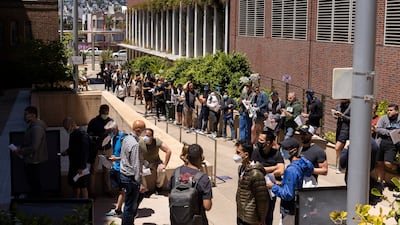
People queue to receive the monkeypox vaccine at a hospital in San Francisco, California. AP -
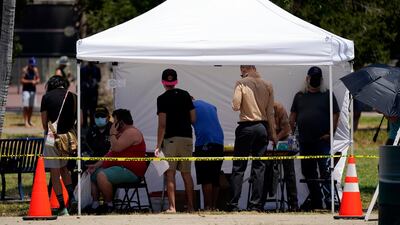
California's governor declared a state of emergency over monkeypox, making it the third state in three days to take the step. AP -
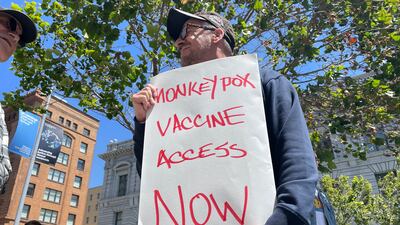
A man holds a sign calling for increased access to the monkeypox vaccine during a protest in San Francisco. AP -
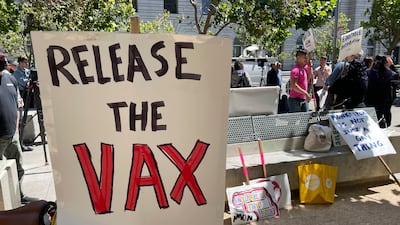
The mayor of San Francisco announced a local state of emergency over the growing number of monkeypox cases. AP -

A pharmacist opens a freezer transport box containing the Jynneos vaccine for monkeypox in San Francisco. AP -
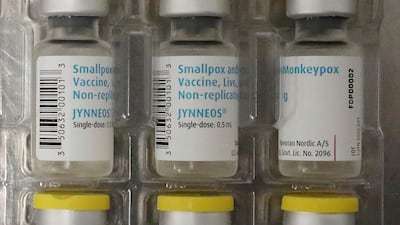
Vials of single doses of the Jynneos shot for monkeypox are seen at the vaccine hub at Zuckerberg San Francisco General Hospital. AP -
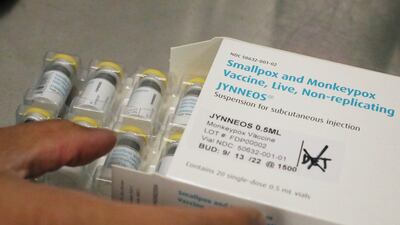
A pharmacist removes a tray of vials of the Jynneos vaccine for monkeypox from a box containing 20 doses. AP -
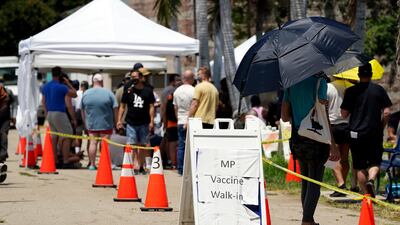
People queue a monkeypox vaccination site in California. AP -
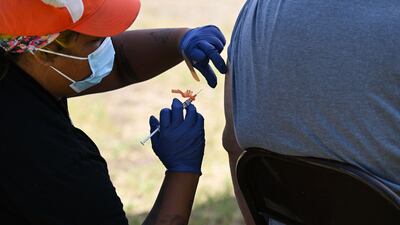
A public health worker administers the monkeypox vaccine in Los Angeles, California. AFP -
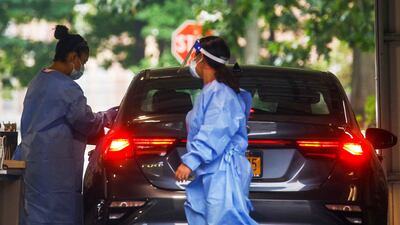
Nurses speak with a person looking to receive a monkeypox vaccine at a drive-through vaccination site at the Westchester Medical Centre in Valhalla, New York. Reuters -
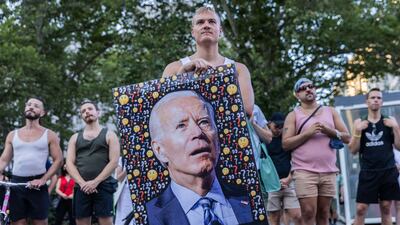
People protest during a rally calling for more government action to combat the spread of monkeypox at Foley Square in New York City. AFP -
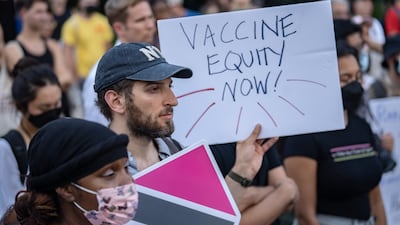
People protest during a rally over the US response to the monkeypox outbreak in Manhattan, New York City. AFP -

People queue to receive the monkeypox vaccine before the opening of a new mass vaccination site in Brooklyn, New York City. AFP -
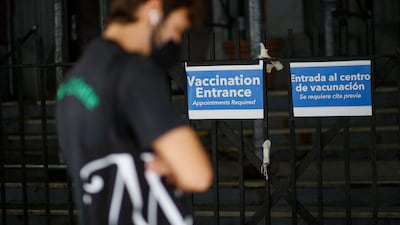
A person waits to receive the monkeypox vaccine in New York City. AFP


However, WHO chief Tedros Adhanom Ghebreyesus said on Wednesday that transmission rates were slowing in the US and Europe — a sign that the outbreak can be stopped.
“In the Americas, which accounts for more than half of reported cases, several countries continue to see increasing numbers of infections, although it is encouraging to see a sustained downwards trend in Canada,” he said.
“Some European countries, including Germany and the Netherlands, are also seeing a clear slowing of the outbreak, demonstrating the effectiveness of public health interventions and community engagement to track infections and prevent transmission.
“These signs confirm what we have said consistently since the beginning: that with the right measures, this is an outbreak that can be stopped.”
The surge in infections since early May has been outside the African countries where it has long been endemic.
“Eliminating monkeypox needs three things: the evidence that it's possible, which we are now beginning to see; political will and commitment; and the implementation of public health measures in the communities that need them most,” said Mr Tedros. “We don't have to live with monkeypox.”
Cases have been reported from 101 territories, though only 52 have reported new cases in the last seven days — of which 27 were reporting numbers in single figures.
The countries which have reported more than 1,000 cases are the US (17,994), Spain (6,543), Brazil (4,693), France (3,547), Germany (3,467), Britain (3,413), Peru (1,463), Canada (1,228) and the Netherlands (1,160).
Monkeypox was first identified in the Democratic Republic of the Congo in 1970. Before the 2022 outbreak, there were cases in 11 African countries: Benin, Cameroon, the Central African Republic, the Democratic Republic of the Congo, Gabon, Cote d’Ivoire, Liberia, Nigeria, the Republic of the Congo, Sierra Leone and South Sudan.

