

All rainwater is unsafe to drink and has made the Earth permanently 'inhospitable to life', a study by Stockholm University scientists says.
Its toxicity is caused by chemicals known as PFAS that exceed the latest guidelines.
Commonly known as 'forever chemicals' because they disintegrate extremely slowly, PFAS (per- and polyfluoroalkyl substances) were initially found in packaging, shampoo or make-up but have spread to our entire environment, including water and air.
"There is nowhere on Earth where the rain would be safe to drink, according to the measurements that we have taken," Ian Cousins, a professor at the university and the lead author of the study published in Environmental Science and Technology, told AFP.
A compilation of the data since 2010 that his team studied showed that "even in Antarctica or the Tibetan plateau, the levels in the rainwater are above the drinking water guidelines that the US EPA (Environmental Protection Agency) proposed", he said.
Normally considered pristine, the two regions still have PFAS levels "14 times higher" than the US drinking water guidelines.
The EPA recently lowered its PFAS guidelines significantly after discovering that the chemicals may affect the immune response in children to vaccines, Cousins noted.
Once ingested, PFAS accumulate in the body.
According to some studies, exposure can also lead to problems with fertility, developmental delays in children, increased risks of obesity or certain cancers (prostate, kidney and testicular), an increase in cholesterol levels.
Prof Cousins said PFAS were now "so persistent" and ubiquitous that they will never disappear from the planet.
"We have made the planet inhospitable to human life by irreversibly contaminating it now so that nothing is clean any more. And to the point that's it's not clean enough to be safe", he said.
While not classified as a climate change tipping point, a planetary boundary has been crossed, he said, referring to a central paradigm for evaluating Earth's capacity to absorb the impact of human activity.
However, Prof Cousins noted that PFAS levels in people have actually dropped "quite significantly in the last 20 years" and "ambient levels (of PFAS in the environment) have been the same for the past 20 years".
"What's changed is the guidelines. They've gone down millions of times since the early 2000s, because we've learned more about the toxicity of these substances."
Prof Cousins said we have to learn to live with it.
"I'm not super concerned about the everyday exposure in mountain or stream water or in the food. We can't escape it... we're just going to have to live with it."
"But it's not a great situation to be in, where we've contaminated the environment to the point where background exposure is not really safe."
Climate change tipping points - in pictures
-
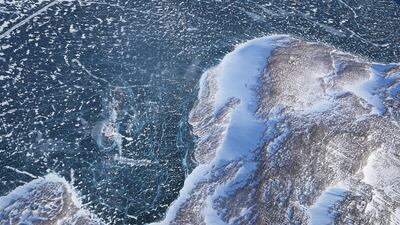
Greenland ice sheet disintegration – Rising temperatures causing the retreat of the ice sheet, which would cause sea levels to rise. -
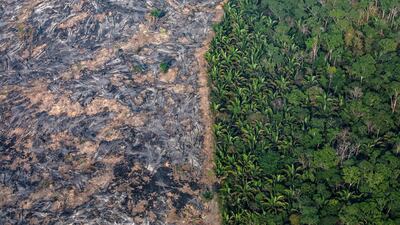
Amazon rainforest dieback – Large-scale dieback of the forest, via increased temperatures and drying, or direct deforestation, would amplify global warming. -
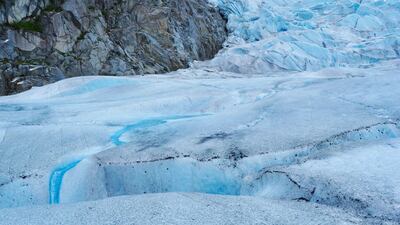
Permafrost loss – Thawing of carbon-rich soils, which releases greenhouse gas into the atmosphere. -

Atlantic meridional overturning circulation breakdown – An increased amount of freshwater in the Northern Atlantic disrupting the system of currents. -
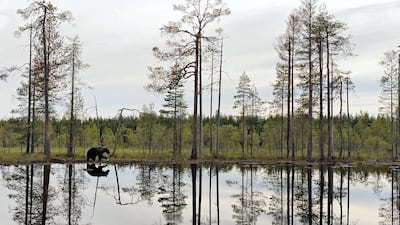
Boreal forest shift – Warming causes dieback in the south of the forests, and expansion into the tundra in the north, which would cause regional warming. -
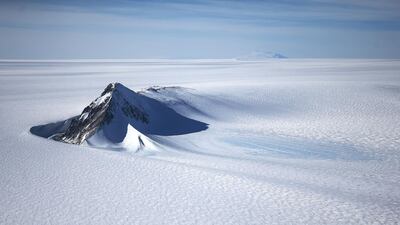
West Antarctic ice sheet disintegration – The melting of major ice sheets would lead to significant increases in sea level. -
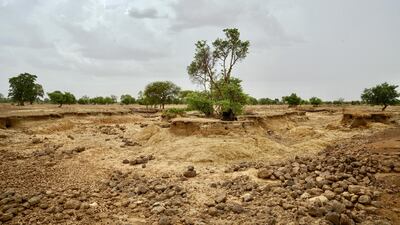
West African monsoon shift – A change in the monsoon season would lead to agricultural disruption and effect the ecosystem. -
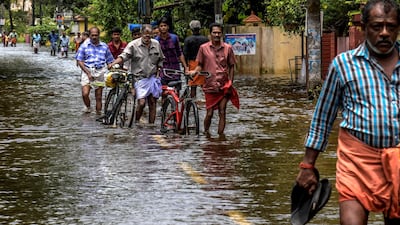
Indian monsoon shift – An increase in the planetary albedo (increases in the atmospheric brown cloud haze over India) has the capability of switching off the monsoon, which is crucial for the local economy, as well as being important for agriculture. -
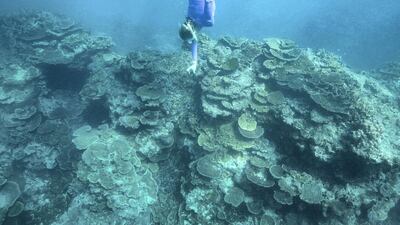
Coral reef die-off – Exposure to increased sea temperatures can kill off reefs, which has a serious effect on ecosystems and local economies.



