


The G7 countries put new ideas on the table this week to ease an alarming global food crisis, but an agreement to restart grain shipments from Ukraine’s blockaded Black Sea ports remained elusive.
Tackling the hunger crisis is central to the G7’s desire to appear a force for good at a time of food shortages and other global problems, especially as Russia spins the counter-narrative that western sanctions are to blame.
But many of the world’s poorest people and children are still at risk of starvation despite an increase in Ukrainian grain exports, via road, rail or river barges, which only partly makes up for the Black Sea standstill.
And there are facts of geography and history that can hardly change overnight: Ukraine has no other coastline, most of its neighbours are landlocked or hostile and its Soviet railways are incompatible with those to the west.
The G7 leaders promised at their three-day summit to “spare no effort” to solve the crisis and made some new suggestions to ease the problem, but some are unlikely to find consensus or bear immediate fruit.
While negotiations on unblocking the Black Sea continue, “people need this food now and time is running out,” European Council President Charles Michel said, at the G7’s mountain retreat in Germany.
Vaccine drive reloaded
An idea floated by the EU on the second day of talks was to increase fertiliser production in Africa, reducing its reliance on slow imports from Ukraine and Russia.
EU officials compared the project to vaccine production during the coronavirus pandemic, when rich countries accused of hoarding doses sought to foster home-grown manufacturing in Africa.
South African President Cyril Ramaphosa, a guest at the G7 talks, echoed that message by saying Africa should become more self-reliant in fertiliser production.
However, the EU initiative is regarded more as a project for the longer term, to reduce Africa’s vulnerability, than as a solution to the immediate problem in the Black Sea.
“In a few months we could be blackmailed again, so we need to find solutions to increase production globally,” one official said.

Ditch biofuels
UK Prime Minister Boris Johnson had a proposal too on Monday: tell global biofuel producers, who make fuel out of corn, to put those crops aside for the moment and grow more cereals instead.
“If we could temporarily reduce the amount of biofuels going into the petrol pumps, that actually does bring down the price of maize quite significantly,” said Environment Secretary George Eustice, who said British officials had “done the analysis on this”.
They are not the first to raise the idea. Environmentalists have long been doubtful about biofuels, and 40 groups including Oxfam and Greenpeace wrote to EU leaders last month telling them to “choose food over fuel”.
But as Mr Eustice acknowledged, winning over the ethanol-producing Americans is a major obstacle to the British plan, and there was no mention of it in the G7's final communique.
US President Joe Biden has increased the use of biofuels in domestic fuel production in a move to reduce prices, and both Democrats and Republicans in Congress have called for an expansion of domestic ethanol production.

Stop Russian 'pilfering'
Russia is accused of stealing grain during its four-month offensive in Ukraine and hoarding its own supplies to tighten the squeeze on global markets.
Ukraine on Wednesday published footage of what it implied was a Russian vehicle tearing up farmland before being blown up by a Ukrainian strike.
The G7 leaders said catching Russia red-handed by finding stolen goods on the world market would have the effect of “deterring Russia from continuing its illegal seizures”. Moscow denies the allegations.
Britain is putting £1.5 million ($1.8m) towards a screening process to detect Russian grain theft, hoping to increase Ukrainian revenue as well as food supplies.
Leaders did not say how they plan to trace the origin of stolen grain, but Ukraine has pointed the finger at Russian cargo ships headed to Syria as a likely smuggling route.
Money and aid
The G7’s headline promise in a two-page declaration on food security was $4.5 billion of new funding to ease the effects of hunger and malnutrition.
The $2.8bn American portion of this will mostly go towards “direct humanitarian interventions” with the rest aimed at increasing longer-term food production, a Biden administration official said.
Activists said more was needed. Save the Children’s humanitarian director Gabriella Waaijman said the G7’s decisions were a “small start” but that the summit was a “lost opportunity” for a wider package of support.
European countries also want to speed up the rail route out of Ukraine, which involves changing wagons at the EU border. Brussels has sent customs experts to speed up checks and Britain is offering £10m to repair railways.
Leaders meanwhile promised to minimise knock-on effects of sanctions on food shipments, while insisting it was Russia ultimately to blame for the problem.
-
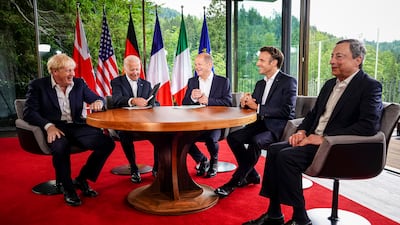
Britain's Prime Minister Boris Johnson, US President Joe Biden, German Chancellor Olaf Scholz, France's President Emmanuel Macron and Italian Prime Minister Mario Draghi chat before their meeting at Elmau Castle on Tuesday morning. Getty Images -
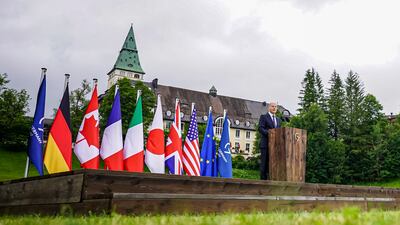
Olaf Scholz speaks at a press conference at Elmau Castle. EPA -
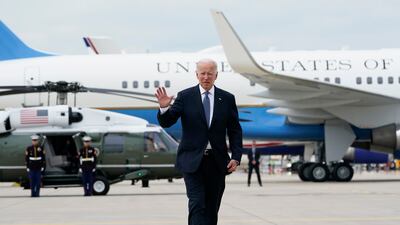
Joe Biden waves as he crosses the tarmac next to Air Force One at Munich International Airport. The US president is leaving Germany on his way to Spain to attend a Nato summit. AP -
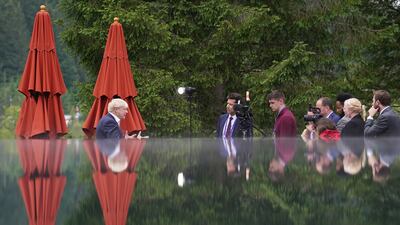
Boris Johnson speaks to press at the G7 summit. PA -

Emmanuel Macron holds a press conference at Elmau Castle. AFP -
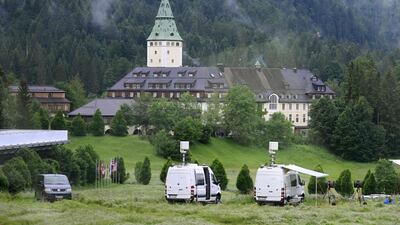
Vans equipped with electronic detection devices are stationed in front of Elmau Castle, where the G7 summit is taking place. AFP -
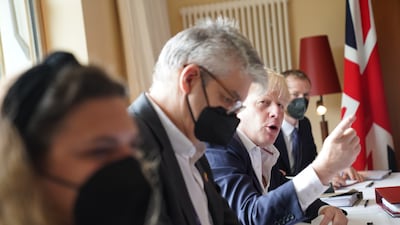
Boris Johnson makes a point during a meeting with the Prime Minister of Japan Fumio Kishida. PA -
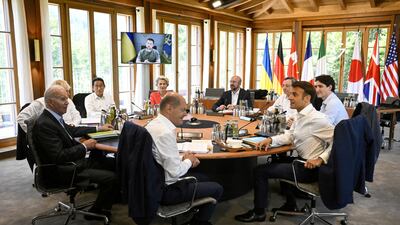
Clockwise from centre: Olaf Scholz; Joe Biden; Boris Johnson; Fumio Kishida; European Commission President Ursula von der Leyen, European Council President Charles Michel; Mario Draghi; Canada's Prime Minister Justin Trudeau, and Emmanuel Macron listen to an online address by Ukraine's President Volodymyr Zelenskyy at the G7 summit in Bavaria. Reuters -
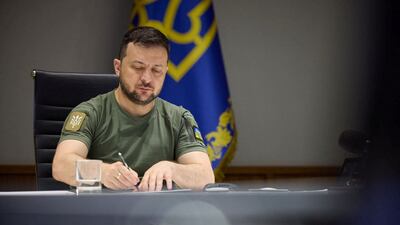
Volodymyr Zelenskyy attends a working session of G7 leaders via video link from Kyiv, Ukraine. Reuters -
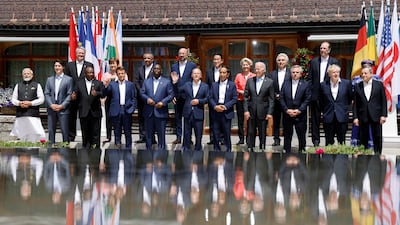
Olaf Scholz waves alongside G7 leaders and participants of the outreach programme as they pose for a 'family photo' at the Bavarian resort of Schloss Elmau. Reuters -
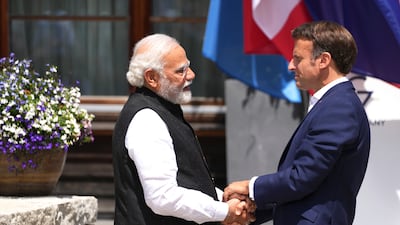
Emmanuel Macron greets India's Prime Minister Narendra Modi during the official welcome ceremony of G7 leaders. AP -
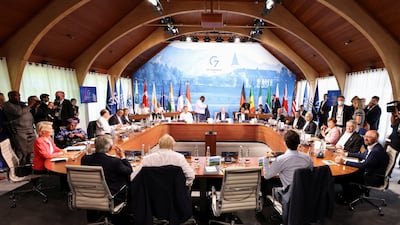
G7 leaders meet outreach guests at the summit. Reuters -
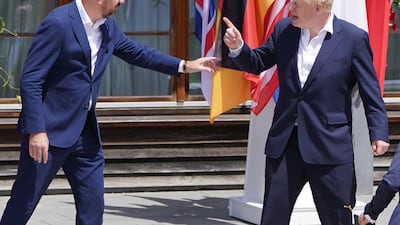
Boris Johnson speaks to Charles Michel. PA -
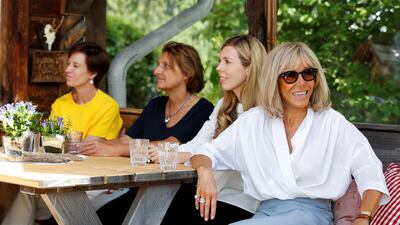
Amelie Derbaudrenghien, Britta Ernst, Carrie Johnson and Brigitte Macron at Elmauer Alm Mountain Restaurant. Reuters -
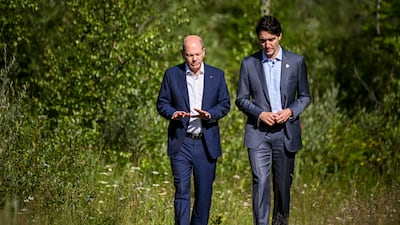
G7 leaders Olaf Scholz and Justin Trudeau talk a walk at Elmau Castle in Bavaria. EPA -
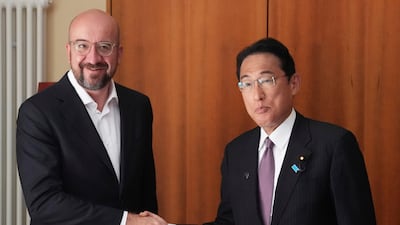
European Council President Charles Michel greets Japanese Prime Minister Fumio Kishida on the sidelines of the G7 summit at Castle Elmau in Bavaria. AP -
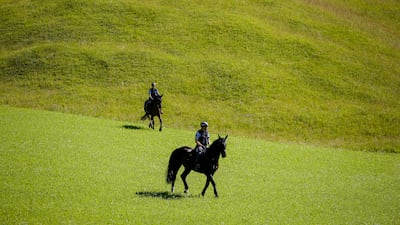
Horseback police patrol at Elmau Castle in Bavaria. EPA -
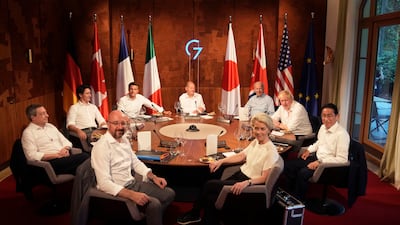
G7 leaders have dinner at Elmau Castle in Kruen, Germany. Clockwise from front left, European Council President Charles Michel, Italy's Prime Minister Mario Draghi, Canada's Prime Minister Justin Trudeau, French President Emmanuel Macron, German Chancellor Olaf Scholz, US President Joe Biden, British Prime Minister Boris Johnson, Japan's Prime Minister Fumio Kishida and European Commission President Ursula von der Leyen. AP -

From left, Mr Draghi, Ms von der Leyen, Mr Biden, Mr Scholz, Mr Johnson, Mr Trudeau, Mr Kishida, Mr Macron and Mr Michel. AFP -
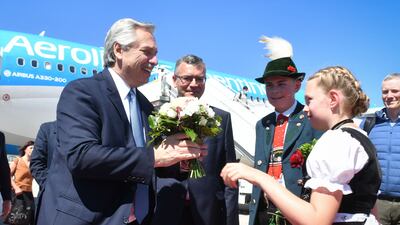
Flowers for President Alberto Fernandez of Argentina at Munich Airport as he arrives to take part in the G7 summit in Bavaria. AFP -
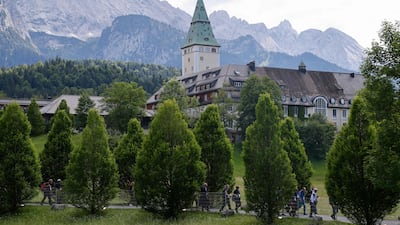
Elmau Castle in southern Germany, the venue for the G7 summit. AFP -
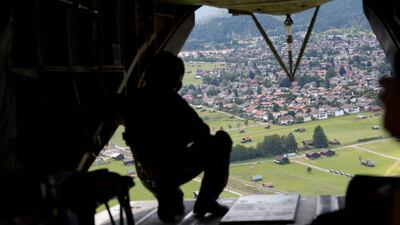
The view from a German armed forces helicopter on its way to the G7 summit at Elmau Castle. AFP -
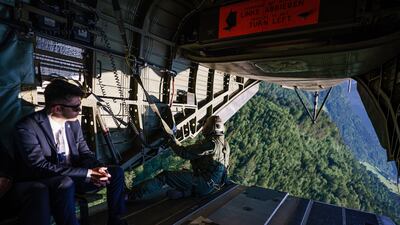
Gazing out from the helicopter. AFP -
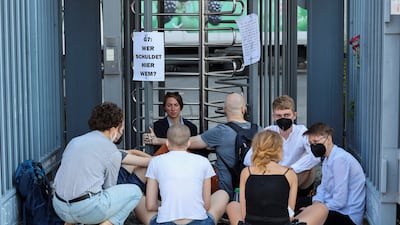
In Berlin, campaigners sit near a sign reading 'G7: Who owes who?' at the Ministry of Finance building to demand debt relief for countries of the global south. Reuters -
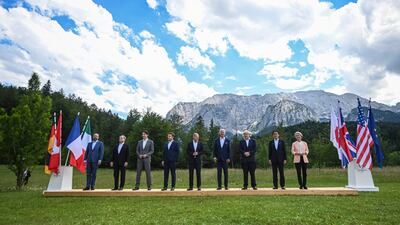
From left, Mr Michel, Mr Draghi, Mr Trudeau, Mr Macron, Mr Scholz, Mr Biden, Mr Johnson, Mr Kishida and Ms von der Leyen at the summit at Elmau Castle. EPA -
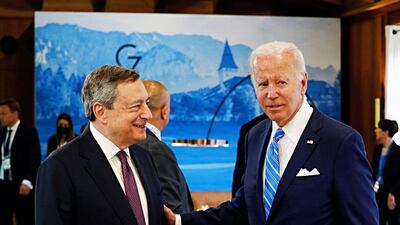
Mr Draghi talks with Mr Biden. EPA -
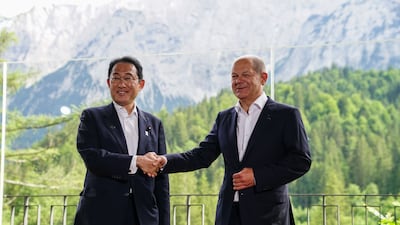
Mr Scholz shakes hands with Mr Kishida. EPA -
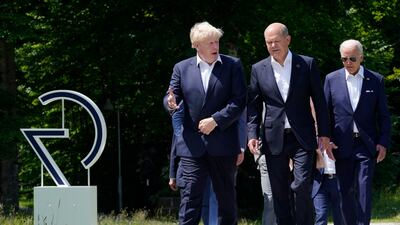
Mr Johnson, Mr Scholz and Mr Biden. AFP -
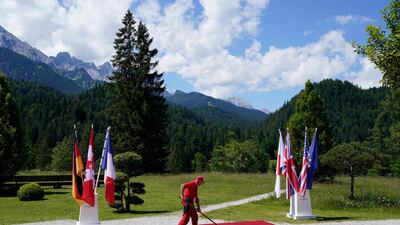
A worker cleans the red carpet at Elmau Castle in the Bavarian mountains. AFP -

Mr Kishida leads the Japanese delegation. AFP -

The G7 logo at Elmau Castle. AFP -
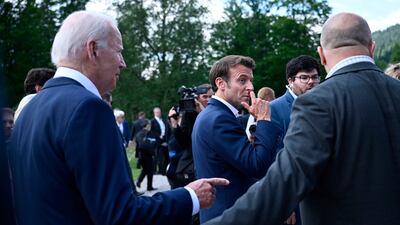
Mr Biden and Mr Macron. AP -
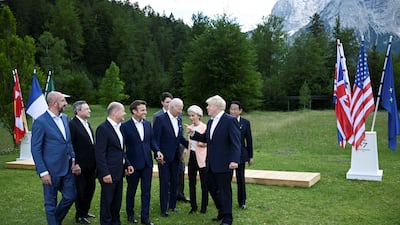
The leaders at a photocall. Reuters -
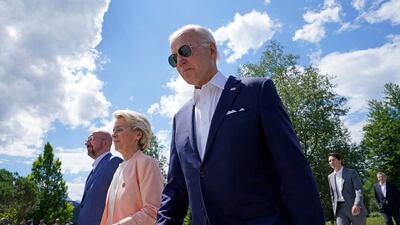
Mr Biden walks with Ms von der Leyen and Mr Michel. Reuters -
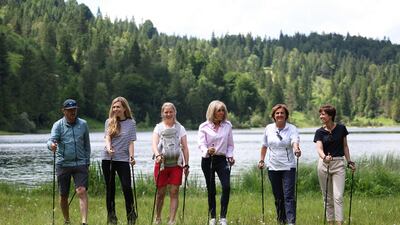
Former German alpine ski racer Christian Neureuther, British Prime Minister's wife Carrie Johnson, former German biathlete Miriam Neureuther, French President's wife Brigitte Macron, German Chancellor's wife Britta Ernst and European Council President's wife Amelie Derbaudrenghien take part in a Nordic Walk as part of the spouses' programme. Reuters -

Mr Macron, Mr Biden, Ms von der Leyen and Mr Trudeau. AP -
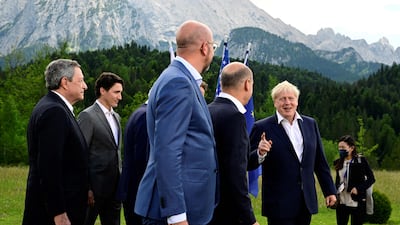
Mr Draghi, Mr Trudeau, Mr Michel, Mr Scholz and Mr Johnson. AFP -

Ms von der Leyen chats with Mr Trudeau. AFP -
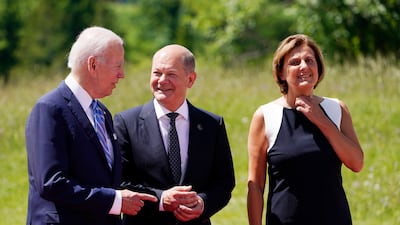
Mr Biden is welcomed by Mr Scholz and his wife Britta Ernst. AP -
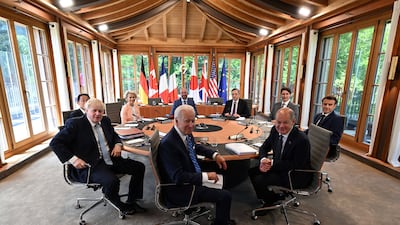
The leaders get down to business. AP -
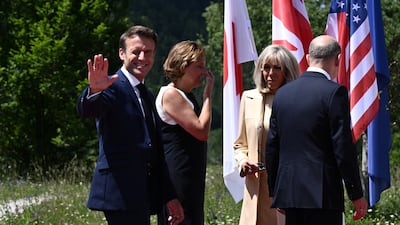
Mr Scholz and Ms Ernst welcome the Macrons. Reuters -
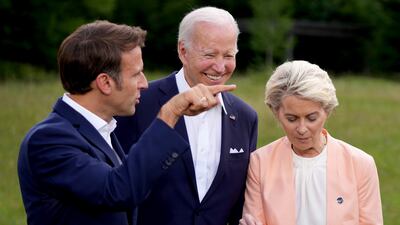
Mr Macron, Mr Biden and Ms von der Leyen. AP -
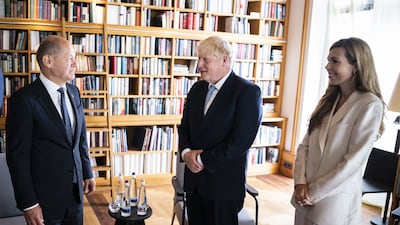
Mr Scholz greets Mr and Mrs Johnson. PA -

Mr Scholz and Ms Ernst welcome Ms von der Leyen to Elmau Castle. AFP -
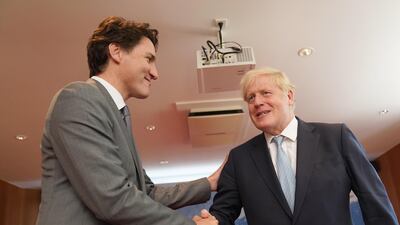
Mr Johnson meets Mr Trudeau. PA -
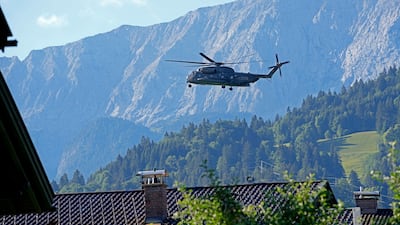
A helicopter flies over the G7 venue. AP Photo


Keep pushing on the Black Sea
For all the workarounds being pursued, the real prize would be opening up the Black Sea, especially the port of Odesa, to restart grain shipments towards the Bosporus and the Mediterranean.
UN Secretary General Antonio Guterres briefed the G7 on Monday on his attempts to broker an agreement but had no clear breakthrough to report to leaders, although they renewed their encouragement for his efforts.
The mood among leaders was “not pessimistic”, was the best that one official close to the summit felt able to say.
Ukraine has called for western navies to protect its ships, but French President Emmanuel Macron said any arrangement had to involve talks with Russia. Turkey is positioning itself as a mediator.
Mr Guterres has refused to disclose details of a potential deal but said he was hoping to bring more Russian products to world markets as well as Ukrainian ones.

