Ukrainian troops fire with a French Caesar towards Russian positions at a front line in the eastern region of Donbas. AFP

Nato's low artillery stockpile threatens deterrence against Russia


  • English
  • Arabic

Nato faces a significant challenge to adequately supply its new high readiness force with ammunition to defend against a potential Russian invasion, defence experts have said.

European countries have sent significant amounts of their weapon stockpiles to Ukraine creating concerns over equipping the alliance's new high readiness force of 300,000 troops on the eastern flank.

The National has learnt that there are a number of weapon systems that will take a long time to manufacture due to global supply shortages, including the NLAW anti-tank weapon.

While America has huge stockpiles of tanks, armoured vehicles and ammunition, European Nato forces do not and have witnessed a “noticeable reductions in inventory”, military analysts have said.

“There are issues around whether Nato has manufactured enough ammunition to meet its needs in the event of a war with Russia,” said military analyst Sam Cranny-Evans

“Parts of our defence industry have been neglected quite badly and the governments know that. To fix this is going to require a different type of relationship between defence departments and industry.”

The British-supplied NLAW anti-tank missile has proved highly successful against Russian tanks but it is difficult to obtain components for the system, including microchips provided by Taiwan.

The UK has given 5,000 NLAWs to Ukraine and it is understood that the government recently placed an order for a similar amount to the Belfast-based company that makes them.

However, the last major NLAW order was made in 2006 and now a number of components and machinery are difficult to replace.

Ukrainian soldiers prepare shells for a M777 Howitzer near a frontline in Donetsk Region. Reuters

Ben Wallace, the Defence Secretary, has held urgent talks with the top UK defence companies, including BAE Systems, requesting they ramp up production to resupply Ukraine and ensure the home defences are adequately supplied.

In its Strategic Concept announced on Wednesday Nato stated that it could not “discount the possibility of an attack against allies’ sovereignty” by Russia.

It will now assemble a force of 300,000 troops for the front line in Eastern Europe with 100,000 troops at “very high readiness” able to deploy within 10 days.

Light and heavy weapon systems, including air defence, artillery and tanks, will be “forward positioned” but there are questions whether they can be adequately supplied.

A number of smaller Nato countries have depleted their stockpiles, with the Czech Republic and Slovakia donating more relatively than any other country in terms of infantry fighting vehicles and tanks.

Poland has also supplied Ukraine with a quarter of its Soviet-era tank force sending 230 T72s out of its total of 860. It hopes to be “back-filled” by America supplying it with modern M1A1 Abrams tanks.

France has given about 15 out of its total of 70 advanced Caesar artillery pieces that have great accuracy and out-range Russian guns.

A Ukrainian serviceman checks an NLAW anti-tank system in an area not far from the Ukrainian town of Chuguiv. AFP

But there are questions over how readily Nato forces can build up stockpiles of artillery rounds that are proving effective in Ukraine.

Currently Ukraine is expending about 6,000 shells a day with the Russian figure approaching 20,000 rounds.

To build a credible deterrence Nato will have to create a stockpile to at least match the Russian expenditure, military experts have said.

“Can western industry meet the demand of 20,000 rounds a day when the demand signal for so long has been for exquisite precision-guided munitions as opposed to mass fires?” said Mr Cranny-Evans, of the London-based RUSI think tank.

“I personally don't believe they can right now. But if the political impetus is strong and determined enough, then there will be change. Because if you're not prepared to fight that long, grinding battle your deterrence is not credible.”

There is also a problem with the different sizes of various Nato ammunition as the artillery pieces sent to Ukraine have five different calibres.

However most of the combat vehicles sent are from stocks that are no longer widely used by Nato such as US Humvees or French VAB armoured vehicles.

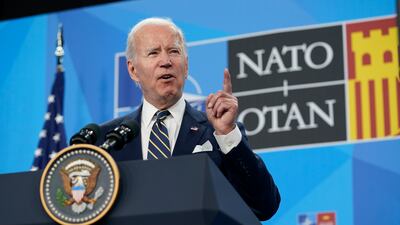
  • US President Joe Biden speaks at a news conference on the final day of the Nato summit in Madrid. AP
    US President Joe Biden speaks at a news conference on the final day of the Nato summit in Madrid. AP
  • British Prime Minister Boris Johnson holds a news conference. PA
    British Prime Minister Boris Johnson holds a news conference. PA
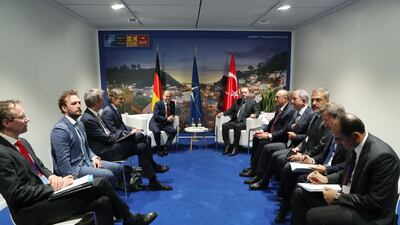
  • Turkish President Recep Tayyip Erdogan meets German Chancellor Olaf Scholz. AFP
    Turkish President Recep Tayyip Erdogan meets German Chancellor Olaf Scholz. AFP
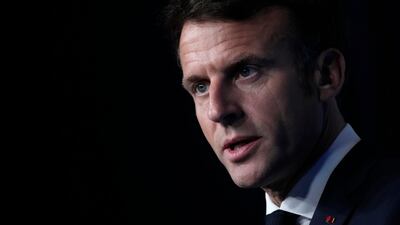
  • French President Emmanuel Macron speaks during the final day of the Nato summit. AP
    French President Emmanuel Macron speaks during the final day of the Nato summit. AP
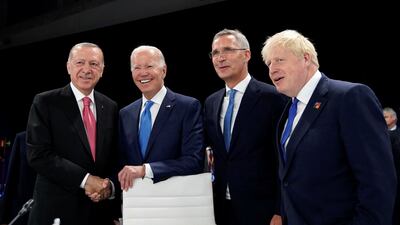
  • Turkish President Recep Tayyip Erdogan and US President Joe Biden shake hands as Nato secretary general Jens Stoltenberg and British Prime Minister Boris Johnson look on at a Nato summit in Madrid. Reuters
    Turkish President Recep Tayyip Erdogan and US President Joe Biden shake hands as Nato secretary general Jens Stoltenberg and British Prime Minister Boris Johnson look on at a Nato summit in Madrid. Reuters
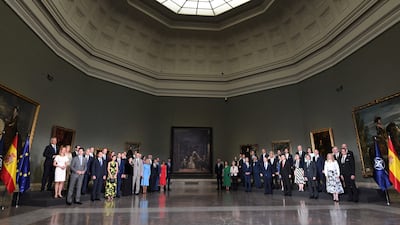
  • Heads of state of Nato member countries and their spouses pose for a group photo during a visit to the Prado Museum, in Madrid. AFP
    Heads of state of Nato member countries and their spouses pose for a group photo during a visit to the Prado Museum, in Madrid. AFP
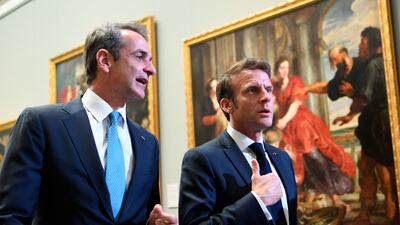
  • French president Emmanuel Macron, right, and Greek Prime Minister Kyriakos Mitsotakis during the Prado Museum visit. AP
    French president Emmanuel Macron, right, and Greek Prime Minister Kyriakos Mitsotakis during the Prado Museum visit. AP
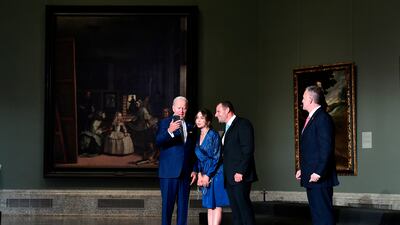
  • Mr Biden takes a selfie with Maltese Prime Minister Robert Abela and his wife Lydia Abela as they visit the Prado Museum. AP
    Mr Biden takes a selfie with Maltese Prime Minister Robert Abela and his wife Lydia Abela as they visit the Prado Museum. AP
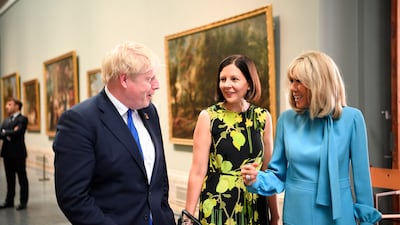
  • British Prime Minister Boris Johnson, the first lady of France, Brigitte Macron, right, and Belgian Prime Minister Alexander De Croo's wife Annik Penders have a conversation at the museum. AP
    British Prime Minister Boris Johnson, the first lady of France, Brigitte Macron, right, and Belgian Prime Minister Alexander De Croo's wife Annik Penders have a conversation at the museum. AP
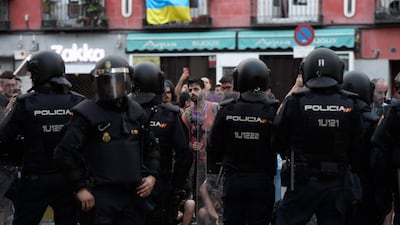
  • Spanish police stand in front of protesters during an anti-Nato demonstration near Tirso de Molina square in Madrid. AFP
    Spanish police stand in front of protesters during an anti-Nato demonstration near Tirso de Molina square in Madrid. AFP
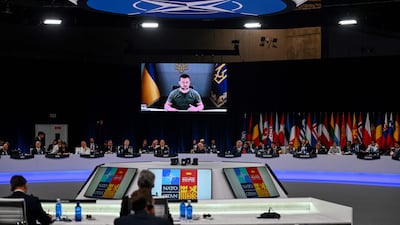
  • Ukrainian President Volodymyr Zelenskyy appears on a giant screen as he delivers a statement at the start of the first plenary session of the Nato summit. AFP
    Ukrainian President Volodymyr Zelenskyy appears on a giant screen as he delivers a statement at the start of the first plenary session of the Nato summit. AFP
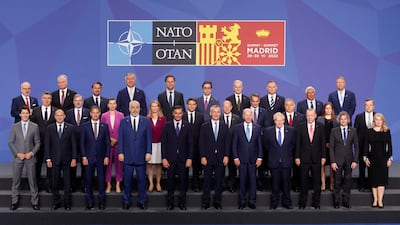
  • World leaders pose for a photo during the summit. Reuters
    World leaders pose for a photo during the summit. Reuters
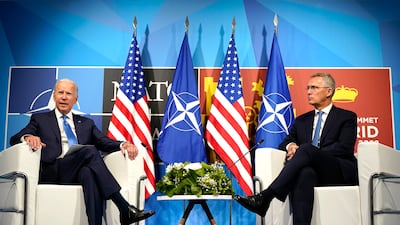
  • US President Joe Biden, left, and Nato Secretary General Jens Stoltenberg. AP
    US President Joe Biden, left, and Nato Secretary General Jens Stoltenberg. AP
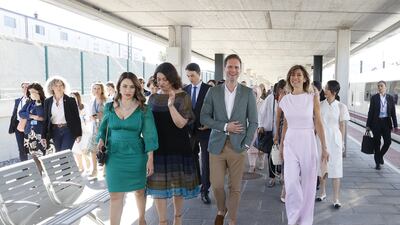
  • Maria Begona Gomez, wife of Spanish Prime Minister Pedro Sanchez, the first Lady of Lithuania, Diana Nausediene, first lady of Malta, Lydia Abela, and Gauthier Destenay, the husband of Luxembourg's Prime Minister, before a visit to the royal site of San Idelfonso in Segovia. EPA
    Maria Begona Gomez, wife of Spanish Prime Minister Pedro Sanchez, the first Lady of Lithuania, Diana Nausediene, first lady of Malta, Lydia Abela, and Gauthier Destenay, the husband of Luxembourg's Prime Minister, before a visit to the royal site of San Idelfonso in Segovia. EPA
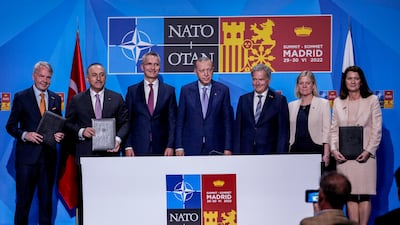
  • Finnish Foreign Minister Pekka Haavisto, Turkish Foreign Minister Mevlut Cavusoglu, Jens Stoltenberg, Turkish President Recep Tayyip Erdogan, Finland's President Sauli Niinisto, Sweden's Prime Minister Magdalena Andersson and Sweden's Foreign Minister Ann Linde pose for a picture after signing an agreement in Madrid. AP
    Finnish Foreign Minister Pekka Haavisto, Turkish Foreign Minister Mevlut Cavusoglu, Jens Stoltenberg, Turkish President Recep Tayyip Erdogan, Finland's President Sauli Niinisto, Sweden's Prime Minister Magdalena Andersson and Sweden's Foreign Minister Ann Linde pose for a picture after signing an agreement in Madrid. AP
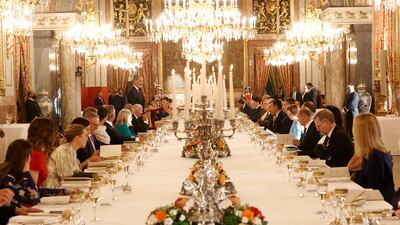
  • King Felipe VI of Spain addresses leaders during a dinner at the Royal Palace in Madrid. Reuters
    King Felipe VI of Spain addresses leaders during a dinner at the Royal Palace in Madrid. Reuters
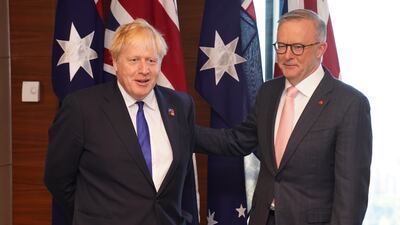
  • Mr Johnson meets Australian Prime Minister Anthony Albanese. PA
    Mr Johnson meets Australian Prime Minister Anthony Albanese. PA
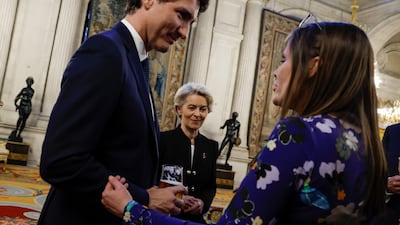
  • Canada's Prime Minister Justin Trudeau and European Commission President Ursula von der Leyen attend a reception at the Royal Palace in Madrid. AP
    Canada's Prime Minister Justin Trudeau and European Commission President Ursula von der Leyen attend a reception at the Royal Palace in Madrid. AP
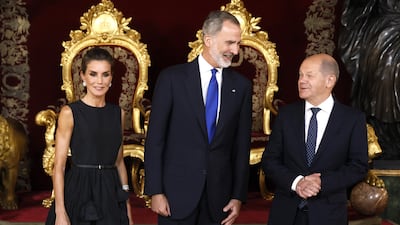
  • Spain's King Felipe VI and Queen Letizia greet German Chancellor Olaf Scholz, right, during a royal reception for heads of governments and states. EPA
    Spain's King Felipe VI and Queen Letizia greet German Chancellor Olaf Scholz, right, during a royal reception for heads of governments and states. EPA
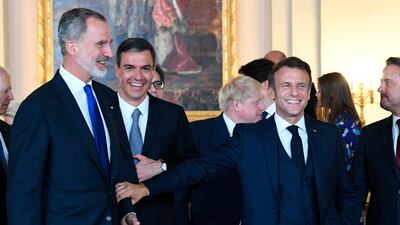
  • King Felipe VI, left, Mr Sanchez, second left and Mr Macron before the dinner. AP
    King Felipe VI, left, Mr Sanchez, second left and Mr Macron before the dinner. AP
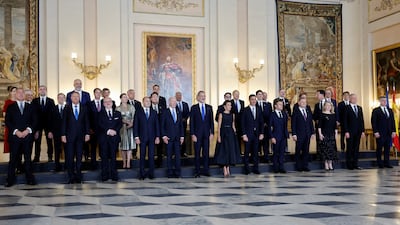
  • Nato leaders pose for a 'family photo' with King Felipe and Queen Letizia in Madrid. Reuters
    Nato leaders pose for a 'family photo' with King Felipe and Queen Letizia in Madrid. Reuters
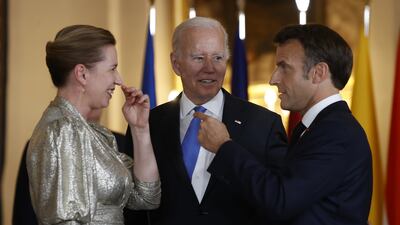
  • Denmark's Prime Minister Mette Frederiksen, left, with Mr Biden and Mr Macron. EPA
    Denmark's Prime Minister Mette Frederiksen, left, with Mr Biden and Mr Macron. EPA
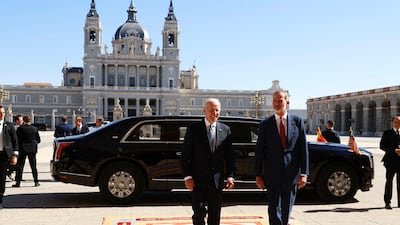
  • Mr Biden, left, and King Felipe arrive for a meeting at the Royal Palace in Madrid. Reuters
    Mr Biden, left, and King Felipe arrive for a meeting at the Royal Palace in Madrid. Reuters
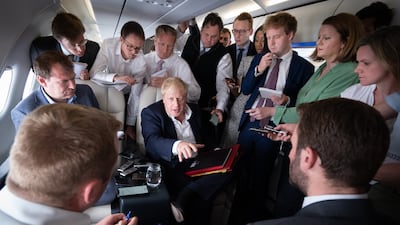
  • Mr Johnson talks to journalists on his plane during a flight from Germany – where he was attending the G7 summit – to the Nato summit in the Spanish capital. PA
    Mr Johnson talks to journalists on his plane during a flight from Germany – where he was attending the G7 summit – to the Nato summit in the Spanish capital. PA
  • Mr Erdogan, second left, meets Mr Stoltenberg, Mr Niinisto of Finland and Ms Andersson of Sweden before the summit. Reuters
    Mr Erdogan, second left, meets Mr Stoltenberg, Mr Niinisto of Finland and Ms Andersson of Sweden before the summit. Reuters
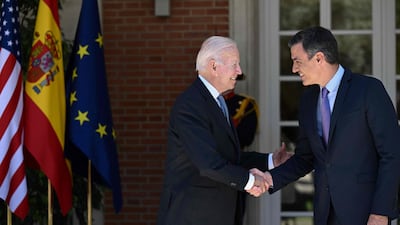
  • Mr Biden shakes hands with Prime Minister Sanchez of Spain at the Palace of Moncloa, in Madrid. AFP
    Mr Biden shakes hands with Prime Minister Sanchez of Spain at the Palace of Moncloa, in Madrid. AFP
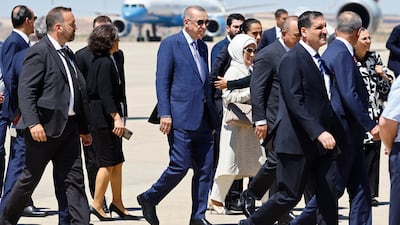
  • Mr Erdogan, centre, arrives at the Torreon air base in Madrid. AP
    Mr Erdogan, centre, arrives at the Torreon air base in Madrid. AP
  • Mr Sanchez, right, speaks with Mr Stoltenberg before the summit. EPA
    Mr Sanchez, right, speaks with Mr Stoltenberg before the summit. EPA
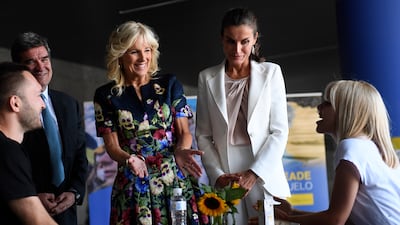
  • US first lady Jill Biden, centre left, and Spain's Queen Letizia speak with a family during a visit to a reception centre for Ukrainian refugees in Madrid. AP
    US first lady Jill Biden, centre left, and Spain's Queen Letizia speak with a family during a visit to a reception centre for Ukrainian refugees in Madrid. AP
  • Spanish police patrol outside the Ifema convention centre before the Nato summit in Madrid. EPA
    Spanish police patrol outside the Ifema convention centre before the Nato summit in Madrid. EPA
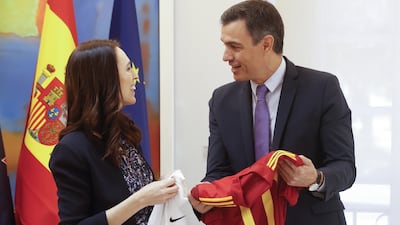
  • Mr Sanchez and his New Zealand counterpart Jacinda Ardern hold the jerseys of their national football teams during a meeting at Moncloa Palace. EPA
    Mr Sanchez and his New Zealand counterpart Jacinda Ardern hold the jerseys of their national football teams during a meeting at Moncloa Palace. EPA
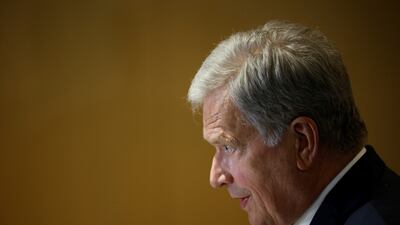
  • Finland's President Niinisto speaks during a briefing in Madrid before the Nato summit. Reuters
    Finland's President Niinisto speaks during a briefing in Madrid before the Nato summit. Reuters
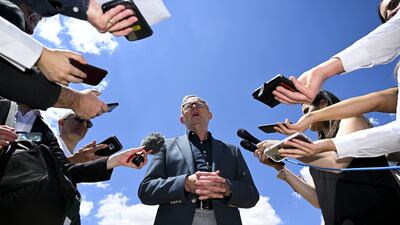
  • Australian Prime Minister Anthony Albanese speaks to the media after arriving at Torrejon Airbase in Madrid. EPA
    Australian Prime Minister Anthony Albanese speaks to the media after arriving at Torrejon Airbase in Madrid. EPA
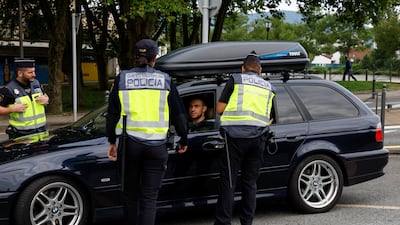
  • Spanish police officers control traffic on the Spain-France border in Irun. Reuters
    Spanish police officers control traffic on the Spain-France border in Irun. Reuters
  • Mr Stoltenberg speaks at a press conference to preview the Nato summit at the alliance's headquarters in Brussels, Belgium. AFP
    Mr Stoltenberg speaks at a press conference to preview the Nato summit at the alliance's headquarters in Brussels, Belgium. AFP
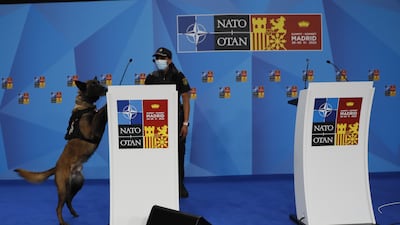
  • Spanish police use sniffer dogs to check a podium at the Ifema centre in Madrid. EPA
    Spanish police use sniffer dogs to check a podium at the Ifema centre in Madrid. EPA
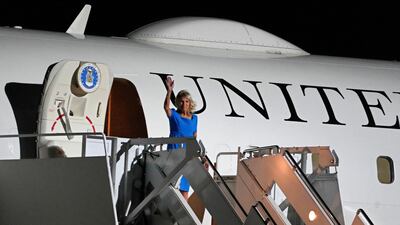
  • US first lady Jill Biden waves on arrival at Torrejon air base in Madrid. Reuters
    US first lady Jill Biden waves on arrival at Torrejon air base in Madrid. Reuters

Europe also retains strong air forces including fighter jets and attack helicopters that are largely superior to Russian aircraft.

Also, production lines for advanced precision guided munitions such as Javelin anti-tank missiles, Hellfire and Brimstone missiles are running well as there have been continuing orders.

Furthermore, defence observers say the weapons in Ukraine are causing significant attrition to Russian forces.

“Nato powers are drawing down their weapon systems but these are achieving real effects in Ukraine damaging and destroying Russian capabilities, which advances European security in places like the Baltics,” commented the defence blogger known as “Perun”.

A comment on his site mentioned Estonia sending 500 Javelin missiles to Ukraine in late February adding: “Every piece of Russian armour destroyed in Ukraine is one fewer system that can be used to invade the Baltics.”

Up to 800 Russian tanks have been lost in Ukraine.

Mercer, the investment consulting arm of US services company Marsh & McLennan, expects its wealth division to at least double its assets under management (AUM) in the Middle East as wealth in the region continues to grow despite economic headwinds, a company official said.

Mercer Wealth, which globally has $160 billion in AUM, plans to boost its AUM in the region to $2-$3bn in the next 2-3 years from the present $1bn, said Yasir AbuShaban, a Dubai-based principal with Mercer Wealth.

Within the next two to three years, we are looking at reaching $2 to $3 billion as a conservative estimate and we do see an opportunity to do so,” said Mr AbuShaban.

Mercer does not directly make investments, but allocates clients’ money they have discretion to, to professional asset managers. They also provide advice to clients.

“We have buying power. We can negotiate on their (client’s) behalf with asset managers to provide them lower fees than they otherwise would have to get on their own,” he added.

Mercer Wealth’s clients include sovereign wealth funds, family offices, and insurance companies among others.

From its office in Dubai, Mercer also looks after Africa, India and Turkey, where they also see opportunity for growth.

Wealth creation in Middle East and Africa (MEA) grew 8.5 per cent to $8.1 trillion last year from $7.5tn in 2015, higher than last year’s global average of 6 per cent and the second-highest growth in a region after Asia-Pacific which grew 9.9 per cent, according to consultancy Boston Consulting Group (BCG). In the region, where wealth grew just 1.9 per cent in 2015 compared with 2014, a pickup in oil prices has helped in wealth generation.

BCG is forecasting MEA wealth will rise to $12tn by 2021, growing at an annual average of 8 per cent.

Drivers of wealth generation in the region will be split evenly between new wealth creation and growth of performance of existing assets, according to BCG.

Another general trend in the region is clients’ looking for a comprehensive approach to investing, according to Mr AbuShaban.

“Institutional investors or some of the families are seeing a slowdown in the available capital they have to invest and in that sense they are looking at optimizing the way they manage their portfolios and making sure they are not investing haphazardly and different parts of their investment are working together,” said Mr AbuShaban.

Some clients also have a higher appetite for risk, given the low interest-rate environment that does not provide enough yield for some institutional investors. These clients are keen to invest in illiquid assets, such as private equity and infrastructure.

“What we have seen is a desire for higher returns in what has been a low-return environment specifically in various fixed income or bonds,” he said.

“In this environment, we have seen a de facto increase in the risk that clients are taking in things like illiquid investments, private equity investments, infrastructure and private debt, those kind of investments were higher illiquidity results in incrementally higher returns.”

The Abu Dhabi Investment Authority, one of the largest sovereign wealth funds, said in its 2016 report that has gradually increased its exposure in direct private equity and private credit transactions, mainly in Asian markets and especially in China and India. The authority’s private equity department focused on structured equities owing to “their defensive characteristics.”

COMPANY%20PROFILE
%3Cp%3E%3Cstrong%3ECompany%20name%3A%3C%2Fstrong%3E%20OneOrder%3Cbr%3E%3Cstrong%3EStarted%3A%3C%2Fstrong%3E%20March%202022%3Cbr%3E%3Cstrong%3EFounders%3A%3C%2Fstrong%3E%20Tamer%20Amer%20and%20Karim%20Maurice%3Cbr%3E%3Cstrong%3EBased%3A%3C%2Fstrong%3E%20Cairo%3Cbr%3E%3Cstrong%3ENumber%20of%20staff%3A%20%3C%2Fstrong%3E82%3Cbr%3E%3Cstrong%3EInvestment%20stage%3A%3C%2Fstrong%3E%20Series%20A%3C%2Fp%3E%0A
Infiniti QX80 specs

Engine: twin-turbocharged 3.5-liter V6

Power: 450hp

Torque: 700Nm

Price: From Dh450,000, Autograph model from Dh510,000

Available: Now

While you're here
MANDOOB
%3Cp%3EDirector%3A%20Ali%20Kalthami%3C%2Fp%3E%0A%3Cp%3EStarring%3A%20Mohammed%20Dokhei%2C%20Sarah%20Taibah%2C%20Hajar%20Alshammari%3C%2Fp%3E%0A%3Cp%3ERating%3A%204%2F5%3C%2Fp%3E%0A%3Cp%3E%3C%2Fp%3E%0A
Updated: June 30, 2022, 11:36 AM