


Ukrainian President Volodymyr Zelenskyy will urge leaders of some of the world’s richest countries to do more to support his nation’s fight against Russia.
Mr Zelenskyy will address US President Joe Biden, British Prime Minister Boris Johnson and other G7 leaders by video link from Kyiv as his country continues to come under attack from Russian missiles.
In his nightly address on Sunday, he urged the allies to be “partners, not observers” and give his country the ability to defend itself, warning that any delay would be an invitation to Russia to strike again.
Mr Johnson will use Monday’s session at the G7 summit in Germany to call for urgent action to help get vital grain supplies out of Ukraine’s blockaded ports, to support the country’s economy and alleviate shortages around the world.
Time is running out to prevent stores of grain rotting in silos, with July’s harvest set to worsen the problem.
As Russian missile strikes continued to hit Ukrainian towns and cities, Mr Johnson said the country was on a “knife edge”, with Russian troops advancing in the east.
The blockade of major Ukrainian ports such as Odesa, attacks on farms and warehouses and the wider impact of the Russian invasion have all added to the problems blocking food from the country reaching the global market.
Ukraine previously supplied 10 per cent of the world’s wheat, up to 17 per cent of the world’s maize and half of the world’s sunflower oil.
About 25 million tonnes of corn and wheat is at risk of rotting in Ukrainian silos.
Mr Johnson will call for an international solution to the crisis, including overland routes for grain supplies to beat the Russian blockade, with £10 million ($12.2m) in materials and equipment to repair damaged railways.
-
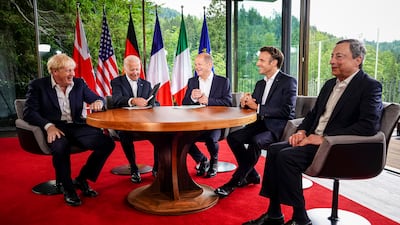
Britain's Prime Minister Boris Johnson, US President Joe Biden, German Chancellor Olaf Scholz, France's President Emmanuel Macron and Italian Prime Minister Mario Draghi chat before their meeting at Elmau Castle on Tuesday morning. Getty Images -
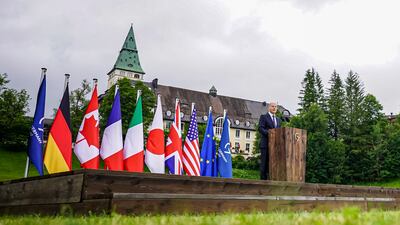
Olaf Scholz speaks at a press conference at Elmau Castle. EPA -
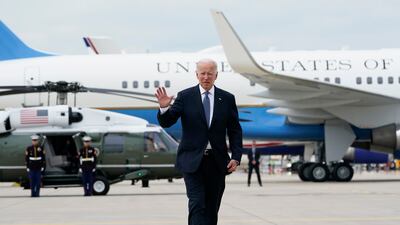
Joe Biden waves as he crosses the tarmac next to Air Force One at Munich International Airport. The US president is leaving Germany on his way to Spain to attend a Nato summit. AP -
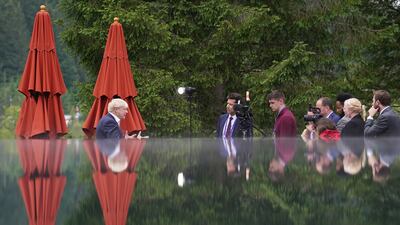
Boris Johnson speaks to press at the G7 summit. PA -

Emmanuel Macron holds a press conference at Elmau Castle. AFP -
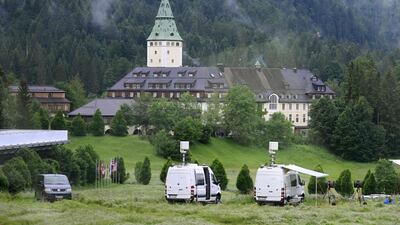
Vans equipped with electronic detection devices are stationed in front of Elmau Castle, where the G7 summit is taking place. AFP -
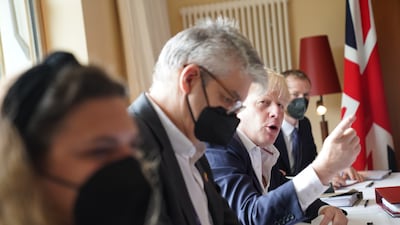
Boris Johnson makes a point during a meeting with the Prime Minister of Japan Fumio Kishida. PA -
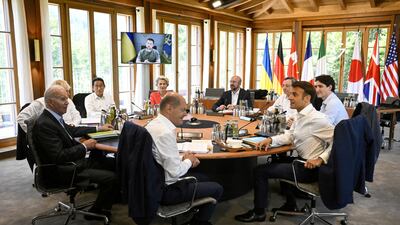
Clockwise from centre: Olaf Scholz; Joe Biden; Boris Johnson; Fumio Kishida; European Commission President Ursula von der Leyen, European Council President Charles Michel; Mario Draghi; Canada's Prime Minister Justin Trudeau, and Emmanuel Macron listen to an online address by Ukraine's President Volodymyr Zelenskyy at the G7 summit in Bavaria. Reuters -
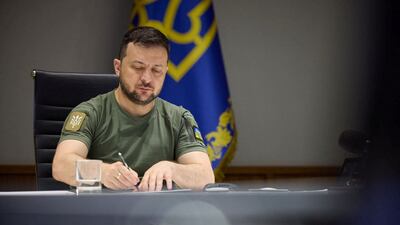
Volodymyr Zelenskyy attends a working session of G7 leaders via video link from Kyiv, Ukraine. Reuters -
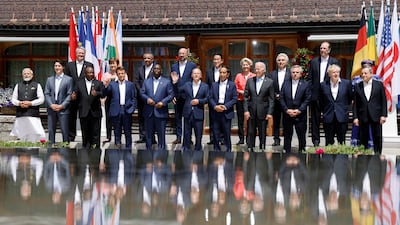
Olaf Scholz waves alongside G7 leaders and participants of the outreach programme as they pose for a 'family photo' at the Bavarian resort of Schloss Elmau. Reuters -
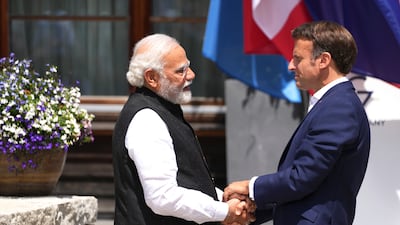
Emmanuel Macron greets India's Prime Minister Narendra Modi during the official welcome ceremony of G7 leaders. AP -
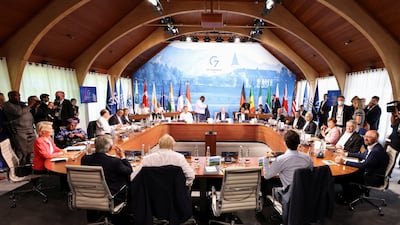
G7 leaders meet outreach guests at the summit. Reuters -
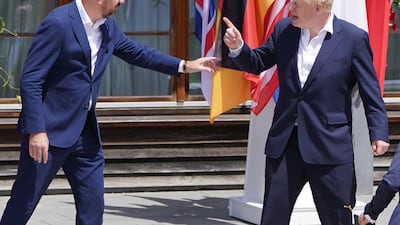
Boris Johnson speaks to Charles Michel. PA -
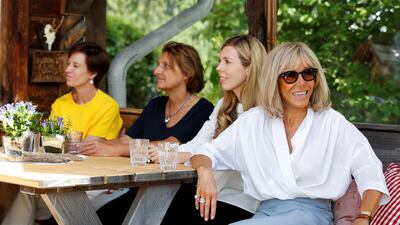
Amelie Derbaudrenghien, Britta Ernst, Carrie Johnson and Brigitte Macron at Elmauer Alm Mountain Restaurant. Reuters -
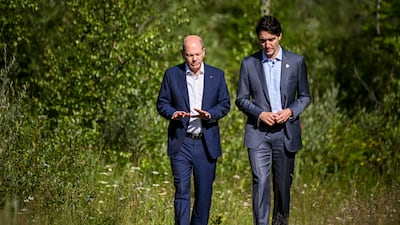
G7 leaders Olaf Scholz and Justin Trudeau talk a walk at Elmau Castle in Bavaria. EPA -
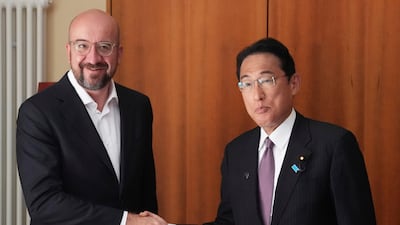
European Council President Charles Michel greets Japanese Prime Minister Fumio Kishida on the sidelines of the G7 summit at Castle Elmau in Bavaria. AP -
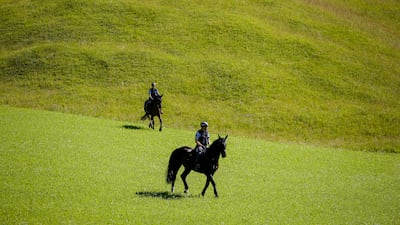
Horseback police patrol at Elmau Castle in Bavaria. EPA -
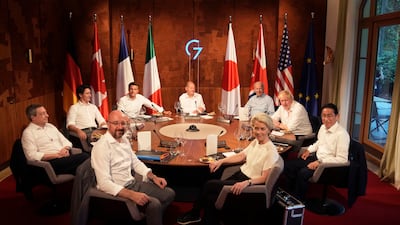
G7 leaders have dinner at Elmau Castle in Kruen, Germany. Clockwise from front left, European Council President Charles Michel, Italy's Prime Minister Mario Draghi, Canada's Prime Minister Justin Trudeau, French President Emmanuel Macron, German Chancellor Olaf Scholz, US President Joe Biden, British Prime Minister Boris Johnson, Japan's Prime Minister Fumio Kishida and European Commission President Ursula von der Leyen. AP -

From left, Mr Draghi, Ms von der Leyen, Mr Biden, Mr Scholz, Mr Johnson, Mr Trudeau, Mr Kishida, Mr Macron and Mr Michel. AFP -
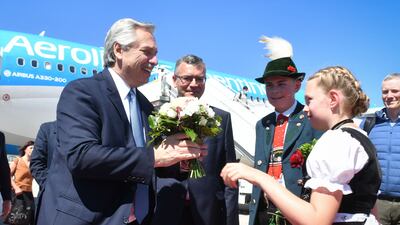
Flowers for President Alberto Fernandez of Argentina at Munich Airport as he arrives to take part in the G7 summit in Bavaria. AFP -
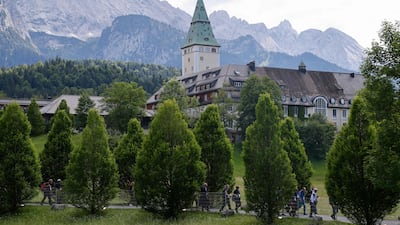
Elmau Castle in southern Germany, the venue for the G7 summit. AFP -
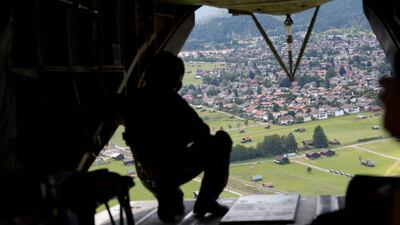
The view from a German armed forces helicopter on its way to the G7 summit at Elmau Castle. AFP -
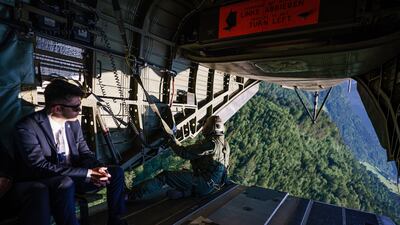
Gazing out from the helicopter. AFP -
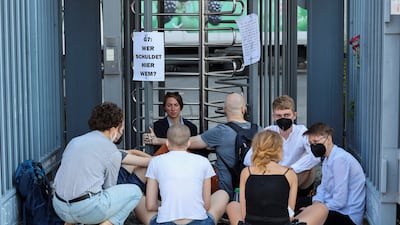
In Berlin, campaigners sit near a sign reading 'G7: Who owes who?' at the Ministry of Finance building to demand debt relief for countries of the global south. Reuters -
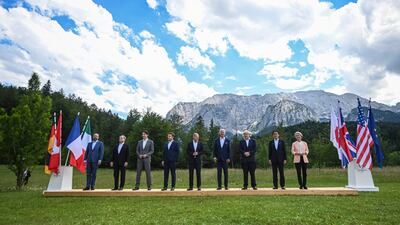
From left, Mr Michel, Mr Draghi, Mr Trudeau, Mr Macron, Mr Scholz, Mr Biden, Mr Johnson, Mr Kishida and Ms von der Leyen at the summit at Elmau Castle. EPA -
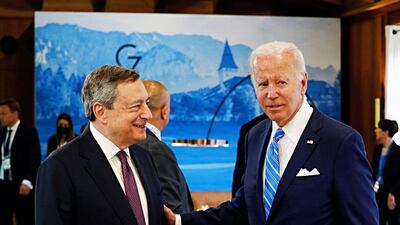
Mr Draghi talks with Mr Biden. EPA -
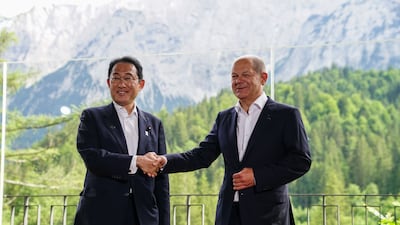
Mr Scholz shakes hands with Mr Kishida. EPA -
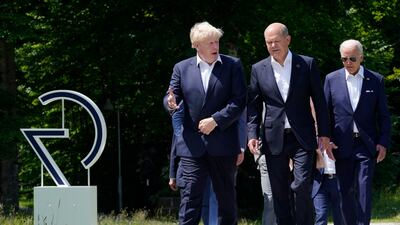
Mr Johnson, Mr Scholz and Mr Biden. AFP -
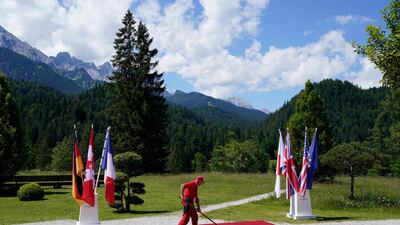
A worker cleans the red carpet at Elmau Castle in the Bavarian mountains. AFP -

Mr Kishida leads the Japanese delegation. AFP -

The G7 logo at Elmau Castle. AFP -
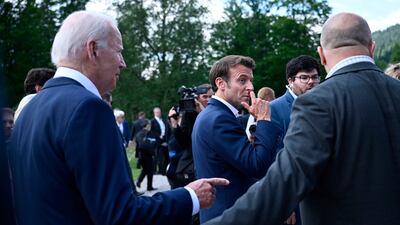
Mr Biden and Mr Macron. AP -
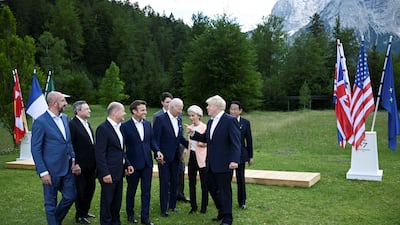
The leaders at a photocall. Reuters -
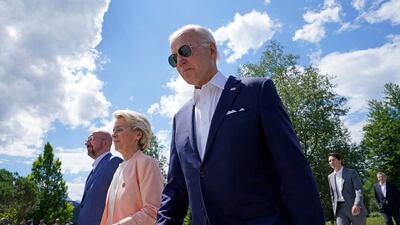
Mr Biden walks with Ms von der Leyen and Mr Michel. Reuters -
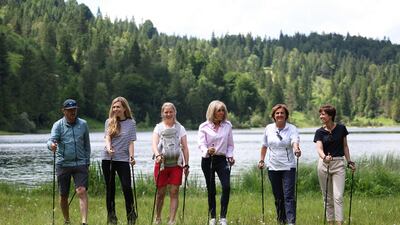
Former German alpine ski racer Christian Neureuther, British Prime Minister's wife Carrie Johnson, former German biathlete Miriam Neureuther, French President's wife Brigitte Macron, German Chancellor's wife Britta Ernst and European Council President's wife Amelie Derbaudrenghien take part in a Nordic Walk as part of the spouses' programme. Reuters -

Mr Macron, Mr Biden, Ms von der Leyen and Mr Trudeau. AP -
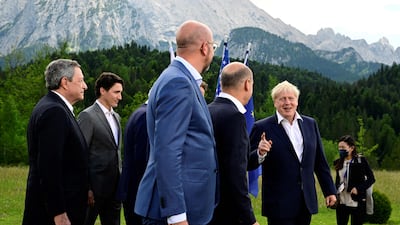
Mr Draghi, Mr Trudeau, Mr Michel, Mr Scholz and Mr Johnson. AFP -

Ms von der Leyen chats with Mr Trudeau. AFP -
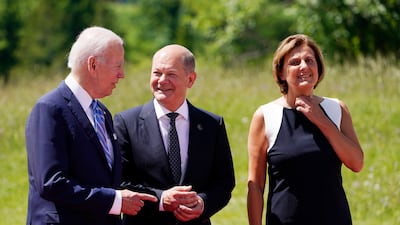
Mr Biden is welcomed by Mr Scholz and his wife Britta Ernst. AP -
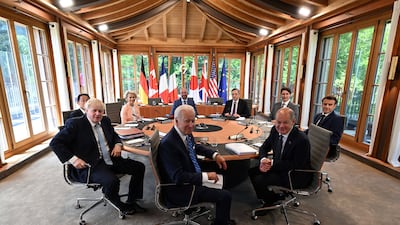
The leaders get down to business. AP -
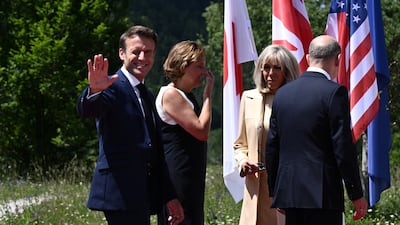
Mr Scholz and Ms Ernst welcome the Macrons. Reuters -
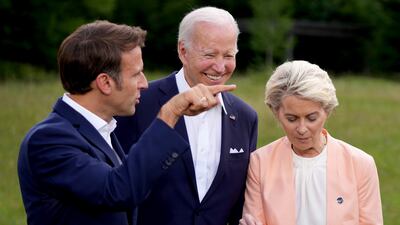
Mr Macron, Mr Biden and Ms von der Leyen. AP -
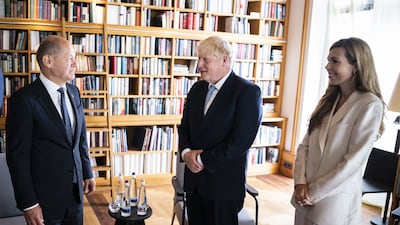
Mr Scholz greets Mr and Mrs Johnson. PA -

Mr Scholz and Ms Ernst welcome Ms von der Leyen to Elmau Castle. AFP -
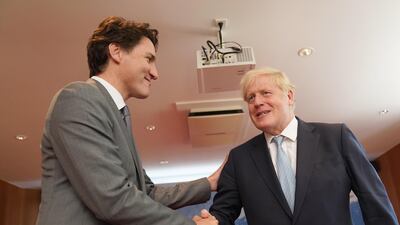
Mr Johnson meets Mr Trudeau. PA -
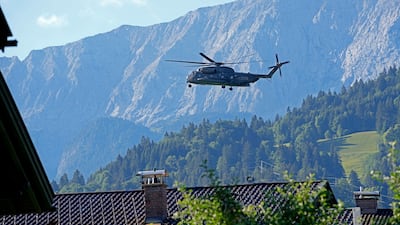
A helicopter flies over the G7 venue. AP Photo


The UK has also been urging Turkey, which controls access to the Black Sea, to do more to get grain supplies out by ship.
Russia’s actions have driven up food prices globally, including in the UK, while 47 million people around the world in countries dependent on Ukrainian grain are at risk of humanitarian disaster.
“Putin’s actions in Ukraine are creating terrible aftershocks across the world, driving up energy and food prices as millions of people are on the brink of famine," Mr Johnson will tell G7 leaders on Monday.
“Only [Russian President Vladimir] Putin can end this needless and futile war.
“But global leaders need to come together and apply their combined economic and political heft to help Ukraine and make life easier for households across the world. Nothing should be off the table.”
Mr Johnson also wants G7 leaders to look at the use of grain for biofuel, claiming its use for vehicles may be reducing availability and pushing up food costs.
The UK will also put £1.5m into developing a testing process to identify whether grain sold by Russia has been illegally smuggled from Ukraine.
Mr Johnson has played down the prospect of the Royal Navy being sent in to help merchant vessels beat the Russian blockade.
But he has said British expertise in “remote de-mining” and insurance of shipping in contested waters could help vessels to move the grain out by sea.
Mr Zelenskyy will address the G7 and Nato summits over coming days.
Ahead of his speech to the G7 leaders gathered in the luxury Schloss Elmau hotel in the Bavarian Alps, Mr Zelenskyy said he would demand extra defence systems to battle the missile bombardment.
“We need a powerful air defence – modern, fully effective – which can ensure complete protection against these missiles,” he said.
“We talk about this every day with our partners. There are already some agreements. And partners need to move faster if they are really partners, not observers.
“Delays in the transfer of weapons to our state, any restrictions, are actually an invitation for Russia to strike again and again.
“The occupiers — these terrorists — must be beaten with all our might so that they do not think they can put pressure and outplay someone.”

