


Live updates: follow the latest news on Russia-Ukraine
The EU on Tuesday accused Russia of deliberately engineering the emerging global food crisis by bombing Ukrainian warehouses, confiscating crops and “using hunger and grain to wield power”.
European Commission president Ursula von der Leyen said runaway bread prices in Lebanon and stalled food shipments to Somalia were the result of Russia’s “shameful acts” during its three-month invasion of Ukraine.
The war between two of the world’s top agricultural producers has sent alarm bells ringing among global aid workers, adding potential food shortages to the energy and humanitarian crises unleashed by the conflict.
In addition to blocking food shipments from Ukraine, Russia is hoarding its own supplies “as a form of blackmail” to win political support, Ms von der Leyen said in Davos at a World Economic Forum overshadowed by the war in Europe.
Recalling the Soviet-era famine that devastated Ukraine in the 1930s, she told delegates that Russia’s alleged seizures of grain stocks and machinery had “brought back memories from a dark past”.
“Global wheat prices are skyrocketing, and it’s the fragile countries and vulnerable populations that suffer the most,” she said, after accusing Russia of deliberately bombing warehouses and blockading ships carrying grain and sunflower seeds.
“On top of this, Russia is now hoarding its own food exports as a food of blackmail, holding back supplies to increase global prices or trading wheat in exchange for political support. This is using hunger and grain to wield power.”

Poland’s President Andrzej Duda said food shortages in North Africa as a result of the war would spur more migration across the Mediterranean to Europe, a route which EU leaders have been trying to narrow for years.
The bloc is looking to mitigate the grain crisis by importing Ukrainian food over land, avoiding the mine-laden shipping lanes of the Black Sea, and increasing its own agricultural output.
Ms von der Leyen said she was working with Egypt’s President Abdel Fattah El Sisi to hold an event on food security, with Europe regarding greater African food production as a longer-term guarantee of food security.
But political and business leaders at Davos were urged not to compromise their countries’ security for economic gain, after the war in Ukraine exposed much of Europe’s reliance on oil and gas imported from Russia.
On Tuesday, the US and EU said Russia’s moves to cut off fossil fuel exports, most recently to Finland, had “demonstrated that it is an unreliable supplier of energy”.
Nato Secretary General Jens Stoltenberg said at Davos that gas exports had given Russia a tool to intimidate its neighbours and that western nations should assess their trade with China for similar security risks.
-

Service members of pro-Russian troops drive a tank past a destroyed residential building in the town of Popasna in the Luhansk region, Ukraine. Reuters -
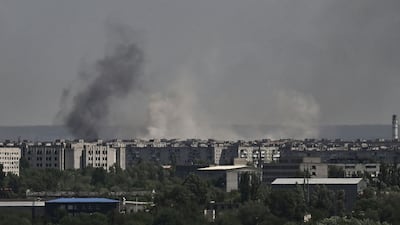
Smoke and dirt rise from the city of Severodonetsk during shelling in the eastern Ukrainian region of Donbas. AFP -
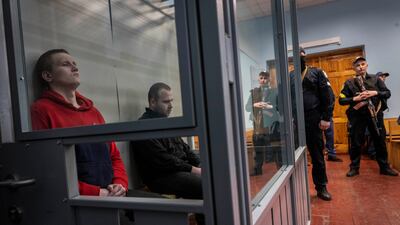
Russian soldiers Alexander Alexeevich Ivanov and Alexander Vladimirovich Bobykin, left, attend their trial hearing in Kotelva, northeastern Ukraine. AP Photo -
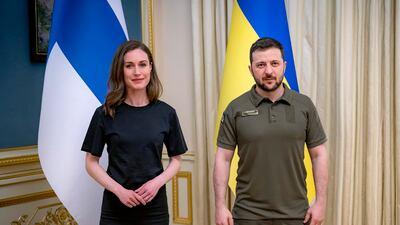
Ukrainian President Volodymyr Zelenskyy, right, meets with Finnish Prime Minister Sanna Marin in Kyiv, Ukraine. AP -
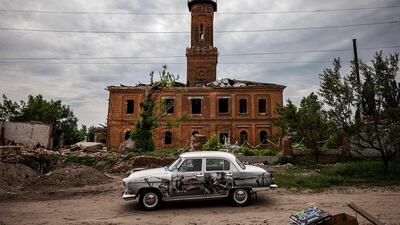
A man drives a GAZ-21 Volga car past a damaged building in Kharkiv, eastern Ukraine, on the 92nd day of the Russian invasion of Ukraine. AFP -
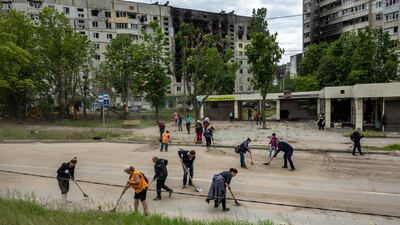
Public transit workers sweep up shrapnel in Kharkiv, Ukraine. Getty Images -
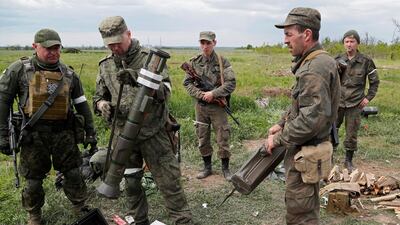
Pro-Russian troops inspect an AT4 anti-tank launcher outside the town of Svitlodarsk in the Donetsk region, Ukraine. Reuters -
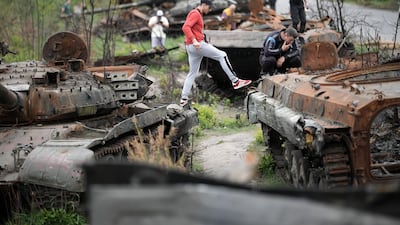
People inspect destroyed Russian tanks and armoured vehicles in Irpin, Ukraine. Getty Images -

A local resident pets a cat next to a destroyed house in Vilkhivka village, near Kharkiv, Ukraine. AFP -
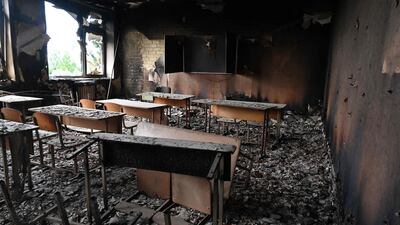
The remains of a school in Vilkhivka village, near Kharkiv. AFP -
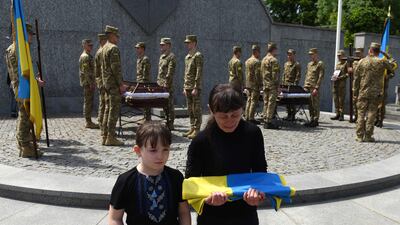
Widow and daughter of Andriy Vertiev, a Ukrainian serviceman, killed during the Russian invasion of Ukraine, attend his funeral at Lychakiv cemetery, Lviv, Ukraine. AFP -
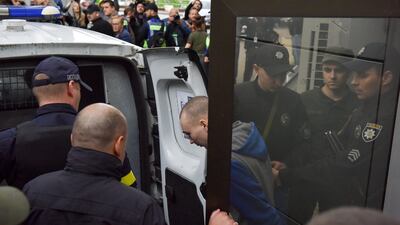
Russian serviceman Vadim Shishimarin, centre, leaves a court hearing in Kyiv. EPA -
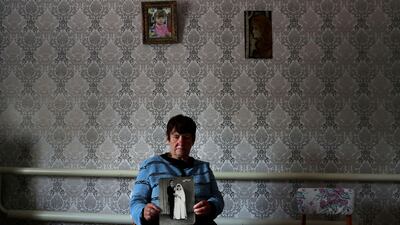
Kateryna Shelikhova, widow of Oleksandr Shelipov, 62, who was shot dead by a Russian soldier. Reuters -
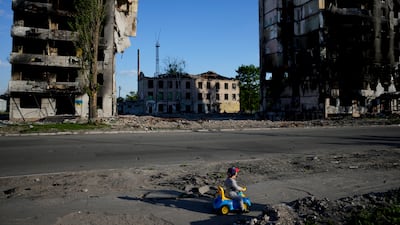
A child plays against a backdrop of buildings ruined by shelling in Borodyanka, Ukraine. AP -
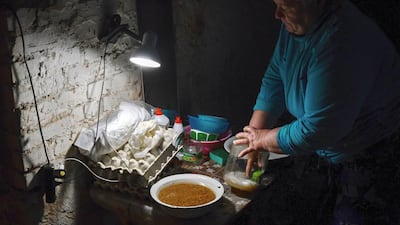
A Ukrainian woman in the basement of a building used as bomb shelter in Soledar, Donetsk region. AP -
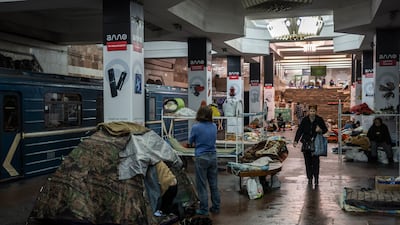
Residents live in a subway station used as temporary shelter in Kharkiv. AP -
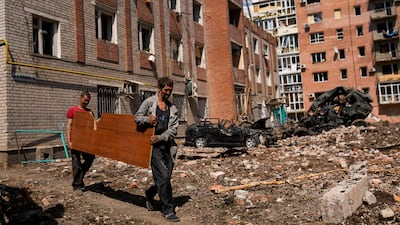
Men with salvageable material from damaged buildings after Russian bombing in Bakhmut, eastern Ukraine. AP -
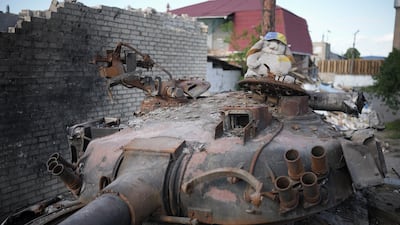
A cuddly toy adorns a destroyed Russian battle tank near damaged homes in Hostomel, Ukraine. Getty Images -
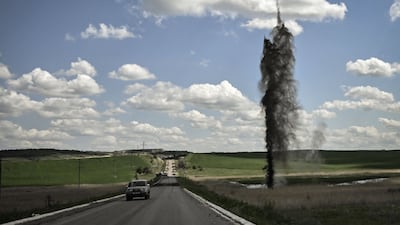
A mortar explodes next to a road leading to the city of Lysychansk, in the eastern Ukrainian region of Donbas. AFP -
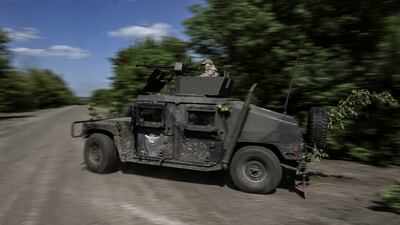
A Ukrainian army vehicle moves towards the front line at a checkpoint near Lysychansk. AFP -
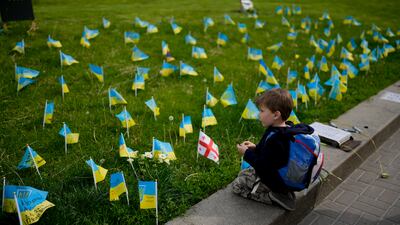
A boy looks at flags honouring soldiers killed while fighting Russian troops, in Kyiv city centre. AP -
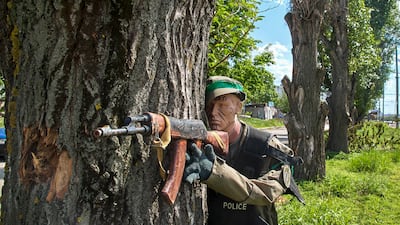
A mannequin with a fake gun is placed as bait on a roadside in the Nord Saltivka district of Kharkiv. EPA -
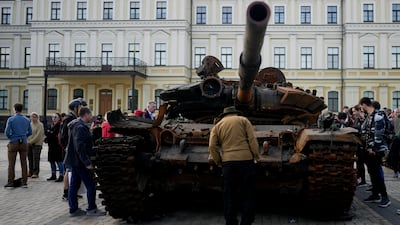
A man looks at a destroyed Russian tank placed as a symbol of war, in central Kyiv. AP -
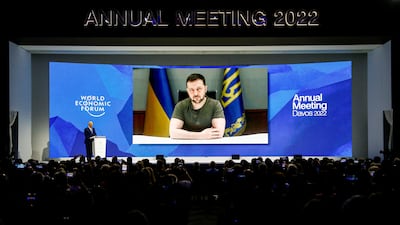
Ukraine's President Volodymyr Zelenskyy on a screen at the opening ceremony for the World Economic Forum in Davos, Switzerland. Reuters -
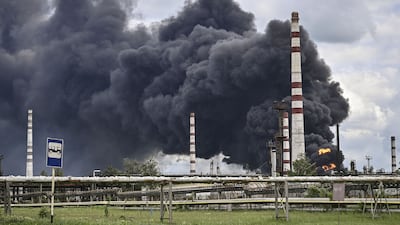
Smoke billows from an oil refinery after an attack outside the city of Lysychansk, in the eastern Ukrainian region of Donbas. AFP -
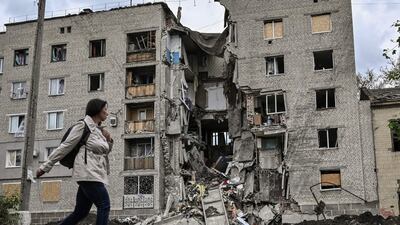
A woman walks by a destroyed apartment building in Bakhmut, Donbas region. AFP -
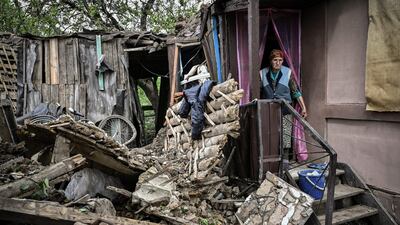
An elderly woman stands inside her heavily damaged house after it was hit by a missile in Bakhmut. AFP -
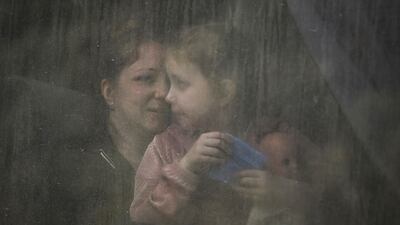
A mother with her daughter sit inside a bus as they leave Bakhmut. AFP -
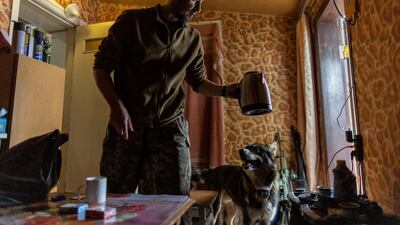
A Ukrainian soldier prepares coffee as he takes a break near an artillery position in the breakaway enclave of Donetsk, in the Donbas region. Reuters -
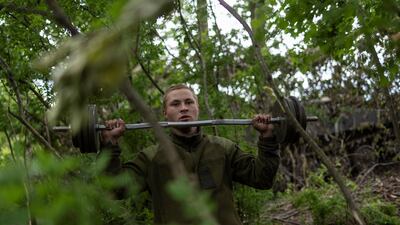
A Ukrainian soldier exercises near Donetsk. Reuters -
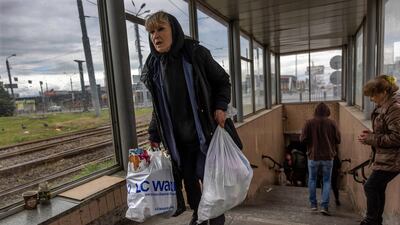
A woman displaced by incessant Russian shelling leaves a metro station where people had been living underground for months in Kharkiv, Ukraine. Getty -

A heavily damaged home spa near Ruski Tyshky village in Ukraine. Getty -

The wreckage of a Ukrainian military helicopter is transported in Kharkiv. Getty -
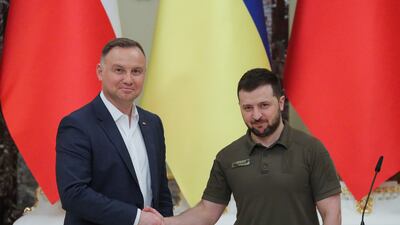
Ukrainian President Volodymyr Zelenskyy and Polish President Andrzej Duda in Kyiv. EPA -
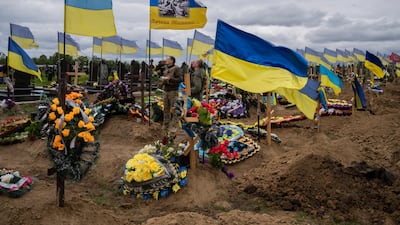
Two Ukrainian national guard soldiers pay their respects at a cemetery in Kharkiv. AP -
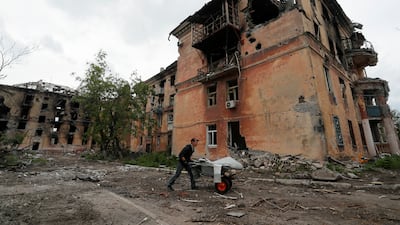
A man pushes a wheelbarrow past a heavily damaged apartment building near Azovstal Iron and Steel Works in Mariupol. Reuters -
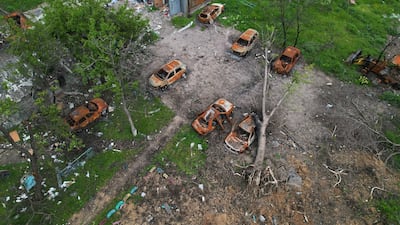
The burnt out shells of cars in a residential area near Azovstal Iron and Steel Works in Mariupol. Reuters -
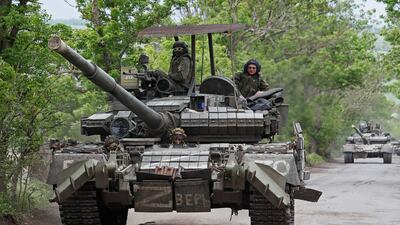
Pro-Russian troops drive a tank in Ukraine's Donetsk region. Reuters -
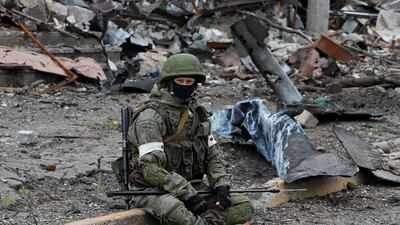
A Russian soldier takes a break during an operation to demine the territory of Azovstal steel plant in Mariupol. Reuters -
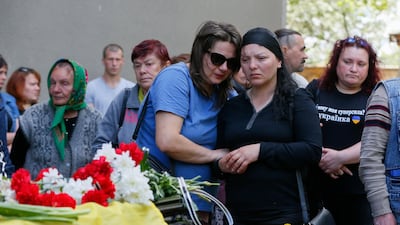
Relatives and friends attend the funeral of a Ukrainian soldier killed in action, in the Odessa region city of Rozdilna. EPA -
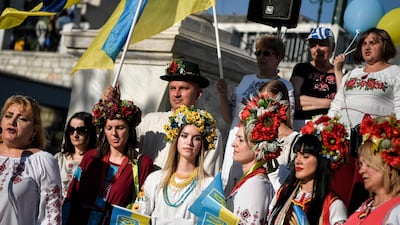
Ukrainians wearing traditional clothing listen to their national anthem as they take part in the celebration of 'Vyshyvanka Day', an annual celebration of Ukrainian folk traditions, in Athens. AFP


He cited over-reliance on energy imports, exports of sensitive technology such as artificial intelligence and control over infrastructure such as 5G mobile networks as areas where democracies could be found vulnerable.
“We must recognise that our economic choices have consequences for our security,” he said. “Freedom is more important than free trade. The protection of our values is more important than profit.”
Mr Stoltenberg said Russia’s invasion had backfired because Nato is now poised to welcome two new members in Sweden and Finland, an enlargement of the alliance that the Kremlin had sought to avoid.
He said he was confident that Turkey’s threat to stop their accession could be overcome, with diplomats set to discuss President Recep Tayyip Erdogan’s stated concerns about terrorist fighters in the two Nordic countries.
Sweden and Finland will send delegations to Ankara this week hoping to clear up differences with Turkey, Finnish Foreign Minister Pekka Haavisto said on Tuesday.
“I’m confident that we will be able now, as we have done so many, many times before in Nato, to find a way to solve these issues and to agree, and then to welcome Finland and Sweden and fully-fledged members of our alliance,” Mr Stoltenberg said.

