


The International Atomic Energy Agency expressed “concern” on Thursday after Ukraine warned of bombardment by Russia of the town where staff working at the Chernobyl nuclear site live.
“Ukraine informed the International Atomic Energy Agency (IAEA) today that Russian forces were shelling Ukrainian checkpoints in the city of Slavutych where many people working at the nearby Chernobyl Nuclear Power Plant live, putting them at risk,” the Vienna-based UN agency said.
Its director-general, Rafael Grossi, said the incident came “just a few days after technical staff at the Chernobyl [plant] were finally able to rotate and go to their homes in Slavutych and rest after working for nearly four weeks without a change of shift".
Russian forces took control of the plant on February 24.
About 100 Ukrainian technicians then continued to run the daily operations at the radioactive site for nearly four weeks without being rotated.
The UN agency also referred to forest fires in the vicinity of the plant, which was the site of the worst nuclear disaster in history in 1986.
These fires do not pose “any major radiological concerns”, according to the Ukrainian regulatory authority, an opinion shared by the IAEA experts.
-

Girls wearing face masks place candles among others forming a radioactivity sign at the monument to Chernobyl victims in Slavutich, the city where the power station's personnel lived, some 50 kilometres from the accident site, on April 26, 2020. AFP -

An aerial view at the site of the worst nuclear disaster in history. In April 1986, the nuclear reactors at the Chernobyl plant ruptured and exploded, causing radioactive contamination in the surrounding areas. A few photographers risked exposure to radiation in order to document the disaster. This photograph was taken in May 1986 just weeks after the accident. Getty -

Ukrainians light candles and lay flowers at the memorial for 'liquidators' who died during cleaning up works after the Chernobyl nuclear power plant disaster, during a ceremony in Slavutich city. EPA -

A nuclear technician checks, on September 1987, the radioactivity on the upper part of the nuclear reactor. AFP -

Women wearing face masks light candles at the monument to Chernobyl victims in Slavutich. AFP -

This picture, dated 1 October 1986, shows repairs being carried out on the Chernobyl nuclear plant. AFP -

Former liquidators of the Chernobyl nuclear accident wearing face masks lay flowers at Chernobyl's memorial in Kiev amid the Covid-19 coronavirus pandemic. AFP -
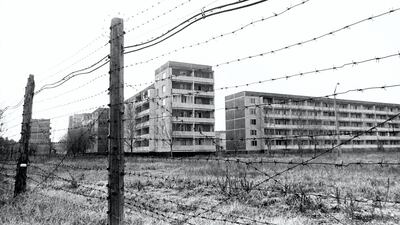
This picture, taken in April 1990, shows buildings abandoned because of the radioactive contamination produced by the Chernobyl nuclear plant No. 4 reactor's blast. AFP -

An elderly woman wearing a face mask visits Chernobyl's memorial in Kiev to commemorate the victims on the 34th anniversary of the tragedy. AFP -

People wearing face masks to protect against coronavirus pray during a commemorative religious ceremony in front of the church at a memorial of the Chernobyl tragedy victims in capital Kiev, Ukraine. AP -

A clean-up operation veteran wearing a face mask to protect against coronavirus pays respect to the Chernobyl victims at a memorial in capital Kiev, Ukraine. AP


An environmental analysis laboratory was “looted” and equipment stolen, the authority also said.
Since the start of the Russian military offensive, the IAEA chief has repeatedly warned of the dangers of the conflict, which is the first to take place in a country with a vast nuclear estate comprising 15 reactors, in addition to Chernobyl.
Mr Grossi reiterated this week that he was prepared to send equipment and staff to ensure the safety of the facilities and “prevent a serious nuclear accident".
He criticised the fact that an agreement had not yet been reached with Moscow and Kiev despite intensive efforts.
The West also issued warnings on Thursday.
“Russia's attack has already risked the safety and security of nuclear sites in Ukraine. Russian military activities are creating extreme risks for the population and the environment, with the potential for catastrophic result,” the G7 leaders — the US, France, Germany, Britain, Italy, Canada and Japan — said in a joint statement.

