


Live updates: follow the latest news on Russia-Ukraine
The war in Ukraine and resulting sanctions on Russia are adding to the concerns of Europe’s tourism sector as it tries to recover from the two-year battering of the coronavirus pandemic.
Italian tourism association Federalberghi said the “horizon has darkened again” after big-spending Russian tourists were virtually barred from Europe under sanctions intended to punish the country’s elite.
Almost two million Russians visited Italy every year before the pandemic and spent a combined €984 million ($1.1 billion) in tourist magnets such as Rome, Venice and Tuscany, the federation said.
But dozens of western countries have banned Russian planes from their airspace under sweeping sanctions intended to punish the country’s elite and weaken its wartime economy.
Many luxury western brands have ended operations or cut ties with Russia, with Radisson Hotel Group the latest to announce on Friday that it was suspending new investments in the country.
Federalberghi boss Bernabo Bocca also expressed concern that security-conscious American tourists might choose to avoid a continent at war, citing similar caution after a spate of terrorist incidents in the mid-2010s.
“In this case, it will not only be the big five-star hotels that will lose out,” he told the newspaper Il Messaggero.
Rating agency Fitch described Cyprus, another tourism-reliant Mediterranean economy, as “highly exposed” to the loss of Russian investors and holidaymakers.
-
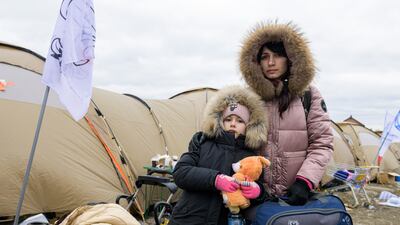
Mykhaila and her daughter from Loubny, central Ukraine, travelled by train to the Ukrainian city of Lviv then took a bus to Medyka on the Polish border, before walking across. Photo: DEC -

Women hold hands at the Medyka border crossing point, through which thousands of Ukrainian refugees have passed. Photo: DEC -
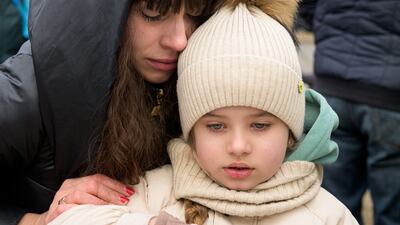
Angelika, 27, and her daughter Diana, 4, from Khmelnytskyi in Ukraine arrive at a reception centre on the outskirts of Przemysl, Poland. Photo: DEC -

Maria, 38, from Chernihiv, left Ukraine with a friend. They came to the Romanian border to wait for another friend before crossing. Photo: Panos Pictures -
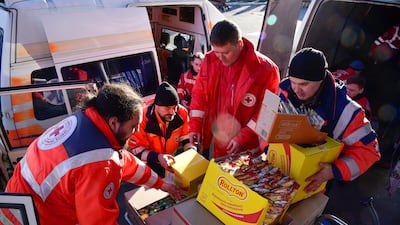
Ukrainian Red Cross staff and volunteers are providing food and other basic necessities to about 8,000 people sheltering in an underground station in Kyiv. Photo: Tebukhukhov Maksym -
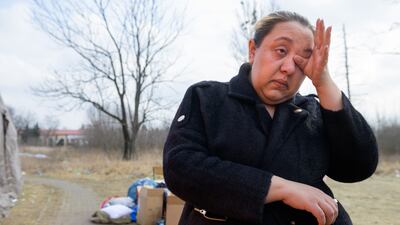
Kristina wipes away tears at Lwowska reception centre on the outskirts of Przemysl, Poland. Photo: DEC -
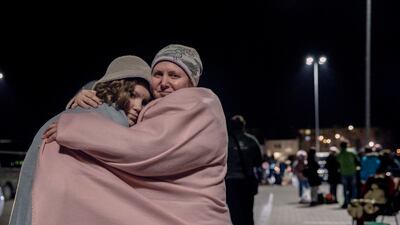
Ira, 45, and her daughter Olena, 12, outside a transit centre in Przemysl, Poland. Photo: Adrienne Surprenant -
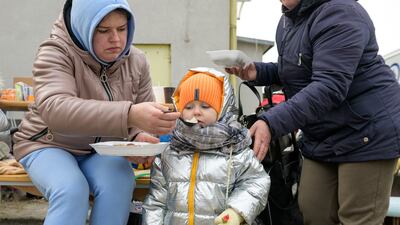
Veronika feeds her son Aleksander at the temporary refugee station in Medyka, eastern Poland. Photo: DEC


Fitch lowered its forecast for Cypriot economic growth by 0.6 percentage point this year after predicting that the fallout from Ukraine would hit the country’s tourism sector, although it did not downgrade Cyprus’s financial rating.
An EU member, Cyprus has closed its skies to Russian airspace while reserving the right to reconsider this if Turkey tries to bring Russian citizens to the occupied northern part of the island.
Turkey is another popular destination for Russians and was named by Fitch as one of three other emerging markets, along with Egypt and Thailand, where the consequences of the war could dent the tourism industry’s recovery.
In Greece, by contrast, Tourism Minister Vassilis Kikilias told Bloomberg that there were few cancellations after the invasion of Ukraine, with Russians representing only a small number of visitors.
Russia’s invasion came just as much of Europe lifted the last remnants of the Covid-19 restrictions that had all but shut down international travel at the most severe stages of the health crisis.
Hotrec, a European hospitality group, said many businesses had offered accommodation to provide shelter for the millions of Ukrainian refugees fleeing the Russian invasion.
The World Tourism Organisation is being urged by some members to suspend Russia after what it said was an invasion inconsistent with UN principles.

