


Live updates: follow the latest news on Russia-Ukraine
All members of the one shift of technical staff on duty at Chernobyl's radioactive waste complex since Russian forces seized the site last month have been relieved, the IAEA said on Monday.
For more than three weeks the Ukrainian centre, next to the now-defunct power plant that in 1986 was the site of the world's worst nuclear disaster, were operated by a single shift of staff who happened to be on duty when Russian forces took control on February 24.
All had been unable to leave until Sunday.
For weeks the International Atomic Energy Agency has been saying that the exhausted staff, working under extreme pressure, posed a growing risk to the site's safety and called for them to be rotated out.
"Ukraine's regulatory authority said about half of the outgoing shift of technical staff left the site of the 1986 accident yesterday and the rest followed today, with the exception of 13 staff members who declined to rotate," the IAEA said.
The Ukrainian regulator said most of the guards who have also been there since it was seized remained at the site, the IAEA said.
The agency said last week that there were 211 technical staff and guards there.
-
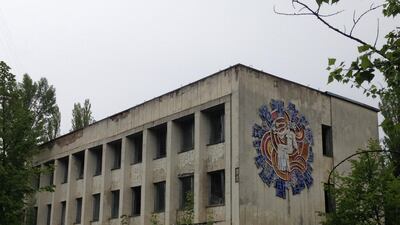
Pripyat is still a draw for visitors, not least for its Soviet-era architecture which has been frozen in time. All photos: Declan McVeigh / The National -
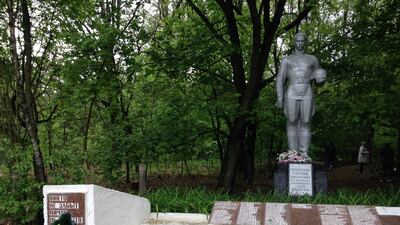
Like thousands of other Soviet towns, Pripyat had memorials to the dead of the 1941-1945 Great Patriotic War. This one is close to an abandoned nursery in the 30km 'dead zone' around Chernobyl. -
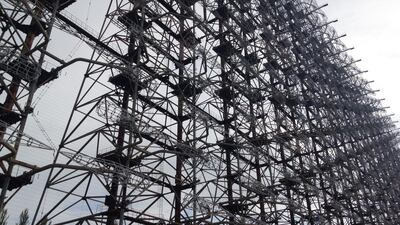
This enormous Duga-1 OTH radar array – AKA the 'Russian woodpecker' for the interference it caused on shortwave radio – dominates the skyline of this remote part of northern Ukraine near Chernobyl. -

Pripyat was once home to nearly 50,000 people; the city has been left to rot as Ukraine’s government still forbids people from living there. -

An abandoned funfair in Pripyat. -

Before the disaster more than 15,400 children lived in the city of Pripyat alone. -
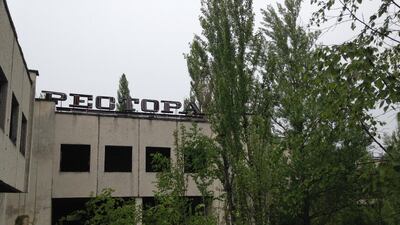
One of Pripyat’s 27 restaurants and cafes, left to the elements since 1986. -
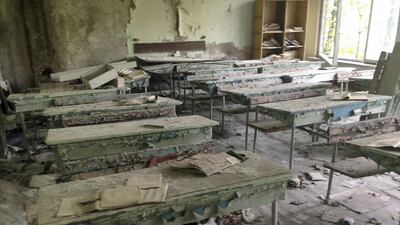
The UN says more than 6,000 cases of thyroid cancer were reported among children from Ukraine, Russia and Belarus up to 2005, 'most likely caused by radiation exposures shortly after the accident'. -
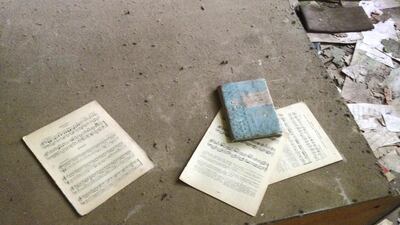
Classrooms were abandoned as the Soviet authorities ordered people to leave the Chernobyl area. Residents were told they would be leaving for three days, but officials later decided the area would remain empty. -
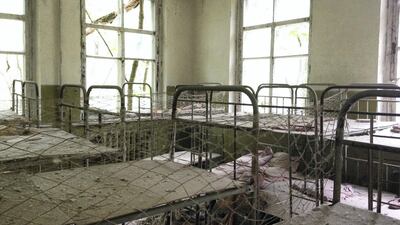
This nursery was one of 15 which educated almost 5,000 young children across the area. -
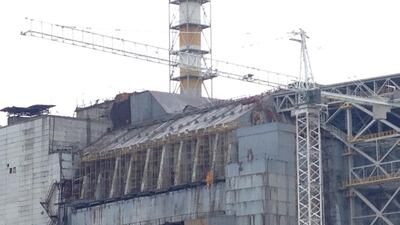
The sarcophagus over reactor number four at Chernobyl was designed and built in 1986 to keep in 740,000m3 of radioactive debris and contaminated soil. In November 2016 the sarcophagus itself was covered in the €1.5 billion ($1.49bn) Chernobyl New Safe Confinement project. -
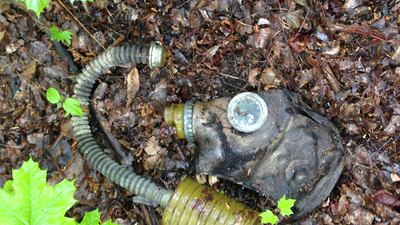
A gas mask once worn by one of thousands of Soviet 'liquidators' - a mix of civilian and military workers sent to Chernobyl after the reactor explosion. More than half a million people took part in the clean-up. -
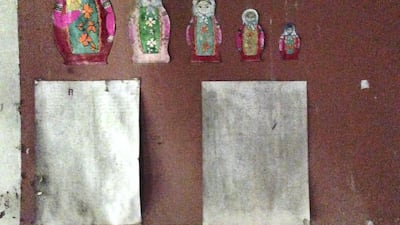
The 30km exclusion zone around the site of the blast is dotted with reminders that it was once home to thousands of people. This nursery was abandoned on April 27, 1986. -
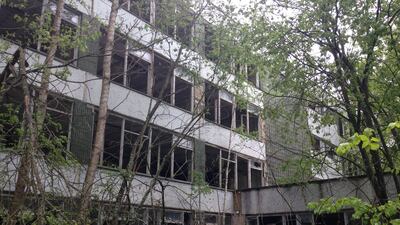
Abandoned buildings in Pripyat remain officially out of bounds, but some people – a mix of former residents, villagers, adventurers and mere loners – have returned to live inside the 30km 'dead zone'.


The departing technical staff have been replaced by Ukrainian colleagues who are based in the nearby town of Slavutych, the IAEA said.
"The new work shift ... includes two supervisors instead of the usual one to ensure that there is back-up available on the site, the regulator said."
The IAEA said the Ukrainian regulator claimed an agreement had been reached on how to organise staff rotations.

