


Extremist group Boko Haram on Tuesday claimed responsibility for the abduction of hundreds of pupils in northwest Nigeria.
"I am Abubakar Shekau and our brothers are behind the kidnapping in Katsina," said the leader of the group in a voice message.
The abductions have sparked global outrage and brought back memories of the 2014 abduction of almost 300 schoolgirls by the group in Chibok, Borno State, northern Nigeria.
Those kidnappings led to international campaign Bring Back Our Girls, which continues to this day as a large number of the girls are still missing.
Usama Aminu was one of the lucky ones. He managed to escape when gunmen abducted more than 300 pupils from his school in northwestern Nigeria. At first, he said, the boys thought the commotion was from soldiers trying to protect them. But the attackers, armed with AK-47 assault rifles, were already in the building, threatening groups who tried to leave their dormitories at the Government Science secondary school in an attack that has outraged Nigerians.
"When I decided to run they brought a knife to slaughter me but I ran away quickly," he said, sitting on a mat and speaking softly as he described how he had been in bed at the all-boys school in Kankara when he heard gunshots on Friday night.
"They said they would kill whoever is trying to escape then I began to run, climbing one rock to another through a forest," Usama said.
Many details of the raid and its aftermath remain unknown.
Police said on Friday they exchanged fire with the attackers, allowing some students to run for safety. A spokesman for Katsina state said 17 more students had been found on Monday, leaving about 320 students missing.
The president's office said on Monday the government was in contact with the armed men and was negotiating the release of the boys after security agencies had located them.
"We are making progress and the outlook is positive," Katsina Governor Aminu Bello Masari told reporters after meeting President Muhammadu Buhari, who was visiting his home state.
The governor said the president was fully committed to the rescue of the schoolchildren, after he had been criticised in Nigerian newspapers for not visiting the school.
Until Boko Haram claimed the attack, it was not clear who the gunmen were – attacks by armed gangs, widely known as bandits, are common throughout northwestern Nigeria. The groups attack civilians, stealing or kidnapping them for ransom.
Mohammed Abubakar, 15, was another pupil who got away – after trekking through farmland and a forest in the dark. He said he was among 72 boys who had reached safety in the village of Kaikaibise where he ended up.
"The bandits called us back. They told us not to run. We started to walk back to them, but as we did, we saw more people coming towards the dormitory," he told Reuters.
"So I and others ran again. We jumped over the fence and ran through a forest to the nearest village."
Mohammed, one of eight children, said he saw a number of boys being rounded up before they were marched out of the school, which has around 800 students. Seven of his friends are missing.
As he was reunited with his mother, who sells firewood for a living, he said: "I never thought I would see my parents again."
-
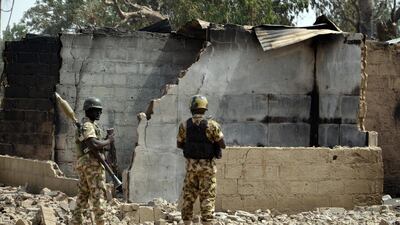
Soldiers looks at burnt house on February 4, 2016 during a visit to the village of Dalori village, some 12 kilometres from Borno state capital Maiduguri, northeastern Nigeria, after an attack by Boko Haram insurgents on the village left at least 85 people dead on January 30, 2016. - At least 85 people died when Boko Haram insurgents stormed and torched a village on January 30 near the restive northeast Nigerian city of Maiduguri, a state commissioner said on February 1, 2016. Boko Haram, which seeks a hardline Islamic state in northern Nigeria, has killed some 17,000 people and forced more than 2.6 million others to flee their homes since 2009. (Photo by STRINGER / AFP) -
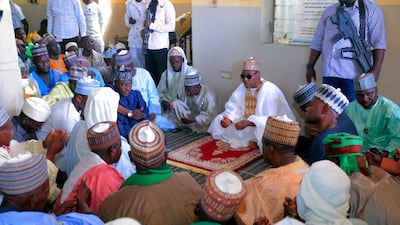
Babagana Umara Zulum, center, governor of Borno State, prays during a funeral for those killed by suspected Boko Haram militants in Zaabarmar, Nigeria, Sunday, Nov. 29, 2020. Nigerian officials say suspected members of the Islamic militant group Boko Haram have killed at least 40 rice farmers and fishermen while they were harvesting crops in northern Borno State. The attack was staged Saturday in a rice field in Garin Kwashebe, a Borno community known for rice farming. (AP Photo/Jossy Ola) -
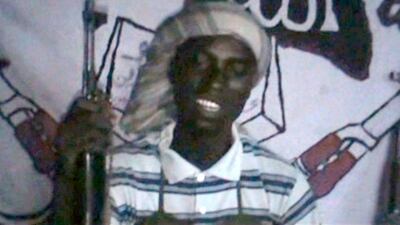
RESTRICTED TO EDITORIAL USE - NO MARKETING NO ADVERTISING CAMPAIGNS - DISTRIBUTED AS A SERVICE TO CLIENTS A videograb released on September 18, 2011 and taken from a video obtained by AFP, said to be from the sect known as Boko Haram shows a young man apparently responsible for last month's bombing of the UN headquarters in Abuja. A soft-spoken, 27-year-old smiling man said to be the UN bomber pleads with his family to understand his actions, and a vague warning is sent out to "Obama and other infidels." During much of his time on the video, he holds an AK-47 while two others lean against the wall. Two gas cannisters are on the floor at his feet. He is rail-thin and wears a striped, polo-style shirt, a turban and what looks to be a suicide vest. AFP PHOTO (Photo by - / AFP) -
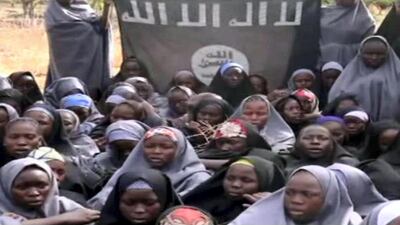
A screengrab taken on May 12, 2014, from a video released by Nigerian Islamist extremist group Boko Haram obtained by AFP shows girls wearing the full-length hijab holding a flag reading "There is no god, but Allah" and "Mohammed is Allah's prophet" at an undisclosed rural location. Boko Haram released a new video on claiming to show the missing Nigerian schoolgirls, alleging they had converted to Islam and would not be released until all militant prisoners were freed. A total of 276 girls were abducted on April 14 from the northeastern town of Chibok, in Borno state, which has a sizeable Christian community. Some 223 are still missing. AFP PHOTO / BOKO HARAM RESTRICTED TO EDITORIAL USE - MANDATORY CREDIT "AFP PHOTO / BOKO HARAM" - NO MARKETING NO ADVERTISING CAMPAIGNS - DISTRIBUTED AS A SERVICE TO CLIENTS (Photo by HO / BOKO HARAM / AFP) -

A person walks at the Government Science secondary school in Kankara district, after it was attacked by armed bandits, in northwestern Katsina state, Nigeria December 12, 2020. REUTERS/Abdullahi Inuwa NO RESALES. NO ARCHIVES -
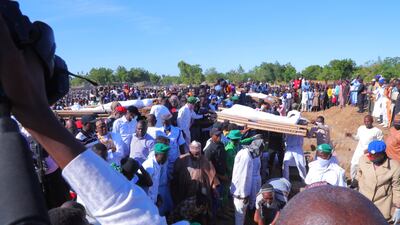
Funeral for victims of rice and fishermen farmers that were killed by suspected Boko Haram in Zaabarmar, Borno, Nigeria, Sunday, Nov 29, 2020. Suspected Boko Haram militants killed at least 40 rice farmers and fishermen while they were harvesting crops in Nigeria's northern Borno State, officials said. (AP Photo/Jossy Ola) -
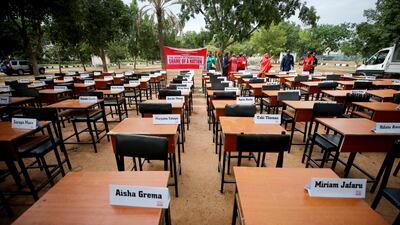
FILE PHOTO: Names of missing Chibok school girls kidnapped by Boko Haram insurgency five years ago are displayed during the 5th year anniversary of their abduction, in Abuja, Nigeria April 14, 2019. REUTERS/Afolabi Sotunde/File Photo -
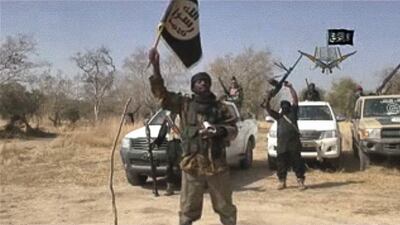
A screen grab made on January 20, 2015 from a video of Nigerian Islamist extremist group Boko Haram obtained by AFP shows the leader of the Islamist extremist group Boko Haram Abubakar Shekau holding up a flag as he delivers a message. AFP -
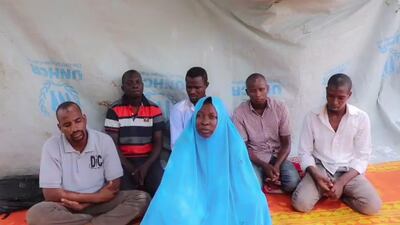
A screen grab taken from a video released in July by ISWAP purportedly shows a female aid worker from the NGO Action Against Hunger and five male colleagues kidnapped in an attack in north-east Nigeria. AFP -
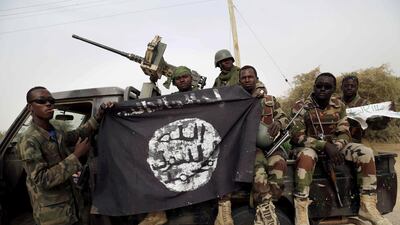
Nigerian soldiers hold the extremist group's flag in the retaken town of Damasak. Reuters


Despite the measures taken to find the boys and track down the assailants, there was growing anger at the precarious security situation in the country. On Monday, #BringBackOurBoys was trending on Twitter.
Late last month, extremist militants killed scores of farmers in north-eastern Borno State, beheading some of them.
And in October the country was gripped by some of the worst civil unrest since its return to civilian rule in 1999, following weeks of largely peaceful protests against police brutality in which several demonstrators were shot dead.
Oby Ezekwesili, a former government minister and campaigner who organised the Bring Back Our Girls Movement after the Chibok abductions, said the insecurity that led to the latest abduction was the product of poor governance.
Since the abductions, about half of the girls have been found or freed, dozens have been paraded in propaganda videos and an unknown number are believed to have died.

