

Australia's prime minister has dismissed calls to publicly demand that the US drop its prosecution of Julian Assange after the WikiLeaks co-founder's wife expressed hopes the government in Canberra would intervene.
Anthony Albanese, who was elected last month, refused to say whether he had discussed the case with President Joe Biden after the UK ordered the Australian citizen's extradition on spying charges last week.
“There are some people who think that if you put things in capital letters on Twitter and put an exclamation mark, that somehow makes it more important. It doesn't,” Mr Albanese said on Monday.
“I intend to lead a government that engages diplomatically and appropriately with our partners.”
The Australian government has been under pressure to come to Assange's aid over the case, which his supporters say amounts to a political attack on actions protected by the US constitution.
Mr Albanese's comments come after Australian citizen Assange's wife earlier on Monday urged the Government to urge its “closest ally” to “bring this matter to a close”.
In an interview with the Australian Broadcasting Corporation's Radio National, Stella Assange said the case against her husband was an “aberration” that criminalised journalism.
Ms Assange, who has two children with the WikiLeaks co-founder whom she married in London's Belmarsh prison in March this year, said she believed there had been signs of progress in Australia's handling of the case since the election of the Labour leader last month.
“There's definitely a shift,” she said of the new government's approach. “It feels like we've been running a marathon for a long time … But now it feels like we have many people running alongside us and we might see the finish line.”
Ms Assange repeated concerns she has voiced about her husband's physical health, which is said to have deteriorated dramatically over the three years he has been detained in Belmarsh.
“It's a nasty environment and it would deteriorate anyone's health but he was already in a bad health situation when he entered the prison,” she said. Her husband suffered a “mini stroke” in October, she said.
“So his health was in decline and we're extremely worried that he will at any moment have a catastrophic health episode inside Belmarsh prison without the ability to get emergency treatment, because that's the nature of prisons, basically,” she said.
Assange is wanted by the US on 18 counts, including a spying accusation, after his organisation published confidential military records and diplomatic cables. If convicted of breaching the Espionage Act, he faces up to 175 years in jail.
Following the UK Home Secretary Priti Patel's signing on Friday of an order to extradite Assange to the US, reports emerged in Australian media that the newly elected Albanese government was lobbying its US counterparts behind the scenes to have him freed.
In a statement, the country's Department of Foreign Affairs and Trade said it was continuing to provide consular assistance to Assange, but could not intervene.
It also added that Assange's case had “dragged on for too long and that it should be brought to a close”.
On Monday, Australia's Immigration Minister Andrew Giles said Mr Albanese had “made clear that enough was enough for Julian Assange and the treatment that he had been subjected to” in the case.
He has spent more than three years in prison after spending years in the Ecuadorean embassy, where he had been living since 2012.
Jennifer Robinson, a lawyer for Assange, said in London on Friday that his legal team would be appealing against Ms Patel's decision to grant his extradition.
Julian Assange case through the years - in pictures
-
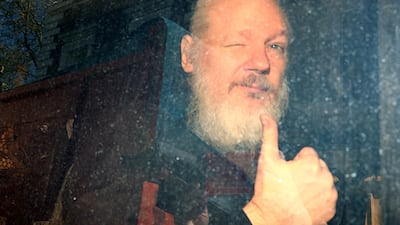
WikiLeaks founder Julian Assange arrives at Westminster Magistrates' Court after he was arrested in London in April 2019. Reuters -
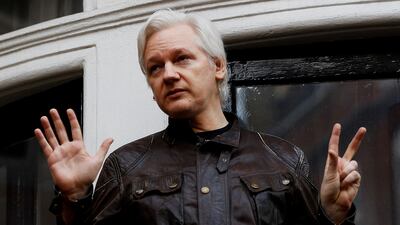
Mr Assange on the balcony of the Ecuadorian embassy in London, in May 2017. Reuters -
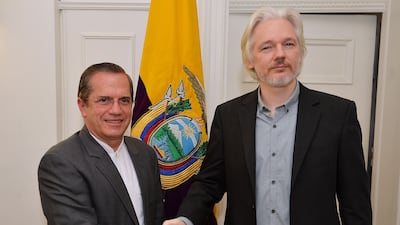
The WikiLeaks founder shakes hands with Ecuadorian Foreign Minister Ricardo Patino after a press conference, at which he confirmed he "will be leaving the embassy soon", in August 2014. Getty Images -
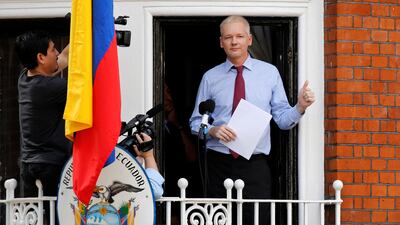
Mr Assange prepares to speak from the balcony of Ecuador's embassy in August 2012. Reuters -
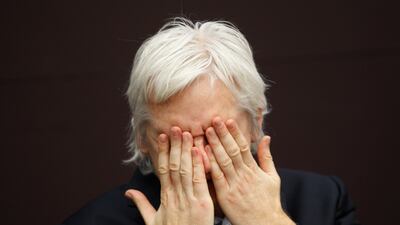
He covers his eyes during a news conference in central London, in December 2011. AP Photo -
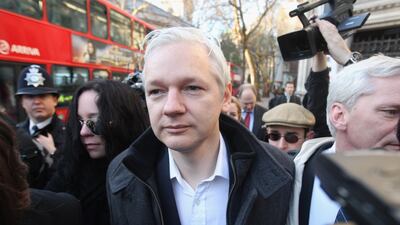
Mr Assange arrives at the High Court in London in December 2011. Getty Images -
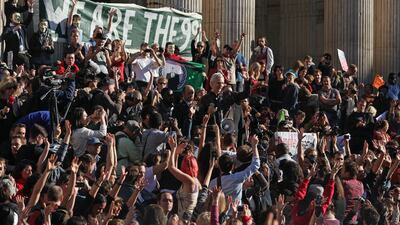
Protesters cheer as Mr Assange, centre, speaks outside St Paul's Cathedral during the 'Occupy London' protest in October 2011. Getty Images -
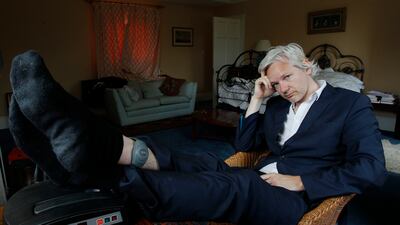
Wearing an ankle tag, Mr Assange at the house where he was required to stay in Suffolk, England, in June 2011. AP Photo -
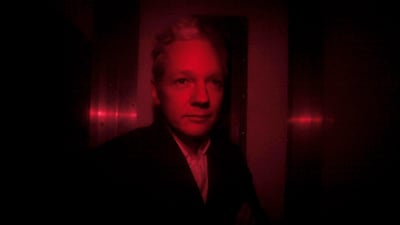
Mr Assange arrives at Westminster Magistrates' Court in a prison van with red windows in December 2010. Getty Images -
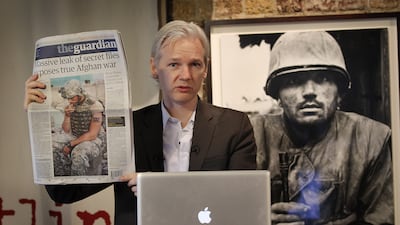
He holds up a copy of 'The Guardian' newspaper in London in July 2010, after WikiLeaks published 90,000 secret US military records. Getty Images -
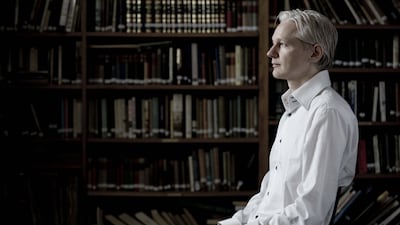
The Australian is photographed for a portrait in May 2010 in Melbourne. Getty Images -

A young Julian Assange leaves a Melbourne court after facing charges of computer hacking in May 1995. Getty Images



