• Shinzo Abe bows after stepping down as Japan's Prime Minister in Tokyo. Reuters
    Shinzo Abe bows after stepping down as Japan's Prime Minister in Tokyo. Reuters
  • Japan's longest-serving prime minister said Friday he intends to step down because of health problems. AP Photo
    Japan's longest-serving prime minister said Friday he intends to step down because of health problems. AP Photo
  • It's not the first time Shinzo Abe has left office. He stepped down as Japanese Prime Minister on September 12, 2007 after just a year. EPA
    It's not the first time Shinzo Abe has left office. He stepped down as Japanese Prime Minister on September 12, 2007 after just a year. EPA
  • He reassumed office on December 26, 2012. This file photo taken on December 29, 2012 shows Mr Abe greeting workers at the Tokyo Electric Power Company's (TEPCO) emergency operation centre inside the crippled Fukushima Daiichi nuclear power plant in Ota. AFP
    He reassumed office on December 26, 2012. This file photo taken on December 29, 2012 shows Mr Abe greeting workers at the Tokyo Electric Power Company's (TEPCO) emergency operation centre inside the crippled Fukushima Daiichi nuclear power plant in Ota. AFP
  • This file photo taken on September 17, 2014 shows Japanese Prime Minister Shinzo Abe driving a combine harvester to crop rice plants in the town of Hirono in Fukushima prefecture. AFP
    This file photo taken on September 17, 2014 shows Japanese Prime Minister Shinzo Abe driving a combine harvester to crop rice plants in the town of Hirono in Fukushima prefecture. AFP
  • Pope Francis and Shinzo Abe in 2019. AFP
    Pope Francis and Shinzo Abe in 2019. AFP
  • Then-South Korean President Roh Moo-Hyun, right, shaking hands with Japan's Prime Minister Shinzo Abe (L) during their meeting at the presidential Blue House in Seoul in 2006. AFP
    Then-South Korean President Roh Moo-Hyun, right, shaking hands with Japan's Prime Minister Shinzo Abe (L) during their meeting at the presidential Blue House in Seoul in 2006. AFP
  • With Taro Aso, as deputy PM and finance minister, second left, Mr Abe has instilled "Abenomics" to nourish the country's slowing rate growth with an ageing population. EPA
    With Taro Aso, as deputy PM and finance minister, second left, Mr Abe has instilled "Abenomics" to nourish the country's slowing rate growth with an ageing population. EPA
  • This file photo taken on October 18, 2017 shows Japan's Prime Minister and ruling Liberal Democratic Party (LDP) president Shinzo Abe (L) greeting his supporters during an election campaign appearance in Saitama. AFP
    This file photo taken on October 18, 2017 shows Japan's Prime Minister and ruling Liberal Democratic Party (LDP) president Shinzo Abe (L) greeting his supporters during an election campaign appearance in Saitama. AFP
  • This file photo taken on September 20, 2018 shows Japan’s Prime Minister Shinzo Abe attending a press conference after winning the ruling liberal Democratic Party’s (LDP) leadership election at the party’s headquarters in Tokyo. AFP
    This file photo taken on September 20, 2018 shows Japan’s Prime Minister Shinzo Abe attending a press conference after winning the ruling liberal Democratic Party’s (LDP) leadership election at the party’s headquarters in Tokyo. AFP
  • Russian President Vladimir Putin chats with Japanese Prime Minister Shinzo Abe during a visit to the Kodokan judo hall in Tokyo in 2016. AFP
    Russian President Vladimir Putin chats with Japanese Prime Minister Shinzo Abe during a visit to the Kodokan judo hall in Tokyo in 2016. AFP
  • This file photo taken on August 15, 2005 shows Shinzo Abe (C), then-deputy secretary general for Prime Minister Junichiro Koizumi's Liberal Democratic Party (LDP), following a Shinto priest after offering prayers for the country's war dead at Tokyo's controversial Yasukuni Shrine. AFP
    This file photo taken on August 15, 2005 shows Shinzo Abe (C), then-deputy secretary general for Prime Minister Junichiro Koizumi's Liberal Democratic Party (LDP), following a Shinto priest after offering prayers for the country's war dead at Tokyo's controversial Yasukuni Shrine. AFP
  • This file photo taken on September 17, 2002 shows Japanese Prime Minister Junichiro Koizumi, accompanied by then-Vice Cabinet Secretary Shinzo Abe as he leaves Tokyo International Airport for Pyongyang to meet with then-North Korean leader Kim Jong Il. AFP
    This file photo taken on September 17, 2002 shows Japanese Prime Minister Junichiro Koizumi, accompanied by then-Vice Cabinet Secretary Shinzo Abe as he leaves Tokyo International Airport for Pyongyang to meet with then-North Korean leader Kim Jong Il. AFP
  • This file photo taken on August 15, 2007 shows Japanese Prime Minister Shinzo Abe (R) bowing at the alter as Emperor Akihito (L) and Empress Michiko (C) look on during a memorial ceremony for the national war dead to commemorate the end of World War II. AFP
    This file photo taken on August 15, 2007 shows Japanese Prime Minister Shinzo Abe (R) bowing at the alter as Emperor Akihito (L) and Empress Michiko (C) look on during a memorial ceremony for the national war dead to commemorate the end of World War II. AFP
  • Japanese Prime Minister Shinzo Abe smiles in 2013. EPA
    Japanese Prime Minister Shinzo Abe smiles in 2013. EPA
  • Japan's Prime Minister Shinzo Abe, second right, wearing protective suit and mask, is briefed about tanks containing radioactive water by Fukushima Daiichi nuclear power plant chief Akira Ono after the nuclear disaster. REUTERS
    Japan's Prime Minister Shinzo Abe, second right, wearing protective suit and mask, is briefed about tanks containing radioactive water by Fukushima Daiichi nuclear power plant chief Akira Ono after the nuclear disaster. REUTERS
  • Japanese Prime Minister Shinzo Abe arrives at a debate with party leaders at Japan National Press Club in Tokyo, Japan, 03 July 2013. EPA
    Japanese Prime Minister Shinzo Abe arrives at a debate with party leaders at Japan National Press Club in Tokyo, Japan, 03 July 2013. EPA
  • This file photo taken on March 6, 2020 shows Japan's Prime Minister Shinzo Abe gesturing as he attends a upper house plenary session at parliament in Tokyo. AFP
    This file photo taken on March 6, 2020 shows Japan's Prime Minister Shinzo Abe gesturing as he attends a upper house plenary session at parliament in Tokyo. AFP
  • Japan's Prime Minister Shinzo Abe poses with child actors, members of Japanese idol group Momoiro Clover Z at a cherry blossom viewing party at Shinjuku Gyoen park in Tokyo, Japan. REUTERS
    Japan's Prime Minister Shinzo Abe poses with child actors, members of Japanese idol group Momoiro Clover Z at a cherry blossom viewing party at Shinjuku Gyoen park in Tokyo, Japan. REUTERS
  • Japanese Prime Minister Shinzo Abe pours sake for US President Barack Obama as they have dinner at the Sukiyabashi Jiro sushi restaurant in Tokyo. Reuters
    Japanese Prime Minister Shinzo Abe pours sake for US President Barack Obama as they have dinner at the Sukiyabashi Jiro sushi restaurant in Tokyo. Reuters
  • Japan's Prime Minister Shinzo Abe shakes hands with his supporters after an election campaign rally in Fukushima in 2017. Reuters
    Japan's Prime Minister Shinzo Abe shakes hands with his supporters after an election campaign rally in Fukushima in 2017. Reuters
  • Japan's Prime Minister Shinzo Abe eats a local grilled fish at the Soma Haragama fishing port in Soma, Fukushima prefecture, December 2, 2014. Reuters
    Japan's Prime Minister Shinzo Abe eats a local grilled fish at the Soma Haragama fishing port in Soma, Fukushima prefecture, December 2, 2014. Reuters
  • Japanese Prime Minister Shinzo Abe shakes hands with US President Donald Trump during their meeting in the Oval Office on February 10, 2017. Reuters
    Japanese Prime Minister Shinzo Abe shakes hands with US President Donald Trump during their meeting in the Oval Office on February 10, 2017. Reuters
  • Japanese Prime Minister Shinzo Abe, left, and President George W Bush, right, attend a joint news conference at Camp David in 2006. AP Photo
    Japanese Prime Minister Shinzo Abe, left, and President George W Bush, right, attend a joint news conference at Camp David in 2006. AP Photo
  • Japan's Prime Minister Shinzo Abe reaches out to shake hands with Chinese President Xi Jinping during a welcome ceremony for the Asia-Pacific Economic Cooperation (APEC) Economic Leaders Meeting in Beijing in 2014. AP Photo
    Japan's Prime Minister Shinzo Abe reaches out to shake hands with Chinese President Xi Jinping during a welcome ceremony for the Asia-Pacific Economic Cooperation (APEC) Economic Leaders Meeting in Beijing in 2014. AP Photo
  • Japanese Prime Minister Shinzo Abe appears as the Nintendo game character Super Mario during the closing ceremony at the 2016 Summer Olympics in Rio de Janeiro, Brazil. AP Photo
    Japanese Prime Minister Shinzo Abe appears as the Nintendo game character Super Mario during the closing ceremony at the 2016 Summer Olympics in Rio de Janeiro, Brazil. AP Photo

Japanese Prime Minister Shinzo Abe steps down due to poor health


  • English
  • Arabic

Japan's Prime Minister Shinzo Abe announced on Friday that he will resign over health problems, in a development that kicks off a leadership contest in the world's third-largest economy.

"I have decided to step down from the post of the prime minister," Mr Abe told a press conference, saying he was suffering from a recurrence of the ulcerative colitis that ended his first term in office.

He said he was receiving a new treatment for the condition, which needed to be administered on a regular basis which would not leave him with sufficient time to discharge his duties.

"Now that I am not able to fulfil the mandate from the people with confidence, I have decided that I should no longer occupy the position of the prime minister."

Mr Abe, 65, is expected to stay in office until his ruling Liberal Democratic Party can choose a successor, in an election likely to take place among the party's lawmakers and members.

There is no clear consensus on who will succeed him, with likely candidates including Finance Minister Taro Aso and chief cabinet secretary Yoshihide Suga.

Mr Abe, who stepped down as prime minister just one year into his first term in 2007, offered his apologies for the second resignation.

"I would like to sincerely apologise to the people of Japan for leaving my post with one year left in my term of office, and amid the coronavirus woes, while various policies are still in the process of being implemented," Mr Abe said, bowing deeply.

Despite reports of poor health, Mr Abe's decision comes as "a big surprise", Shinichi Nishikawa, a professor of political science at Meiji University in Tokyo, told Agence France-Presse.

"His resignation comes at a time when Japan is facing tough issues, including measures against the coronavirus," Mr Nishikawa said.

"There may be political confusion."

Mr Abe on Monday broke Japan's record for longest consecutive tenure as premier after taking office for a second time in 2012. His current term is due to expire in September next year.

______________

Who could succeed Shinzo Abe as Japan's prime minister?

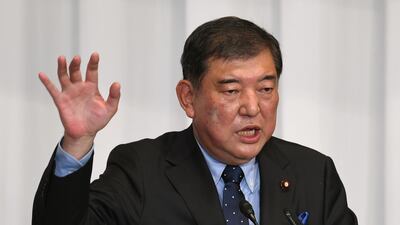
  • Japan's former defence minister Shigeru Ishiba is seen as seen as a strong orator with significant political experience. AFP
    Japan's former defence minister Shigeru Ishiba is seen as seen as a strong orator with significant political experience. AFP
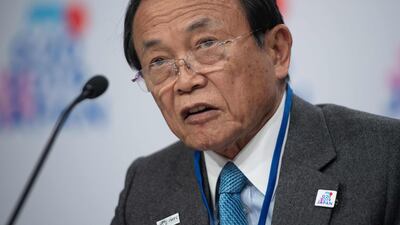
  • Japanese Finance Minister Taro Aso became prime minister in 2008 but stepped down after the Liberal Democratic Party suffered a historic defeat the following year. AFP
    Japanese Finance Minister Taro Aso became prime minister in 2008 but stepped down after the Liberal Democratic Party suffered a historic defeat the following year. AFP
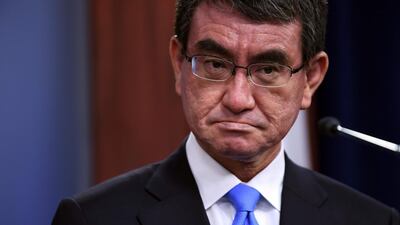
  • Defence Minister Taro Kono formerly served as Japan's foreign minister and is a passionate opponent of nuclear power. AFP
    Defence Minister Taro Kono formerly served as Japan's foreign minister and is a passionate opponent of nuclear power. AFP
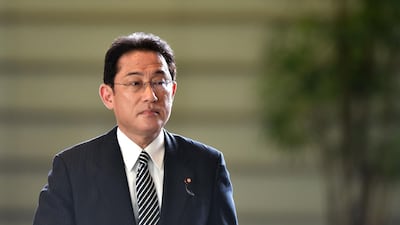
  • Fumio Kishida, also a former foreign minister, currently serves as policy chief in the Liberal Democratic Party. AFP
    Fumio Kishida, also a former foreign minister, currently serves as policy chief in the Liberal Democratic Party. AFP
  • Japan's Cabinet Secretary Yoshihide Suga is a self-made politician and trusted adviser to Prime Minister Shinzo Abe. AFP / JJiji Press
    Japan's Cabinet Secretary Yoshihide Suga is a self-made politician and trusted adviser to Prime Minister Shinzo Abe. AFP / JJiji Press

______________

His first stint as prime minister from 2006 to 2007 was cut short due to ulcerative colitis, an intestinal disease that can cause stomach pain, diarrhoea and extreme fatigue.

The Liberal Democratic Party leader has been under fire for his handling of the coronavirus pandemic and scandals among party members, with his support falling to one of the lowest levels since 2012.

The prime minister has also seen his signature "Abenomics" economic policy come under increasing strain, with the country already slumping into recession even before the coronavirus crisis hit.

Still, experts had said there was little appetite within the Liberal Democratic Party for Mr Abe to depart early, especially as there is no consensus yet on his successor.

And with Japan's fragmented opposition so far unable to capitalise on the government's falling approval ratings, there had appeared to be little immediate pressure on him to step down.