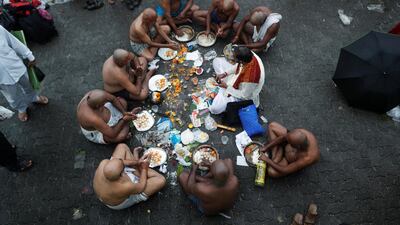
India’s leading health experts say the coronavirus is spreading like wildfire as the number of cases in the country tops five million, despite government claims that it is making all possible efforts to mitigate the spread of infection.
In recent weeks there has been a huge surge in the number of infections, with confirmed cases close to 100,000 a day of late, making India the second most affected country after the US.
India imposed a lockdown in March to control the spread of the virus, but floundered as the economy slumped despite initial success containing the pandemic.
Case numbers have doubled since mid-August, with more than two million recorded in less than a month and the death toll now topping 82,000.
The trend raises fears that India, with its 1.3 billion people, shaky healthcare system and crisis-hit economy, will crumble under the flood of cases with hospitals unable to cope with the onslaught.
The way the country started reopening in May and June, and the full withdrawal of the lockdown, "actually gave rise to a rapid spread of the virus with the free movement of people", Jayaprakash Muliyil, India's leading epidemiologist and chairman of the scientific advisory committee at the National Institute of Epidemiology, told The National.
As the numbers soar, the country’s health system is expected to reach a tipping point in coming months.
-

Health workers check the temperature of a resident at a housing society in Mumbai during a screening campaign for the coronavirus in India's financial capital. Reuters -
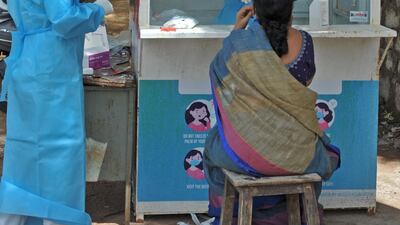
A health worker collects a swab sample of a woman at a government free testing centre in Hyderabad on July 17, 2020. AFP -
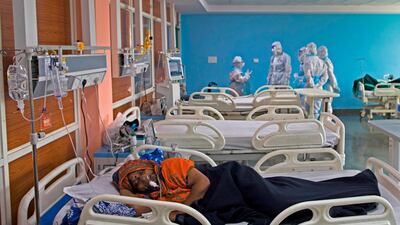
A Covid-19 patient lies on a bed at the Intensive Care Unit of the Sharda Hospital in Greater Noida, near India's capital New Delhi. Coronavirus cases in India passed one million on July 17, 2020 as authorities struggle to check the spread of the deadly pandemic across the world's second-most populous nation. AFP -

People queue to collect their Covid-19 test results at a hospital in Amritsar on July 17, 2020 as India's confirmed coronavirus cases passed one million. AFP -
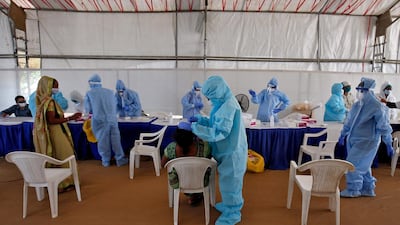
A healthcare worker takes a swab from a woman for a rapid antigen test at a check-up point in Ahmedabad, India. Reuters -
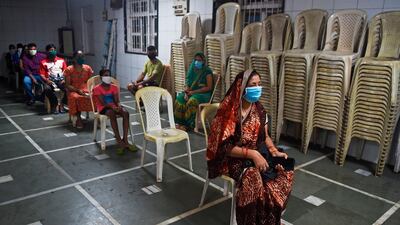
People wait for their turn at a coronavirus testing centre in Mumbai on July 17, 2020. AFP -
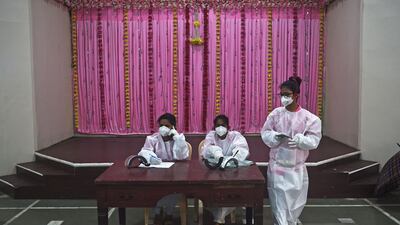
Medical volunteers wait to register people for coronavirus tests at a marriage hall temporarily converted into a testing centre, in Mumbai on July 17, 2020. AFP -
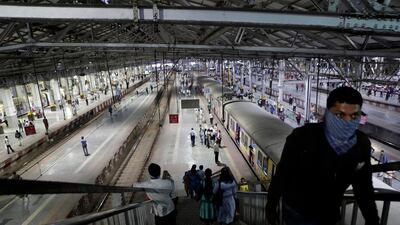
A passenger leaves a platform at the usually crowded Chhatrapati Shivaji Maharaj Terminus train station in Mumbai. AP Photo -
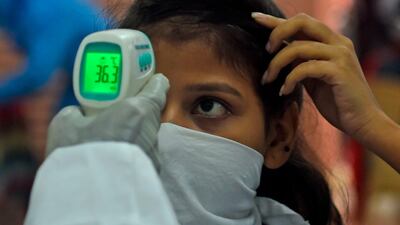
A medical volunteer takes temperature reading of a woman at a coronavirus testing centre in Mumbai on July 17, 2020. AFP


In Mumbai, the financial capital, there were no intensive care beds available this week at any of the top hospitals. In New Delhi, an average of 4,600 new cases were reported in the first week of September. To cope with the surge, the state government asked private hospitals to reserve hundreds of beds for coronavirus cases.
Health experts believe the spurt was largely caused by the rush to open the economy and a lax public attitude regarding precautions. India had just 500 cases when Prime Minister Narendra Modi imposed the world’s most stringent lockdown on March 24.
Government data shows that GDP contracted 23.9 per cent on year in the quarter from April to June, the worst performance in four decades.
“The anxiety to revive the economy ... rapid opening of cities, shopping areas and malls, has actually made many people somewhat liberal in their attitude to large social and religious gatherings,” said K Srinath Reddy, president of the Public Health Foundation of India.
“Ending lockdown gave people the impression that the threat had passed.”
Government officials say the rapid rise in infections is because of increased testing, but Mr Reddy said “cases are increasing because of viral spread and testing is just revealing that”.
India is also doing sero surveys – testing blood samples for the presence of Covid-19 antibodies – to keep track of the infection rate.
On Thursday, the Indian Council of Medical Research released a survey paper that showed the country potentially had as many as 6.4 million infections in the May and June period.
The research also revealed that of the total infections, 860,000 cases were present in the districts deemed as having a zero caseload at the time, suggesting the under-detection of infections.
A similar survey by the federal government found nearly 29 per cent of the New Delhi's 20 million population were carrying antibodies.
The government launched a contact-tracing application to help users lower the risk of coming into contact with an infected person. Despite initial success – there were more than 150 million downloads – interest tailed off owing to a lack of efficacy and concerns over data privacy.
Government also made the use of masks mandatory but large sections of society have disregarded that directive and social distancing guidelines.
State authorities have also put their own rules in place, such as local lockdowns and mandatory quarantine for travellers.

