


The first typhoon of the Philippines’ brutal rainy season brought the capital of Manila to a virtual standstill, forcing hundreds of thousands to flee to safety. At least 38 people have been killed so far.
-

-
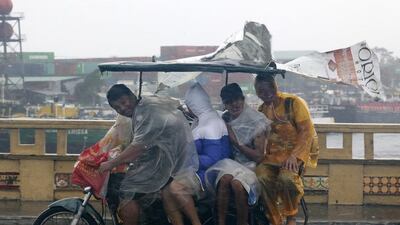
The Southeast Asian archipelago is often the first major land mass to be struck after storms build above the warm Pacific Ocean waters. Dennis Sabangan/EPA -
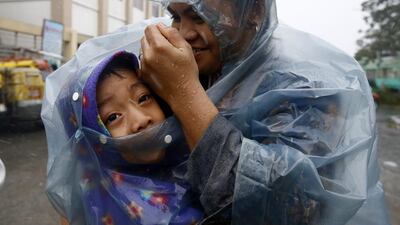
The storm weakened slightly as it cut across the main island of Luzon and exited into the South China Sea on Wednesday afternoon, but forecasters warn it may pick up strength again as it tracks towards southern China. Dennis M Sabangan/EPA -

The eye of the storm just missed Manila, home to more than 12 million people. Romeo Ranoco/Reuters -

Ferocious winds tore roofs off houses, overturned cars and ripped trees out of the ground in Manila. Bullit Marquez/ AP Photo -
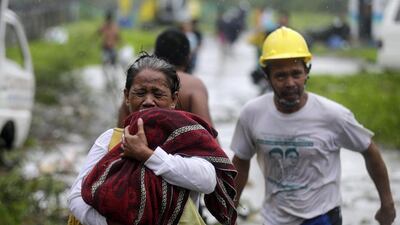
Power in many areas, including the business district of Makati, was cut just after dawn as branches were torn off trees and electricity lines snapped. Francis R Malasig/EPA -
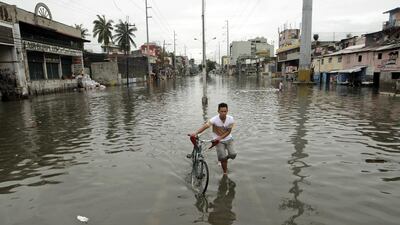
A Filipino pushes his bike in a flooded street in Manila, Philippines. Ritchie B Tongo/EPA -
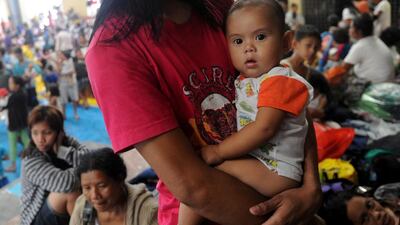
People gather at a basketball arena used as a shelter after they fled to safety from their homes in Manila on July 16, 2014. Jay Directo/AFP Photo -
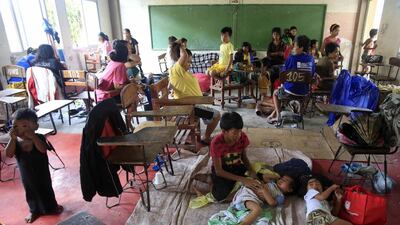
Across the country, about 350,000 people fled their homes and took shelter in evacuation centres, according to the disaster management council. Romeo Ranoco/Reuters -
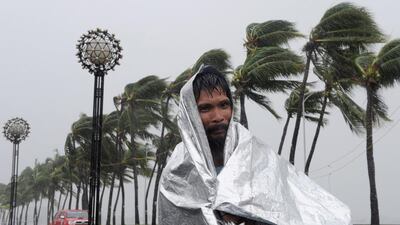
A man walks through heavy wind and rain as Typhoon Rammasun barrels across Manila on July 16, 2014, shutting down the Philippine capital on July 16. Jay Directo/AFP Photo -
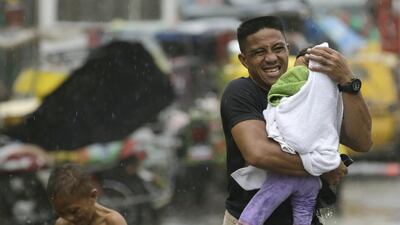
Residents at the slum community of Baseco evacuate to safer grounds at the onslaught of Typhoon Rammasun, locally known as Glenda, which battered Manila on July 16, 2014. Bullit Marquez / AP Photo -
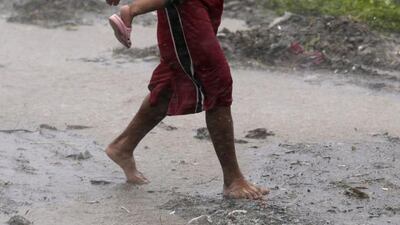
The Philippines is hit by about 20 major storms a year, many of them deadly. Francis R Malasig/EPA -
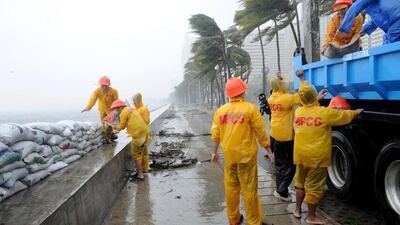
Rammasun was the first typhoon to make landfall since this year’s rainy season began in June. Jay Directo/AFP Photo
In pictures: Typhoon Rammasun batters the Philippines
Most popular today

