

Independent candidates in Pakistan backed by jailed former prime minister Imran Khan surged ahead of the party of former leader Nawaz Sharif in national elections after the polling authority declared provisional results for 250 of the 266 seats in the lower house of Parliament.
Candidates backed by Khan’s Pakistan Tehreek-e-Insaf party were ahead with 99 seats, while the Pakistan Muslim League (Nawaz) party of three-time prime minister Mr Sharif had 71 seats, the Election Commission of Pakistan announced on Friday evening.
The Pakistan People's Party of Bilawal Bhutto Zardari, the son of assassinated prime minister Benazir Bhutto, had won 53 seats.
The final results were expected by Friday night. The election for one seat was postponed because of the death of a candidate.
The results were delayed after the vote was marred by sporadic violence and cuts to mobile phone services.
Pakistan’s key KSE-100 Index of shares fell the most in more than a month.
The main focus of the vote is on candidates backed by Khan, whose party won the last national election, and Mr Sharif, who is said to be backed by the country's powerful military.
A party needs 133 seats in parliament to secure a simple majority. If no party wins an outright majority, the one with the biggest share of the seats can form a coalition government.
The United States, Britain and the European Union on Friday separately expressed concerns about Pakistan's electoral process.
The US and the EU both mentioned allegations of interference, including arrests of activists, and added that claims of irregularities, interference and fraud should be fully investigated.
British foreign minister David Cameron's statement noted "serious concerns raised about the fairness and lack of inclusivity of the elections."
Addressing a rally in Lahore on Friday evening, Mr Sharif said he was looking co-operate with all parties to form a coalition government.
Mr Sharif acknowledged that, telling supporters “we don’t have enough of a majority to form a government without the support of others and we invite allies to join the coalition so we can make joint efforts to pull Pakistan out of its problems.”
“We will have to sit together to settle all matters,” he said.
He said his brother Shehbaz Sharif would be holding talks with leaders of the Pakistan People's Party (PPP), the Muttahida Qaumi Movement and other parties.
The main goal of all parties should be to solve the people's problems, particularly high inflation, he said.
Independents backed by Khan were also leading in the provincial assembly polls for Khyber Pakhtunkhwa, his home province, and in Punjab, a stronghold of Mr Sharif's party.
“The PTI has successfully used Imran Khan's’ imprisonment to boost sympathy and support for the party,” political analyst Sarfraz Khan told The National.
He said the elected independent candidates had two options: to either join a political party or remain as independent members in the National Assembly.
“If they remain independent, they will remain in the opposition and not be able to form government, despite being in majority. But if they join a political party, they could become part of the government.”
However, Haroon Rasheed, an analyst based in the capital, Islamabad, said the independent candidates could decide the next minister by forming an alliance with smaller parties.
“It remains to be seen if PML [Pakistan Muslim League] and PPP decide to form a coalition government, or if the independents outnumber them by joining up with smaller parties,” Mr Rasheed said.
“It will become clear in a day or two as to which bloc is able to form a government. But even if PML-N and PPP form a government, it would face a strong opposition” from the independents, he added.
Qaiser Jamal, leader of the Pakistan Tehreek-e-Insaf party in the Kohat district of Khyber Pakhtunkhwa province and a former member of the National Assembly, told The National that his party aimed to overcome the action taken against its leaders and would be a powerful stakeholder in the next government.
PTI candidates ran as independents after the Supreme Court and Election Commission said they could not use the party symbol – a cricket bat.
In Pakistan, parties use symbols to help illiterate voters find them on the ballots. PTI could not hold rallies or open campaign offices, while its online events were blocked. The party says such measures were unfair.
“It was a challenge for us to contest elections without the use of our traditional symbol, the cricket bat, on which we had worked for decades,” Mr Jamal said.
The Election Commission said earlier that an “internet issue” was the reason for the delay in results being announced. Mobile phone services, which were suspended by before the election on Thursday, were partially restored.
Authorities said the suspension was carried out as a security measure. Services were cut by “law and order agencies” after violence on Wednesday in which 26 people were killed, Reuters quoted Chief Election Commissioner Sikandar Sultan Raja as saying.
-
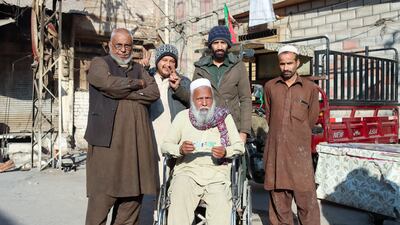
A disabled man being taken to cast his vote in Peshawar, Pakistan. Musa Kamal for The National -
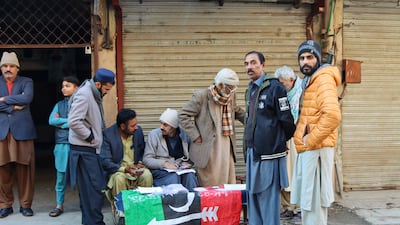
A Pakistan People's Party awareness camp outside the polling station in Peshawar. Musa Kamal for The National -
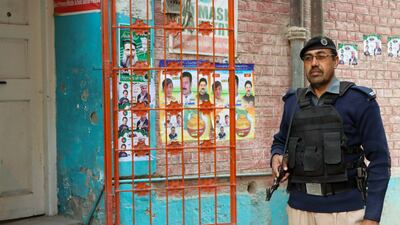
A security guard on duty outside the polling station in Peshawar. Musa Kamal for The National -
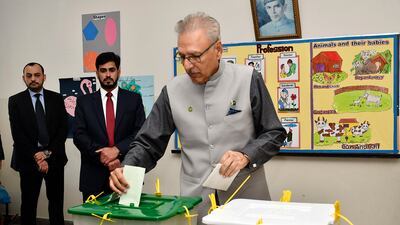
Pakistan's President Ariv Alvi casts his vote at a polling station in Karachi during parliamentary elections. AP -
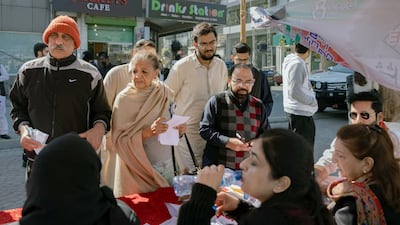
Voters register at a Pakistan Tehreek-e-Insaf voting registration camp in Lahore, Pakistan. Getty Images -
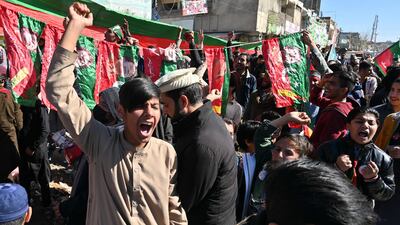
Activists from the Pakistan Tehreek-e-Insaf party outside a polling station in Islamabad. AFP -
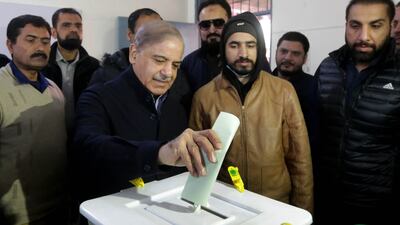
Shehbaz Sharif, centre, former prime minister and president of Pakistan Muslim League Nawaz casts his ballot in Lahore. EPA -
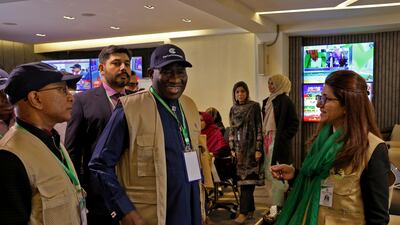
Former Nigerian president Goodluck Jonathan, who is leading a Commonwealth monitoring team, visits the Election Commission of Pakistan's election monitoring control centre, where complaints are received and checked, in Rawalpindi. Reuters -
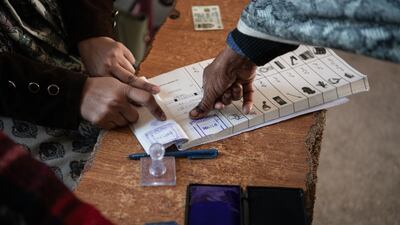
A Pakistani voter at a polling station in Wahgrian. Getty Images -
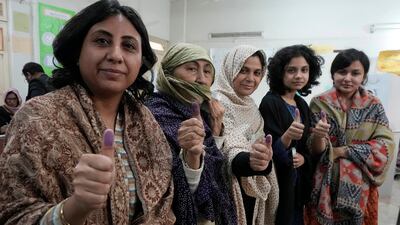
Women show their ink-stained thumbs after voting in Karachi. AP -
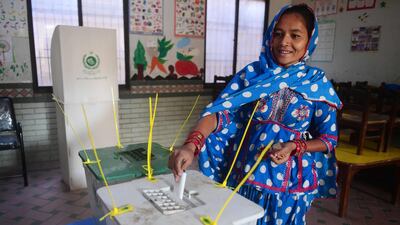
A woman casts her ballot at a polling station during Pakistan's national elections. AFP -
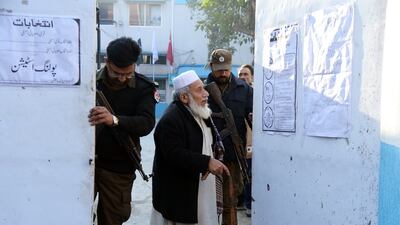
Pakistani security officials guard a polling station in Lahore. EPA -
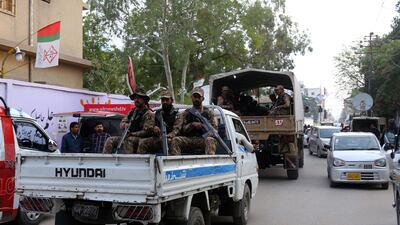
Pakistani soldiers patrol near polling stations in Karachi. EPA -
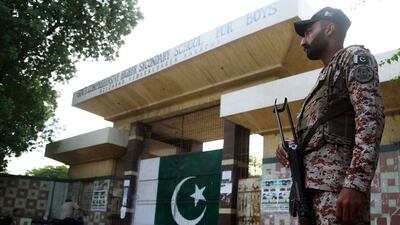
A Pakistani soldier stands guard outside a polling station in Karachi. EPA -
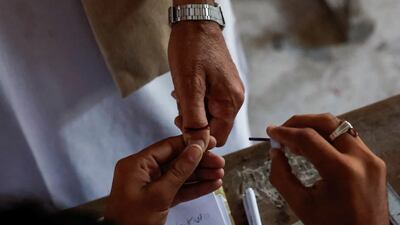
A voter in Karachi gets an ink mark on his thumb after casting his vote during the general election. Reuters -

A voter leaves the ballot booth in Karachi. Reuters -
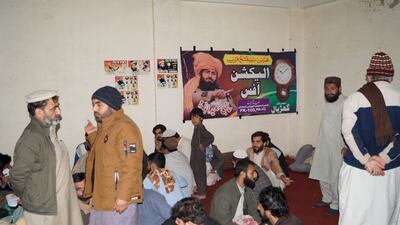
Supporters of Saeed Anwar Mehsud, an independent candidate from South Waziristan, sit inside their campaign office in Dera Ismail Khan. Reuters -
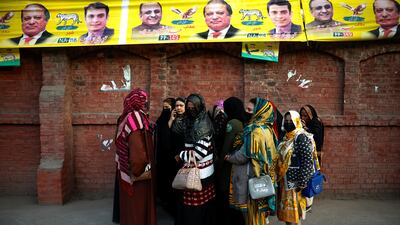
Women wait outside a polling station for voting to begin in Lahore. Reuters -
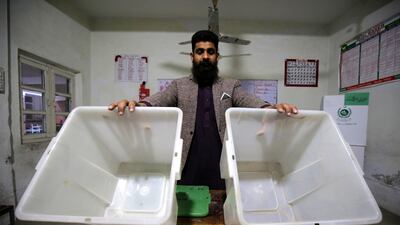
A polling officer sets up a polling station in Peshawar on the eve of the general election. EPA -
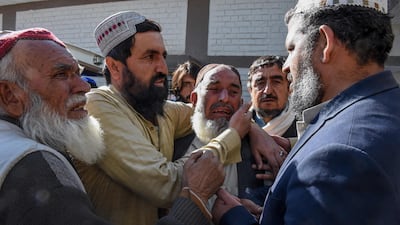
Relatives mourn the death of victims after a bomb blast outside the office of an independent candidate in Pishin district, about 50km from Quetta. AFP -
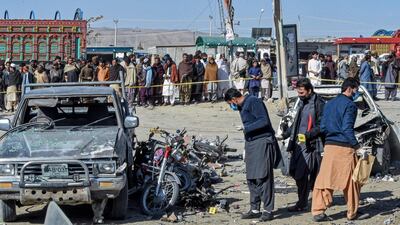
Officials collect evidence at the site of the bomb blast. AFP -
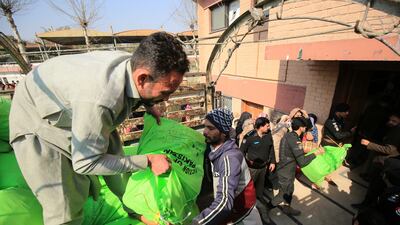
Election commission workers unload election materials at a distribution centre in Khyber-Pakhtunkhwa province. EPA


Thousands of troops were on the streets and at polling stations across the country on Thursday. The borders with Iran and Afghanistan were closed temporarily as security was increased in an effort to ensure peaceful polling.
But despite the heightened security, 12 people, including two children, were killed in 51 bomb blasts, grenade attacks and shootings by militants, mostly in western provinces, the military said in a statement.
The dead included five police killed in attacks in the Kulachi area of Dera Ismail Khan, Khyber Pakhtunkhwa, authorities said. Two children died in a blast outside a women's polling station in Balochistan province.
UN Secretary General Antonio Guterres expressed concern about the violence and the suspension of mobile services, according to a statement.
With additional reporting by Muhammad Shahid

