


Alef, 32, was once one of the lucky ones. Few men in Afghanistan can get a passport these days – such is the scale of the country’s economic crisis – but he has one, which he used frequently to travel from his village, Sia Ab, near the western city of Herat, to nearby Iran to work as a labourer.
But it was that very privilege that prevented him from returning home on the morning of October 7, when relatives called him shortly after 11am to say a massive earthquake had struck, and that Sia Ab was near the epicentre.
He did not know at the time that his village, which had been home to more than 1,000 people, was almost completely destroyed.
Alef’s passport was kept by Iranian border police when he had crossed six weeks earlier, and as soon as he heard about the earthquake, he tried to get it back. He was still waiting by sunset, when he received another call informing him his entire family was dead. Alef spent that night sleeping rough by the border post, his mind utterly consumed by the worst news anyone could ever receive.
resident of Sia Ab village
“I finally reached the village two days later,” he told The National. “The excavator was still removing bodies and many of them were in pieces.
“The bodies hadn’t been buried yet when I arrived. I managed to see two of my little girls – one was 13 and the other five. But I couldn’t see my wife, my boy and my two other daughters. Their bodies were not identifiable.”
Sitting on the floor of his tent, he wears a stoic expression. “We were seven. Only I am left now – just me and God above.”
Alef’s pain is shared by nearly all of the village’s men. More than a tenth of Sia Ab’s population died in the earthquake. Another 100 were injured, many critically. The victims were largely women and children, as most of Sia Ab’s men work outside in the fields or travel for their jobs.
Abdul Latif, 33, was also in Iran on the morning of the earthquake. He, too, had to spend that night sleeping near the border and returned home the next day to find he had lost his mother and his only daughter, 13-year-old Ruqayya.
“You can see with your own eyes,” he says, standing on the pile of rubble that used to be his house. “It’s a special pain, losing your daughter. It was God’s wish that I would only have one. Now I don’t have any children. But I have to say thanks that God gave her to me before he took her back.”
Sia Ab’s victims have been buried in a fresh cemetery on a hilltop nearby. The steep walk up the slope is a daily ritual for Alef, Abdul Latif and the other men. When The National visited, one elderly man, Abdul Rasul, was fighting a windstorm that swept into the area to make his way up to where his three daughters are now buried. “I saw the walls fall on them,” he says, his eyes welling up. “And now they are in the ground.”
The National visited Sia Ab on October 31 to find the village reduced to rubble, the villagers scattered across the barren hills of the surrounding landscape in tents provided by the UN and international aid agencies. Only the school remains standing.
As UN workers carry out welfare checks, the wind batters the tents and sends everyone indoors for cover. In the shelter of a converted shipping container, officials from the World Food Programme told The National discussions were under way with Afghanistan’s “de facto authorities” (DFA) – the term the UN and many aid groups use to refer to the country’s Taliban rulers – to plan for the village’s reconstruction.

When the earthquake struck, the Taliban authorities responded rapidly. The normally onerous procedures for foreign aid operations have been suspended for earthquake relief projects, says one aid worker from a major international NGO, who requested anonymity because they are not authorised to speak to the media.
“We don’t need any of the usual permits to do our relief work in the earthquake-affected areas,” the aid worker said. “Normally we face a lot of challenges and restrictions – getting permission can take up to four months. But the DFA recognises the seriousness of the situation. They have just asked us [international aid groups] to co-ordinate our activities with one another.”
“The only challenge we have faced is the DFA’s requirement that no female staff are allowed to work in the disaster area without a male escort. But we are very familiar with this restriction by now, so we were well prepared.”
-

People gather outside their homes after the US Geological Survey reported another earthquake in Herat, Afghanistan. EPA -
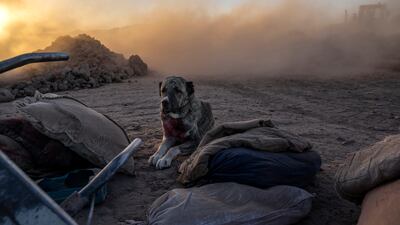
A dog waits for its owners near a house that was destroyed by an earthquake. All those in the home in the Zenda Jan district in Herat province died. AP -
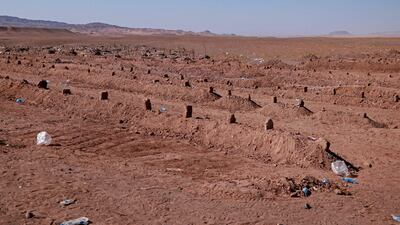
A general view of a mass graveyard after earthquake in Nayeb Rafi village, Zendeh Jan district of Herat province. AFP -
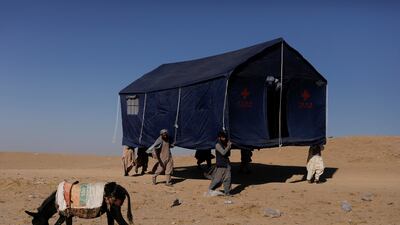
Afghan men carry a tent after the recent earthquake in the district of Zinda Jan, in Herat, Afghanistan. Reuters -
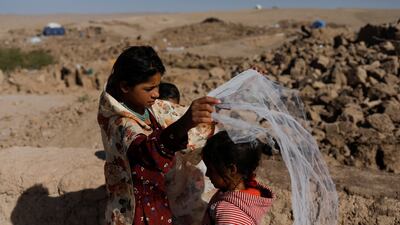
Afghan children are pictured in the quake-hit area in the district of Zinda Jan, in Herat, Afghanistan. Reuters -
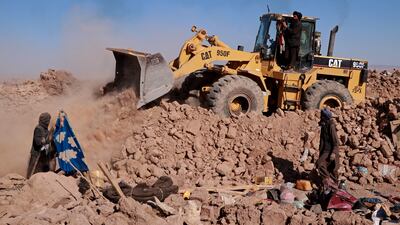
Afghan residents clear debris of damaged houses after earthquake in Nayeb Rafi village, Zendeh Jan district of Herat province. AFP -

A relative of earthquake victims faints after seeing dead bodies in Sia Ab village, Herat, Afghanistan. Mahab Azizi for The National -
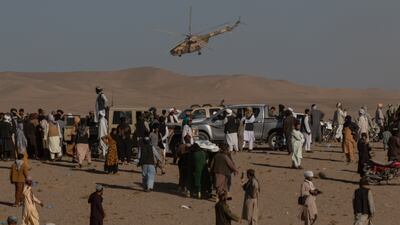
A Taliban government official arrives to attend funeral prayers. Mahab Azizi for The National -

The earthquake destroyed much of Sia Ab village in Afghanistan. Mahab Azizi for The National -

More than 2,000 people were killed in earthquakes in Afghanistan, the Taliban administration said. Mahab Azizi for The National -

A man waits for aid to arrive in the Zinda Jan district of Herat, Afghanistan. EPA -
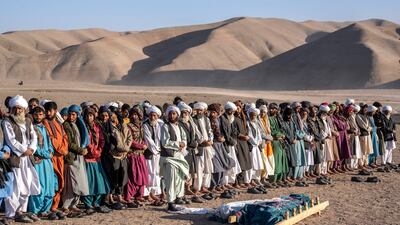
Afghans pray for relatives at a burial site after an earthquake in Zenda Jan district, Afghanistan. AP -
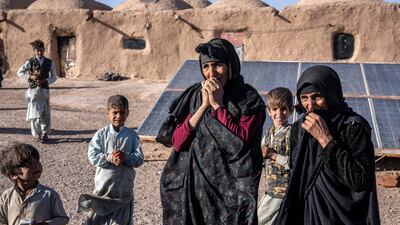
Afghan women mourn relatives killed in an earthquake in Herat province. AP -
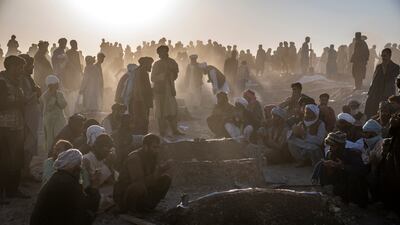
Hundreds of people were buried in a village in Zenda Jan district in Herat province. AP -
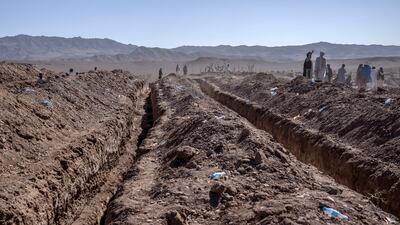
Afghans dig a trench to bury the dead in the Zenda Jan district in Herat province. AP -
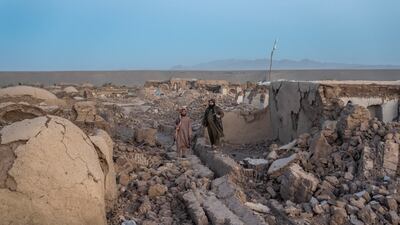
Taliban fighters at the site of an earthquake in Herat province, Afghanistan. AP -
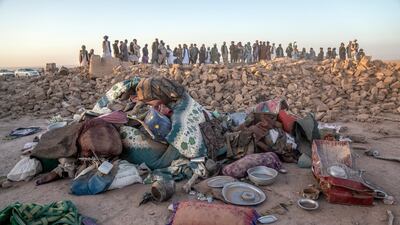
Afghan men search for victims after the earthquake. AP -
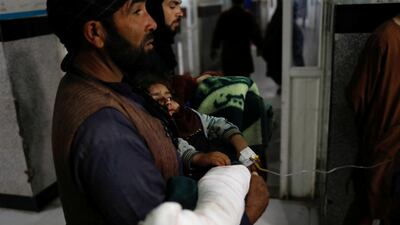
An earthquake survivor carries his child to a hospital in Herat. Reuters -
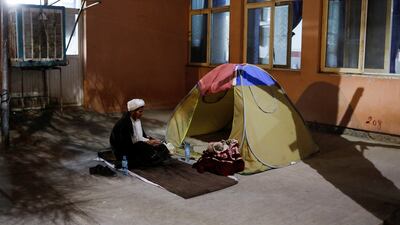
An Afghan man in a hospital following an earthquake in Herat. Reuters -
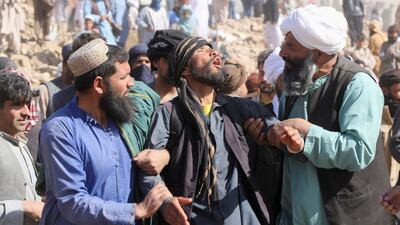
A survivor in Herat. The US Geological Survey said a series of earthquakes hit 35km north-west of the city, with one measuring 6.3 magnitude. Reuters -
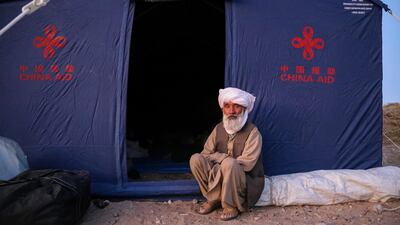
A man affected by an earthquake waits for aid in Herat. There is an urgent need for tents, medical supplies and food items. EPA -
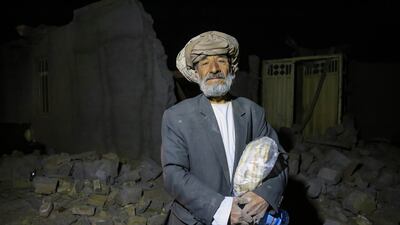
An Afghan survivor stands outside his collapsed house near Herat. EPA -

An Afghan man, at his destroyed home, waits for aid in the Zinda Jan district of Herat. EPA -
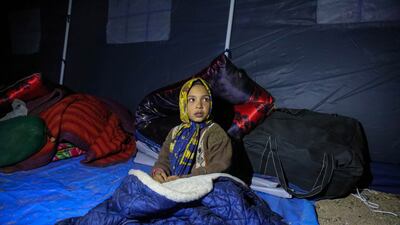
Survivors of the earthquake live in temporary shelters near Herat. EPA -
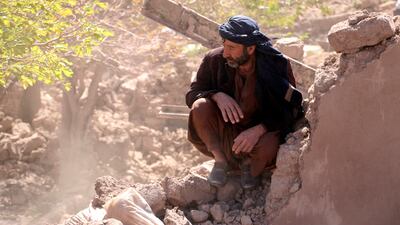
An Afghan man sits in the courtyard of his destroyed home. AP -
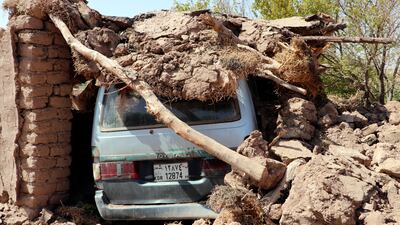
A damaged car after an earthquake in the Zenda Jan district in Herat province. AP -

People salvage their belongings as they wait for relief near Herat. EPA -
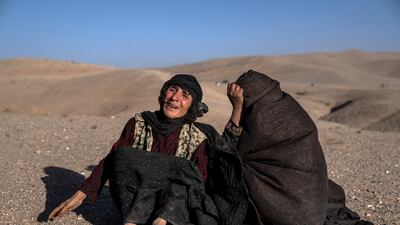
Afghan women mourn relatives killed in an earthquake at a burial site after an earthquake in Zenda Jan district in Herat province. AP -
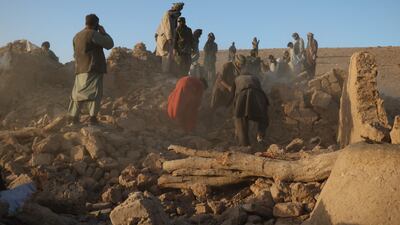
Afghan residents clear debris from a damaged house after an earthquake in the Sarbuland village of Zendeh Jan district in Herat province. AFP -
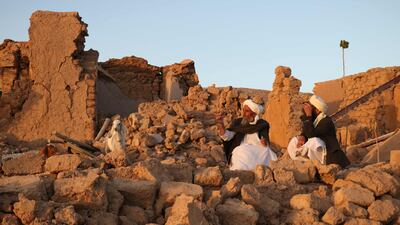
Afghan residents sit at a damaged house after the earthquake. AFP -
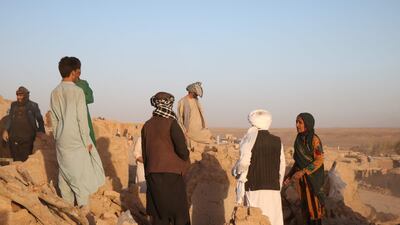
Afghan residents clear debris from a damaged house after an earthquake in the Sarbuland village of Zendeh Jan district. AFP -

People wait for relief in Herat, Afghanistan, with rescue efforts continuing. EPA -
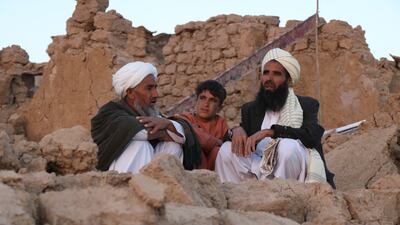
People wait for relief in Herat, Afghanistan after a 6.3-magnitude earthquake struck. EPA -
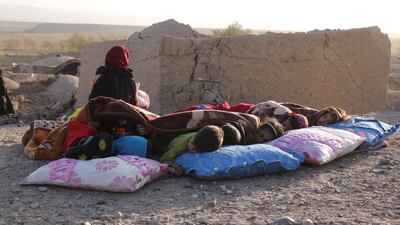
Afghan children rest under a blanket beside damaged houses after the earthquake. AFP -
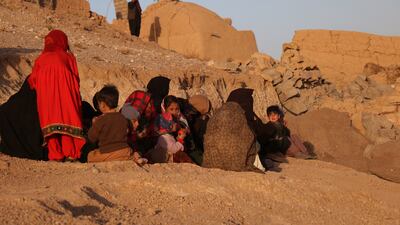
People affected by an earthquake wait for relief in Herat, Afghanistan. EPA -

The 6.3-magnitude earthquake struck 40km west of Herat city. EPA


The earthquake has not only levelled entire villages in Herat’s environs; it has upended life in Herat’s city centre and raised fears over whether the city’s famous cultural monuments are now in jeopardy.
The National visited Herat’s old city, a centuries-old medina of winding alleyways and ornate Persian architecture. At a local boys’ school that was once an ancient synagogue for the city’s former Jewish population, teachers pointed out cracks that appeared this month in the domes.
A short walk away, outside Herat’s historic blue mosque, the public square is filled with dozens of tents housing displaced families from earthquake-hit villages. The city’s public parks have been given over to the tents also, and its main streets are lined with them.
No one seems to know how long the situation will persist. Herat itself continues to suffer from aftershocks, including one that occurred in the middle of the night during The National’s visit. The manager at the hotel where The National’s reporter stayed had set up beds in the garden of the hotel restaurant, in case guests were worried about earthquakes.
Taliban authorities have allocated at least $1 million for reconstruction efforts and set up donations from Afghan citizens and small NGOs. At least $3 million has been pledged by private donors, including Azizi Bank. But funding is not the main issue.
Villagers are most concerned with their short-term survival. While families have been given rice, oil and flour by the Taliban authorities and aid organisations, those The National spoke to said they lacked equipment to cook. During The National’s visit, WFP officials discussed plans to supply ovens and gas cookers.
Reconstruction methods are also a concern. Piles of clay bricks and bags of cement have been laid out neatly on the outskirts of Sia Ab, but the challenge for the Afghan National Disaster Management Agency (Anda) and aid organisations is how to use these materials to rebuild affected villages in a way that adheres to the local vernacular but is also more earthquake-resistant than previous techniques.
An engineer working for an international NGO, who also requested anonymity as they are not authorised to speak to journalists, said Anda and aid groups had learnt many lessons from the major earthquakes that struck Paktika and Khost, in south-eastern Afghanistan, last year. It was the Taliban’s first experience with a major natural disaster since it took power in 2021.
“We can co-ordinate better with the DFA now and design buildings in the local style, but with some modifications here and there that will help.”
head of the WFP Herat office
“The biggest problem,” says Qadir Assemy, head of the WFP Herat office, “is that winter is coming quickly.” His words are interrupted by the frequent sound of stones being blown by the wind against the sides of the shipping container.
“You can see the temperatures dropping and the winds outside. Once the real winter starts, it will become impossible to build with cement.”
A delay in reconstruction means an uncertain fate for villagers – a thought that preoccupies Alef even amid his extraordinary loss.
“I’m just one man, alone now,” he says. “You could give me a plant to live off of and I’ll be fine. But those with families, with children … I don’t know how they will survive the winter. They might lose their children, too.”

