Wheat is packed into sacks outside Ahmedabad. India will give irrigation advice as a lack of winter rain threatens its wheat harvest. Reuters

India monitors threat to wheat crop amid severe heat risk


Taniya Dutta
  • English
  • Arabic

India has formed a panel to assess how temperature increases will affect its wheat crop after the federal weather agency forecast another spell of abnormal heat this year.

The country's Meteorological Department issued a warning on Monday that unusually high temperatures were being recorded in much of the country's west and north-west.

India is the world's second-biggest wheat producer after China.

The crop is planted in October and November, and harvested from March.

However, a lack of winter rain has driven up temperatures in some parts of India's northern states where wheat is mostly grown, triggering threats of a severe heatwave and crop damage.

The panel will be headed by the federal agriculture commissioner and comprise officials from the country's key wheat-growing states and government scientists who will issue advice to farmers on the adoption of micro-irrigation techniques.

India's 2022 heatwave — in pictures

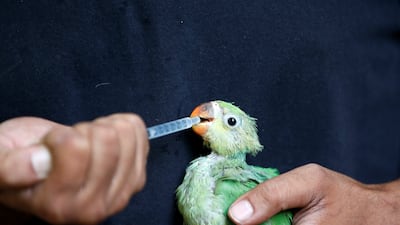
  • A parakeet is nourished with water mixed with multivitamins, after it was dehydrated during scorchingly hot weather in Ahmedabad, India. Reuters. Reuters
    A parakeet is nourished with water mixed with multivitamins, after it was dehydrated during scorchingly hot weather in Ahmedabad, India. Reuters. Reuters
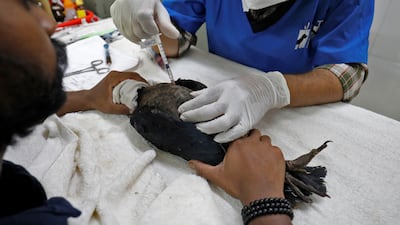
  • A vet administers an injection to an eagle at Jivdaya Charitable Trust, a rehabilitation centre for birds and animals, in Ahmedabad, where the temperature this week hit 45.8°C. Reuters
    A vet administers an injection to an eagle at Jivdaya Charitable Trust, a rehabilitation centre for birds and animals, in Ahmedabad, where the temperature this week hit 45.8°C. Reuters
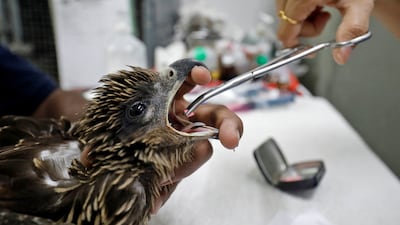
  • Birds falling from trees and the sky is a common occurrence every summer in India, but this year the instances have increased by 30 per cent. Reuters
    Birds falling from trees and the sky is a common occurrence every summer in India, but this year the instances have increased by 30 per cent. Reuters
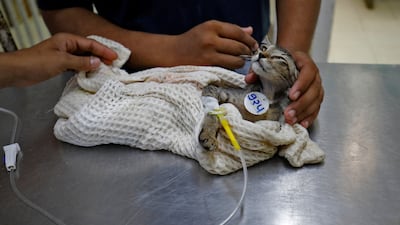
  • The Jivdaya Charitable Trust is treating birds and animals for dehydration, disorientation, fractures and other injuries due to the searing heat. Reuters
    The Jivdaya Charitable Trust is treating birds and animals for dehydration, disorientation, fractures and other injuries due to the searing heat. Reuters
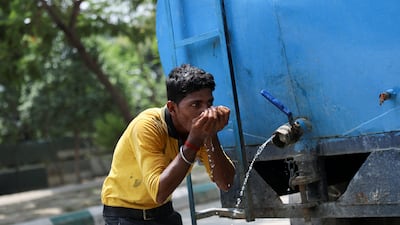
  • A labourer drinks water from a tanker at a construction site on a hot summer day in Noida. India is experiencing a heatwave in the northern and western parts of the country. Reuters
    A labourer drinks water from a tanker at a construction site on a hot summer day in Noida. India is experiencing a heatwave in the northern and western parts of the country. Reuters
  • A man cools off under a pipe of flowing water on a hot summer day in New Delhi, India. Reuters
    A man cools off under a pipe of flowing water on a hot summer day in New Delhi, India. Reuters
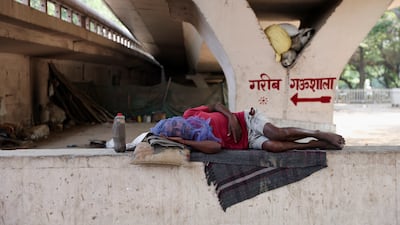
  • A man sleeps under a bridge in a bid to escape the searing heat in New Delhi. Reuters
    A man sleeps under a bridge in a bid to escape the searing heat in New Delhi. Reuters
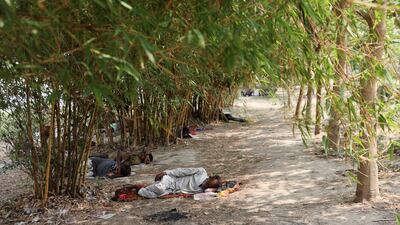
  • Men sleep in the shade on the banks of the Yamuna River. Reuters
    Men sleep in the shade on the banks of the Yamuna River. Reuters
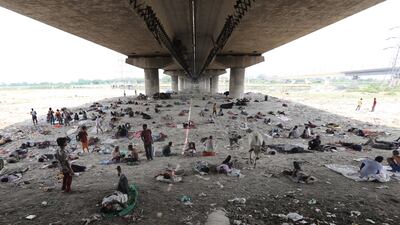
  • People shelter under a bridge from scorching heat in New Delhi. EPA
    People shelter under a bridge from scorching heat in New Delhi. EPA
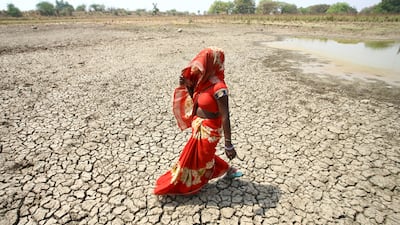
  • Cracked mud at the bottom of a dry pond on a hot day in Mauharia village in the northern state of Uttar Pradesh. Reuters
    Cracked mud at the bottom of a dry pond on a hot day in Mauharia village in the northern state of Uttar Pradesh. Reuters
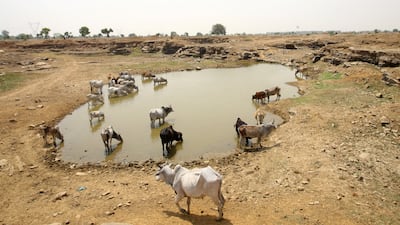
  • Cattle drink water at an abandoned stone quarry in Chipiya Abhaipur, Uttar Pradesh. Reuters
    Cattle drink water at an abandoned stone quarry in Chipiya Abhaipur, Uttar Pradesh. Reuters

Agricultural Secretary Manoj Ahuja said the committee would monitor the situation.

Last week, the average daily temperature rose to levels normally experienced in early to mid-March, according to weather officials.

The capital, New Delhi, recorded a temperature of 33.6ºC on Monday, the highest since 2006, with the mercury expected to hover around 33ºC on Tuesday.

The weather agency issued a heatwave warning for the next two days in Kutch district, in western Gujarat.

“This higher day temperature might lead to adverse effects on wheat approaching the reproductive growth period, which is sensitive to temperature. High temperature during flowering and maturing periods leads to loss in yield,” it said.

India banned wheat exports in May after a severe heatwave damaged crops and triggered a domestic shortage that pushed up prices after global supplies were disrupted as a result of Russia's invasion of Ukraine in February 2022.

It has been scorching hot across several parts of the country, with temperatures in New Delhi rising beyond 43°C, surpassing a record set last year when India had its hottest March in about 75 years.

The government has estimated a record wheat harvest of 112.18 million tonnes for this financial year


The bio

His favourite book - 1984 by George Orwell

His favourite quote - 'If you think education is expensive, try ignorance' by Derek Bok, Former President of Harvard

Favourite place to travel to - Peloponnese, Southern Greece

Favourite movie - The Last Emperor

Favourite personality from history - Alexander the Great

Role Model - My father, Yiannis Davos


Company Profile

Name: Thndr
Started: 2019
Co-founders: Ahmad Hammouda and Seif Amr
Sector: FinTech
Headquarters: Egypt
UAE base: Hub71, Abu Dhabi
Current number of staff: More than 150
Funds raised: $22 million

SRI LANKA SQUAD

Upul Tharanga (captain), Dinesh Chandimal, Niroshan Dickwella
Lahiru Thirimanne, Kusal Mendis, Milinda Siriwardana
Chamara Kapugedara, Thisara Perera, Seekuge Prasanna
Nuwan Pradeep, Suranga Lakmal, Dushmantha Chameera
Vishwa Fernando, Akila Dananjaya, Jeffrey Vandersay

Company profile

Name: Tharb

Started: December 2016

Founder: Eisa Alsubousi

Based: Abu Dhabi

Sector: Luxury leather goods

Initial investment: Dh150,000 from personal savings


COMPANY%20PROFILE
%3Cp%3E%3Cstrong%3EName%3A%3C%2Fstrong%3E%20PlanRadar%3Cbr%3E%3Cstrong%3EStarted%3A%20%3C%2Fstrong%3E2013%3Cbr%3E%3Cstrong%3ECo-founders%3A%20%3C%2Fstrong%3EIbrahim%20Imam%2C%20Sander%20van%20de%20Rijdt%2C%20Constantin%20K%C3%B6ck%2C%20Clemens%20Hammerl%2C%20Domagoj%20Dolinsek%3Cbr%3E%3Cstrong%3EBased%3A%20%3C%2Fstrong%3EVienna%2C%20Austria%3Cbr%3E%3Cstrong%3ESector%3A%20%3C%2Fstrong%3EConstruction%20and%20real%20estate%3Cbr%3E%3Cstrong%3ECurrent%20number%20of%20staff%3A%20%3C%2Fstrong%3E400%2B%3Cbr%3E%3Cstrong%3EInvestment%20stage%3A%20%3C%2Fstrong%3ESeries%20B%3Cbr%3E%3Cstrong%3EInvestors%3A%3C%2Fstrong%3E%20Headline%2C%20Berliner%20Volksbank%20Ventures%2C%20aws%20Gr%C3%BCnderfonds%2C%20Cavalry%20Ventures%2C%20Proptech1%2C%20Russmedia%2C%20GR%20Capital%3C%2Fp%3E%0A
The Sheikh Zayed Future Energy Prize

This year’s winners of the US$4 million Sheikh Zayed Future Energy Prize will be recognised and rewarded in Abu Dhabi on January 15 as part of Abu Dhabi Sustainable Week, which runs in the capital from January 13 to 20.

From solutions to life-changing technologies, the aim is to discover innovative breakthroughs to create a new and sustainable energy future.

Ten tax points to be aware of in 2026

1. Domestic VAT refund amendments: request your refund within five years

If a business does not apply for the refund on time, they lose their credit.

2. E-invoicing in the UAE

Businesses should continue preparing for the implementation of e-invoicing in the UAE, with 2026 a preparation and transition period ahead of phased mandatory adoption. 

3. More tax audits

Tax authorities are increasingly using data already available across multiple filings to identify audit risks. 

4. More beneficial VAT and excise tax penalty regime

Tax disputes are expected to become more frequent and more structured, with clearer administrative objection and appeal processes. The UAE has adopted a new penalty regime for VAT and excise disputes, which now mirrors the penalty regime for corporate tax.

5. Greater emphasis on statutory audit

There is a greater need for the accuracy of financial statements. The International Financial Reporting Standards standards need to be strictly adhered to and, as a result, the quality of the audits will need to increase.

6. Further transfer pricing enforcement

Transfer pricing enforcement, which refers to the practice of establishing prices for internal transactions between related entities, is expected to broaden in scope. The UAE will shortly open the possibility to negotiate advance pricing agreements, or essentially rulings for transfer pricing purposes. 

7. Limited time periods for audits

Recent amendments also introduce a default five-year limitation period for tax audits and assessments, subject to specific statutory exceptions. While the standard audit and assessment period is five years, this may be extended to up to 15 years in cases involving fraud or tax evasion. 

8. Pillar 2 implementation 

Many multinational groups will begin to feel the practical effect of the Domestic Minimum Top-Up Tax (DMTT), the UAE's implementation of the OECD’s global minimum tax under Pillar 2. While the rules apply for financial years starting on or after January 1, 2025, it is 2026 that marks the transition to an operational phase.

9. Reduced compliance obligations for imported goods and services

Businesses that apply the reverse-charge mechanism for VAT purposes in the UAE may benefit from reduced compliance obligations. 

10. Substance and CbC reporting focus

Tax authorities are expected to continue strengthening the enforcement of economic substance and Country-by-Country (CbC) reporting frameworks. In the UAE, these regimes are increasingly being used as risk-assessment tools, providing tax authorities with a comprehensive view of multinational groups’ global footprints and enabling them to assess whether profits are aligned with real economic activity. 

Contributed by Thomas Vanhee and Hend Rashwan, Aurifer

The Gandhi Murder
  • 71 - Years since the death of MK Gandhi, also christened India's Father of the Nation
  • 34 - Nationalities featured in the film The Gandhi Murder
  • 7 - million dollars, the film's budget 
Dust and sand storms compared

Sand storm

  • Particle size: Larger, heavier sand grains
  • Visibility: Often dramatic with thick "walls" of sand
  • Duration: Short-lived, typically localised
  • Travel distance: Limited 
  • Source: Open desert areas with strong winds

Dust storm

  • Particle size: Much finer, lightweight particles
  • Visibility: Hazy skies but less intense
  • Duration: Can linger for days
  • Travel distance: Long-range, up to thousands of kilometres
  • Source: Can be carried from distant regions
The rules on fostering in the UAE

A foster couple or family must:

  • be Muslim, Emirati and be residing in the UAE
  • not be younger than 25 years old
  • not have been convicted of offences or crimes involving moral turpitude
  • be free of infectious diseases or psychological and mental disorders
  • have the ability to support its members and the foster child financially
  • undertake to treat and raise the child in a proper manner and take care of his or her health and well-being
  • A single, divorced or widowed Muslim Emirati female, residing in the UAE may apply to foster a child if she is at least 30 years old and able to support the child financially
Updated: February 21, 2023, 8:36 AM