
Dozens of Sri Lankan legislators walked out of the ruling coalition on Tuesday, leaving President Gotabaya Rajapaksa's government in a minority in parliament as it struggled to quell protests amid the country's worst economic crisis in decades.
In another setback for the administration, Finance Minister Ali Sabry resigned a day after his appointment and ahead of crucial talks scheduled with the International Monetary Fund about a loan programme.
Mr Rajapaksa dissolved his cabinet on Monday and sought to form a unity government as public unrest surged over the ruling family's handling of the debt-heavy economy, amid shortages of food and fuel and prolonged power cuts.
A doctors' body also told the government there was an acute shortage of medicines that could collapse the health system.
Politically, the possible next steps could include the appointment of a new prime minister replacing the president's elder brother, Mahinda Rajapaksa, or snap parliamentary elections way ahead of a scheduled vote in 2025.
There was no immediate indication of what was being planned.
Mr Sabry said in his resignation letter to the president that he believed he had “acted in the best interests of the country".
“At this crucial juncture the country needs stability to weather the current financial crisis and difficulties,” he said in the letter seen by Reuters, also offering to resign from his parliamentary seat if the president wanted to bring in someone from outside to replace him.
Street demonstrations against the food and fuel shortages triggered by a lack of foreign exchange for imports began last month, but have intensified in recent days, leading to clashes between protesters and police in some instances.
-
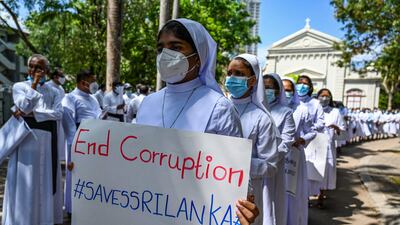
Catholic priests and sisters hold placards during a demonstration against the economic crisis in Colombo, the capital of Sri Lanka. All photos: AFP -
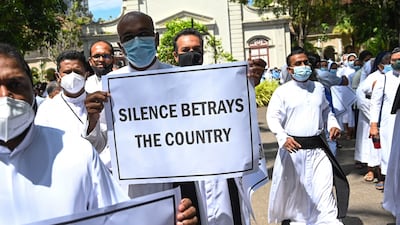
Catholic priests and sisters hold placards during a demonstration against the economic crisis in Colombo. -

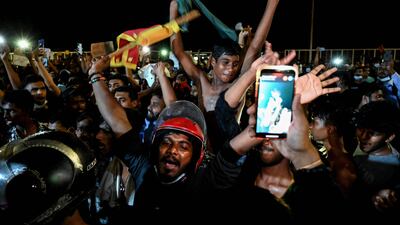
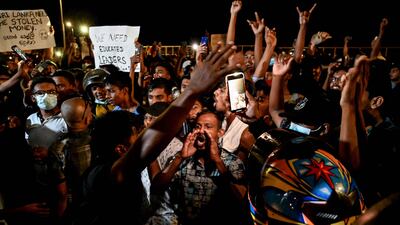
Protesters lash out after a surge of prices and a shortage of fuel and other essential commodities outside the president's office in Colombo. -
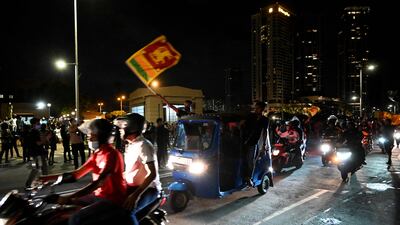
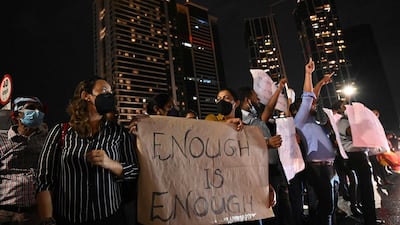
All 26 Cabinet ministers resigned after thousands defied a national state of emergency and curfew, and joined street protests denouncing the government. -
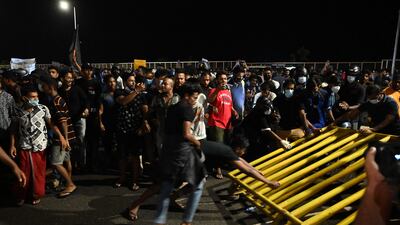
The curfew has been lifted but the president and his elder brother Prime Minister Mahinda Rajapaksa continue to hold on to power. -

Sri Lankans have endured long queues to buy fuel, cooking gas, foods and medicine, most of which come from abroad and are paid for in hard currency. -
The fuel shortage has caused rolling power cuts lasting several hours a day. -
The extent of the crisis became clear when Sri Lanka could not pay for imports of basic supplies because of its mounting debts and dwindling foreign reserves. -
Sri Lanka’s usable foreign reserves reportedly amount to be less than $400 million, yet it is saddled with about $7 billion in foreign debt obligations for this year. -
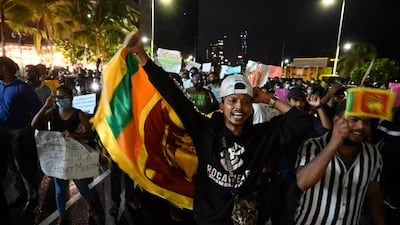
Police used water cannon to disperse angry protesters who marched toward the Rajapaksa family home in southern Sri Lanka, demanding that they quit. -
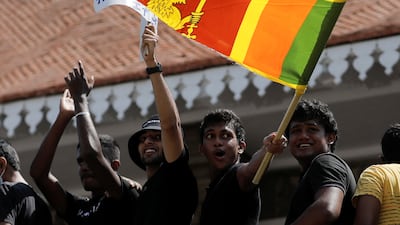
The president had appealed to people to limit their use of power and ‘extend their support to the country’ but the crisis has intensified since the main opposition party rejected his call to form a unity government. Reuters


Dozens of protesters peacefully gathered near the residence of the prime minister on Tuesday.
The names of the 41 legislators leaving the coalition were announced by party leaders in parliament.
They have now become independent members, leaving Rajapaksa's government with fewer than the 113 members needed to maintain a majority in the 225-member house.
There has been no vote count yet, although Rajapaksa's minority government could find decision-making more challenging. Independent parliamentarians, however, could continue to support government proposals in the house.
“There are endless shortages of essentials including fuel and cooking gas. Hospitals are on the verge of closing because there are no medicines,” Maithripala Sirisena, leader of the Sri Lanka Freedom Party that withdrew its support for Rajapaksa's coalition, told parliament.
“At such a time, our party is on the side of the people.”
In a further sign of a desperate shortage of funds, Sri Lanka announced the temporary closure of its embassies in Oslo and Baghdad, and the consulate general in Sydney, from April 30.
The foreign ministry said it was restructuring Sri Lanka’s diplomatic representation due to the “economic situation and foreign currency constraints faced by the country".
The Government Medical Officers Association, which represents over 16,000 doctors nationwide, said there was an acute shortage of medicines, including life-saving drugs.
-

Sri Lankans participate in a protest in the capital Colombo, demanding the resignation of President Gotabaya Rajapaksa, shortly before the start of a nationwide curfew. AP -
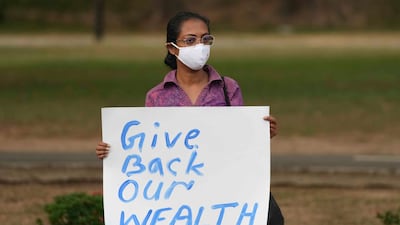
The three-day curfew was imposed by the government from Saturday evening as protests against food and fuel shortages were held in Sri Lanka. AP -

People queue for essentials at a shop before the beginning of the curfew, in Colombo. AP -
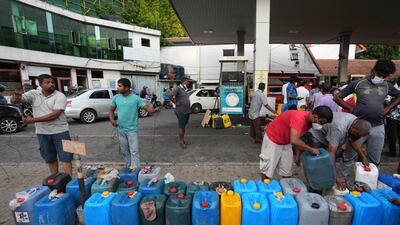
Sri Lankans flock to a fuel station to buy diesel. AP -
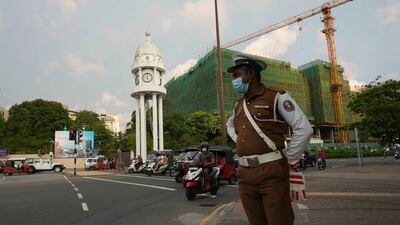
A Sri Lankan police officer stands in a street as curfew begins in Colombo, Sri Lanka. AP -

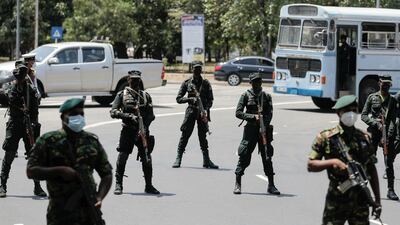
The military stand guard at a checkpoint in Colombo. AFP -
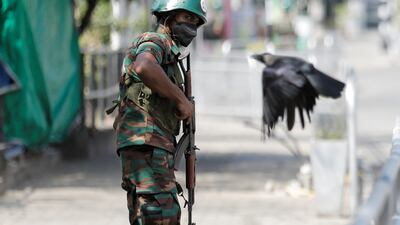
The curfew was imposed after a clash between police and protesters near Sri Lankan President Gotabaya Rajapaksa's residence. Reuters -
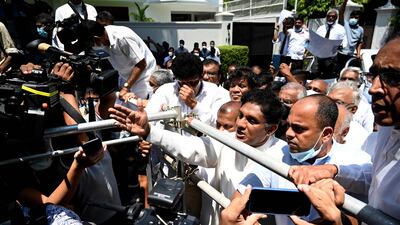
Sri Lanka's main opposition leader Sajith Premadasa (C) and MPs members shout during a protest in Colombo. AFP -
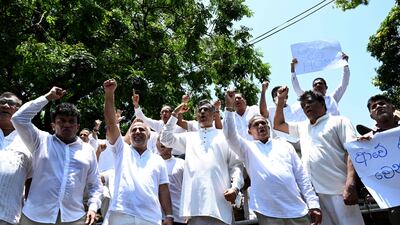
Sri Lankans have urged foreign tourists not to cancel travel plans as the South Asian island battles power cuts linked to soaring fuel prices. AFP -

The country is in the grips of its worst economic downturn in decades, sparked by a lack of foreign currency to pay for essential imports. AFP -
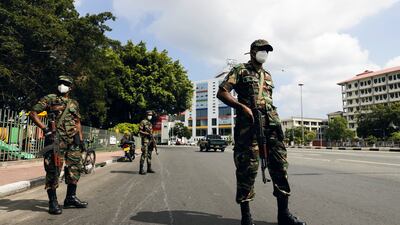
President Gotabaya Rajapaksa has invoked laws that allow the military to arrest and detain protesters without warrants. Reuters -

Tourism in Sri Lanka has been hit hard by the coronavirus pandemic. AFP -

The island welcomed 194,000 foreign tourists in 2021, down from 1.9 million in 2019 and 2.3 million in 2018. AFP -
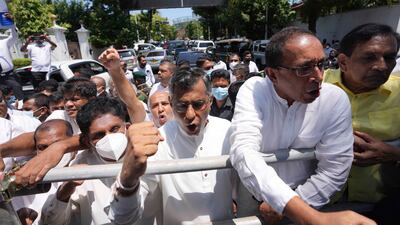
Sajith Premadasa (L) and other opposition politicians lead an anti government rally in Colombo. AP -
As fuel resources diminish, electricity rationing continues to be enforced and the cost of living rises, the shortages have led to a series power cuts. Reuters


“Failure to assure a continuous and adequate supply of essential medical drugs will lead to collapse of the entire health system,” it told the health ministry in a letter.
“This will create a life-threatening situation to our citizens who are already facing an unprecedented crisis situation.”
Mr Sirisena, together with other politicians, called on the president and the prime minister to present a clear plan to resolve Sri Lanka's financial mess.
But opposition parties — reflecting the mood of protests sweeping the country of 22 million people — urged the two brothers to step down. A third brother, Basil Rajapaksa, quit as finance minister on Sunday.
The opposition parties have also rejected a move to form a unity government comprising all parties represented in parliament.
“There should not be a voice that is contrary to the voice on the streets. And the voice is that there should be change,” said Sajith Premadasa, leader of the Samagi Jana Balawegaya, Sri Lanka's main opposition alliance.
“What the people want is for this president and the entire government to step down.”
A small group of people protested near parliament, as police stood guard with tear gas and water cannons.
“If the government loses its majority, you could see the opposition bringing in a vote of no confidence but there is parliamentary procedure that goes around it first and is unlikely to happen immediately,” said lawyer Luwie Niranjan Ganeshanathan, who specialises in constitutional issues.
If a vote of no confidence is adopted, then the president can appoint a new prime minister, he said.
The opposition can also table a resolution to dissolve parliament and call for snap elections, Mr Ganeshanathan added.

