Taliban ban poppy cultivation - in pictures
-
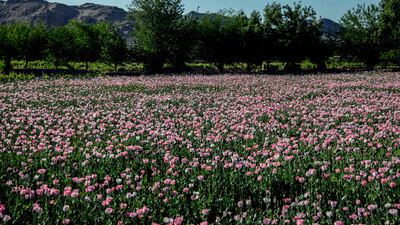
A poppy field in Afghanistan's Kandahar province. The Taliban's supreme leader issued a decree on April 3 against the cultivation of poppies and other plants that can be used to make narcotics. AFP -
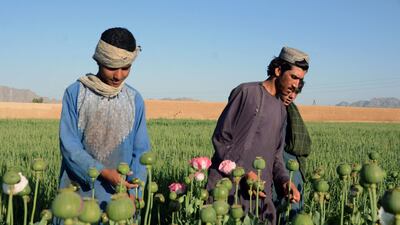
Farmers work at a poppy plantation in Kandahar. AFP -

Poppy cultivation surged in the southern provinces of Kandahar and Helmand after the Taliban seized power in August 2021. AFP -
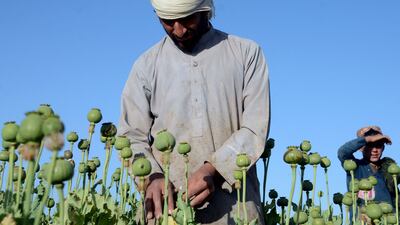
A poppy farmer in Kandahar collects sap from the plants' seed capsules. The sap is the raw material for drugs such as opium, heroin and morphine. AFP -
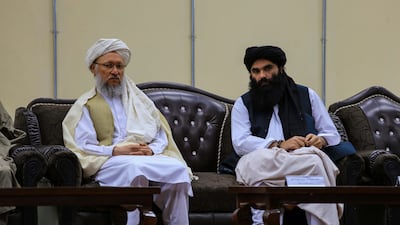
Taliban Second Deputy Prime Minister Abdul Salam Hanafi, left, and Interior Minister Sirajuddin Haqqani attend a ceremony to announce the ban on poppy cultivation. EPA -

The Taliban deputy interior minister for counter-narcotics, Abdul Haq Hamkar, speaks at the ceremony in Kabul. EPA -

Mr Haqqani arrives for the ceremony to announce the ban on poppy cultivation. EPA -
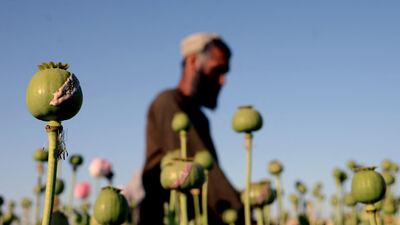
The ban was announced as Afghan farmers began harvesting their poppy fields. AFP -

Afghanistan accounts for 80 to 90 per cent of the world's opium and heroin production, according to the UN Office on Drugs and Crime. AFP -
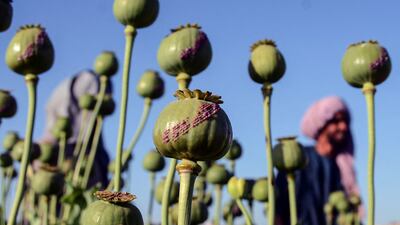
Efforts to encourage Afghan farmers to grow alternative crops such as wheat and saffron have not been successful. AFP


Most popular today

