

Zalmay Khalilzad, the US envoy to Afghanistan who resigned on Monday, has “betrayed” his country, Afghans told The National.
Mr Khalilzad has come under extreme criticism from Afghans and Americans both for his role in negotiating a political settlement with the Taliban and the collapse of the Kabul government in August.
former Afghan provincial governor
Afghans say his resignation on Monday after three years in the role was a personal acknowledgment of failure.
But political experts watching the developments said they were not surprised by his departure.
It was “always in the cards”, said Jonathan Schroden, research programme director at CNA, a non-profit research and analysis organisation.
“He was originally slated to leave in May but stayed on to help with the withdrawal transition period. His deputy has been much more involved and active with the administration’s engagements on Afghanistan of late, so it appears the White House is making that change permanent,” Dr Schroden said.
Mr Khalilzad was hired by president Donald Trump in 2018 and retained by the sitting US President Joe Biden.
Born in the northern Afghan province of Balkh, he was assigned the Herculean task of bringing the Taliban to the negotiating table, and striking an agreement that would ensure the homecoming of American troops.
He completed the task, but many Afghans have placed the blame for the current crisis squarely on his shoulders.
-
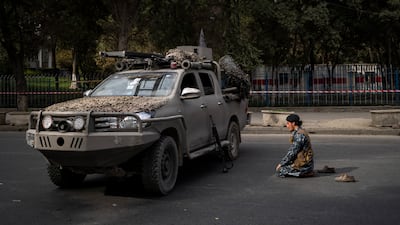
A Taliban fighter prays next to a demonstration organised by the Afghan Society of Muslim Youth, demanding the release of frozen international money in Kabul, Afghanistan. AP Photo -
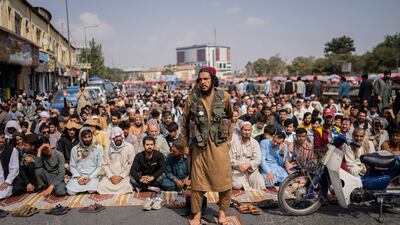
A Taliban fighter and a group of Afghan men attend Friday prayers in Kabul. AP Photo -
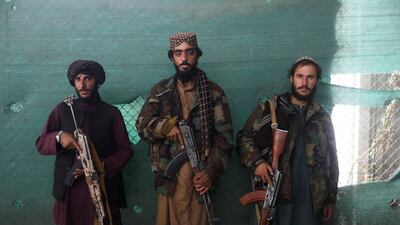
Taliban soldiers in Bagram Air Base in Parwan. Reuters -
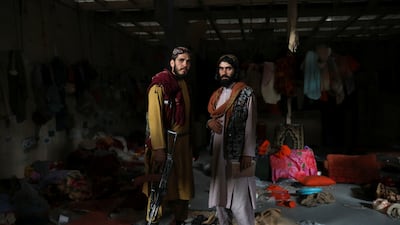
Taliban soldiers Seifatollah and Vasighollah stand in a prison in Bagram Air Base. Reuters -
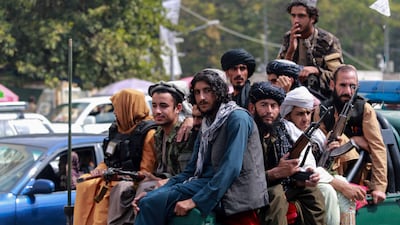
Taliban patrol Kabul. EPA -
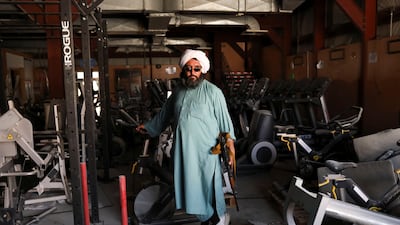
Vahdat, a Taliban soldier and former prisoner, stands next to exercise equipment in Bagram Air Base. Reuters -
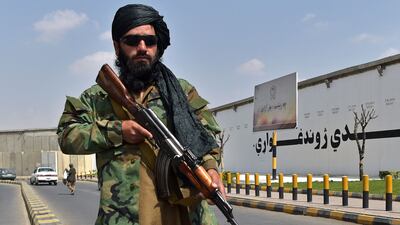
A Taliban fighter stands guard near Zanbaq Square in Kabul. AFP -
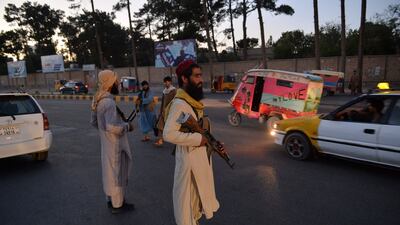
Taliban fighters police a road in Herat. AFP


Sayed Mohammadi, 34, from Kabul, said Mr Khalilzad should have resigned long ago.
“He took Afghanistan and handed it over to the Taliban. With his Taliban deal, he forced the Afghan government to release those 5,000 prisoners, ensuring the rise in violence against Afghans and weakening our government,” he said.
Mr Mohammadi said the deal the Taliban signed with the US in February last year only empowered the group and led to an increase in conflict.
“He never had any interest in helping Afghans,” he said.
Mr Mohammadi lost his job with an international NGO after the fall of Kabul.
The closure of girls’ schools in the Afghan capital has put his daughters’ education on hold and put his wife, a teacher, out of work.
The family, like many others in the country, is struggling to make ends meet.
“Everything vanished overnight,” he said.
Former Afghan politicians have said Mr Khalilzad’s strategic manoeuvring during talks with the Taliban undermined Afghanistan’s political identity.
“One of the biggest mistakes that the US government, on Khalilzad’s advice, made during the peace process was to recognise the Taliban politically,” Mohammad Rahimi, a former provincial governor in Afghanistan, said.
“They paved a way for their international recognition, and empowered them without receiving any solid commitment from the Taliban.”
Mr Rahimi, whose name has been changed, was deposed when his province was captured by the Taliban. He is now on the run from Taliban retribution.
“Despite being Afghan, he [Khalilzad] wasn’t neutral and much of his efforts were ethnocentric in nature, undermining and weakening other political forces in the country,” he said.
“This, along with his failure to provide accurate information on Afghanistan to US leaders, led to wrong strategies and policies bringing us to where we are today – a terror group in power.”
Mr Mohammadi said: “American considered him an Afghan expert because he was born here. But he clearly failed to provide the right information and advice. Otherwise, how can you explain that despite the best intelligence in the world, they couldn’t predict the fall of a government that was backed by 300,000 soldiers?”
In his resignation statement, shared by Afghan broadcaster Tolo News, Mr Khalilzad lauded the benefits to Washington of the withdrawal.
“Today, our forces are out. The war is finally over for the United States. The very high financial cost of this engagement can now be directed to other vital needs,” he wrote.
But, he also wrote, the political arrangement between the Afghan government and the Taliban “did not go as envisaged”.
Mr Mohammadi believes Mr Khalilzad’s legacy will be the betrayal of Afghanistan.
“Afghanistan has made them what they are today and he should have thought of his people when making decisions that put the Taliban in power. Afghanistan was like his mother, but he turned out to be a namak haram,” he said, using a Dari phrase meaning “traitor”.
Mr Khalilzad’s exit could be seen as the end of a troubled era.
Dr Schroden spoke of the developing Afghan crisis, which was compounded by the botched withdrawals.
“Zal’s [Khalilzad] mixed track record and the mixed views of many audiences of him are aspects of the withdrawal that the Biden team probably would like to put behind them as they continue to deal with the fallout of Kabul’s collapse,” he said.
While the US said its evacuation removed 100,000 people from Afghanistan, many Afghans who served Americans have been left behind at the mercy of a vengeful Taliban.
Dr Schroden said Mr Khalilzad’s successor, Thomas West, is an experienced South Asia hand and is well-suited to take up the role.
“His entire State Department career was focused on Afghanistan and Pakistan, so he comes well-versed in the issues,” he said.
“And he’ll bring a fresh perspective as someone who wasn’t involved with the Doha negotiations.”

