
The alleged ringleader of Asia’s biggest crime syndicate and one of the world’s most wanted men has been arrested in the Netherlands.
Police had been chasing Tse Chi Lop, 57, for years until his arrest by Dutch police on Friday, acting on a request from Australia’s federal police.
Australian authorities on Sunday said a man “of significant interest” to law-enforcement agencies had been detained. A police spokeswoman confirmed his name as Tse Chi Lop.
The Chinese-born Canadian citizen has been identified by the UN Office on Drugs and Crime as the suspected leader of the Asian cartel known as Sam Gor, a major producer and supplier of methamphetamine globally.
Sam Gor is believed to launder its billions in drug money through businesses in South-East Asia’s Mekong region, including casinos, hotels and property companies.
Australia’s federal police said the arrest on Friday was the result of an operation that in 2012-2013 caught 27 people linked to a crime syndicate operating in five countries.
The group’s members were accused of importing “substantial quantities of heroin and methamphetamine” into Australia, long a lucrative market for drug traffickers.
“The syndicate targeted Australia over a number of years, importing and distributing large amounts of illicit narcotics, laundering the profits overseas and living off the wealth obtained from crime,” Australian police said.
As part of the raids across Melbourne, police seized A$9 million ($6.9m) worth of assets including cash, designer handbags, casino chips and jewellery.
The arrest almost a decade after that operation’s launch is a major breakthrough for the Australian authorities.
The country’s attorney-general will now begin preparing a formal extradition request for Tse to face trial.
Most of Asia’s methamphetamine comes from the “Golden Triangle” border areas where Laos, Myanmar, Thailand and south-west China converge.
The region is the world’s biggest source of synthetic drugs.
A study by the UN drugs agency says South-East Asia’s crime groups are earning more than $60 billion a year.
Production of methamphetamine – in tablet “yaba” form or the highly potent crystallised “ice” version – as well as ketamine and fentanyl, takes place mainly in the eastern Myanmar state of Shan.
But large quantities of the chemicals needed to make them flow across the border from China.
Thailand in 2018 intercepted more than 515 million tablets, 17 times the amount seized in the entire Mekong region a decade ago, the UN agency said.
Drug hauls occur almost daily across the region, with traffickers finding more creative ways to distribute their products.
__________
Gallery: The world’s most notorious drug barons
-

** FILE ** Frank Lucas, who is portrayed by Denzel Washington in the film "American Gangster," is shown in New York in this Nov. 2, 2007 file photo. A group of retired federal drug enforcement agents sued NBC Universal on Wednesday, Jan. 16, 2008, saying the movie "American Gangster" falsely portrayed them as villains in the story of a Harlem heroin trafficker. The suit, filed in federal court in Manhattan, claims that the movie defamed hundreds of DEA agents and New York City police officers by claiming at the end that Frank Lucas' collaboration with prosecutors "led to the convictions of three-quarters of New York City's Drug Enforcement Agency." (AP Photo/ Jim Cooper, File) -

UNITED STATES - CIRCA 2002: Leroy "Nicky" Barnes leaving courtroom in the Bronx. (Photo by James McGrath/NY Daily News Archive via Getty Images) -
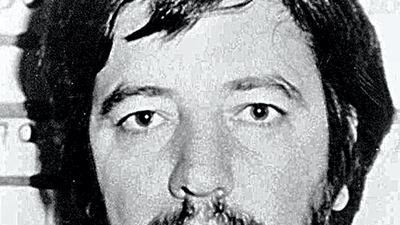
UNDATED FILE PHOTO - Undated file photo of alleged Mexican drug lord Amado Carrillo Fuentes, who died July 5, according to his mother. Fuentes, also known as the "Senor de los cielos" or "Lord of the skies" because of his tactic of using airplanes to smuggle cocaine from South America to Mexico, was considered Mexico's most powerful drug smuggler. MEXICO DRUGS -
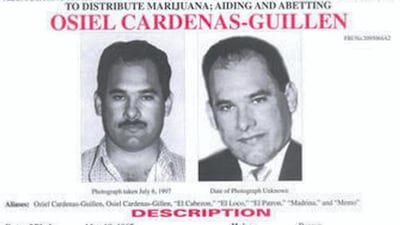
2A47J5H FBI Wanted Poster - Osiel Cardenas Guillen. -
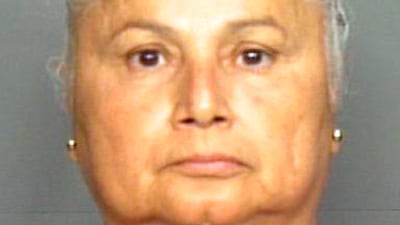
Griselda Blanco is shown in this undated handout photo supplied by Miami-Dade Police Department to Reuters September 5, 2012. Blanco, a convicted Colombian drug dealer known as the "Queen of cocaine," was gunned down by unidentified assailants, Colombian media reported Tuesday. REUTERS/Miami-Dade Police Dept/Handout (CRIME LAW HEADSHOT) FOR EDITORIAL USE ONLY. NOT FOR SALE FOR MARKETING OR ADVERTISING CAMPAIGNS. THIS IMAGE HAS BEEN SUPPLIED BY A THIRD PARTY. IT IS DISTRIBUTED, EXACTLY AS RECEIVED BY REUTERS, AS A SERVICE TO CLIENTS



