

Locust swarms forming in northern Ethiopia are threatening to aggravate an already severe food shortage faced by millions of people in the Tigray region after nearly a year of civil war, the UN Food and Agriculture Organisation has said.
A report published last week by the Food and Agriculture Organisation said the crop-destroying insects, first spotted in mid-September in the north-eastern Afar region, are likely to have spread to neighbouring Tigray and Amhara.
“We are extremely concerned about the possible impacts of desert locusts on northern Ethiopia’s upcoming cereal harvest season,” Cyril Ferrand of the FAO’s Eastern Africa resilience team told The National. “People in the region can ill afford to lose one grain of the already reduced harvest.”
-

Tigrayan refugees wait in line to receive food from Muslim Aid at Hamdeyat Transition Center near the Sudan-Ethiopia border, eastern Sudan, on Wednesday. AP -

Janez Lenarcic, fifth right, the European Commissioner for Crisis Management, arrives to visit Um Raquba camp for Ethiopian refugees who fled the Tigray conflict, in eastern Sudan's Gedaref state on December 3, 2020. AFP -

Janez Lenarcic, second right, the European Commissioner for Crisis Management, arrives to visit Um Raquba reception camp for Ethiopian refugees who fled the Tigray conflict, in eastern Sudan's Gedaref state on December 3, 2020. AFP -
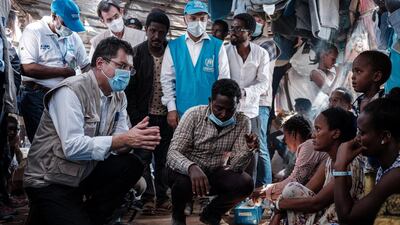
Janez Lenarcic, left, the European Commissioner for Crisis Management, speaks with Ethiopian refugees who fled the Tigray conflict during his visit to Um Raquba reception camp in Sudan on December 3, 2020. AFP -
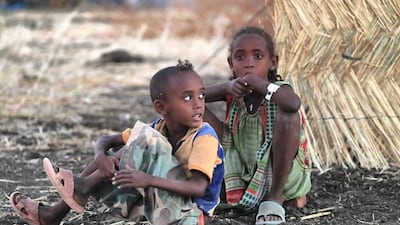
Ethiopian children sit outside their family's tent at Um Raquba refugee camp in Gedaref, eastern Sudan, on January 6, 2021. AFP -
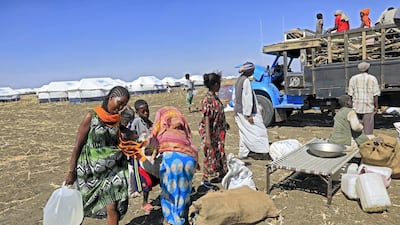
Ethiopian refugees, who fled the Tigray conflict, gather their belongings upon their arrival at the Tenedba camp in Mafaza, eastern Sudan on January 8, 2021. AFP -
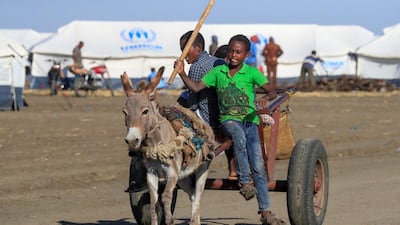
Ethiopian refugees, who fled the Tigray conflict, at the Tenedba camp in Mafaza, eastern Sudan on January 8, 2021. AFP -
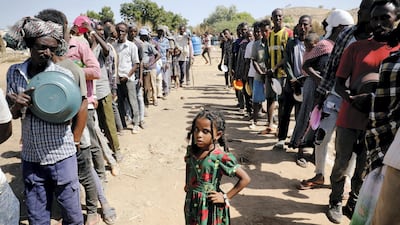
Ethiopian refugees wait in line for a meal at Sudan's Um Raquba camp which houses Ethiopian refugees who fled the fighting in the Tigray region, November 28, 2020. Reuters -
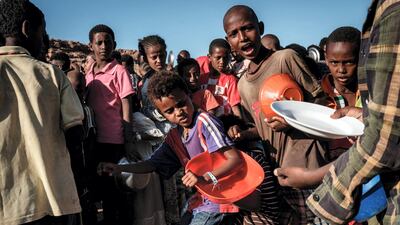
Ethiopian refugee children who fled the Tigray conflict have a play-fight as they wait for food from Muslim Aid at the Um Raquba camp in eastern Sudan's Gedaref state on December 12, 2020. AFP -
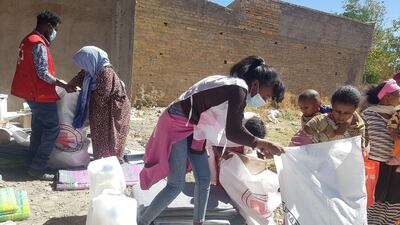
Red Cross workers and volunteers distribute supplies to civilians in the Tigray region of Ethiopia, January 6, 2021. Reuters


The war is likely to hinder measures to combat the locust swarms in Tigray, where destruction of crops and food stocks has left hundreds of thousands of civilians facing starvation.
The US estimates that 900,000 people are facing famine in the region. A study by the World Peace Foundation reported between 50 and 100 hunger-related deaths a day in Tigray.
Aid agencies say Tigray needs more than 100 lorries of food aid daily. But only a fraction of that is reaching the region, with the Ethiopian government accused of blocking deliveries.
Ethiopia this month expelled seven UN aid officials for “meddling” in the country’s internal affairs. The expulsion came after UN aid chief Martin Griffiths urged the government to lift a three-month blockade on lorries entering Tigray. On Friday, the UN said it was suspending its flights to the regional capital, Mekelle, after the government launched air strikes on a reported rebel target in the city as a plane carrying aid workers was preparing to land.

Prime Minister Abiy Ahmed sent the country’s military into Tigray, alongside allied troops from neighbouring Eritrea, in November 2020 after ambushes on federal army bases by Tigrayan forces. The US and civilians in Tigray have accused Ethiopian and Eritrean troops of atrocities, including rape, in a campaign of ethnic cleansing.
Eritrean soldiers in particular are accused of preventing farmers from ploughing their land, looting cattle and setting fire to grain silos.
The violence has displaced more than two million people, leading to much of the region’s farmland being uncultivated.
“Our estimates indicate that around half of all arable land in Tigray went unplanted due to the security situation,” Mr Ferrand said. “The harvest could be 40 per cent below baseline.”
Debrom, 43, a farmer from La'ilay Maychew district, about 30 kilometres south of the Eritrean border, told The National he fled his village last December and was living in a camp for displaced Tigrayans in Sudan’s Al Qadarif region.
“I fled my land because soldiers were killing everyone they saw and didn’t differentiate between civilians and fighters,” said Debrom, whose full name has been withheld for his safety.
“I got out alive, but Eritrean soldiers killed many of my friends and family who stayed behind,” he said.
When asked how many farmers are likely to have remained in his village, he said: “If they weren’t killed, they have probably joined [the Tigrayan rebels], or they might have made it here to Sudan like me.”
Ethiopia is still recovering from the locust swarms that ravaged crops in East Africa last year and left millions across the region needing food aid.
-
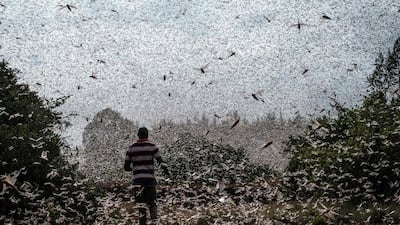
A farmer walks through a swarm of desert locust in the eastern Kenyan city of Meru. The infestations devastated 23 countries across East Africa, the Middle East and South Asia in 2020, with Kenya suffering its worst locust swarms in 70 years. AFP -

A swarm of desert locusts flies after an aircraft sprayed pesticide in the eastern Kenyan city of Meru. The UN's Food and Agricultural Organisation is working closely with several Kenyan agencies before teams are sent to targeted areas to spray pesticides to prevent damage to crops and grazing areas. AFP -

Cyril Ferrand, Team Leader for East Africa at the UN's Food and Agricultural Organisation walks past a swarm of desert locusts in the eastern Kenyan city of Meru. It has been more than a year since the worst desert locust infestation in decades hit the region. AFP -
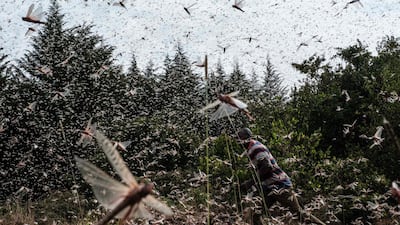
A local farmer walks through a swarm of desert locusts in the eastern Kenyan city of Meru. The East African country is battling another wave of infestations along with its neighbours Somalia and Ethiopia, the use of cutting-edge technology and improved co-ordination is helping to crush the menace. AFP -

A swarm of desert locusts fly after an aircraft sprayed pesticide in the eastern Kenyan city of Meru. The use of cutting-edge technology and improved co-ordination across East Africa is helping to crush the ravenous swarms and protect the livelihoods of thousands of farmers. AFP -
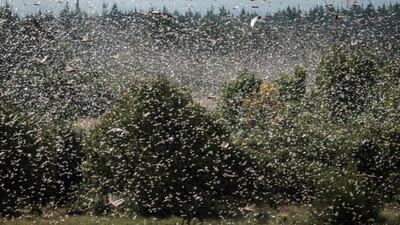
Locusts fly after an aircraft sprayed pesticide in the eastern Kenyan city of Meru. The country is suffering its worst locust swarms in 70 years. AFP -

A farmer chases away desert locusts at maze field in the eastern Kenyan city of Meru. The country is suffering its worst locust swarms in 70 years. AFP -

A swarm of desert locust flies after an aircraft sprayed pesticide in the eastern Kenyan city of Meru. Desert locusts belong to the grasshopper family, which form massive swarms when breeding is spurred by good rains. AFP -
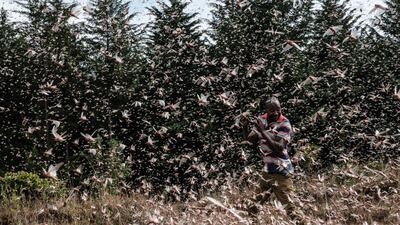
A farmer walks through a swarm of desert locust in the eastern Kenyan city of Meru. The use of cutting edge technology and improved co-ordination across East Africa is helping to crush the swarms and protect the livelihoods of thousands of farmers. AFP -

Desert locusts are seen at maze field in the eastern Kenyan city of Meru. A series of new measures to combat a second wave of the pests has improved control and co-operation in Kenya, Ethiopia and parts of Somalia. AFP -

An aircraft sprays pesticide over the trees covered by desert locusts in eastern Kenyan city of Meru. Each locust eats its weight in vegetation daily and multiplies twenty-fold every three months. AFP -
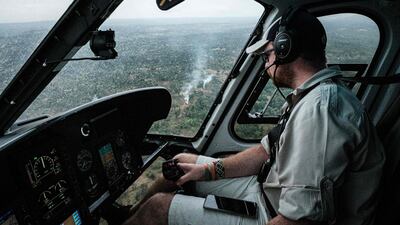
A pilot follows a swarm of desert locusts during a surveillance flight as farmers set fires to create smoke in their attempt to chase away the insects from fields in Meru, Kenya. AFP


Mr Ferrand said the scale of locust breeding in Tigray this year was not clear as the conflict made it impossible to conduct exhaustive land surveys.
The new swarms could be more devastating than last year's, said Emnet Negash, a doctoral student at Ghent University’s department of geography.
“It’s from upon hatching from eggs through the larvae period and prior to becoming adults that locusts consume food the most,” he said.
“Much of last year’s swarms were hatched in Yemen and in remote areas of the Afar region where crop production is not the main economic means. Most arrived in Ethiopia as adults, relatively past their feeding prime.
doctoral student and former employee at Tigray Bureau of Agriculture and Rural Development
“The current swarms, however, are all being formed in Ethiopia, including in parts of the Tigray and Amhara regions, meaning that they will consume far more than last year’s swarms did.”
The student, who worked at the Tigray Bureau of Agriculture and Rural Development until 2018, said breeding locusts had been spotted in seven districts of Tigray and their appearance could not come at a worse time.
“Under the current circumstances, last year's harvest largely ran out at the beginning of the rainy season [around June]. Ahead of the maturation of cereal crops in October, farmers resort to growing lean-season crops like maize and vegetables that can grow quickly and supplement their dishes during the food supply gap in September.
"This year, however, the conflict has caused a severe, noticeable dearth of corn crops. This has worsened this year’s hunger gap. Locust swarms will arrive when people are at their lowest point.”
Despite the seriousness of the situation, there is little sign of urgency in Addis Ababa, where government officials tend to play down the crisis. Last month, the deputy head of the National Disaster Risk Management Commission, Aydrus Hassan, told state media outlets that no one in Ethiopia was at risk of starvation, echoing comments made by Mr Abiy in June.
The threat of US sanctions, mounting diplomatic pressure and criticism, including a stinging indictment of Mr Abiy's actions by former UN aid chief Mark Lowcock, have so far not moved Ethiopian authorities to allow aid deliveries to Tigray.
Meanwhile, the civil war rages on, with government forces launching a new offensive last week to dislodge Tigrayan fighters from entrenched positions in the neighbouring Amhara region.

