


Schools in Afghanistan opened for the new academic year on Wednesday, the Education Ministry said, with girls banned from secondary-level classes for the third year in a row.
Women and girls have been barred from education beyond Year 6 since the Taliban takeover in 2021.
Male pupils returned to classes with the start of the Afghan new year, but women and girls were left out as part of a wave of restrictions the UN has labelled “gender apartheid”.
The Taliban has severely curtailed women's access to education and employment, effectively wiping out half of its population from society.
Begum Academy provides online classes to allow women and girls who are banned to get an education.
“It's difficult to get motivated when everything is closed to you and there's no perspective of future,” Begum Academy's director Hamida Amanshe told AFP from France, where she is based.
“These girls cannot have certificates, or they cannot have the ambition to go to the university or to have any job later.”
Even home-based schooling programmes by international organisations are regularly shut down by the authorities.
Government universities also recently opened for the new academic year. Women have been blocked from attending since December 2022.
Unesco ranks Afghanistan among the world's worst places to be female, with one of the lowest literacy rates.
Education for girls and women was a key aim of the previous US-backed government, but gains were largely limited to cities, with only 23 per cent of girls aged 13 to 18 in school nationwide, according to the International Crisis Group think tank.
That figure dropped to 13 per cent after the Taliban government announced its education ban.
Alternative education methods
Since the takeover, Taliban authorities have said they are working on establishing a system that aligns with their interpretation of Islamic law.
The UN children’s agency says more than one million girls are affected by the ban.
It also estimates five million were out of education before the Taliban takeover, with a lack of schools the main reason.
Online alternatives have sprung up, but with weak internet connections, recurring power cuts and a scarcity of computers, virtual classes are a poor substitute for in-person learning, students and teachers say.
A Unesco report found that “widespread virtual schooling during the Covid-19 pandemic demonstrated it was 'at best, a rather partial substitute for in-person instruction'.”
Less than a quarter of the population uses the internet, according to online insights company DataReportal.
-
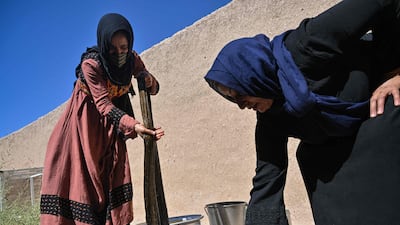
Women wash freshly dyed silk in a factory in Herat province. Whether Afghan girls receive an education under the Taliban is turning into an issue of wealth, young women living under the regime say. AFP -
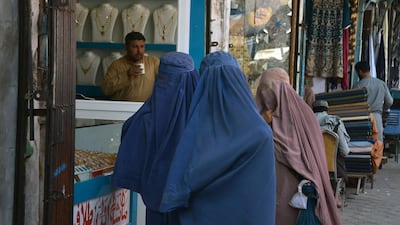
Afghan women walk in a Kandahar market. Even if Afghan girls can receive an education, the likelihood they will be able to put it to any use is low. AFP -
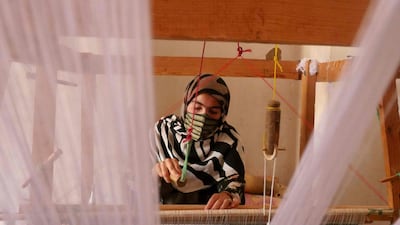
An Afghan women weaves silk to make scarfs and other products inside a workshop in the Zandajan district of Herat province. Many Afghan girls fear the longer they stay away from school, the more pressure will build to conform to patriarchal standards and marry. AFP -
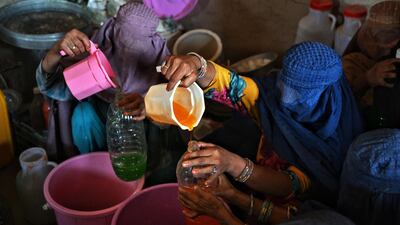
Burqa-clad women work in a shampoo factory in Kandahar. AFP -
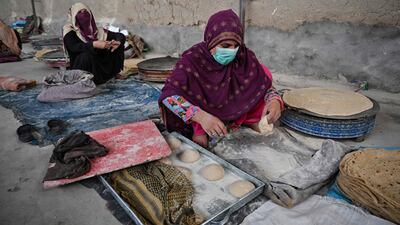
Women make flatbread in a factory in Kandahar. AFP -
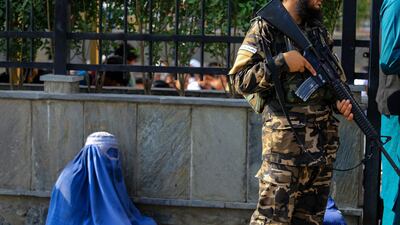
An Afghan woman begs as Taliban fighters stand guard in Kabul. Amnesty International says the Taliban have breached women's and girls' rights to education, work and free movement since they took control of the government. EPA -
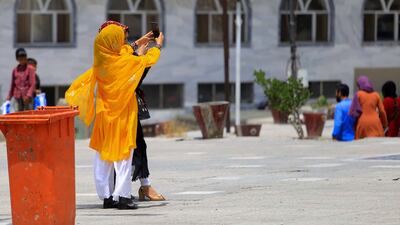
Afghan women take a selfie at a park in Kabul. The rates of child, early and forced marriage in Afghanistan are increasing under Taliban rule, Amnesty International has said. EPA -
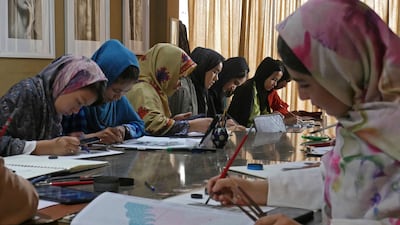
Afghan girls paint at a workshop class in Herat. The World Bank estimates that for each year of secondary education, the likelihood of marrying before the age of 18 decreases by five percentage points or more. AFP -
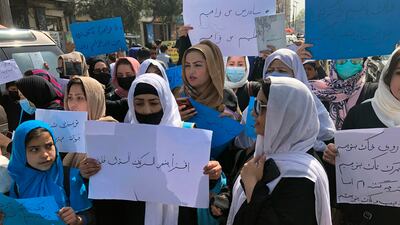
Afghan women protest in Kabul. The lives of Afghan women and girls are being destroyed by the Taliban’s crackdown on their human rights, Amnesty has said. AP -
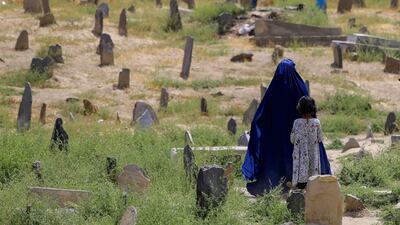
An Afghan woman walks in a graveyard in Kabul. EPA -

Shgofe, an Afghan newscaster, presents a programme on private channel 1TV in Kabul. Female TV presenters and reporters in Afghanistan continue to appear with their faces covered to comply with a mandate issued by the Taliban. EPA -
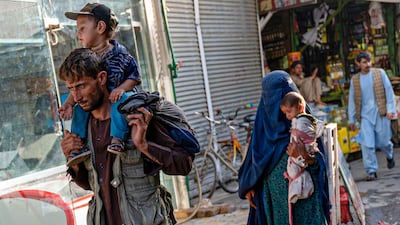
An Afghan family walk past a market near the Pul-e Khishti Mosque in Kabul. AFP -
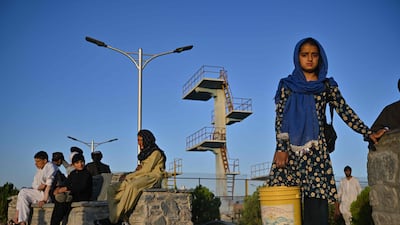
People at Wazir Akbar Khan Hill in Kabul. Whether Afghan girls receive an education under the Taliban is turning into an issue of wealth, young women living under the regime say. AFP -
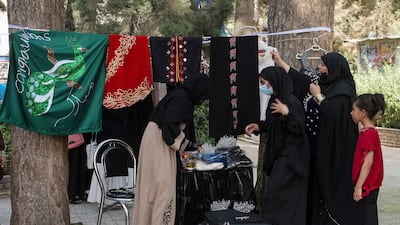
Women browse through garments and fabrics for sale in a stall at a women's handicraft market in Herat. AFP -
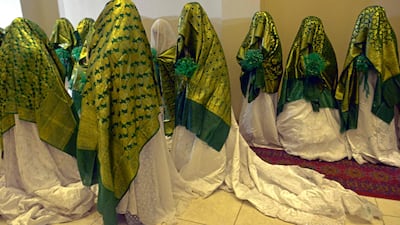
Brides wait for the start of a mass wedding in Kabul. Dozens of Afghan women, concealed in thick green shawls, were married off in an austere ceremony attended by hundreds of guests and gun-toting Taliban fighters. AFP


These alternatives cannot provide diplomas or certified qualifications that are recognised worldwide.
“We have a highly educated new generation of women and they won’t stop studying. They are trying to find new ways but it's difficult because they cannot receive formal education,” Manizha Bakhtari, former Afghanistan foreign affairs chief of staff, told The National last June.
It's unclear exactly how many girls and women are involved in online learning,
Launched in December, Begum Academy has 8,500 free videos in Dari and Pashto covering the Afghan secondary school curriculum.
Afghan girls and young women are also enrolling at madrasas in an effort to continue their education.
But experts say these religious schools, while important, cannot compensate for loss of access to secondary education.
A Unesco report last year said 2.5 million Afghan girls and young women are not in the education system – 80 per cent of the age group.
Taliban authorities have imposed a strict interpretation of Islamic law since they seized power, meaning all women must be veiled and largely excluding them from public life.

