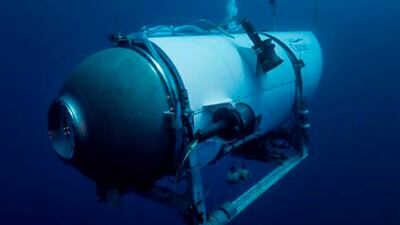
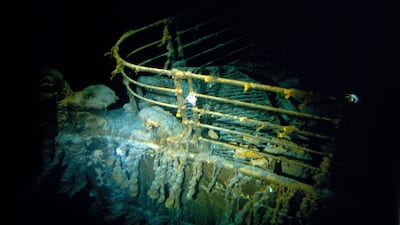
Rescuers are racing against time to find the missing submersible Titan, which is carrying five people. AP

'Debris field' found in search for Titanic submarine


  • English
  • Arabic

The US coastguard has insisted an operation to save five occupants of a submersible diving to the wreck of the Titanic is still a rescue mission, despite passing a crucial 96-hour window for oxygen supply.

Experts believe the Titan, which was launched on Sunday morning, had four days of oxygen on board, which would have dwindled by Thursday.

However, Guillermo Sohnlein, the co-founder of OceanGate, the company operating the missing submersible, said that the five crew members have "longer than what most people think" in terms of survival.

In a statement, Mr Sohnlein, who remains a minority shareholder but is no longer involved with the company, expressed confidence that the crew have been utilising their resources wisely and extending their available time by relaxing as much as possible.

"I firmly believe that the time window available for their rescue is longer than what most people think," he said.

On Thursday afternoon the US Coastguard said it is evaluating a “debris field” discovered within the search area using a remotely-operated vehicle near the wreckage of the Titanic.

The US Coastguard is leading the hunt for the craft. It appeared to rule out banging sounds detected earlier from beneath the waves.

When questioned about the noises detected by the sonar buoys dropped into the ocean, Rear Admiral John Mauger revealed initial reports found that it was “ocean background noise”.

He said: “We’ve taken that information and shared it with top leading experts from the US Navy and the Canadian Navy, and they’re working on the analysis of that information, they’re continuing to work on the analysis of that information.

“The initial reports is that there’s a lot of the sounds that were generated were from background ocean noise, but they continue to … look for all available information there.

“What’s important to me, and what’s important as the unified command, is that we’ve continued search in the areas where noise was detected with the ROVs that we have from the time of that detection, so we’re not waiting for this analysis to take action.

“The analysis is really helpful to our overall search-and-rescue efforts, but we’re not waiting on it, we’ve moved the remote operated vehicles that we’ve had on site to those areas where noise was detected.”

Speaking on Thursday after the 96-hour oxygen supply deadline had passed, Rear Admiral Mauger, the chief co-ordinator of the multinational mission in search of a missing submersible near the Titanic wreck, reaffirmed his unwavering focus on rescuing the five-member crew alive.

In a series of TV interviews, he emphasised the significance of accounting for people's will to survive in particularly complex situations.

“We continue to find that people's will to live really needs to be accounted for as well. And so, we're continuing to search and proceed with rescue efforts,” he said.

Those on board the submersible include three fee-paying passengers: British billionaire Hamish Harding, 58, who lives in Dubai, as well as Pakistani-born businessman Shahzada Dawood, 48, and his son Suleman, 19, a first-year student at the University of Strathclyde in Glasgow. They are also British citizens. The trip cost $250,000 a person.

Pilot Stockton Rush, chief executive of the company leading the expedition, was at the helm, with French submersible pilot Paul-Henry Nargeolet the final person on board.

An expert in underwater search told The National no one can definitively say how much oxygen is left.

Michael Welham, a marine operations specialist and author, told The National the specific levels have not been published, and the behaviour of the passengers will be crucial.

Breathing rates will also have an effect on how quickly the oxygen is used up, as people can breathe faster when they are anxious, he said.

“I have been in a very similar situation inside a diving bell, where the scrubbing system for removing carbon dioxide had stopped and you're right down then to breathing very, very shallow. You sit quietly and try not to talk,” he said.

Professional operations have a log which details the amount of oxygen available and expectations for battery life. “That log hasn't been made available, even if it exists. So everybody's speculating,” Mr Welham said.

Mr Welham said the battery life is another complicating factor in the rescue, as it is required to keep the submersible warm.

If the battery has now drained, the heating will also fail, sending temperatures plummeting on board.

He said he had one experience where the heating failed while he was in a diving bell.

“We were sitting there doing exercises and moving our bodies around to try [and keep warm].”

Although the rescue is facing serious challenges, Mr Welham said is some way off becoming a recovery operation.

“That decision is a way off yet. At this moment in time. It's a search for it and people are still there. Get the thing to the surface and rescue them,” he added.

Titanic tourist submersible goes missing – in pictures

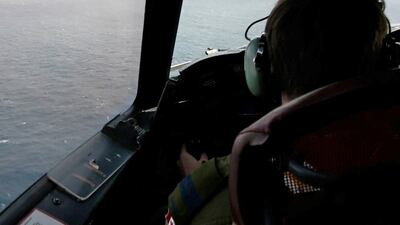
  • The pilot of a Royal Canadian Air Force maritime surveillance aircraft flies over the Atlantic during the search for the missing OceanGate submersible. Reuters
    The pilot of a Royal Canadian Air Force maritime surveillance aircraft flies over the Atlantic during the search for the missing OceanGate submersible. Reuters
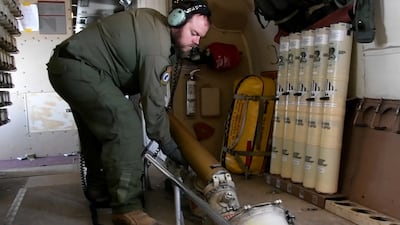
  • A Royal Canadian Air Force serviceman drops sonar buoys from a surveillance aircraft. Reuters
    A Royal Canadian Air Force serviceman drops sonar buoys from a surveillance aircraft. Reuters
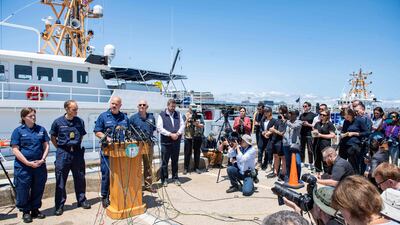
  • Capt Jamie Frederick of the US coastguard speaks to reporters about the search for the submersible, during a press conference in Boston, Massachusetts. AFP
    Capt Jamie Frederick of the US coastguard speaks to reporters about the search for the submersible, during a press conference in Boston, Massachusetts. AFP
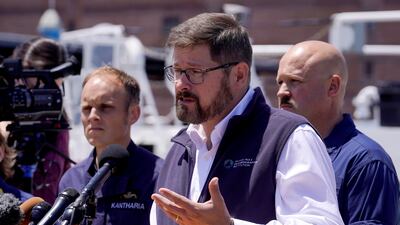
  • Carl Hartsfield, director and senior programme manager Oceanographic Systems Laboratory, faces reporters as Royal Navy Lt Cdr Rich Kantharia, left, and Capt Frederick look on during the news conference. AP
    Carl Hartsfield, director and senior programme manager Oceanographic Systems Laboratory, faces reporters as Royal Navy Lt Cdr Rich Kantharia, left, and Capt Frederick look on during the news conference. AP
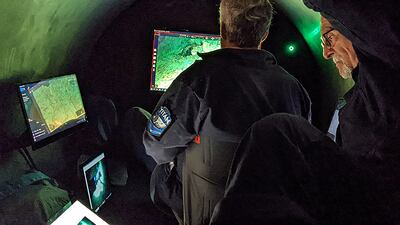
  • Inside the submersible vessel Titan on a previous dive. The vessel is used to visit the wreckage site of the Titanic. PA
    Inside the submersible vessel Titan on a previous dive. The vessel is used to visit the wreckage site of the Titanic. PA
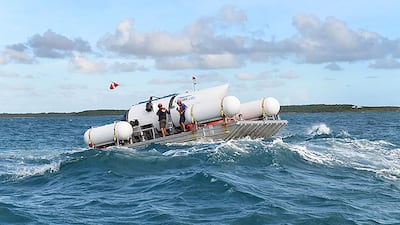
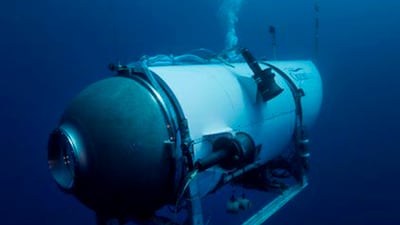
  • Titan went missing on a dive to the Titanic wreck site this week. PA
    Titan went missing on a dive to the Titanic wreck site this week. PA
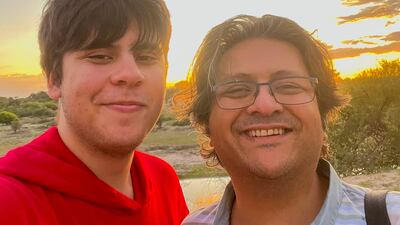
  • Businessman Shahzada Dawood, the vice-chairman of Karachi conglomerate Engro, and his son Suleman are on board the missing sub. AFP
    Businessman Shahzada Dawood, the vice-chairman of Karachi conglomerate Engro, and his son Suleman are on board the missing sub. AFP
  • Paul-Henri Nargeolet, French explorer and director of a company that owns the rights to the Titanic wreck, is on board the submarine. Reuters
    Paul-Henri Nargeolet, French explorer and director of a company that owns the rights to the Titanic wreck, is on board the submarine. Reuters
  • The Titan submersible was taking five people to view the wreck of the Titanic when it went missing. AP
    The Titan submersible was taking five people to view the wreck of the Titanic when it went missing. AP
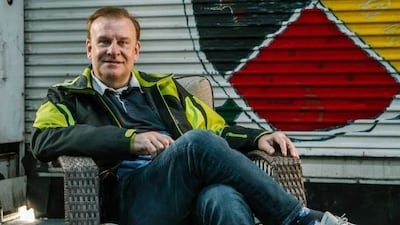
  • UAE-based British space explorer Hamish Harding posted this image of himself in Canada a day before the expedition. Photo: Instagram
    UAE-based British space explorer Hamish Harding posted this image of himself in Canada a day before the expedition. Photo: Instagram
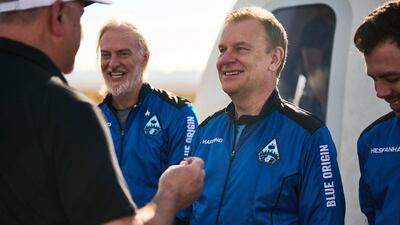
  • Mr Harding, a businessman, receives his Blue Origin astronaut pin after a successful flight to space in June 2022. AP
    Mr Harding, a businessman, receives his Blue Origin astronaut pin after a successful flight to space in June 2022. AP
  • The submersible usually carries a pilot, three paying guests and a 'content expert'. It has enough oxygen for up to 96 hours. AP
    The submersible usually carries a pilot, three paying guests and a 'content expert'. It has enough oxygen for up to 96 hours. AP
  • The Titanic sank on April 15, 1912, during its maiden voyage from Southampton to New York, killing more than 1,500 of the 2,200 passengers on board. Getty
    The Titanic sank on April 15, 1912, during its maiden voyage from Southampton to New York, killing more than 1,500 of the 2,200 passengers on board. Getty
  • The wreck, which was located in 1985, sits 3,800 metres at the bottom of the Atlantic, about 600km off Newfoundland. AFP
    The wreck, which was located in 1985, sits 3,800 metres at the bottom of the Atlantic, about 600km off Newfoundland. AFP

However, the mission to recover the craft will be challenging, he said.

First, rescuers have to locate it. Next, they must lower a cable to wrap around the submersible to bring it up.

“You have to get it over what you're going to lift because the ROV can't drag it along the seabed,” said Mr Welham.

He said its motors are not powerful enough to manoeuvre the cable, so it needs to be dropped as accurately as possible to land next to the craft.

That will be a challenge because the vessel it is being lowered down from will be moving, he said.

“If the seas are rough it will be rolling. There might be currents that will actually affect that cable and make it bow a bit.

“Then you have got to get on to the deck of the boat to unbolt it to get to the people inside.”

The submersible lost communication with tour operators on Sunday while about 700km south of St John’s, Newfoundland, during a voyage to the Titanic shipwreck off the coast of Canada.


Search for Titanic submersible focused on area where noises were picked up – video

COMPANY%20PROFILE
%3Cp%3E%3Cstrong%3ECompany%20name%3A%3C%2Fstrong%3E%20Alaan%3Cbr%3E%3Cstrong%3EStarted%3A%3C%2Fstrong%3E%202021%3Cbr%3E%3Cstrong%3EBased%3A%3C%2Fstrong%3E%20Dubai%3Cbr%3E%3Cstrong%3EFounders%3A%3C%2Fstrong%3E%20Parthi%20Duraisamy%20and%20Karun%20Kurien%3Cbr%3E%3Cstrong%3ESector%3A%3C%2Fstrong%3E%20FinTech%3Cbr%3E%3Cstrong%3EInvestment%20stage%3A%3C%2Fstrong%3E%20%247%20million%20raised%20in%20total%20%E2%80%94%20%242.5%20million%20in%20a%20seed%20round%20and%20%244.5%20million%20in%20a%20pre-series%20A%20round%3Cbr%3E%3Cbr%3E%3C%2Fp%3E%0A
RESULT

Bayern Munich 3 Chelsea 2
Bayern: Rafinha (6'), Muller (12', 27')
Chelsea: Alonso (45' 3), Batshuayi (85')

Living in...

This article is part of a guide on where to live in the UAE. Our reporters will profile some of the country’s most desirable districts, provide an estimate of rental prices and introduce you to some of the residents who call each area home.

Global Fungi Facts

• Scientists estimate there could be as many as 3 million fungal species globally
• Only about 160,000 have been officially described leaving around 90% undiscovered
• Fungi account for roughly 90% of Earth's unknown biodiversity
• Forest fungi help tackle climate change, absorbing up to 36% of global fossil fuel emissions annually and storing around 5 billion tonnes of carbon in the planet's topsoil

COMPANY PROFILE

Name: N2 Technology

Founded: 2018

Based: Dubai, UAE

Sector: Startups

Size: 14

Funding: $1.7m from HNIs

The Details

Article 15
Produced by: Carnival Cinemas, Zee Studios
Directed by: Anubhav Sinha
Starring: Ayushmann Khurrana, Kumud Mishra, Manoj Pahwa, Sayani Gupta, Zeeshan Ayyub
Our rating: 4/5 

Mercer, the investment consulting arm of US services company Marsh & McLennan, expects its wealth division to at least double its assets under management (AUM) in the Middle East as wealth in the region continues to grow despite economic headwinds, a company official said.

Mercer Wealth, which globally has $160 billion in AUM, plans to boost its AUM in the region to $2-$3bn in the next 2-3 years from the present $1bn, said Yasir AbuShaban, a Dubai-based principal with Mercer Wealth.

Within the next two to three years, we are looking at reaching $2 to $3 billion as a conservative estimate and we do see an opportunity to do so,” said Mr AbuShaban.

Mercer does not directly make investments, but allocates clients’ money they have discretion to, to professional asset managers. They also provide advice to clients.

“We have buying power. We can negotiate on their (client’s) behalf with asset managers to provide them lower fees than they otherwise would have to get on their own,” he added.

Mercer Wealth’s clients include sovereign wealth funds, family offices, and insurance companies among others.

From its office in Dubai, Mercer also looks after Africa, India and Turkey, where they also see opportunity for growth.

Wealth creation in Middle East and Africa (MEA) grew 8.5 per cent to $8.1 trillion last year from $7.5tn in 2015, higher than last year’s global average of 6 per cent and the second-highest growth in a region after Asia-Pacific which grew 9.9 per cent, according to consultancy Boston Consulting Group (BCG). In the region, where wealth grew just 1.9 per cent in 2015 compared with 2014, a pickup in oil prices has helped in wealth generation.

BCG is forecasting MEA wealth will rise to $12tn by 2021, growing at an annual average of 8 per cent.

Drivers of wealth generation in the region will be split evenly between new wealth creation and growth of performance of existing assets, according to BCG.

Another general trend in the region is clients’ looking for a comprehensive approach to investing, according to Mr AbuShaban.

“Institutional investors or some of the families are seeing a slowdown in the available capital they have to invest and in that sense they are looking at optimizing the way they manage their portfolios and making sure they are not investing haphazardly and different parts of their investment are working together,” said Mr AbuShaban.

Some clients also have a higher appetite for risk, given the low interest-rate environment that does not provide enough yield for some institutional investors. These clients are keen to invest in illiquid assets, such as private equity and infrastructure.

“What we have seen is a desire for higher returns in what has been a low-return environment specifically in various fixed income or bonds,” he said.

“In this environment, we have seen a de facto increase in the risk that clients are taking in things like illiquid investments, private equity investments, infrastructure and private debt, those kind of investments were higher illiquidity results in incrementally higher returns.”

The Abu Dhabi Investment Authority, one of the largest sovereign wealth funds, said in its 2016 report that has gradually increased its exposure in direct private equity and private credit transactions, mainly in Asian markets and especially in China and India. The authority’s private equity department focused on structured equities owing to “their defensive characteristics.”

'Jurassic%20World%20Dominion'
%3Cp%3EDirector%3A%20Colin%20Trevorrow%3C%2Fp%3E%0A%3Cp%3EStars%3A%20Sam%20Neill%2C%20Laura%20Dern%2C%20Jeff%20Goldblum%2C%20Bryce%20Dallas%20Howard%2C%20Chris%20Pratt%3C%2Fp%3E%0A%3Cp%3ERating%3A%204%2F5%3C%2Fp%3E%0A
About Karol Nawrocki

• Supports military aid for Ukraine, unlike other eurosceptic leaders, but he will oppose its membership in western alliances.

• A nationalist, his campaign slogan was Poland First. "Let's help others, but let's take care of our own citizens first," he said on social media in April.

• Cultivates tough-guy image, posting videos of himself at shooting ranges and in boxing rings.

• Met Donald Trump at the White House and received his backing.

Updated: June 22, 2023, 4:24 PM