The White Cliffs of Dover in the UK illuminated by 'warming stripes' that represent the average temperature in the country from 1884 to 2022, with blue colours for colder years. Reuters

World leaders to discuss debt and funding climate action at Paris summit


Soraya Ebrahimi
  • English
  • Arabic

French President Emmanuel Macron will host world leaders and heads of development finance institutions in Paris this week for a summit that aims to create a new pact between rich and poor countries to ease debt burdens and fund climate action.

The Summit for a New Global Financing Pact will bring together about 50 heads of state and government, with more than 100 countries represented.

Vulnerable countries have faced many adverse events in recent years that have left them unable to address key issues such as hunger, poverty and inequality, as well as inhibiting their ability to build resilience and invest in their futures.

Climate change is likely to lead to larger and more frequent disasters, which hit the world's poorest, most vulnerable populations the hardest.

Experts believe the journey to “net zero” and the goals of the Paris Agreement offer the strongest route to alleviating poverty and supporting inclusive and sustainable development.

Organisers say the summit will end with a summary of commitments, including a road map for what to expect from this year's meeting of the Group of 20 major economies and Cop28.

But climate advocates say they want to see more meaningful commitments – such as new money to help climate-vulnerable nations build sustainable infrastructure or reallocating existing funds to new climate-related projects.

Developing nations are grappling with high levels of debt exacerbated by the Covid-19 pandemic, causing them to struggle to find the financing they need to adapt to worsening climate change impacts and transition to greener economies.

As many low-income nations bear the brunt of climate change, rising debt burdens and interest rates are also weighing down their economies – leading to calls for new mechanisms to lighten the load as well as reforms to the global financial system.

“There's a broad coming together around the fact that debt has to be dealt with in a serious way,” said Rachel Kyte, dean of the Fletcher School at Tufts University.

Of 69 countries eligible for concessional finance from the International Monetary Fund's lending arm for low-income nations, 29 are in debt distress or at high risk of it in addition to being highly vulnerable to climate impacts, the UN says.

“You can't take a highly indebted country and have it grow greener,” Ms Kyte said.

“That lies right at the very heart of this.”

The risk of defaults is on the rise as the world's poorest nations owed more than $62 billion in annual debt service payments in 2022, a 35 per cent increase from 2021, the World Bank said in December.

Ahead of the summit, IMF chief Kristalina Georgieva told The Guardian newspaper that providing debt relief to countries struggling with extreme weather was an urgent matter.

Beyond debt, the agenda in Paris is broad – ranging from a proposed global levy on shipping emissions to encouraging investment in green infrastructure in developing countries.

Climate change around the world – in pictures

  • Engineers carry solar panels on to the roof of a property in Barcelona in September 2022. Spain and other Mediterranean countries have generated record amounts of power from wind and solar farms. Bloomberg
    Engineers carry solar panels on to the roof of a property in Barcelona in September 2022. Spain and other Mediterranean countries have generated record amounts of power from wind and solar farms. Bloomberg
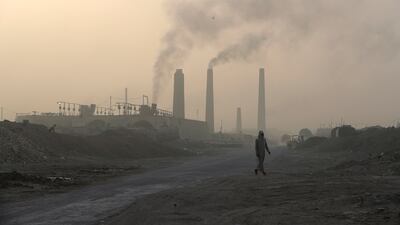
  • Smoke rises from brick factory stacks in Nahrawan, Baghdad. Tackling emissions from heavy industry is crucial to tackling global warming. Reuters
    Smoke rises from brick factory stacks in Nahrawan, Baghdad. Tackling emissions from heavy industry is crucial to tackling global warming. Reuters
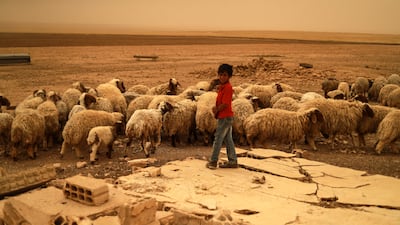
  • A boy stands near a flock of sheep as a sandstorm approaches in the Syrian countryside of Tabqa. Syria is among the countries most vulnerable and poorly prepared for climate change, which is expected to worsen. AFP
    A boy stands near a flock of sheep as a sandstorm approaches in the Syrian countryside of Tabqa. Syria is among the countries most vulnerable and poorly prepared for climate change, which is expected to worsen. AFP
  • Mountains of smouldering rubbish at the Bhalswa landfill in New Delhi, India. Reuters
    Mountains of smouldering rubbish at the Bhalswa landfill in New Delhi, India. Reuters
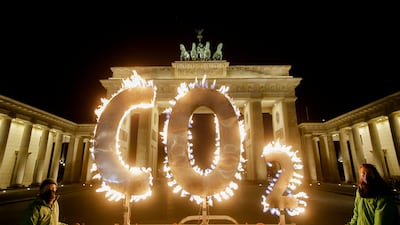
  • Greenpeace activists take part in a climate change protest in front of the Brandenburg Gate in Berlin in May. AP
    Greenpeace activists take part in a climate change protest in front of the Brandenburg Gate in Berlin in May. AP
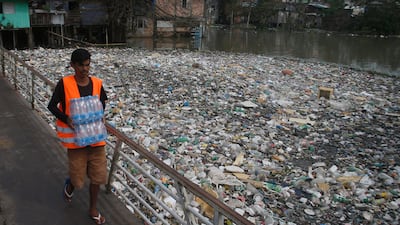
  • A man carries water bottles across the heavily polluted Negro River in Manaus, Brazil. About 35 tonnes of rubbish are removed daily from the river. AP
    A man carries water bottles across the heavily polluted Negro River in Manaus, Brazil. About 35 tonnes of rubbish are removed daily from the river. AP
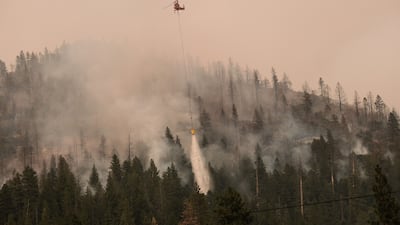
  • A helicopter drops water on a brush fire in California. Bloomberg
    A helicopter drops water on a brush fire in California. Bloomberg
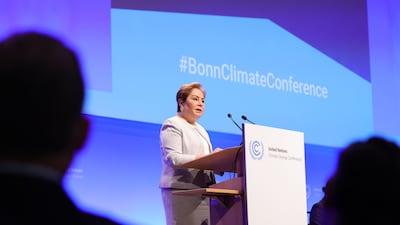
  • UN climate chief Patricia Espinosa speaks on the opening day of the Bonn climate change conference in Germany. Getty
    UN climate chief Patricia Espinosa speaks on the opening day of the Bonn climate change conference in Germany. Getty
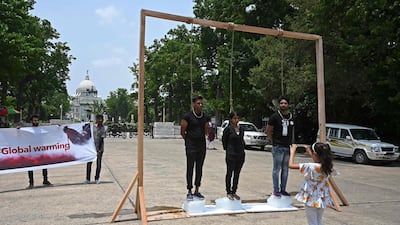
  • Activists take part in a demonstration to raise awareness of global warming, during an event to mark World Environment Day in Kolkata. AFP
    Activists take part in a demonstration to raise awareness of global warming, during an event to mark World Environment Day in Kolkata. AFP
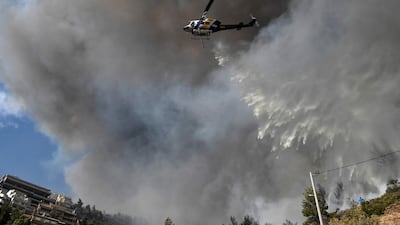
  • A helicopter drops water on a bushfire near a residential district in Athens. The fire forced residents to flee. AFP
    A helicopter drops water on a bushfire near a residential district in Athens. The fire forced residents to flee. AFP
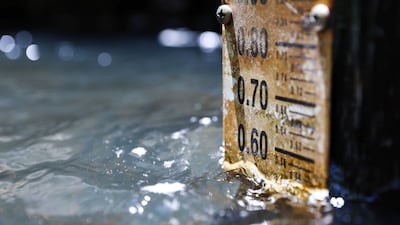
  • A gauge measures water levels in the Rio Nambe river, in New Mexico. Ninety per cent of the state is experiencing extreme drought. Getty
    A gauge measures water levels in the Rio Nambe river, in New Mexico. Ninety per cent of the state is experiencing extreme drought. Getty
  • Afghan refugees search for recyclable material from heaps of rubbish in Karachi, Pakistan. AP
    Afghan refugees search for recyclable material from heaps of rubbish in Karachi, Pakistan. AP
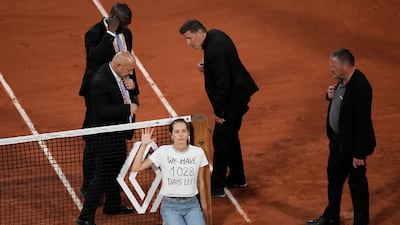
  • A climate activist ties herself to the net during the semi-final tennis match between Croatia's Marin Cilic and Norway's Casper Ruud at the French Open in Roland Garros in Paris. AP
    A climate activist ties herself to the net during the semi-final tennis match between Croatia's Marin Cilic and Norway's Casper Ruud at the French Open in Roland Garros in Paris. AP
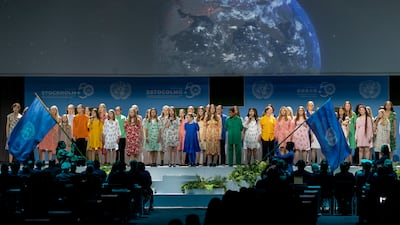
  • A dance group performs at a climate summit in Stockholm, Sweden. Getty
    A dance group performs at a climate summit in Stockholm, Sweden. Getty
  • US climate envoy John Kerry talks to a delegate at the Stockholm 50 climate summit. Getty
    US climate envoy John Kerry talks to a delegate at the Stockholm 50 climate summit. Getty
  • A boat is stranded during low tide at the Chebayesh marsh in Dhi Qar province, Iraq. Reuters
    A boat is stranded during low tide at the Chebayesh marsh in Dhi Qar province, Iraq. Reuters
  • A woman crosses a polluted river in Dhaka, Bangladesh. EPA
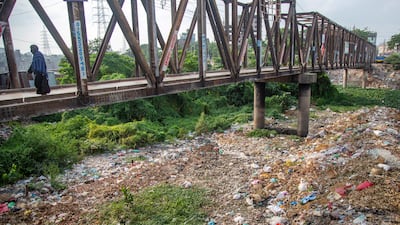
    A woman crosses a polluted river in Dhaka, Bangladesh. EPA
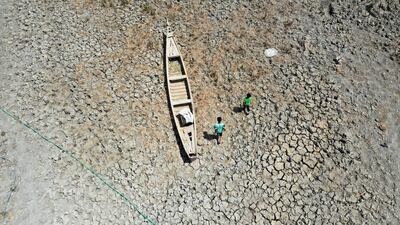
  • A man walks past an abandoned boat in the bed of a drought-affected reservoir on the outskirts of Sana'a, Yemen. EPA
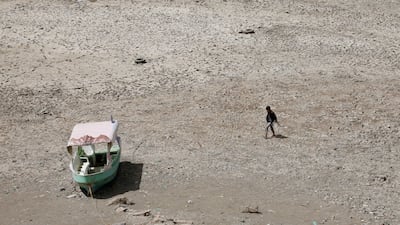
    A man walks past an abandoned boat in the bed of a drought-affected reservoir on the outskirts of Sana'a, Yemen. EPA

Barbados Prime Minister Mia Mottley has spearheaded discussions over development finance, with a reform plan called the “Bridgetown Initiative”.

This includes a $100 billion plan to drive more climate and development investment using currency guarantees from the IMF and other multilateral development banks, or MDBs – one idea among many to boost funding for developing nations.

Ms Mottley's special envoy Avinash Persaud said dealing with debt was going to “play a big role” in developing countries' response to climate change, citing a World Bank estimate that these nations will require $2.4 trillion annually for the next seven years to address costs from climate change, conflict and pandemics.

“Debt is going to increase, and debt is already very, very high for developing countries,” he told a media briefing last week.

Countries urged to 'reverse the fatal debt doom loop'

Ahead of the Paris summit, several solutions are being touted to address debt pressures facing developing countries.

Mr Persaud is pushing for climate-resilient debt clauses whereby repayments are suspended for two years in the event of a disaster such as a hurricane, which he says would provide Barbados with funds to the tune of 19 per cent of its gross domestic product in liquidity.

Small island developing states, which are especially vulnerable to climate impacts such as rising sea levels, spend at least 18 times more on servicing debts than they receive in climate finance, according to a 2022 report by the European Network on Debt and Development, a civil society coalition.

Another favoured tool is debt-for-nature or debt-for-climate swaps, explored by countries including Cape Verde and Zambia, where debt is restructured to allow funds to be freed up for investment in measures such as conservation and clean energy.

In 2021, Belize's $553 million swap reduced its debt level by more than 10 per cent of its GDP while investing in protection of the world's second-largest coral reef.

“The money that's being generated for conservation is money that otherwise would be leaving the country to pay for debt,” said Andrew Deutz, director of policy and finance at the Nature Conservancy, a US-based charity that was heavily involved in the swap agreement.

Mr Deutz said these deals are not a “panacea for debt distress” and are expensive and complex to set up. But they can offer a “partial solution” for countries which could eventually be scaled up with a more standardised process supported by MDBs, he added.

Earlier this month, Ecuador agreed to a record $1.1 billion debt-for-nature deal to protect the Galapagos Islands, which was considered a breakthrough agreement by backers of the mechanism.

Yet some experts are sceptical about such debt relief tools.

“We don't see any of them as viable, adequate solutions to addressing the debt crisis now,” said Tess Woolfenden, senior policy and research officer at the campaign group Debt Justice.

Why are rich nations paying for climate 'loss and damage'? – video

Debt suspension clauses fail to address the crisis because they are only temporary and do not cancel or restructure debt, Ms Woolfenden said.

She also said debt-for-nature swaps are too small to make a meaningful difference to debt levels or nature goals, calling for debt cancellations and more grant financing instead of loans.

Last week, about 30 economists from the Earth4All initiative signed an open letter criticising the “low level of ambition” of proposals at the Paris summit and urging nations to “stop and reverse the fatal debt doom loop”, including through significant debt reductions.

Measures such as the G20 group of economies' Common Framework – a multilateral platform for debt restructuring – do not include a formal role for private creditors, which are responsible for the majority of developing countries' sovereign debt.

Establishing a new financial order?

The Paris summit will also discuss the increasing role of MDBs in global climate action, ahead of crucial annual meetings of the World Bank and IMF in Marrakech in October.

“Many MDBs are becoming climate banks,” said Annalisa Prizzon, principal research fellow at the Overseas Development Institute, a London-based think tank.

“You have long-term patient capital at a lower cost than what other sources may offer.” This is compared to private lenders with higher interest rates and shorter loan periods.

In 2021, the biggest MDBs gave nearly $51 billion in climate finance to low- and middle-income countries, according to a report by the lenders, but they are under pressure to do more.

The World Bank recently appointed a new president, former Mastercard chief executive Ajay Banga, who this month asked the lender's staff to “double down” on development and climate efforts.

Options available to MDBs include a capital injection from shareholders, lowering capital requirements to boost lending and, for the IMF, allocating emergency reserves to poorer countries for investments in climate adaptation and the energy transition, according to analysts.

“MDBs already work very closely indeed on climate, and there are constant efforts to work even more closely together,” said Danny Alexander, vice president of policy and strategy at the Asian Infrastructure Investment Bank.

He said among the bank's ideas is the creation of a joint MDB meeting every four years in which debt and other issues can be discussed to improve the response from the MDB system.

Franklin Steves, a sustainable finance expert at the E3G think tank, said developing nations are seeking a greater voice in how MDBs are run, but the “fundamental, underlying problem” is that rich countries like the US are reluctant to support governance reform.

He said several initiatives are being discussed to address the issue, such as new financing institutions which can fund climate projects with a more equal shareholding structure.

“Now that international financial architecture reform is very much on the top political table … I think there's much more prospect of these kinds of proposals getting through,” Mr Steves said.


MEYDAN%20RACECARD
%3Cp%3E%3Cstrong%3E6pm%20%3C%2Fstrong%3EArabian%20Adventures%20%E2%80%93%20Maiden%20(TB)%20Dh82%2C500%20(Dirt)%201%2C200m%0D%3Cbr%3E%3Cstrong%3E6.35pm%20%3C%2Fstrong%3EEmirates%20Sky%20Cargo%20%E2%80%93%20Handicap%20(TB)%2087%2C500%20(D)%202%2C000m%0D%3Cbr%3E%3Cstrong%3E7.10pm%20%3C%2Fstrong%3EEmirates%20Holiday%20%E2%80%93%20Maiden%20(TB)%20Dh82%2C500%20(D)%201%2C400m%0D%3Cbr%3E%3Cstrong%3E7.45pm%20%3C%2Fstrong%3EEmirates%20Skywards%20%E2%80%93%20Handicap%20(TB)%20Dh87%2C500%20(D)%201%2C400m%0D%3Cbr%3E%3Cstrong%3E8.20pm%3C%2Fstrong%3E%20Emirates%20Airline%20%E2%80%93%20Handicap%20(TB)%20Dh105%2C000%20(D)%201%2C600m%0D%3Cbr%3E%3Cstrong%3E8.55pm%20%3C%2Fstrong%3EEmirates%20Airline%20%E2%80%93%20Handicap%20(TB)%20Dh105%2C000%20(D)%201%2C900m%0D%3Cbr%3E%3Cstrong%3E9.30pm%20%3C%2Fstrong%3EEmirates.com%20%E2%80%93%20Handicap%20(TB_%20Dh87%2C500%20(D)%201%2C200m%3C%2Fp%3E%0A
Museum of the Future in numbers
  •  78 metres is the height of the museum
  •  30,000 square metres is its total area
  •  17,000 square metres is the length of the stainless steel facade
  •  14 kilometres is the length of LED lights used on the facade
  •  1,024 individual pieces make up the exterior 
  •  7 floors in all, with one for administrative offices
  •  2,400 diagonally intersecting steel members frame the torus shape
  •  100 species of trees and plants dot the gardens
  •  Dh145 is the price of a ticket

Mercer, the investment consulting arm of US services company Marsh & McLennan, expects its wealth division to at least double its assets under management (AUM) in the Middle East as wealth in the region continues to grow despite economic headwinds, a company official said.

Mercer Wealth, which globally has $160 billion in AUM, plans to boost its AUM in the region to $2-$3bn in the next 2-3 years from the present $1bn, said Yasir AbuShaban, a Dubai-based principal with Mercer Wealth.

Within the next two to three years, we are looking at reaching $2 to $3 billion as a conservative estimate and we do see an opportunity to do so,” said Mr AbuShaban.

Mercer does not directly make investments, but allocates clients’ money they have discretion to, to professional asset managers. They also provide advice to clients.

“We have buying power. We can negotiate on their (client’s) behalf with asset managers to provide them lower fees than they otherwise would have to get on their own,” he added.

Mercer Wealth’s clients include sovereign wealth funds, family offices, and insurance companies among others.

From its office in Dubai, Mercer also looks after Africa, India and Turkey, where they also see opportunity for growth.

Wealth creation in Middle East and Africa (MEA) grew 8.5 per cent to $8.1 trillion last year from $7.5tn in 2015, higher than last year’s global average of 6 per cent and the second-highest growth in a region after Asia-Pacific which grew 9.9 per cent, according to consultancy Boston Consulting Group (BCG). In the region, where wealth grew just 1.9 per cent in 2015 compared with 2014, a pickup in oil prices has helped in wealth generation.

BCG is forecasting MEA wealth will rise to $12tn by 2021, growing at an annual average of 8 per cent.

Drivers of wealth generation in the region will be split evenly between new wealth creation and growth of performance of existing assets, according to BCG.

Another general trend in the region is clients’ looking for a comprehensive approach to investing, according to Mr AbuShaban.

“Institutional investors or some of the families are seeing a slowdown in the available capital they have to invest and in that sense they are looking at optimizing the way they manage their portfolios and making sure they are not investing haphazardly and different parts of their investment are working together,” said Mr AbuShaban.

Some clients also have a higher appetite for risk, given the low interest-rate environment that does not provide enough yield for some institutional investors. These clients are keen to invest in illiquid assets, such as private equity and infrastructure.

“What we have seen is a desire for higher returns in what has been a low-return environment specifically in various fixed income or bonds,” he said.

“In this environment, we have seen a de facto increase in the risk that clients are taking in things like illiquid investments, private equity investments, infrastructure and private debt, those kind of investments were higher illiquidity results in incrementally higher returns.”

The Abu Dhabi Investment Authority, one of the largest sovereign wealth funds, said in its 2016 report that has gradually increased its exposure in direct private equity and private credit transactions, mainly in Asian markets and especially in China and India. The authority’s private equity department focused on structured equities owing to “their defensive characteristics.”

ANDROID%20VERSION%20NAMES%2C%20IN%20ORDER
%3Cp%3EAndroid%20Alpha%3C%2Fp%3E%0A%3Cp%3EAndroid%20Beta%3C%2Fp%3E%0A%3Cp%3EAndroid%20Cupcake%3C%2Fp%3E%0A%3Cp%3EAndroid%20Donut%3C%2Fp%3E%0A%3Cp%3EAndroid%20Eclair%3C%2Fp%3E%0A%3Cp%3EAndroid%20Froyo%3C%2Fp%3E%0A%3Cp%3EAndroid%20Gingerbread%3C%2Fp%3E%0A%3Cp%3EAndroid%20Honeycomb%3C%2Fp%3E%0A%3Cp%3EAndroid%20Ice%20Cream%20Sandwich%3C%2Fp%3E%0A%3Cp%3EAndroid%20Jelly%20Bean%3C%2Fp%3E%0A%3Cp%3EAndroid%20KitKat%3C%2Fp%3E%0A%3Cp%3EAndroid%20Lollipop%3C%2Fp%3E%0A%3Cp%3EAndroid%20Marshmallow%3C%2Fp%3E%0A%3Cp%3EAndroid%20Nougat%3C%2Fp%3E%0A%3Cp%3EAndroid%20Oreo%3C%2Fp%3E%0A%3Cp%3EAndroid%20Pie%3C%2Fp%3E%0A%3Cp%3EAndroid%2010%20(Quince%20Tart*)%3C%2Fp%3E%0A%3Cp%3EAndroid%2011%20(Red%20Velvet%20Cake*)%3C%2Fp%3E%0A%3Cp%3EAndroid%2012%20(Snow%20Cone*)%3C%2Fp%3E%0A%3Cp%3EAndroid%2013%20(Tiramisu*)%3C%2Fp%3E%0A%3Cp%3EAndroid%2014%20(Upside%20Down%20Cake*)%3C%2Fp%3E%0A%3Cp%3EAndroid%2015%20(Vanilla%20Ice%20Cream*)%3C%2Fp%3E%0A%3Cp%3E%3Cem%3E*%20internal%20codenames%3C%2Fem%3E%3C%2Fp%3E%0A
The specs
Engine: 2.0-litre turbo 4-cyl

Transmission: eight-speed auto

Power: 190bhp

Torque: 300Nm

Price: Dh169,900

On sale: now 

The%20Witcher%20-%20season%20three
%3Cp%3E%3Cstrong%3EDirector%3A%20%3C%2Fstrong%3EVarious%0D%3Cbr%3E%3Cstrong%3E%0D%3Cbr%3EStars%3A%20%3C%2Fstrong%3EHenry%20Cavill%2C%20Freya%20Allan%2C%20Anya%20Chalotra%3Cstrong%3E%0D%3Cbr%3E%0D%3Cbr%3ERating%3A%3C%2Fstrong%3E%203%2F5%3C%2Fp%3E%0A
Formula Middle East Calendar (Formula Regional and Formula 4)
Round 1: January 17-19, Yas Marina Circuit – Abu Dhabi
 
Round 2: January 22-23, Yas Marina Circuit – Abu Dhabi
 
Round 3: February 7-9, Dubai Autodrome – Dubai
 
Round 4: February 14-16, Yas Marina Circuit – Abu Dhabi
 
Round 5: February 25-27, Jeddah Corniche Circuit – Saudi Arabia
Keane on …

Liverpool’s Uefa Champions League bid: “They’re great. With the attacking force they have, for me, they’re certainly one of the favourites. You look at the teams left in it - they’re capable of scoring against anybody at any given time. Defensively they’ve been good, so I don’t see any reason why they couldn’t go on and win it.”

Mohamed Salah’s debut campaign at Anfield: “Unbelievable. He’s been phenomenal. You can name the front three, but for him on a personal level, he’s been unreal. He’s been great to watch and hopefully he can continue now until the end of the season - which I’m sure he will, because he’s been in fine form. He’s been incredible this season.”

Zlatan Ibrahimovic’s instant impact at former club LA Galaxy: “Brilliant. It’s been a great start for him and for the club. They were crying out for another big name there. They were lacking that, for the prestige of LA Galaxy. And now they have one of the finest stars. I hope they can go win something this year.”

Dirham Stretcher tips for having a baby in the UAE

Selma Abdelhamid, the group's moderator, offers her guide to guide the cost of having a young family:

• Buy second hand stuff

 They grow so fast. Don't get a second hand car seat though, unless you 100 per cent know it's not expired and hasn't been in an accident.

• Get a health card and vaccinate your child for free at government health centres

 Ms Ma says she discovered this after spending thousands on vaccinations at private clinics.

• Join mum and baby coffee mornings provided by clinics, babysitting companies or nurseries.

Before joining baby classes ask for a free trial session. This way you will know if it's for you or not. You'll be surprised how great some classes are and how bad others are.

• Once baby is ready for solids, cook at home

Take the food with you in reusable pouches or jars. You'll save a fortune and you'll know exactly what you're feeding your child.

Types of bank fraud

1) Phishing

Fraudsters send an unsolicited email that appears to be from a financial institution or online retailer. The hoax email requests that you provide sensitive information, often by clicking on to a link leading to a fake website.

2) Smishing

The SMS equivalent of phishing. Fraudsters falsify the telephone number through “text spoofing,” so that it appears to be a genuine text from the bank.

3) Vishing

The telephone equivalent of phishing and smishing. Fraudsters may pose as bank staff, police or government officials. They may persuade the consumer to transfer money or divulge personal information.

4) SIM swap

Fraudsters duplicate the SIM of your mobile number without your knowledge or authorisation, allowing them to conduct financial transactions with your bank.

5) Identity theft

Someone illegally obtains your confidential information, through various ways, such as theft of your wallet, bank and utility bill statements, computer intrusion and social networks.

6) Prize scams

Fraudsters claiming to be authorised representatives from well-known organisations (such as Etisalat, du, Dubai Shopping Festival, Expo2020, Lulu Hypermarket etc) contact victims to tell them they have won a cash prize and request them to share confidential banking details to transfer the prize money.

Updated: June 21, 2023, 9:47 PM