Defence spending around the world reached record levels in 2022, the Stockholm International Peace Research Institute has said.
Expenditure around the world rose to $2.24 trillion, an increase of 3.7 per cent in real terms, it said.
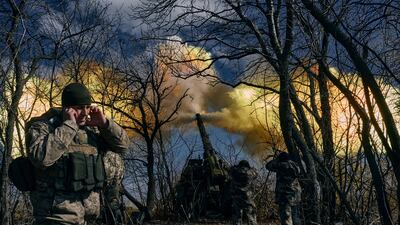
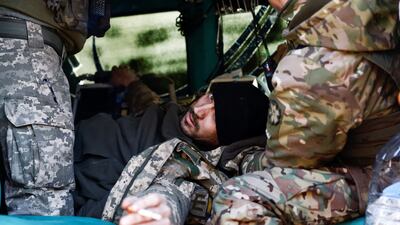
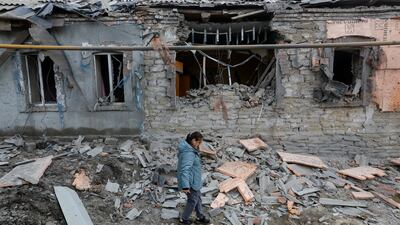
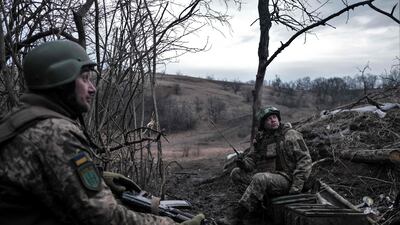
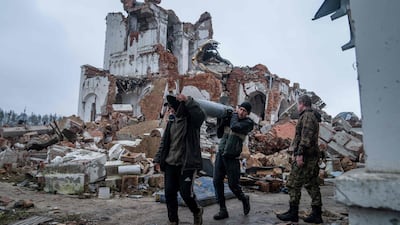
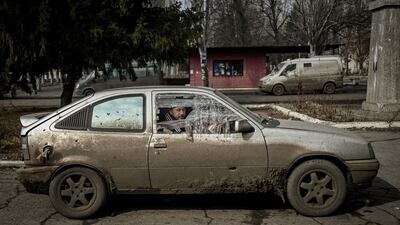
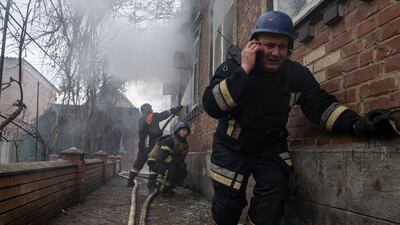
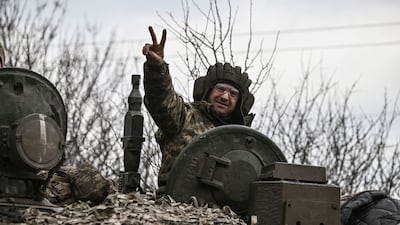
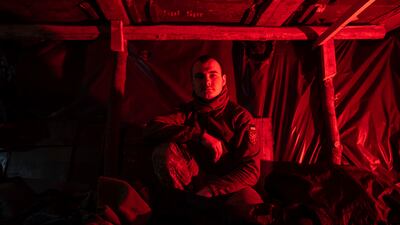
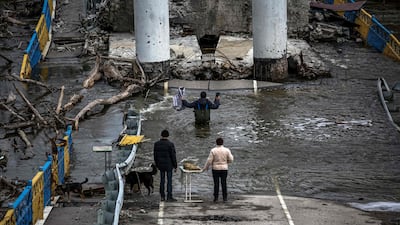
The surge has been driven largely by the Ukraine conflict, with countries sending military aid to the country following Russia’s invasion in February 2022.
Kyiv's allies have so far spent or pledged $128 billion worth of aid, much of it involving military assistance.
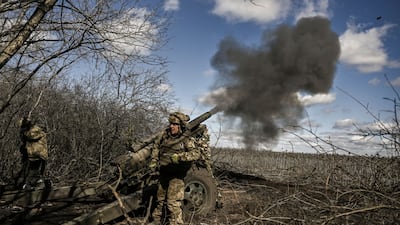
European states have provided about $55 billion in aid, sending German Leopard 2 tanks, British Challenger 2 tanks, a host of artillery systems, portable anti-tank weapons and air defence systems to help Ukraine.
Compared to the Middle East, only Saudi Arabia's defence spending increases come close to the surge in Europe, Sipri said, with defence expenditure in the kingdom rising by 16 per cent to $75 billion, its first increase since 2018.
In total, the European figures put defence expenditure on the continent back to Cold War levels, when Nato was in a standoff with the Soviet Union and its East European Warsaw Pact allies. The rival military coalitions deployed tens of thousands of armoured vehicles, thousands of nuclear weapons and hundreds of thousands of soldiers along the border of a divided Europe at the height of the crisis.
"Military expenditure by states in Central and Western Europe totalled $345 billion in 2022," Sipri reported.
"In real terms, spending by these states for the first time surpassed that in 1989, as the cold war was ending."
In the current crisis, Germany has sent Patriot air defence missile launchers to Ukraine, with the ammunition supplied by the Netherlands.
A Patriot launcher costs $10 million and missiles are priced at about $4 million each, but the system has a proven ability to shoot down ballistic missiles, low-flying cruise missiles and drones.
Some of the biggest increases in military spending have been recorded in eastern Europe.
Spending in Finland has increased by 36 per cent, Lithuania's spending is up 27 per cent, while in Sweden and Poland it has risen by 12 per cent and 11 per cent, respectively, said the institute, which tracks military budgets and the import and export of arms.
Observers say countries that were under Soviet occupation during the Cold War, such as Poland, have pushed harder to send weapons to Kyiv.
But the challenge of supplying military aid amid a high-intensity war has strained Nato’s defence capacity.
Europe and the US have struggled to produce artillery rounds quickly enough, with Ukraine firing about 5,000 artillery shells a day during the peak of the conflict.
Most of the artillery and air defence systems used by Ukraine date back to the Cold War and were made by Soviet companies, making it difficult for Nato to resupply them.
Russia is also reportedly running low on shells, having fired between 20,000 and 50,000 a day at the height of fighting last summer, according to an EU estimate.
European military spending increased by 13 per cent last year and many countries across the continent raised military budgets as tension grew.
"This included multi-year plans to boost spending from several governments," said Diego Lopes da Silva, a senior researcher at the institute.
"As a result, we can reasonably expect military expenditure in central and western Europe to keep rising in the years ahead."
Ukraine's military spending rose 640 per cent in 2022, the largest annual increase recorded in the institute's data going back to 1949.
That total does not include the military aid provided by its allies.
Military aid to Ukraine accounted for 2.3 per cent of total US defence spending in 2022, the institute said.
Meanwhile, Russia's military spending grew by an estimated 9.2 per cent, although the institute said those figures were "highly uncertain given the increasing opaqueness of financial authorities" since the Ukraine war began.
"The difference between Russia's budgetary plans and its actual military spending in 2022 suggests the invasion of Ukraine has cost Russia far more than it anticipated," said Lucie Beraud-Sudreau, director of the institute's military expenditure and arms production programme.

Recycle Reuse Repurpose
New central waste facility on site at expo Dubai South area to handle estimated 173 tonne of waste generated daily by millions of visitors
Recyclables such as plastic, paper, glass will be collected from bins on the expo site and taken to the new expo Central Waste Facility on site
Organic waste will be processed at the new onsite Central Waste Facility, treated and converted into compost to be re-used to green the expo area
Of 173 tonnes of waste daily, an estimated 39 per cent will be recyclables, 48 per cent organic waste and 13 per cent general waste.
About 147 tonnes will be recycled and converted to new products at another existing facility in Ras Al Khor
Recycling at Ras Al Khor unit:
Plastic items to be converted to plastic bags and recycled
Paper pulp moulded products such as cup carriers, egg trays, seed pots, and food packaging trays
Glass waste into bowls, lights, candle holders, serving trays and coasters
Aim is for 85 per cent of waste from the site to be diverted from landfill
What it means to be a conservationist
Who is Enric Sala?
Enric Sala is an expert on marine conservation and is currently the National Geographic Society's Explorer-in-Residence. His love of the sea started with his childhood in Spain, inspired by the example of the legendary diver Jacques Cousteau. He has been a university professor of Oceanography in the US, as well as working at the Spanish National Council for Scientific Research and is a member of the World Economic Forum’s Global Future Council on Biodiversity and the Bio-Economy. He has dedicated his life to protecting life in the oceans. Enric describes himself as a flexitarian who only eats meat occasionally.
What is biodiversity?
According to the United Nations Environment Programme, all life on earth – including in its forests and oceans – forms a “rich tapestry of interconnecting and interdependent forces”. Biodiversity on earth today is the product of four billion years of evolution and consists of many millions of distinct biological species. The term ‘biodiversity’ is relatively new, popularised since the 1980s and coinciding with an understanding of the growing threats to the natural world including habitat loss, pollution and climate change. The loss of biodiversity itself is dangerous because it contributes to clean, consistent water flows, food security, protection from floods and storms and a stable climate. The natural world can be an ally in combating global climate change but to do so it must be protected. Nations are working to achieve this, including setting targets to be reached by 2020 for the protection of the natural state of 17 per cent of the land and 10 per cent of the oceans. However, these are well short of what is needed, according to experts, with half the land needed to be in a natural state to help avert disaster.
Traces%20of%20Enayat
%3Cp%3E%3Cstrong%3EAuthor%3A%3C%2Fstrong%3E%20Iman%20Mersal%3Cbr%3E%3Cstrong%3EPublisher%3A%3C%2Fstrong%3E%20And%20Other%20Stories%3Cbr%3E%3Cstrong%3EPages%3A%3C%2Fstrong%3E%20240%3C%2Fp%3E%0A
Classification of skills
A worker is categorised as skilled by the MOHRE based on nine levels given in the International Standard Classification of Occupations (ISCO) issued by the International Labour Organisation.
A skilled worker would be someone at a professional level (levels 1 – 5) which includes managers, professionals, technicians and associate professionals, clerical support workers, and service and sales workers.
The worker must also have an attested educational certificate higher than secondary or an equivalent certification, and earn a monthly salary of at least Dh4,000.
How to wear a kandura
Dos
- Wear the right fabric for the right season and occasion
- Always ask for the dress code if you don’t know
- Wear a white kandura, white ghutra / shemagh (headwear) and black shoes for work
- Wear 100 per cent cotton under the kandura as most fabrics are polyester
Don’ts
- Wear hamdania for work, always wear a ghutra and agal
- Buy a kandura only based on how it feels; ask questions about the fabric and understand what you are buying
Ferrari 12Cilindri specs
Engine: naturally aspirated 6.5-liter V12
Power: 819hp
Torque: 678Nm at 7,250rpm
Price: From Dh1,700,000
Available: Now
Ten tax points to be aware of in 2026
1. Domestic VAT refund amendments: request your refund within five years
If a business does not apply for the refund on time, they lose their credit.
2. E-invoicing in the UAE
Businesses should continue preparing for the implementation of e-invoicing in the UAE, with 2026 a preparation and transition period ahead of phased mandatory adoption.
3. More tax audits
Tax authorities are increasingly using data already available across multiple filings to identify audit risks.
4. More beneficial VAT and excise tax penalty regime
Tax disputes are expected to become more frequent and more structured, with clearer administrative objection and appeal processes. The UAE has adopted a new penalty regime for VAT and excise disputes, which now mirrors the penalty regime for corporate tax.
5. Greater emphasis on statutory audit
There is a greater need for the accuracy of financial statements. The International Financial Reporting Standards standards need to be strictly adhered to and, as a result, the quality of the audits will need to increase.
6. Further transfer pricing enforcement
Transfer pricing enforcement, which refers to the practice of establishing prices for internal transactions between related entities, is expected to broaden in scope. The UAE will shortly open the possibility to negotiate advance pricing agreements, or essentially rulings for transfer pricing purposes.
7. Limited time periods for audits
Recent amendments also introduce a default five-year limitation period for tax audits and assessments, subject to specific statutory exceptions. While the standard audit and assessment period is five years, this may be extended to up to 15 years in cases involving fraud or tax evasion.
8. Pillar 2 implementation
Many multinational groups will begin to feel the practical effect of the Domestic Minimum Top-Up Tax (DMTT), the UAE's implementation of the OECD’s global minimum tax under Pillar 2. While the rules apply for financial years starting on or after January 1, 2025, it is 2026 that marks the transition to an operational phase.
9. Reduced compliance obligations for imported goods and services
Businesses that apply the reverse-charge mechanism for VAT purposes in the UAE may benefit from reduced compliance obligations.
10. Substance and CbC reporting focus
Tax authorities are expected to continue strengthening the enforcement of economic substance and Country-by-Country (CbC) reporting frameworks. In the UAE, these regimes are increasingly being used as risk-assessment tools, providing tax authorities with a comprehensive view of multinational groups’ global footprints and enabling them to assess whether profits are aligned with real economic activity.
Contributed by Thomas Vanhee and Hend Rashwan, Aurifer
The biog
Family: Parents and four sisters
Education: Bachelor’s degree in business management and marketing at American University of Sharjah
A self-confessed foodie, she enjoys trying out new cuisines, her current favourite is the poke superfood bowls
Likes reading: autobiographies and fiction
Favourite holiday destination: Italy
Posts information about challenges, events, runs in other emirates on the group's Instagram account @Anagowrunning
Has created a database of Emirati and GCC sportspeople on Instagram @abeermk, highlight: Athletes
Apart from training, also talks to women about nutrition, healthy lifestyle, diabetes, cholesterol, blood pressure
India Test squad
Virat Kohli (c), Mayank Agarwal, Rohit Sharma, Cheteshwar Pujara, Ajinkya Rahane, Hanuma Vihari, Rishabh Pant (wk), Wriddhiman Saha (wk), Ravichandran Ashwin, Ravindra Jadeja, Kuldeep Yadav, Mohammed Shami, Umesh Yadav, Ishant Sharma, Shubman Gill
More on Quran memorisation:
UAE currency: the story behind the money in your pockets
How to apply for a drone permit
- Individuals must register on UAE Drone app or website using their UAE Pass
- Add all their personal details, including name, nationality, passport number, Emiratis ID, email and phone number
- Upload the training certificate from a centre accredited by the GCAA
- Submit their request
What are the regulations?
- Fly it within visual line of sight
- Never over populated areas
- Ensure maximum flying height of 400 feet (122 metres) above ground level is not crossed
- Users must avoid flying over restricted areas listed on the UAE Drone app
- Only fly the drone during the day, and never at night
- Should have a live feed of the drone flight
- Drones must weigh 5 kg or less
Killing of Qassem Suleimani
The specs: 2018 Nissan 370Z Nismo
Price, base / as tested: Dh182,178
Engine: 3.7-litre V6
Power: 350hp @ 7,400rpm
Torque: 374Nm @ 5,200rpm
Transmission: Seven-speed automatic
Fuel consumption, combined: 10.5L / 100km
BMW M5 specs
Engine: 4.4-litre twin-turbo V-8 petrol enging with additional electric motor
Power: 727hp
Torque: 1,000Nm
Transmission: 8-speed auto
Fuel consumption: 10.6L/100km
On sale: Now
Price: From Dh650,000
The%20specs
%3Cp%3E%3Cstrong%3EPowertrain%3A%20%3C%2Fstrong%3ESingle%20electric%20motor%0D%3Cbr%3E%3Cstrong%3EPower%3A%20%3C%2Fstrong%3E201hp%0D%3Cbr%3E%3Cstrong%3ETorque%3A%20%3C%2Fstrong%3E310Nm%0D%3Cbr%3E%3Cstrong%3ETransmission%3A%20%3C%2Fstrong%3ESingle-speed%20auto%0D%3Cbr%3E%3Cstrong%3EBattery%3A%20%3C%2Fstrong%3E53kWh%20lithium-ion%20battery%20pack%20(GS%20base%20model)%3B%2070kWh%20battery%20pack%20(GF)%0D%3Cbr%3E%3Cstrong%3ETouring%20range%3A%20%3C%2Fstrong%3E350km%20(GS)%3B%20480km%20(GF)%0D%3Cbr%3E%3Cstrong%3EPrice%3A%20%3C%2Fstrong%3EFrom%20Dh129%2C900%20(GS)%3B%20Dh149%2C000%20(GF)%0D%3Cbr%3E%3Cstrong%3EOn%20sale%3A%3C%2Fstrong%3E%20Now%3C%2Fp%3E%0A
Mobile phone packages comparison
What are NFTs?
Are non-fungible tokens a currency, asset, or a licensing instrument? Arnab Das, global market strategist EMEA at Invesco, says they are mix of all of three.
You can buy, hold and use NFTs just like US dollars and Bitcoins. “They can appreciate in value and even produce cash flows.”
However, while money is fungible, NFTs are not. “One Bitcoin, dollar, euro or dirham is largely indistinguishable from the next. Nothing ties a dollar bill to a particular owner, for example. Nor does it tie you to to any goods, services or assets you bought with that currency. In contrast, NFTs confer specific ownership,” Mr Das says.
This makes NFTs closer to a piece of intellectual property such as a work of art or licence, as you can claim royalties or profit by exchanging it at a higher value later, Mr Das says. “They could provide a sustainable income stream.”
This income will depend on future demand and use, which makes NFTs difficult to value. “However, there is a credible use case for many forms of intellectual property, notably art, songs, videos,” Mr Das says.
Company%20profile
%3Cp%3E%3Cstrong%3ECompany%20name%3A%20%3C%2Fstrong%3EHakbah%0D%3Cbr%3E%3Cstrong%3EStarted%3A%20%3C%2Fstrong%3E2018%0D%3Cbr%3E%3Cstrong%3EFounder%3A%20%3C%2Fstrong%3ENaif%20AbuSaida%0D%3Cbr%3E%3Cstrong%3EBased%3A%20%3C%2Fstrong%3ESaudi%20Arabia%0D%3Cbr%3E%3Cstrong%3ESector%3A%20%3C%2Fstrong%3EFinTech%0D%3Cbr%3E%3Cstrong%3ECurrent%20number%20of%20staff%3A%20%3C%2Fstrong%3E22%20%0D%3Cbr%3E%3Cstrong%3EInitial%20investment%3A%20%3C%2Fstrong%3E%24200%2C000%0D%3Cbr%3E%3Cstrong%3EInvestment%20stage%3A%20%3C%2Fstrong%3Epre-Series%20A%0D%3Cbr%3E%3Cstrong%3EInvestors%3A%20%3C%2Fstrong%3EGlobal%20Ventures%20and%20Aditum%20Investment%20Management%0D%3Cbr%3E%3Cbr%3E%3C%2Fp%3E%0A