Rohingya refugees told The National they do not know how they came to be on repatriation lists. Antolin Avezuela for The National

More than 100 babies among Rohingya refugees in disputed Myanmar return plan


Anjana Sankar
  • English
  • Arabic

More than 1,000 Rohingya refugees, including 150 newborn babies, are on the list of a controversial pilot repatriation project to Myanmar, despite concerns regarding the safety of their return.

Mohammed Mizanur Rahman, Bangladesh's Refugee Relief and Repatriation Commissioner, told The National: “There is a total of 1,140 Rohingya in the list that Myanmar's government sent us, 711 people from the list have got their papers already cleared. The remaining 429 have to be verified,”

A Myanmar delegation visited the Rohingya refugee camps in Bangladesh’s Cox’s Bazar last month and interviewed 429 refugees, he confirmed.

Mr Rahman said that about 150 newborns were on the list.

Bangladesh does not know the basis on which these 1,140 refugees had been selected, nor the timetable for their repatriation, Mr Rahman said.

“The Myanmar officials came and conducted interviews with those that needed verification. Now, we are waiting for their response. But we do not know when they can go home.”

The United Nations High Commissioner for Refugees (UNHCR) said it was aware of the officials' visit but was not involved in the process.

Bangladesh is believed to be home to the world’s largest refugee settlement, hosting more than 1 million Rohingya refugees, most of them fleeing in 2017 after a brutal military-led crackdown on the ethnic minority in Rakhine state, in the north of Myanmar.

It is feared that conditions for the Muslim minorities in Buddhist-majority Myanmar have worsened since the 2021 military coup,

“There is no hide and seek from our side," Mr Rahman said. "We are clear that the repatriation process should be voluntary, done with dignity and should be sustainable. We hope we will be ensured about the next phases and a clear pathway forward to send the Rohingya refugees to their home country.”

'We don’t trust them'

Some of the Rohingya refugees who are on the repatriation list told The National they do not trust the process initiated by the military junta.

“I never applied for a voluntary repatriation, I do not know how me and my family made it to the list,” Abu Sufyan, 30, who was interviewed by the visiting Myanmar officials, told The National.

“There are 1,800 people in my block and 23 made it to the list including me, my wife and my two children. We were summoned to the repatriation centres in Teknaf.

“Nobody asked us whether we are willing to go back and on what conditions. They just asked us about some people in our villages in Rakhine.”

Mr Sufyan said he was shocked to later discover that his wife and kids made it to the final list — but not him. “How is it possible for just them to go back without me? I am convinced that this is just a game they are playing with us to build an image in front of the world.”

Many refugees that The National spoke to also said they were not willing to return to Myanmar without any assurances of citizenship and other basic rights.

Sayedul Karim, 23, a Rohingya refugee activist, told The National that the whole exercise of repatriation was pointless without bringing the perpetrators of the 2017 genocide to justice.

“We are still fighting for justice in the International Court of Justice. It has been proven beyond doubt that there is no limit to the crimes against humanity committed by the Myanmar military.”

Mr Karim, who has six members of his immediate family living in the camp, said many refugees would rather suffer the dire situation in Bangladesh than return and be under the mercy of the Myanmar military.

“We do not even know where we are going back to because many of the villages were torched or bulldozed by the military. We don’t have homes to go back to. What if they kill us after a few months of return?”

A Rohingya refugee at Cox's Bazar, Bangladesh, in the aftermath of a fire. Reuters

Conditions not suitable for safe return

Humanitarian organisations have also expressed reservations about the repatriation process.

The New York-based Human Rights Watch has urged Bangladesh to call off the plan, claiming Rohingya refugees' "lives and liberty would be at grave risk".

UNHCR said conditions in Myanmar’s northern Rakhine State were “not conducive to the sustainable return of Rohingya refugees."

“At the same time, we reiterate that every refugee has a right to return to their home country based on an informed choice, but that no refugee should be forced to do so,” the UN agency said in a statement.

Chris Lewa, co-ordinator of the Arakan Project, a Rohingya advocacy group, told The National that nothing had changed for the Rohingya in northern Rakhine since 2017.

“There is no safety," he said.

“150,000 displaced by violence in 2012 are still in 'internment camps' in central Rakhine 10 years later. In 2022, more than 2,500 Rohingya were arrested for travelling without permission outside Rakhine and face two to five years imprisonment for unauthorised travel.

“In addition, the armed conflict between the Arakan Army and the Myanmar Armed Forces could resume any time, and the Rohingya still residing in Rakhine were trapped between the two warring parties when clashes occurred."

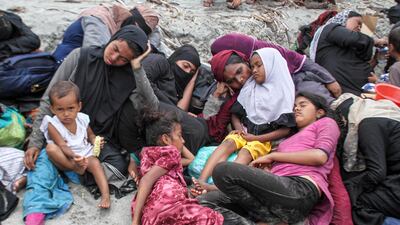
  • Rohingya women and children rest on the sand after making the sea crossing from Bangladesh to Aceh province, Indonesia. Reuters
    Rohingya women and children rest on the sand after making the sea crossing from Bangladesh to Aceh province, Indonesia. Reuters
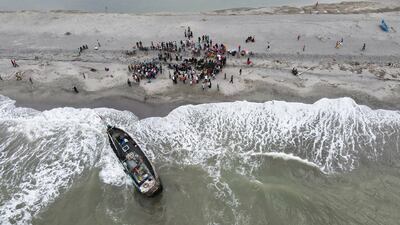
  • A boat carrying Rohingya stranded on Lampanah beach, Aceh province. The UN says the official recorded drowning toll of 350 in 2022 was the 'tip of the iceberg', with many more feared dead. Reuters
    A boat carrying Rohingya stranded on Lampanah beach, Aceh province. The UN says the official recorded drowning toll of 350 in 2022 was the 'tip of the iceberg', with many more feared dead. Reuters
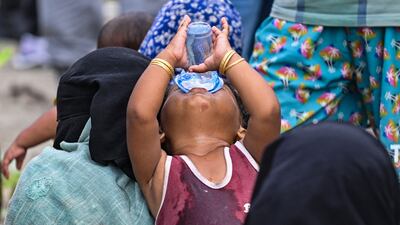
  • A child drinks after arriving by boat in Indonesia. Many Rohingya are fleeing refugee camps in Cox's Bazaar, Bangladesh, where kidnapping, rape and violence have become common. AFP
    A child drinks after arriving by boat in Indonesia. Many Rohingya are fleeing refugee camps in Cox's Bazaar, Bangladesh, where kidnapping, rape and violence have become common. AFP
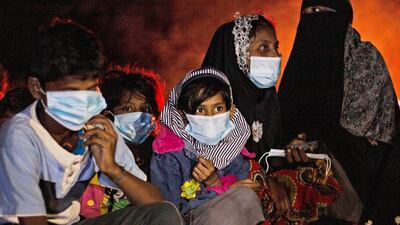
  • Families sit by a fire on a beach on Idaman Island in East Aceh, Indonesia. Despite the risks of crossing the Andaman Sea, the prospect of life in Malaysia and Indonesia attracts thousands. AP
    Families sit by a fire on a beach on Idaman Island in East Aceh, Indonesia. Despite the risks of crossing the Andaman Sea, the prospect of life in Malaysia and Indonesia attracts thousands. AP
  • People smugglers charge about $5,000 for a seat on a vessel from Bangladesh to Indonesia, Thailand or Malaysia. Conditions on board are often grim. AFP
    People smugglers charge about $5,000 for a seat on a vessel from Bangladesh to Indonesia, Thailand or Malaysia. Conditions on board are often grim. AFP
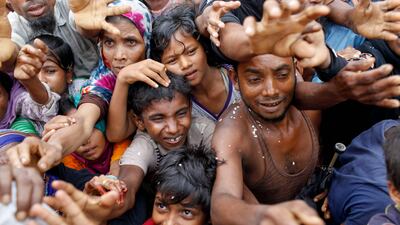
  • Rohingya refugees from Myanmar wait for aid at the Kutupalong refugee camp, the largest in the world, in Bangladesh. AFP
    Rohingya refugees from Myanmar wait for aid at the Kutupalong refugee camp, the largest in the world, in Bangladesh. AFP
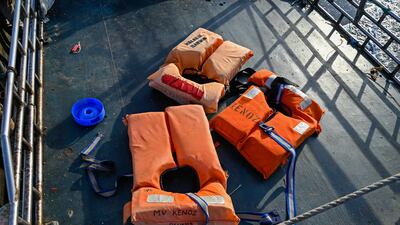
  • Lifejackets lie in a boat used to ferry Rohingya refugees across the water. AFP
    Lifejackets lie in a boat used to ferry Rohingya refugees across the water. AFP
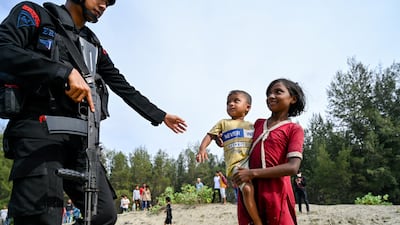
  • Indonesian police assist Rohingya refugee children at a beach in Aceh province. AFP
    Indonesian police assist Rohingya refugee children at a beach in Aceh province. AFP
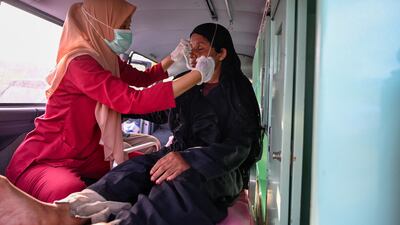
  • A health worker helps a Rohingya refugee after she arrived by boat on the coast of Aceh. AFP
    A health worker helps a Rohingya refugee after she arrived by boat on the coast of Aceh. AFP
Our legal consultant

Name: Dr Hassan Mohsen Elhais

Position: legal consultant with Al Rowaad Advocates and Legal Consultants.

UPI facts

More than 2.2 million Indian tourists arrived in UAE in 2023
More than 3.5 million Indians reside in UAE
Indian tourists can make purchases in UAE using rupee accounts in India through QR-code-based UPI real-time payment systems
Indian residents in UAE can use their non-resident NRO and NRE accounts held in Indian banks linked to a UAE mobile number for UPI transactions

Company Profile:

Name: The Protein Bakeshop

Date of start: 2013

Founders: Rashi Chowdhary and Saad Umerani

Based: Dubai

Size, number of employees: 12

Funding/investors:  $400,000 (2018) 

THE%20HOLDOVERS
%3Cp%3E%3Cstrong%3EDirector%3A%20%3C%2Fstrong%3EAlexander%20Payne%3C%2Fp%3E%0A%3Cp%3E%3Cstrong%3EStarring%3A%3C%2Fstrong%3E%20Paul%20Giamatti%2C%20Da'Vine%20Joy%20Randolph%2C%20Dominic%20Sessa%3C%2Fp%3E%0A%3Cp%3E%3Cstrong%3ERating%3A%3C%2Fstrong%3E%204.5%2F5%3C%2Fp%3E%0A
THE BIO: Martin Van Almsick

Hometown: Cologne, Germany

Family: Wife Hanan Ahmed and their three children, Marrah (23), Tibijan (19), Amon (13)

Favourite dessert: Umm Ali with dark camel milk chocolate flakes

Favourite hobby: Football

Breakfast routine: a tall glass of camel milk

Avatar: Fire and Ash

Director: James Cameron

Starring: Sam Worthington, Sigourney Weaver, Zoe Saldana

Rating: 4.5/5

THREE
%3Cp%3EDirector%3A%20Nayla%20Al%20Khaja%3C%2Fp%3E%0A%3Cp%3EStarring%3A%20Jefferson%20Hall%2C%20Faten%20Ahmed%2C%20Noura%20Alabed%2C%20Saud%20Alzarooni%3C%2Fp%3E%0A%3Cp%3ERating%3A%203.5%2F5%3C%2Fp%3E%0A

Mercer, the investment consulting arm of US services company Marsh & McLennan, expects its wealth division to at least double its assets under management (AUM) in the Middle East as wealth in the region continues to grow despite economic headwinds, a company official said.

Mercer Wealth, which globally has $160 billion in AUM, plans to boost its AUM in the region to $2-$3bn in the next 2-3 years from the present $1bn, said Yasir AbuShaban, a Dubai-based principal with Mercer Wealth.

Within the next two to three years, we are looking at reaching $2 to $3 billion as a conservative estimate and we do see an opportunity to do so,” said Mr AbuShaban.

Mercer does not directly make investments, but allocates clients’ money they have discretion to, to professional asset managers. They also provide advice to clients.

“We have buying power. We can negotiate on their (client’s) behalf with asset managers to provide them lower fees than they otherwise would have to get on their own,” he added.

Mercer Wealth’s clients include sovereign wealth funds, family offices, and insurance companies among others.

From its office in Dubai, Mercer also looks after Africa, India and Turkey, where they also see opportunity for growth.

Wealth creation in Middle East and Africa (MEA) grew 8.5 per cent to $8.1 trillion last year from $7.5tn in 2015, higher than last year’s global average of 6 per cent and the second-highest growth in a region after Asia-Pacific which grew 9.9 per cent, according to consultancy Boston Consulting Group (BCG). In the region, where wealth grew just 1.9 per cent in 2015 compared with 2014, a pickup in oil prices has helped in wealth generation.

BCG is forecasting MEA wealth will rise to $12tn by 2021, growing at an annual average of 8 per cent.

Drivers of wealth generation in the region will be split evenly between new wealth creation and growth of performance of existing assets, according to BCG.

Another general trend in the region is clients’ looking for a comprehensive approach to investing, according to Mr AbuShaban.

“Institutional investors or some of the families are seeing a slowdown in the available capital they have to invest and in that sense they are looking at optimizing the way they manage their portfolios and making sure they are not investing haphazardly and different parts of their investment are working together,” said Mr AbuShaban.

Some clients also have a higher appetite for risk, given the low interest-rate environment that does not provide enough yield for some institutional investors. These clients are keen to invest in illiquid assets, such as private equity and infrastructure.

“What we have seen is a desire for higher returns in what has been a low-return environment specifically in various fixed income or bonds,” he said.

“In this environment, we have seen a de facto increase in the risk that clients are taking in things like illiquid investments, private equity investments, infrastructure and private debt, those kind of investments were higher illiquidity results in incrementally higher returns.”

The Abu Dhabi Investment Authority, one of the largest sovereign wealth funds, said in its 2016 report that has gradually increased its exposure in direct private equity and private credit transactions, mainly in Asian markets and especially in China and India. The authority’s private equity department focused on structured equities owing to “their defensive characteristics.”

WWE Super ShowDown results

Seth Rollins beat Baron Corbin to retain his WWE Universal title

Finn Balor defeated Andrade to stay WWE Intercontinental Championship

Shane McMahon defeated Roman Reigns

Lars Sullivan won by disqualification against Lucha House Party

Randy Orton beats Triple H

Braun Strowman beats Bobby Lashley

Kofi Kingston wins against Dolph Zigggler to retain the WWE World Heavyweight Championship

Mansoor Al Shehail won the 50-man Battle Royal

The Undertaker beat Goldberg


Who's who in Yemen conflict

Houthis: Iran-backed rebels who occupy Sanaa and run unrecognised government

Yemeni government: Exiled government in Aden led by eight-member Presidential Leadership Council

Southern Transitional Council: Faction in Yemeni government that seeks autonomy for the south

Habrish 'rebels': Tribal-backed forces feuding with STC over control of oil in government territory

ENGLAND SQUAD

Goalkeepers: Jack Butland, Jordan Pickford, Nick Pope 
Defenders: John Stones, Harry Maguire, Phil Jones, Kyle Walker, Kieran Trippier, Gary Cahill, Ashley Young, Danny Rose, Trent Alexander-Arnold 
Midfielders: Eric Dier, Jordan Henderson, Dele Alli, Jesse Lingard, Raheem Sterling, Ruben Loftus-Cheek, Fabian Delph 
Forwards: Harry Kane, Jamie Vardy, Marcus Rashford, Danny Welbeck

Updated: April 09, 2023, 12:39 PM