

Tuesday evening’s collision between a Russian SU-27 fighter bomber and a US MQ-9 Reaper drone over the Black Sea has sparked fears of a dangerous escalation between the nuclear armed powers, but the interception ― and even downing of a drone ― is not unusual.
The US said on Tuesday that they believed the collision was accidental and that the $40 million Russian aircraft, code-named Flanker by Nato, had probably suffered some damage when it hit the rear propeller of the $5 million drone after dropping aviation fuel on the unmanned aircraft.
That the Russian jet suffered damage is unsurprising. The 2,000 kilogram MQ-9 has a cruising speed of 300kph and a top speed of 480kph if it was trying to evade the 16,000kg Russian jet.
US State Department spokesman Ned Price called the act, a “brazen violation of international law”, but Russia’s ministry of defence stressed that their aircraft had “not used their weapons” in the incident.
-
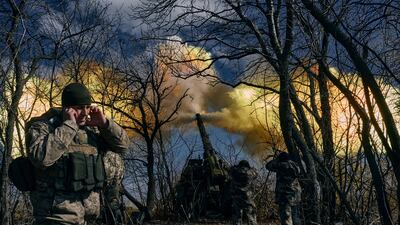
Ukrainian soldiers fire a howitzer towards Russian positions, near Bakhmut in Ukraine. AP -

Resident Svetlana Boiko, 66, who was wounded in recent shelling, is comforted near her destroyed house in Donetsk. Reuters -
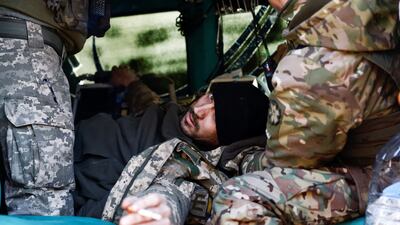
A wounded Ukrainian soldier is treated in a front-line stabilisation ambulance, near Kreminna. Reuters -
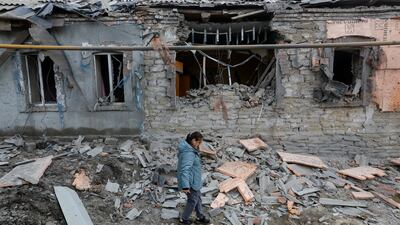
A house in Donetsk destroyed in recent shelling. Reuters -
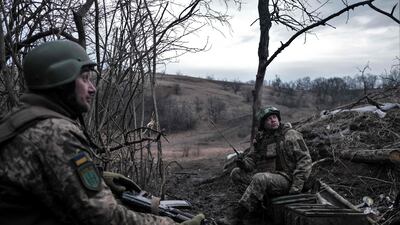
Ukrainian volunteer soldiers hold their positions at the front line near Bakhmut. AFP -

Volunteers carry the remains of a Uragan rocket as they clear the area around the Sviatohirsk Cave Monastery in Dolyna. AFP -

A man sits inside a damaged car in the village of Chasiv Yar. AFP -
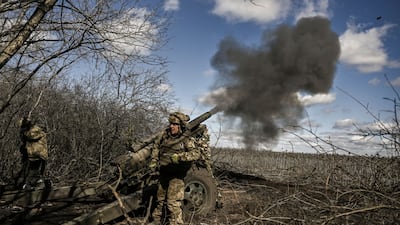
Ukrainian servicemen fire at Russian positions in the region of Donbas. AFP -
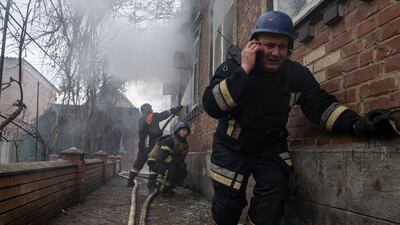
Rescue workers put out a fire in a house shelled by Russian forces in Kostiantynivka. AP -
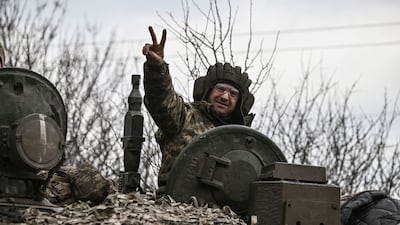
A Ukrainian serviceman moves towards the frontline city of Bakhmut. AFP -
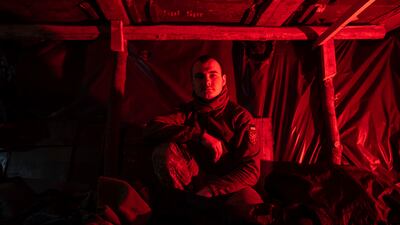
Vladyslav, a Ukrainian paratrooper of the 80 Air Assault brigade, rests in a dugout at the front line near Bakhmut. AP -

Residents of the village of Bohorodychne cross the Seversky Donets river to retrieve bread from the other bank. AFP


Why then, has there been so much concern and what does the US military say about the loss of drones in hostile situations?
How many US drones have been shot down?
The US has lost at least six drones to enemy action, including the latest downing of the MQ-9 reaper. Only the most dramatic of these incidents, the loss of an RQ-4 to an Iranian missile in June 2019 led to the threat of retaliation.
The lumbering RQ-4, one of the largest drones in the world, was downed near the Straits of Hormuz by a Khordad surface-to-air missile at a time of high tension between the US and Iran.
The US said it was “an unprovoked attack on a US surveillance asset that had not violated Iranian airspace”. Footage of the blazing $130 million drone plummeting to earth was later released by Iran.
The RQ-4 has a wingspan of 40m, almost 10m longer than a Second World War B-17 bomber, but the loss of one of the aircraft raised questions as to how it could survive a high intensity conflict with a US adversary. The plane is designed to stay aloft for up to 30 hours, beyond the limits of most manned aircraft, and being capable of surveying up to 100,000 kilometres a day.

President Donald Trump reportedly considered bombing several targets in Iran, saying that the Iranians had made “a very big mistake”, before deciding not to escalate.
Other US drones have been lost to anti-aircraft fire in Yemen and Syria, including at least one MQ-9.
Will the downing of a US drone lead to war?
While the downing of the RQ-4 near Iran provoked Mr Trump, many analysts say the entire point of an unmanned aircraft is to reduce the risk of serious escalation. This makes any US measures to retaliate against Russia unlikely.
Last year, a US Congressional Research Service report quoted US expert Michael C Horowitz, who argued that “states distinguish between the shooting down of manned and unmanned systems”, suggesting that such actions fell below the threshold of war.
Could the MQ-9 drone shoot down an SU-27 Flanker?
Tuesday’s aerial clash was a confrontation between aircraft from two different eras. First flying in 1977, the SU-27 was developed to counter the US F-14 Tomcat and the F-15 fighter-bomber. Armed with a 30mm cannon that can fire up to 1,500 explosive rounds per minute, the Flanker is more than capable of using weapons to shoot down a slow-moving MQ-9.
If the US chose, it could arm the MQ-9 with heat-seeking AIM-9 missiles, that are also capable of shooting down Russian aircraft, although the drone was most likely conducting reconnaissance from its vantage point 15km above Earth.
While the SU-27 can bristle with up to 10 air-to-air missiles and was designed to gain air superiority in a full-scale war with Nato, the MQ-9 was a product of the “war on terror”, first flying in 2001 and developed after the US saw the need for a more powerful version of the smaller Predator drone.

The Predator, initially unarmed, first saw action in Afghanistan in October 2001, targeting suspected Al Qaeda fighters.
With greater endurance and more heavily-armed, the Reaper would not fly similar missions until 2007, also in Afghanistan and by the end of that decade, both aircraft had conducted about 300 air strikes in Iraq, Afghanistan, Yemen and most controversially, Pakistan, dropping missiles and bombs on terrorist groups and insurgents, but also causing significant civilian casualties.
The loss of the Reaper on Tuesday does not represent the loss of an important reconnaissance asset to the US ― the US air force ended the Reaper programme last year, signalling that the aircraft is close to being retired from service and replaced with an entirely new drone system.

