


Thursday's Google Doodle marked the anniversary of the discovery of Son Doong Cave, which is in deep jungle in a remote area of Vietnam.
Rediscovered in 2009 and made of limestone, the cave has many natural wonders, including a thriving community of monkeys.
The natural wonder is believed to be between two and five million years old, and its name means "Mountain River" in Vietnamese.
"Today’s Doodle celebrates this colossal cavern, which was officially discovered on this day in 2009," said Google.
Google marked the day it was "officially discovered" because it is believed that it was actually stumbled on by local farmer Ho Khanh in 1990.
A description of his discovery on Oxalis Adventure reads: "Local man Ho Khanh discovered Son Doong in 1990 while searching Phong Nha-Ke Bang National Park for food and timber to earn a modest income.
"During his search he stumbled across an opening in a limestone cliff, noticed clouds billowing out from the entrance and heard the sounds of a river raging from somewhere inside. He returned home and forgot about the cave."
He is said to have retraced his steps, finding the cave again in 2008, before Howard and Deb Limbert of the British Cave Research Association documented the world wonder a year later.
Travel to the cave is limited and it can only be reached on four-day expeditions with a special travel company.
-

Sapa, in northwest Vietnam, is home to several unique hill tribes. All photos: Ronan O'Connell -
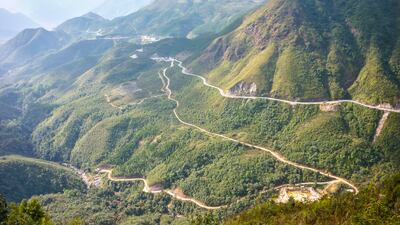
The mountainous region of Sapa in northern Vietnam. -
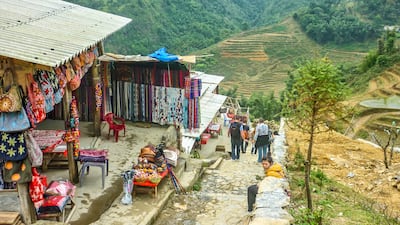
A small hill tribe village in Sapa. -

A Vietnamese ceramics workshop in Ho Chi Minh City. -

A tourist learns the basics of surfing on China Beach. -

A row boat prepares to collect tourists for a tour through Tam Coc. -
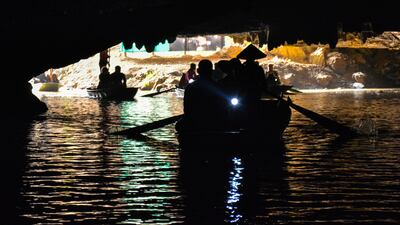
Tourists row down an underground river in Tam Coc. -

A rice paddy in Duong Lam village. -
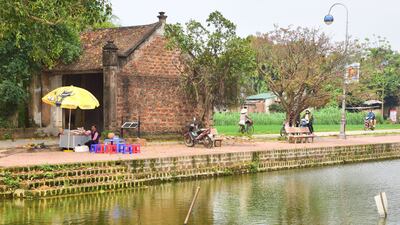
Duong Lam village. -
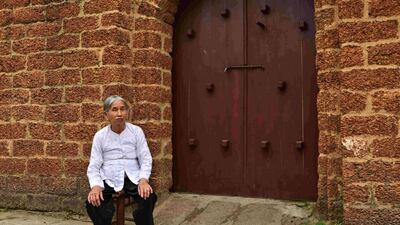
Duong Lam village dates back 1,200 years.


The Son Doong cave is about nine kilometres long and has a volume of 38.5 million cubic metres. It was recognised by Guinness World Records as the largest cave in the world in 2013.
The cave is a geological wonder and is said to have the world's only monkeys living underground, along with flying foxes.
It has sinkholes that allow in the sun and rain, and even has its own weather ecosystem.
The cave also has the world's largest limestone pearls and tallest stalagmite, which is about 70 metres.
The cave is 200 metres in height, about the same as the HSBC tower in Canary Wharf, London.
The main cavern is "large enough to house an entire New York City block".
Plans to build a cable car for mass tourism were rumoured to be taking shape, but were later dismissed by Vietnamese authorities.

