


Live updates: follow the latest news on Russia-Ukraine
President Vladimir Putin ordered Russian nuclear forces to be put on alert on Sunday in a serious escalation of tension in response to economic sanctions and what he called the “aggressive statements” of leading Nato powers.
The Russian leader told his senior defence officials to put nuclear deterrent forces in “special regime of combat duty” after four days of air and ground attacks on Ukraine’s cities and strategic areas using conventional warfare.
The comments came as Ukrainian President Volodymyr Zelenskyy’s office said the two sides would meet at an unidentified site on the border of Belarus.
Russia flew a delegation to the country hours earlier.
The US said the nuclear escalation was part of a pattern of behaviour seen in Mr Putin previously. Before the assault, he had warned nations he would retaliate harshly if they intervened in the conflict and mentioned the country’s status as a nuclear power.
Nato secretary-general Jens Stoltenberg told CNN: “This is dangerous rhetoric. This is a behaviour which is irresponsible.”
EU foreign ministers were meeting this evening to discuss further arms for Ukraine and adopting further “tough” economic sanctions, said Josep Borrell, the bloc’s chief foreign minister.
On Sunday, German Chancellor Olaf Scholz said his country had committed another €100 billion for its military, the latest of several pledges to step up his country’s response to the Russian threat. He told a special session of the Bundestag the investment was needed “to protect our freedom and our democracy”.
It was not known what the impact of Mr Putin’s nuclear order would be because land and submarine-based nuclear forces are on alert at all times.
If he is raising the nuclear combat readiness of his bombers or ordering more ballistic missile submarines to sea, the US might feel compelled to respond in kind, said Hans Kristensen, a nuclear analyst at the Federation of American Scientists.
-
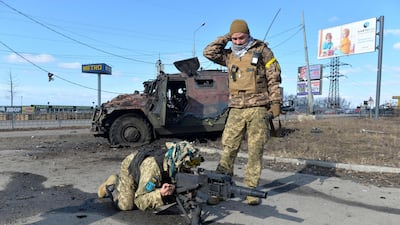
Ukrainian fighters test an automatic grenade launcher taken from a destroyed Russian infantry vehicle in Kharkiv. AFP -
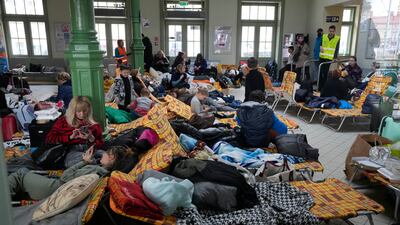
Refugees from Ukraine rest after arriving at a railway station in Przemysl, Poland. AP -
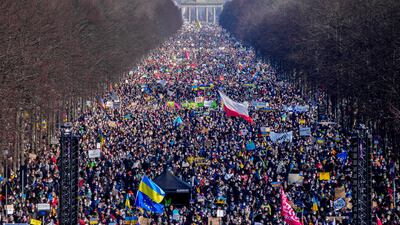
People walk down 17th June Street in Berlin before a rally against Russia’s invasion of Ukraine. AP -
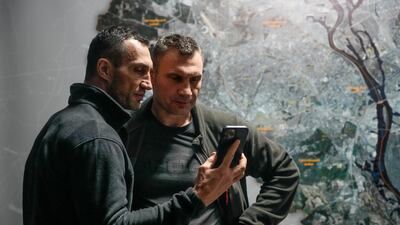
Vitali Klitschko, Mayor of Kiev and former heavyweight boxing champion, right, and his brother, Wladimir. AP -
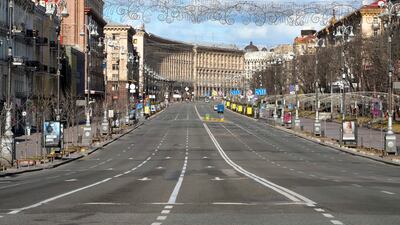
Khreshchatyk, Kiev’s main street, lies empty as a curfew comes into effect. AP -
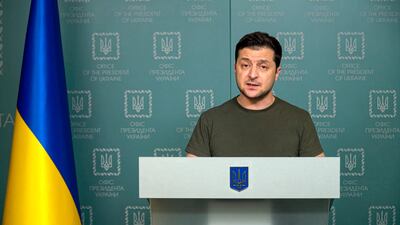
Ukrainian President Volodymyr Zelenskyy speaks to the nation from Kiev. AP -
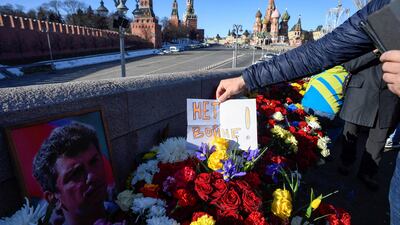
On February 27, the seventh anniversary of the assassination of opposition leader Boris Nemtsov, a note stating ‘No to war!’ is placed among flowers on the central Moscow bridge on which he was shot. AFP -
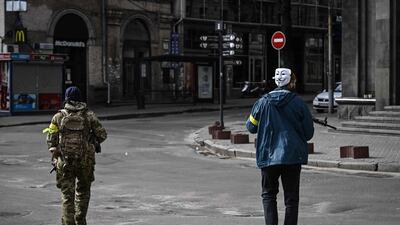
A member of the Ukrainian forces, wearing the Guy Fawkes mask popularised by Anonymous, patrols central Kiev. AFP -
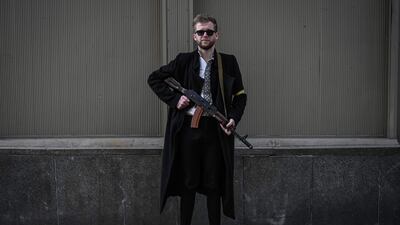
Sviatoslav Yurash, 26, a politician from President Volodymyr Zelenskyy’s Servant of the People party, poses with his assault rifle as he patrols Kiev. AFP -
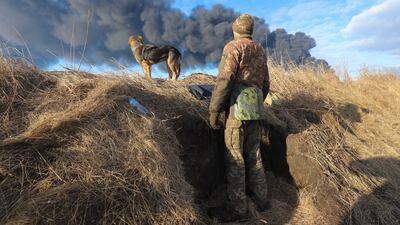
A Ukrainian serviceman and his dog look at smoke from a burning fuel storage depot after a Russian missile attack near Kiev. EPA -
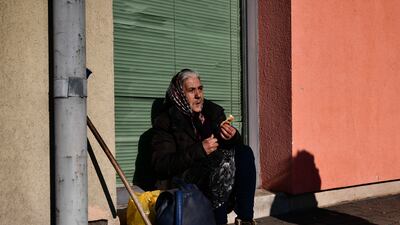
A refugee who fled conflict in Ukraine rests at a railway station after arriving in Zahony, Hungary. AP -
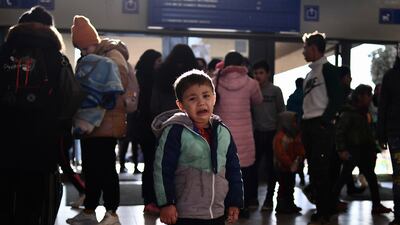
A refugee boy who fled Ukraine cries at the railway station in Zahony, Hungary. AP -
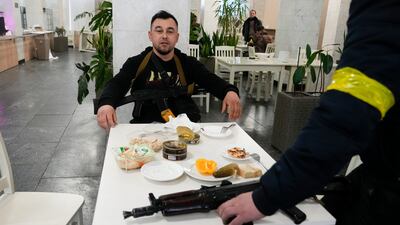
Civil defence members eat during a break at City Hall in Kiev. AP -

An Indian student is embraced by his family at Chennai Airport after returning from Ukraine. EPA -

Smoke is seen rising from behind buildings following bombings in Kiev. Getty -

An armed civil defence woman holds a Kalashnikov assault rifle while patrolling an empty street in Kiev. AP -
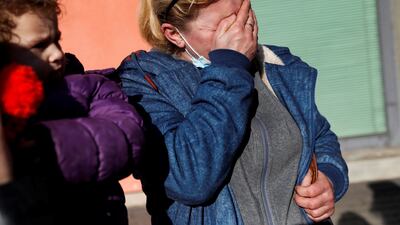
A woman fleeing from Ukraine cries as she waits to be taken to a shelter in Zahony, Hungary. Reuters -
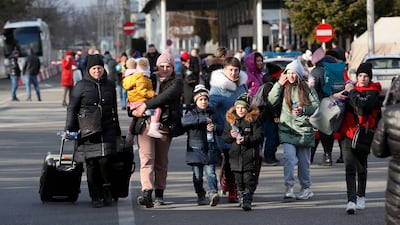
Ukrainian refugees cross the Romanian border at Siret, northern Romania. EPA -
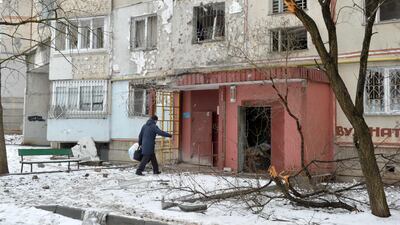
A residential building damaged by shelling in Kharkiv, north-eastern Ukraine. AFP -
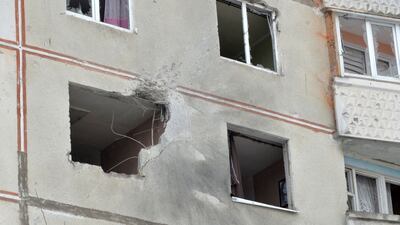
Apartments damaged by shelling in Kharkiv. AFP -

A girl protests against Russia's military operation in Ukraine, in front of the Russian embassy in Tel Aviv. AFP -

Young women protest in Tbilisi, Georgia with their hands painted in the colors of the Ukrainian flag. Getty -
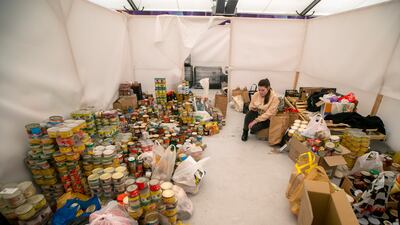
Supplies for Ukrainian refugees at one of three camps set up at the MoldExpo exhibition center, in Chisinau, Moldova. EPA -
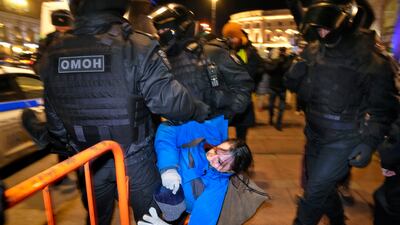
Police detain a demonstrator during a protest against Russia's incursion into Ukraine in St Petersburg. AP -
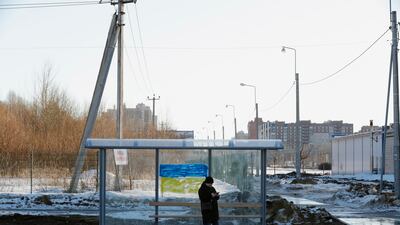
A man waits at a bus stop in St Petersburg, which has been with a painted in the colours of Ukraine's national flag. EPA -
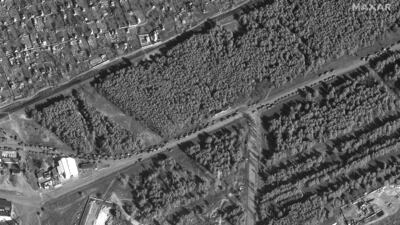
Russian ground forces approaching Nova Kakhovka, southern Ukraine. AP -

A woman holds her daughter's hand as they arrive by bus from the Polish-Ukrainian border. Getty -

A man drives his car full of food supplies to deliver to the Ukrainian side of the border, where thousands wait to enter Poland. Getty -
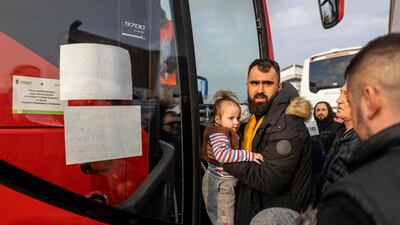
Refugees arrive with buses from the Medyka pedestrian border crossing, in Przemsyl, eastern Poland. AFP -
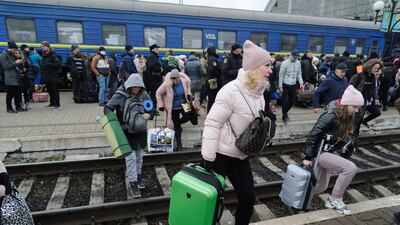
People gather to catch a train and leave Ukraine for neighboring countries at the railway station in Lviv, western Ukraine. AP -
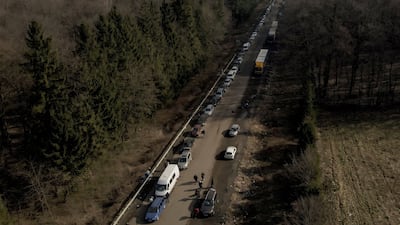
Cars form a line that stretches 35 kilometres from the Shehyni border crossing to Poland as people try to flee Russia's military operation against Ukraine. Reuters -
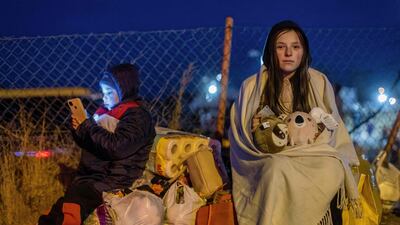
Helena, right, and her brother Bodia, left, from Lviv, wait at the Medyka border crossing in eastern Poland. AFP -
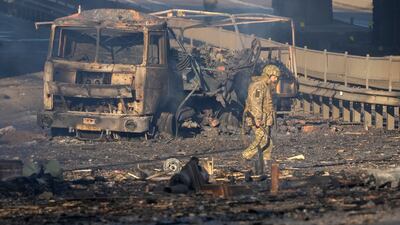
A Ukrainian soldier walks past debris of a burning military truck, on a street in Kiev. AP -
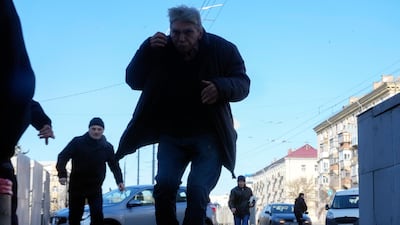
People run for cover during the shelling on the city of Kiev. AP -
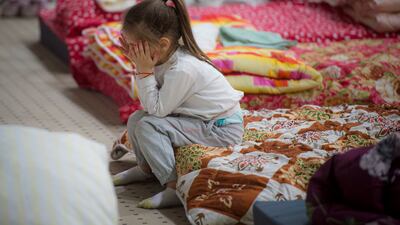
A child refugee who fled the conflict in Ukraine covers her face in the event hall of a hotel offering shelter in Siret, Romania. AP -
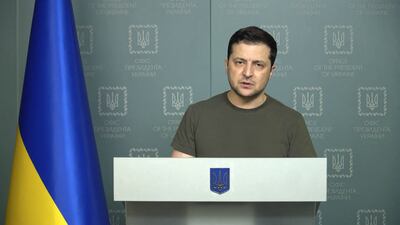
Ukrainian President Volodymyr Zelenskyy holding a briefing in Kyiv. He said that Azerbaijan's President Ilham Aliyev and Turkey's Recep Tayyip Erdogan have suggested talks with Russia, which 'can only be welcomed'. AFP -
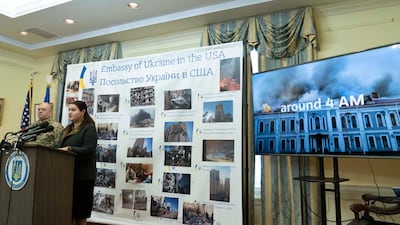
Ukraine's ambassador to the US, Oksana Markarova, at a news conference in the embassy of Ukraine, Washington. AP -
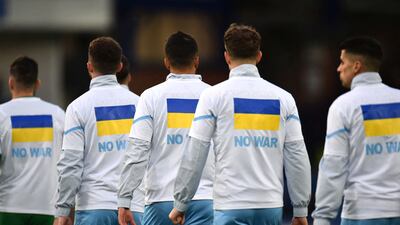
Manchester City footballers wear t-shirts in support of Ukraine before a match. Reuters -

Ukrainian refugees arrive in Warsaw by train from Kiev. EPA -
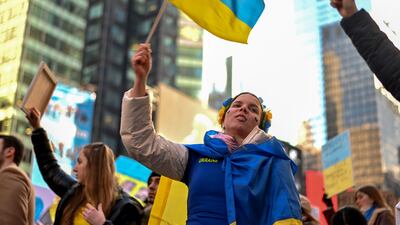
A woman waves a Ukrainian flag during a rally in Times Square, New York City. AFP -
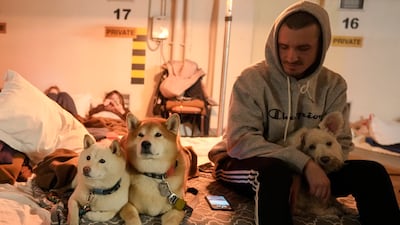
A man sits next to his dogs in an underground car park turned into a bomb shelter during an air raid alert in Kiev. AP -
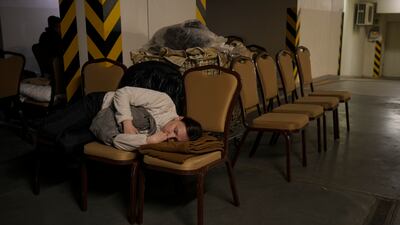
A woman sleeps on chairs in a Kiev bomb shelter. AP -
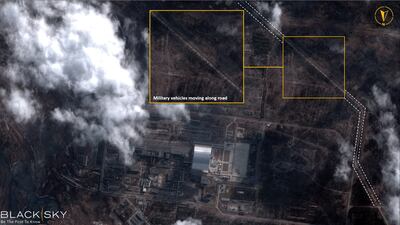
A satellite image with overlaid graphics shows military vehicles alongside the Chernobyl Nuclear Power Plant. Reuters -
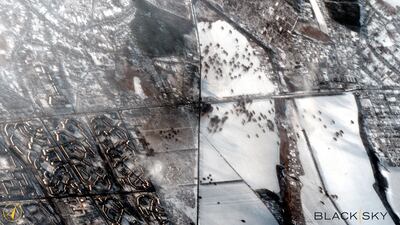
A satellite image shows the effects of shelling in open fields along Soborna Street in the north-east suburbs of Kharkiv. Reuters -
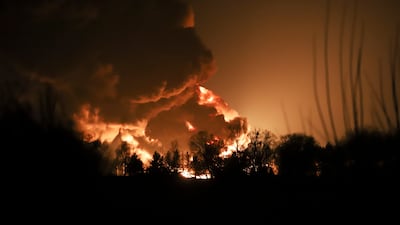
A big fire at a petroleum storage depot after a Russian missile attack, in Vasylkiv, near Kiev. EPA -
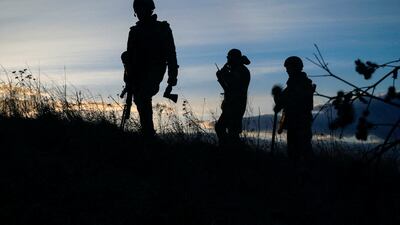
Ukrainian servicemen take positions at a military airbase in the Kyiv region. Reuters


“President Putin is continuing to escalate this war in a manner that is totally unacceptable,” said the US ambassador to the UN, Linda Thomas-Greenfield. “And we have to continue to condemn his actions.”
Max Bergmann, a former US State Department official, called Mr Putin’s talk predictable but dangerous sabre rattling.
“Things could spiral out of control,” said Mr Bergmann, now a senior fellow at the Centre for American Progress, a think tank.
The view was echoed by a senior defence official who told Reuters: “It’s .... putting in play forces that, if there’s a miscalculation, could make things much, much more dangerous.”
Videos posted on Ukrainian media showed Russian troops and military vehicles moving into the country’s second city of Kharkiv, which has a population of 1.4 million.
Russian forces blew up a gas pipeline, prompting the government to warn people to cover their windows with damp cloth or gauze as protection from smoke.
Huge explosions were heard early on Sunday in Kiev but the capital of 2.8 million people was relatively quiet during the day during a strict 39-hour curfew.
Residents remained inside their homes, in underground garages and subway stations in anticipation of a major assault. Those out during the curfew could be considered as saboteurs, said the mayor of Kiev, former boxer Vitali Klitschko.
Ukrainians have volunteered to help defend the capital Kiev and other cities, taking guns distributed by authorities and preparing firebombs to fight the Russian forces. Ukraine is also releasing prisoners with military experience who want to fight for the country, authorities said.
Mr Klitschko said there was no plan to evacuate the capital if Russian troops managed to take it.
“We can't do that, because all ways are blocked,” he said. “Right now we are encircled.”
The number of casualties is unclear. Ukraine’s health minister reported on Saturday that 198 people, including three children, had been killed and more than 1,000 others injured. Russia has not given any casualty figures.
Since Russia launched attacks on Ukraine, about 368,000 people have fled the country, according to the UN Refugee agency. Many have moved into neighbouring countries including Romania, Poland, Hungary and Moldova.
The UN has estimated the conflict could produce as many as four million refugees, depending how long it continues.
The economic impact of the crisis continued to reverberate with European nations and Canada moving to shut their airspace to Russian aircraft. The US is considering similar action but is yet to make a final decision.
Energy giant BP also said that it would exit its 19.75 per cent stake in Russian oil company Rosneft amid growing pressure from the British government since the invasion.
The decision to abandon the Rosneft holding will result in charges of up to $25 billion at the end of the first quarter, BP said in a statement.
BP acquired its Rosneft shareholding in 2013 as part of the $12.5 billion sale of a stake in TNK-BP.
BP chief executive Bernard Looney and his predecessor, Bob Dudley, will step down from the Rosneft board.
“Like so many, I have been deeply shocked and saddened by the situation unfolding in Ukraine and my heart goes out to everyone affected. It has caused us to fundamentally rethink BP’s position with Rosneft,” Mr Looney said.

