

A mysterious object unlike anything seen before has been observed by astronomers, who say the “spooky” body released a giant burst of energy three times an hour.
As it spins through space, the strange object sends out a beam of radiation, and for one minute in every 20 it is one of the brightest objects in the sky.
The researchers think the object could be a neutron star or a white dwarf – collapsed cores of stars – with an ultra-powerful magnetic field.
Astrophysicist Dr Natasha Hurley-Walker, from the Curtin University's International Centre for Radio Astronomy Research in Australia, led the team who made the discovery.
“This object was appearing and disappearing over a few hours during our observations," Dr Hurley-Walker said.
“That was completely unexpected. It was kind of spooky for an astronomer because there’s nothing known in the sky that does that.
“And it’s really quite close to us – about 4,000 light years away. It’s in our galactic back yard.”
She said that the observations matched a predicted astrophysical object called an “ultra-long period magnetar”.
“It’s a type of slowly spinning neutron star that has been predicted to exist theoretically," Dr Hurley-Walker said. “But nobody expected to directly detect one like this, because we didn’t expect them to be so bright.
“Somehow it’s converting magnetic energy to radio waves much more effectively than anything we’ve seen before.”
-
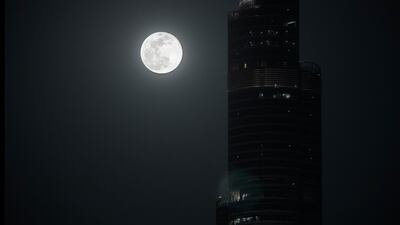
The remaining eight months of 2021 will see several astronomical events. 'The National' lists the top 7 must-see ones that will be visible in UAE's skies. On May 26, a full Moon supermoon will occur. It will be the biggest and brightest of the year. Antonie Robertson / The National -
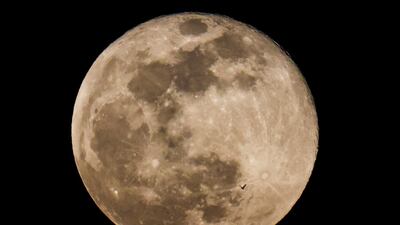
June 24 will be the last chance to spot a supermoon in 2021. The full Moon will not seem as big as the one in May, but it will still be bright enough to spot with the naked eye. Reuters -
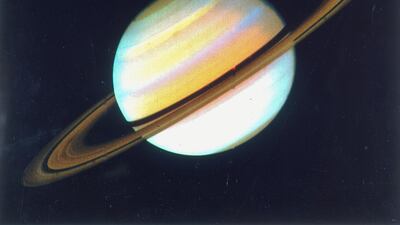
This is a colour-enhanced view of Saturn in 1980 and was taken from the Voyager 2 spacecraft. On August 2, the giant gas planet will be at opposition with Earth and will be visible all night long. It will be the best time to photograph the second largest planet in the solar system. Getty Images -
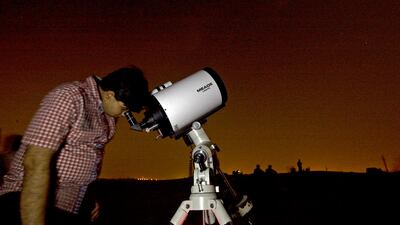
The Perseids meteor shower will be visible in the UAE from August 12 to August 13. At its peak, the shower produces up to 60 meteors per hour and can appear as fireballs shooting across the skies. Jeff Topping / The National -
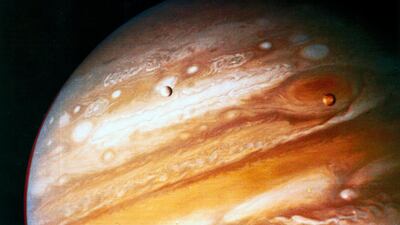
Jupiter will be at opposition on August 19, making a close approach to Earth and becoming visible. This will the best time to observe the largest planet of the solar system and its four large Moons, which will appear as dots next to it. Getty Images -

The Leonids meteor shower will take place on November 18. While these showers are not as visible in the UAE, they still put on a stellar show if weather conditions are favourable and if they are observed away from light pollution. They are also the fastest travelling meteors, at a speed of 71 kilometres per second. Reuters -
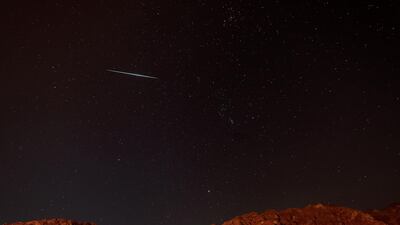
On December 14, the Geminids meteor shower will light up the UAE's skies. It is one of the best celestial events of the year in the Emirates and are highly visible. Chris Whiteoak / The National


Curtin University honours student Tyrone O’Doherty discovered the object using the Murchison Widefield Array telescope in outback Western Australia – and a new technique he developed.
“It’s exciting that the source I identified last year has turned out to be such a peculiar object,” Mr O'Doherty said.
Objects that turn on and off in the universe are not new, and astronomers call them transients, with some appearing over the course of a few days and disappearing after a few months, and others flashing on and off within milliseconds or seconds.
But Curtin astrophysicist and co-author Dr Gemma Anderson said finding something that turned on for just a minute made the discovery unusual.
Dr Anderson said the mysterious object was incredibly bright and smaller than the sun, emitting the kind of radio waves that suggested it had an extremely strong magnetic field.
The researchers are now monitoring the object to see if it switches back on, and plan to search for more of these unusual objects in the vast archives of the Array.
“More detections will tell astronomers whether this was a rare, one-off event or a vast new population we’d never noticed before,” Dr Hurley-Walker said.
The object was visible through a radio telescope and could not be seen with the naked eye. The findings are published in the Nature journal.

