Omicron could cause much less severe illness and 80 per cent fewer hospitalisations, according to a new study based on the variant’s surge in South Africa and the latest data from the UK.
The South African study, released on Wednesday, also suggests its very high transmissibility causes cases to peak and decline far more quickly than occurs with waves of the Delta variant.
Its findings have stirred a heated debate within the scientific community as to how badly Omicron will strain healthcare systems around the world.
Many scientists are urging caution on data suggesting it may be less harmful, because the virus is still a building wave in much of the world and the reporting of cases and deaths can lag behind its spread.
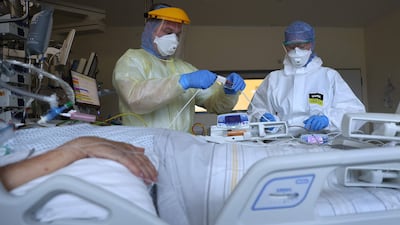
They said that even if Omicron causes less severe illness in most people, the sheer number of infections could overwhelm hospitals.
While a study on Monday by scientists at Imperial College London said there was no evidence that Omicron caused less severe illness the country's latest reports threw the findings into question.
The newest report from the university, also released on Wednesday, found that people with Omicron were 15 to 20 per cent less likely to visit the hospital and 40 to 45 per cent less likely to require an overnight stay than those who had been infected with the previous Delta strain.
But it was 10 times more likely than Delta to infect people who had already contracted Covid-19, researchers in Scotland found.
The latest findings from Imperial College London and South Africa’s National Institute of Communicable Diseases join a growing number of studies that paint a more optimistic picture of the latest wave than previous.
Last week, a study by the Cambridge Institute of Therapeutic Immunology and Infectious Diseases said early findings suggested Omicron was less effective at damaging the lungs compared with prior variants.
The study said Omicron “has gained immune evasion properties whilst compromising on properties associated with replication and pathogenicity [harm]”.
It followed similar findings by the University of Hong Kong, released on December 15, that “Omicron infection in the lung is significantly lower than the original Sars-CoV-2, which may be an indicator of lower disease severity”.
But the Hong Kong study authors also said: “By infecting many more people, a very infectious virus may cause more severe disease and death even though the virus itself may be less pathogenic.”
The South African study authors said that while more study was needed, the data from South Africa – whose experience is being watched around the world – told a “positive story” about the variant’s severity.
Drop in Omicron cases
Omicron was first detected in Gauteng, South Africa’s commercial hub and home to one of the continent’s busiest airports.
Cases in the region are falling, as is the percentage of positive tests, Michelle Groome, of the NICD, told a news briefing.
“Really, we feel that this has persisted for over a week and that we are past the peak in Gauteng,” she said.
There had been a “levelling off” in three other provinces – Limpopo, North West and Mpumalanga – she said, though cases were increasing elsewhere. Dr Groome said the fall in case numbers could be due, in part, to lower levels of testing during the holiday period.
South Africa has imposed the lowest level of a five-tier system of restrictions, despite a rapid surge in infections. But hospital admissions are being monitored closely.
While these have also risen, they have remained far below the levels seen during previous waves of the pandemic, with deaths also lower than seen in the past and people staying in hospital for shorter periods, the NICD’s Dr Waasila Jassat said, with the caveat that relevant data tended to lag.
Infections in the first four weeks of the fourth coronavirus wave, driven by Omicron, rose well above those seen in the previous three waves, NICD data showed. But the proportion of people admitted to hospital stood at 5.7 per cent, compared with above 13 per cent in previous waves.
The proportion of people admitted to hospital who later died dropped to 5.6 per cent, compared with 19 per cent or above in the first, second or third waves.
Of people who died of Covid-19 in South Africa between November 7 and December 18, 87 per cent were unvaccinated or had received only one dose, the data showed.
The South African study used data from four sources: national Covid-19 case data reported to the NICD, public sector laboratories, one large private-sector lab and genome data for clinical specimens sent to NICD from private and public diagnostic labs across the country.
But the study included several caveats and cautioned against jumping to conclusions about the intrinsic characteristics of Omicron.
“It is difficult to disentangle the relative contribution of high levels of previous population immunity versus intrinsic lower virulence to the observed lower disease severity,” they wrote.
Paul Hunter, a professor of medicine at Britain’s University of East Anglia, described the South African study as important. He said it was the first properly conducted study to appear in pre-print form on the relative severity of the Omicron and Delta variants.
He said its main weakness was that it compared Omicron data from one period with Delta data from an earlier period.
“Even though cases of Omicron were less likely to end up in hospital than cases of Delta, it is not possible to say whether this is due to inherent differences in virulence or whether this is due to higher population immunity in November compared to earlier in the year,” he said.
“To a certain extent, this does not matter to the patient who only cares that they won’t get very sick. But it is important to know to enable improved understanding of the likely pressures on health services.”

Red flags
- Promises of high, fixed or 'guaranteed' returns.
- Unregulated structured products or complex investments often used to bypass traditional safeguards.
- Lack of clear information, vague language, no access to audited financials.
- Overseas companies targeting investors in other jurisdictions - this can make legal recovery difficult.
- Hard-selling tactics - creating urgency, offering 'exclusive' deals.
Courtesy: Carol Glynn, founder of Conscious Finance Coaching
Who's who in Yemen conflict
Houthis: Iran-backed rebels who occupy Sanaa and run unrecognised government
Yemeni government: Exiled government in Aden led by eight-member Presidential Leadership Council
Southern Transitional Council: Faction in Yemeni government that seeks autonomy for the south
Habrish 'rebels': Tribal-backed forces feuding with STC over control of oil in government territory
Jetour T1 specs
Engine: 2-litre turbocharged
Power: 254hp
Torque: 390Nm
Price: From Dh126,000
Available: Now
The White Lotus: Season three
Creator: Mike White
Starring: Walton Goggins, Jason Isaacs, Natasha Rothwell
Rating: 4.5/5
6 UNDERGROUND
Director: Michael Bay
Stars: Ryan Reynolds, Adria Arjona, Dave Franco
2.5 / 5 stars
SPEC%20SHEET%3A%20APPLE%20IPAD%20(2022)
%3Cp%3E%3Cstrong%3EDisplay%3A%3C%2Fstrong%3E%2010.9-inch%20Liquid%20Retina%20IPS%20LCD%2C%202%2C360%20x%201%2C640%2C%20264ppi%2C%20wide%20colour%2C%20True%20Tone%2C%20Apple%20Pencil%201%20support%3C%2Fp%3E%0A%3Cp%3E%3Cstrong%3EChip%3A%3C%2Fstrong%3E%20Apple%20A14%20Bionic%2C%206-core%20CPU%2C%204-core%20GPU%2C%2016-core%20Neural%20Engine%3C%2Fp%3E%0A%3Cp%3E%3Cstrong%3EStorage%3A%3C%2Fstrong%3E%2064GB%2F256GB%3C%2Fp%3E%0A%3Cp%3E%3Cstrong%3EPlatform%3A%3C%2Fstrong%3E%20iPadOS%2016%3C%2Fp%3E%0A%3Cp%3E%3Cstrong%3EMain%20camera%3A%3C%2Fstrong%3E%2012-megapixel%20wide%2C%20f%2F1.8%2C%205x%20digital%2C%20Smart%20HDR%203%3C%2Fp%3E%0A%3Cp%3E%3Cstrong%3EVideo%3A%3C%2Fstrong%3E%204K%20%40%2024%2F25%2F30%2F60fps%2C%20full%20HD%20%40%2025%2F30%2F60fps%2C%20slo-mo%20%40%20120%2F240fps%3C%2Fp%3E%0A%3Cp%3E%3Cstrong%3EFront%20camera%3A%3C%2Fstrong%3E%2012MP%20ultra-wide%2C%20f%2F2.4%2C%202x%2C%20Smart%20HDR%203%2C%20Centre%20Stage%3B%20full%20HD%20%40%2025%2F30%2F60fps%3C%2Fp%3E%0A%3Cp%3E%3Cstrong%3EAudio%3A%3C%2Fstrong%3E%20Stereo%20speakers%3C%2Fp%3E%0A%3Cp%3E%3Cstrong%3EBiometrics%3A%3C%2Fstrong%3E%20Touch%20ID%3C%2Fp%3E%0A%3Cp%3E%3Cstrong%3EI%2FO%3A%3C%2Fstrong%3E%20USB-C%2C%20smart%20connector%20(for%20folio%2Fkeyboard)%3C%2Fp%3E%0A%3Cp%3E%3Cstrong%3EBattery%3A%3C%2Fstrong%3E%20Up%20to%2010%20hours%20on%20Wi-Fi%3B%20up%20to%209%20hours%20on%20cellular%3C%2Fp%3E%0A%3Cp%3E%3Cstrong%3EFinish%3A%3C%2Fstrong%3E%20Blue%2C%20pink%2C%20silver%2C%20yellow%3C%2Fp%3E%0A%3Cp%3E%3Cstrong%3EIn%20the%20box%3A%3C%2Fstrong%3E%20iPad%2C%20USB-C-to-USB-C%20cable%2C%2020W%20power%20adapter%3C%2Fp%3E%0A%3Cp%3E%3Cstrong%3EPrice%3A%3C%2Fstrong%3E%20Wi-Fi%20%E2%80%94%20Dh1%2C849%20(64GB)%20%2F%20Dh2%2C449%20(256GB)%3B%20cellular%20%E2%80%94%20Dh2%2C449%20(64GB)%20%2F%20Dh3%2C049%20(256GB)%3C%2Fp%3E%0A
MATCH INFO
Uefa Champions League, semi-final result:
Liverpool 4-0 Barcelona
Liverpool win 4-3 on aggregate
Champions Legaue final: June 1, Madrid
More from Armen Sarkissian
PROFILE OF INVYGO
Started: 2018
Founders: Eslam Hussein and Pulkit Ganjoo
Based: Dubai
Sector: Transport
Size: 9 employees
Investment: $1,275,000
Investors: Class 5 Global, Equitrust, Gulf Islamic Investments, Kairos K50 and William Zeqiri
Where to donate in the UAE
The Emirates Charity Portal
You can donate to several registered charities through a “donation catalogue”. The use of the donation is quite specific, such as buying a fan for a poor family in Niger for Dh130.
The General Authority of Islamic Affairs & Endowments
The site has an e-donation service accepting debit card, credit card or e-Dirham, an electronic payment tool developed by the Ministry of Finance and First Abu Dhabi Bank.
Al Noor Special Needs Centre
You can donate online or order Smiles n’ Stuff products handcrafted by Al Noor students. The centre publishes a wish list of extras needed, starting at Dh500.
Beit Al Khair Society
Beit Al Khair Society has the motto “From – and to – the UAE,” with donations going towards the neediest in the country. Its website has a list of physical donation sites, but people can also contribute money by SMS, bank transfer and through the hotline 800-22554.
Dar Al Ber Society
Dar Al Ber Society, which has charity projects in 39 countries, accept cash payments, money transfers or SMS donations. Its donation hotline is 800-79.
Dubai Cares
Dubai Cares provides several options for individuals and companies to donate, including online, through banks, at retail outlets, via phone and by purchasing Dubai Cares branded merchandise. It is currently running a campaign called Bookings 2030, which allows people to help change the future of six underprivileged children and young people.
Emirates Airline Foundation
Those who travel on Emirates have undoubtedly seen the little donation envelopes in the seat pockets. But the foundation also accepts donations online and in the form of Skywards Miles. Donated miles are used to sponsor travel for doctors, surgeons, engineers and other professionals volunteering on humanitarian missions around the world.
Emirates Red Crescent
On the Emirates Red Crescent website you can choose between 35 different purposes for your donation, such as providing food for fasters, supporting debtors and contributing to a refugee women fund. It also has a list of bank accounts for each donation type.
Gulf for Good
Gulf for Good raises funds for partner charity projects through challenges, like climbing Kilimanjaro and cycling through Thailand. This year’s projects are in partnership with Street Child Nepal, Larchfield Kids, the Foundation for African Empowerment and SOS Children's Villages. Since 2001, the organisation has raised more than $3.5 million (Dh12.8m) in support of over 50 children’s charities.
Noor Dubai Foundation
Sheikh Mohammed bin Rashid Al Maktoum launched the Noor Dubai Foundation a decade ago with the aim of eliminating all forms of preventable blindness globally. You can donate Dh50 to support mobile eye camps by texting the word “Noor” to 4565 (Etisalat) or 4849 (du).
Mercer, the investment consulting arm of US services company Marsh & McLennan, expects its wealth division to at least double its assets under management (AUM) in the Middle East as wealth in the region continues to grow despite economic headwinds, a company official said.
Mercer Wealth, which globally has $160 billion in AUM, plans to boost its AUM in the region to $2-$3bn in the next 2-3 years from the present $1bn, said Yasir AbuShaban, a Dubai-based principal with Mercer Wealth.
“Within the next two to three years, we are looking at reaching $2 to $3 billion as a conservative estimate and we do see an opportunity to do so,” said Mr AbuShaban.
Mercer does not directly make investments, but allocates clients’ money they have discretion to, to professional asset managers. They also provide advice to clients.
“We have buying power. We can negotiate on their (client’s) behalf with asset managers to provide them lower fees than they otherwise would have to get on their own,” he added.
Mercer Wealth’s clients include sovereign wealth funds, family offices, and insurance companies among others.
From its office in Dubai, Mercer also looks after Africa, India and Turkey, where they also see opportunity for growth.
Wealth creation in Middle East and Africa (MEA) grew 8.5 per cent to $8.1 trillion last year from $7.5tn in 2015, higher than last year’s global average of 6 per cent and the second-highest growth in a region after Asia-Pacific which grew 9.9 per cent, according to consultancy Boston Consulting Group (BCG). In the region, where wealth grew just 1.9 per cent in 2015 compared with 2014, a pickup in oil prices has helped in wealth generation.
BCG is forecasting MEA wealth will rise to $12tn by 2021, growing at an annual average of 8 per cent.
Drivers of wealth generation in the region will be split evenly between new wealth creation and growth of performance of existing assets, according to BCG.
Another general trend in the region is clients’ looking for a comprehensive approach to investing, according to Mr AbuShaban.
“Institutional investors or some of the families are seeing a slowdown in the available capital they have to invest and in that sense they are looking at optimizing the way they manage their portfolios and making sure they are not investing haphazardly and different parts of their investment are working together,” said Mr AbuShaban.
Some clients also have a higher appetite for risk, given the low interest-rate environment that does not provide enough yield for some institutional investors. These clients are keen to invest in illiquid assets, such as private equity and infrastructure.
“What we have seen is a desire for higher returns in what has been a low-return environment specifically in various fixed income or bonds,” he said.
“In this environment, we have seen a de facto increase in the risk that clients are taking in things like illiquid investments, private equity investments, infrastructure and private debt, those kind of investments were higher illiquidity results in incrementally higher returns.”
The Abu Dhabi Investment Authority, one of the largest sovereign wealth funds, said in its 2016 report that has gradually increased its exposure in direct private equity and private credit transactions, mainly in Asian markets and especially in China and India. The authority’s private equity department focused on structured equities owing to “their defensive characteristics.”
The%20specs
%3Cp%3E%0D%3Cstrong%3EEngine%3A%20%3C%2Fstrong%3E4.0-litre%20twin-turbo%20V8%0D%3Cbr%3E%3Cstrong%3EPower%3A%20%3C%2Fstrong%3E666hp%20at%206%2C000rpm%0D%3Cbr%3E%3Cstrong%3ETorque%3A%20%3C%2Fstrong%3E850Nm%20at%202%2C300-4%2C500rpm%0D%3Cbr%3E%3Cstrong%3ETransmission%3A%20%3C%2Fstrong%3E8-speed%20auto%0D%3Cbr%3E%3Cstrong%3EOn%20sale%3A%20%3C%2Fstrong%3EQ1%202023%0D%3Cbr%3E%3Cstrong%3EPrice%3A%20%3C%2Fstrong%3Efrom%20Dh1.15%20million%20(estimate)%3C%2Fp%3E%0A
Living in...
This article is part of a guide on where to live in the UAE. Our reporters will profile some of the country’s most desirable districts, provide an estimate of rental prices and introduce you to some of the residents who call each area home.
Prophets of Rage
(Fantasy Records)