

Follow for live UN General Assembly coverage
Israeli Prime Minister Naftali Bennett on Monday called for international support to tackle Iran’s build-up of nuclear technology and its new squadrons of drone attackers that are wreaking havoc in the Arabian Peninsula.
Addressing the UN General Assembly in New York, Mr Bennett also launched a personal attack on Iranian President Ebrahim Raisi, saying the “butcher” had in the 1980s feasted on cream cakes after overseeing the killings of Iranian civilians.
“Iran seeks to dominate the region — and seeks to do so under a nuclear umbrella,” said Mr Bennett.
“For the past three decades, Iran has spread its carnage and destruction around the Middle East, country after country … Lebanon, Iraq, Syria, Yemen and Gaza.”
This past year, Iran has launched a “new deadly terror unit” in the form of “swarms of killer UAVs [unmanned aerial vehicles] armed with lethal weapons that can attack any place any time".
“Iran has already used these deadly UAVs — called Shahed 136 — to attack Saudi Arabia, US targets in Iraq and civilian ships at sea, killing a Brit and a Romanian.”
He also launched a personal diatribe against Mr Raisi, highlighting the killings of some 5,000 Iranian activists during a political crackdown in 1988 and other historic abuses against civilians.
“His nickname is the Butcher of Tehran because that's exactly what he did — butchered his own people,” said Mr Bennett.
-
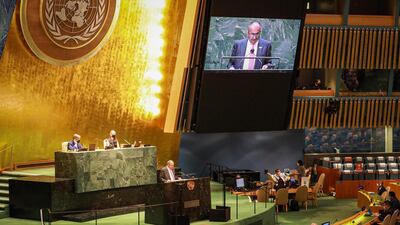
Khalifa Shaheen Al Marar, Minister of State, delivers a speech before the 76th session United Nations General Assembly. Photo: UAE Mission to the UN -
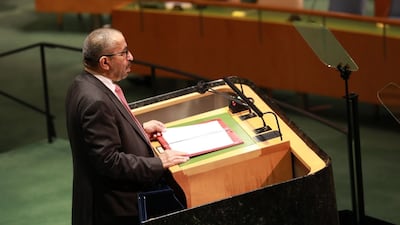
Khalifa Shaheen Al Marar, Minister of State, delivers a speech before the 76th session United Nations General Assembly. Photo: UAE Mission to the UN -
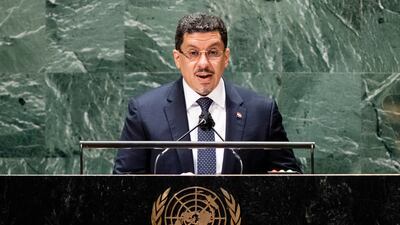
Yemen's Foreign Minister Ahmad Awad bin Mubarak addresses the 76th Session of the United Nations General Assembly in New York. EPA -
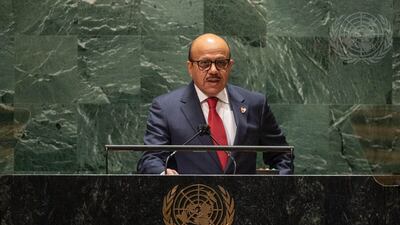
Abdullatif bin Rashid Alzayani, minister for Foreign Affairs of Bahrain, addresses the general debate of the General Assembly’s seventy-sixth session. Photo: United Nations -
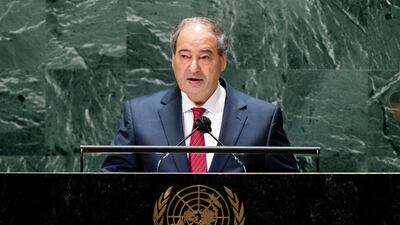
Syria's foreign minister Faisal Mekdad addresses the 76th Session of the United Nations General Assembly. AP Photo -
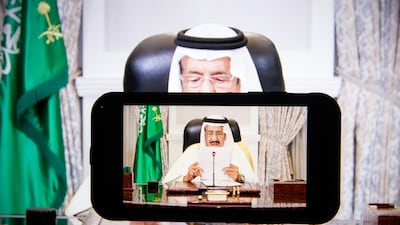
Saudi Arabia's King Salman bin Abdulaziz speaks in a prerecorded video during the United Nations General Assembly in New York. Bloomberg -
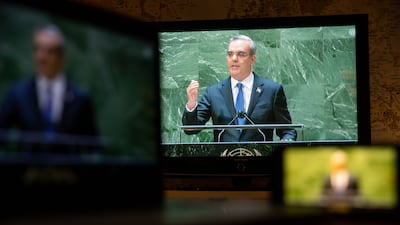
Luis Abinader, the Dominican Republic's president, also speaks via live stream. Bloomberg -
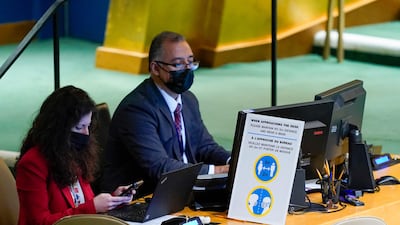
A sign informs United Nations employees of coronavirus protocols. AFP -
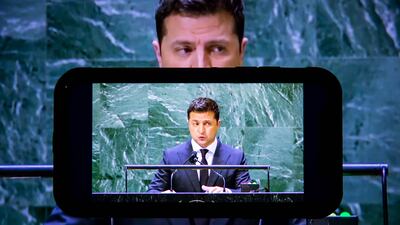
Ukraine President Volodymyr Zelenskiy speaks during the scaled-back meeting. Bloomberg -
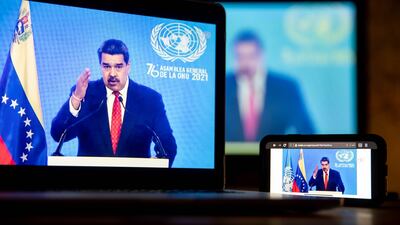
Nicolas Maduro, Venezuela's president, speaks in a prerecorded video. Bloomberg -
Turkish President Recep Tayyip Erdogan addresses the UN General Assembly. AP Photo -
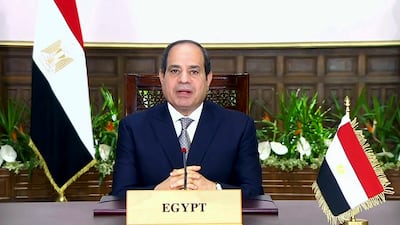
Egypt's President Abdel Fattah El Sisi sent a recorded message. AP Photo -
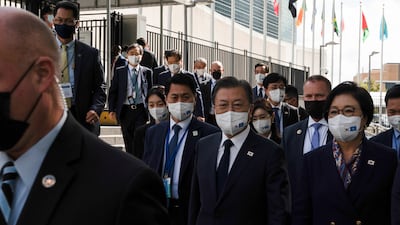
South Korea's President Moon Jae-in and First Lady Kim Jung-sook outside the UN headquarters in New York. Reuters -
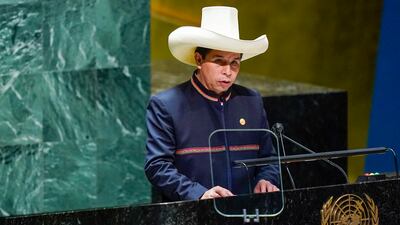
Peruvian President Pedro Castillo speaks at the assembly. AP Photo -
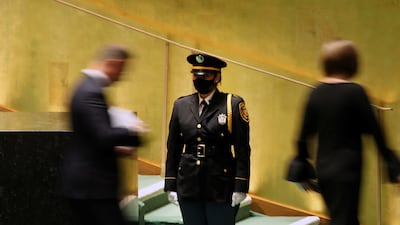
Poland's President Andrzej Duda leaves the stage after delivering his speech. Reuters -
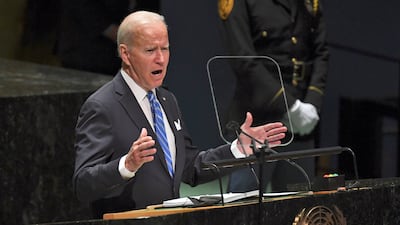
US President Joe Biden addresses the session. AP Photo -
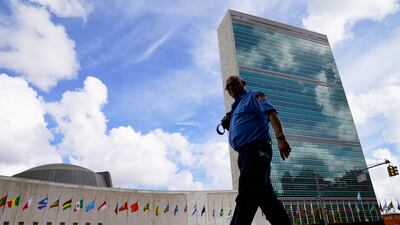
A member of the New York City Fire Department outside the UN headquarters. AP Photo -
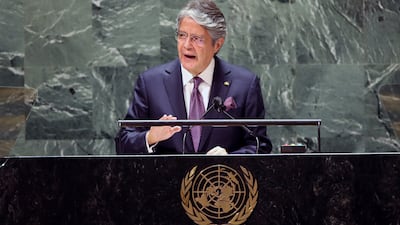
Ecuador's President Guillermo Lasso speaks during the meeting. Reuters -
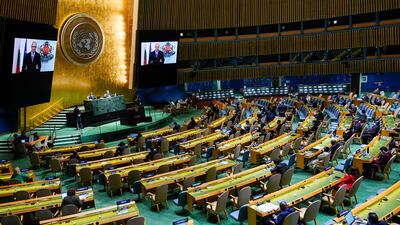
Bulgaria's President Rumen Radev addresses world leaders by video. Reuters -
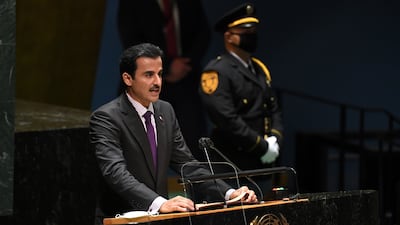
Qatari ruler Sheikh Tamim addresses the session. AP Photo -
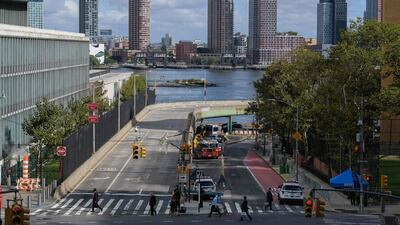
Streets near the UN headquarters in New York were closed ahead of the meeting. AFP -
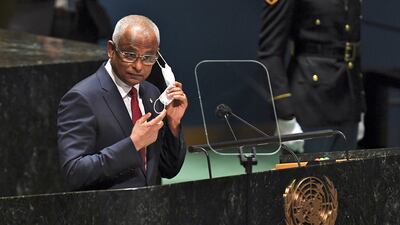
Maldives President Ibrahim Mohamed Solih gets ready to address the annual UN General Assembly. AP Photo -
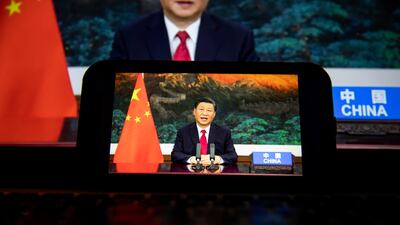
Xi Jinping, the Chinese president, addresses the UN General Assembly. Bloomberg -
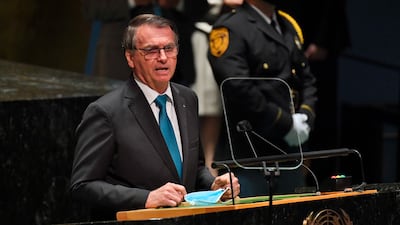
Brazil's President Jair Bolsonaro speaks to world leaders. AP Photo -
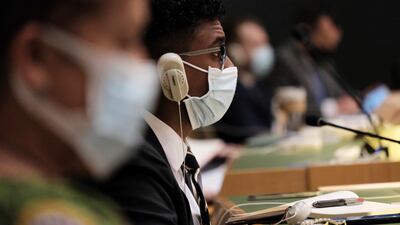
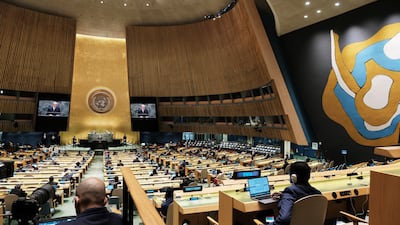
Delegates listen to speeches. AP Photo -
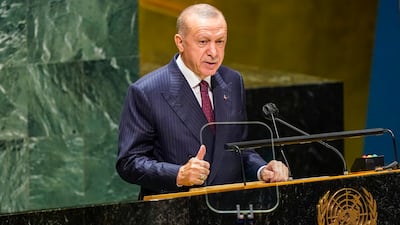
President Recep Tayyip Erdogan announces Turkey's willingness to ratify the Paris Agreement on climate change. EPA -
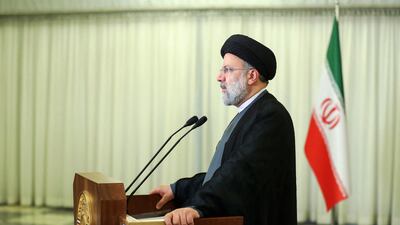
Iranian President Ebrahim Raisi attended the session by video from Tehran. AFP -
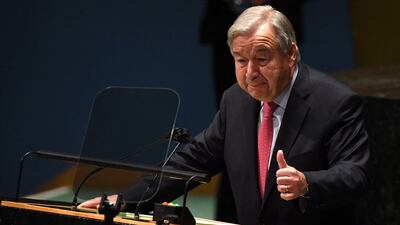
UN Secretary General Antonio Guterres speaks. AFP -
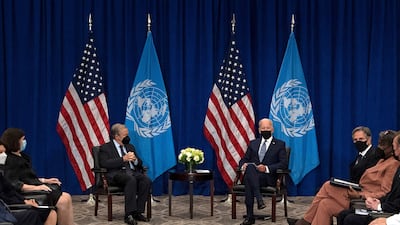
US President Joe Biden and UN Secretary General Antonio Guterres meet at the UN General Assembly. AFP -

US Secretary of State Antony Blinken meets British Foreign Secretary Liz Truss. AP -
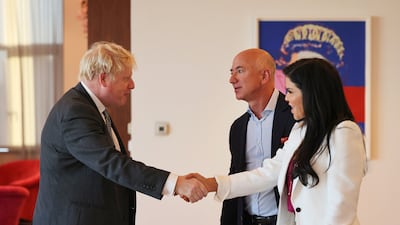
UK Prime Minister Boris Johnson greets Amazon founder Jeff Bezos and his girlfriend, Lauren Sanchez. AP -
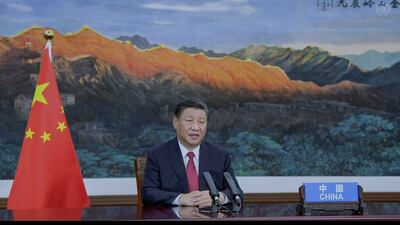
China's President Xi Jinping addresses the UN General Assembly session in a recorded video. AP -
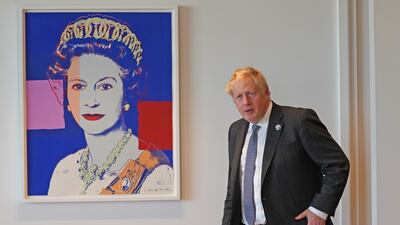
UK Prime Minister Boris Johnson arrives to meet Amazon founder Jeff Bezos. AP -
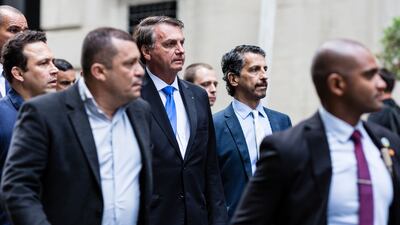
Brazil's President Jair Bolsonaro, centre, walks outside his hotel while in New York for the UN General Assembly. Reuters -
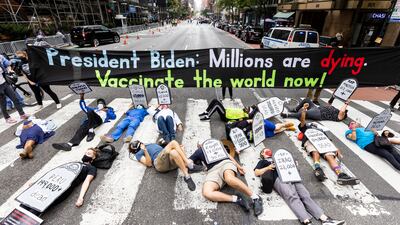
Protesters block 2nd Avenue near the UN's headquarters, calling on US President Joe Biden and the international community to help provide wider access to Covid-19 vaccines. EPA -
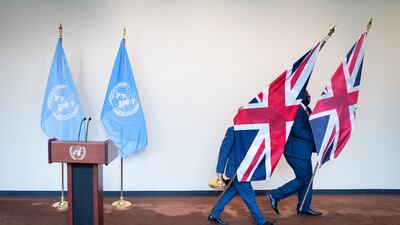
UN staff remove British flags from a podium after UK Prime Minister Boris Johnson addressed the media at the UN General Assembly. AP -
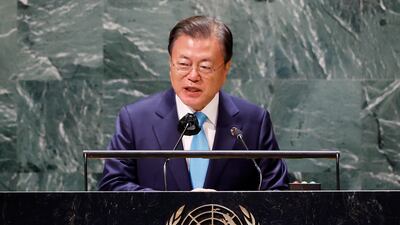
President of South Korea, Moon Jae-in, speaks during the General Debate in the UN General Assembly Hall. EPA -

Members of South Korean K-pop band BTS appear at a Sustainable Development Goals meeting during the UN General Assembly. AP -
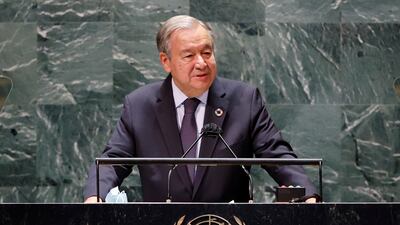
UN Secretary General Antonio Guterres speaks at a Sustainable Development Goals event. Reuters


“One of the witnesses of this massacre stated in her testimony that when Raisi would finish a round of murder, he'd throw a party, pocketing the money of those he just executed … and then would sit down to eat cream cakes.”
Mr Bennett's fierce assault on Iran was reminiscent of the UN speeches made by his predecessor, Benjamin Netanyahu, who took a similarly tough line on Iran's reported pursuit of nuclear weapons — something that Tehran denies.
Mr Bennett also praised Israel’s recent deals to normalise relations with the UAE, Bahrain and Morocco and encouraged UN members to follow Israel’s anti-Covid-19 strategy by rolling out vaccine booster shots.
Israel has trumpeted its normalisation of diplomatic relations with the UAE and Bahrain, brokered by Washington last year, as paving the way for economic co-operation and a regional stand against shared foe Iran.
Mr Bennett met senior ministers from the UAE and Bahrain in New York on Sunday before his UN address, his office said.
During his meeting with Bahrain’s Foreign Minster Abdullatif bin Rashid Al Zayani and UAE Minister of State for Foreign Affairs Khalifa Shaheen Al Marar, Mr Bennett said Israel hoped to further boost ties with both nations.
“We are stable and we believe in this relationship and we want to expand it as much as possible,” Mr Bennett said in a statement released by his office.
US President Joe Biden has started indirect talks with Iran over reviving the 2015 nuclear deal that his predecessor, Donald Trump, unilaterally pulled the US out of in 2018, reimposing sanctions that have destroyed Iran’s economy.
Iran's foreign minister on Friday said talks would start again “very soon”, but gave no specific date. Russian Foreign Minister Sergey Lavrov on Saturday urged the US to play a “more active” role in resuming stalled talks towards reviving the 2015 nuclear accord.

