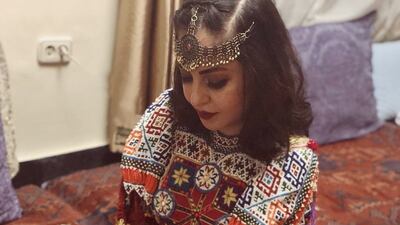
Faiza Zeerak, 22, decided to wear the chadari as a kind of self-censorship. Photo: Faiza Zeerak

Afghanistan: Adjusting to life beneath the veil


Ahmed Maher
  • English
  • Arabic

Two days before the Taliban swept into her home city of Kabul, Faiza Zeerak's mother bought her and her sister a chadari each.

The 22-year-old never expected to wear the garment, which covers her face. A lover of music, education and US TV series, the social worker falls firmly into Generation Z and feels completely at odds with the Taliban's ideology, which treats women as second-class citizens.

"When I wore it for the first time I felt so sad. It was as if I put a parcel on my head. I had to pull it down with my hands to see through that little net in the front," Ms Zeerak told The National from her home in Kabul.

It wasn't just her clothing she adjusted for her safety. On August 15, when the group took over the city, she fled her job at the charity she founded with her friends to go into hiding. The Kabul University graduate's ‘Smile for Afghan Kids’ charity caters for street children and orphans.

“I lost my job, I stopped my activities which I used to do for kids and youths. I couldn’t do anything! I am just hiding at home and I am still like prisoner,” she said.

Born in 1999 in the northern Baghlan province and then later moving with her family to the capital, she is part of a generation that differs from their elders, who experienced the 1996-2001 rule of the Taliban, brought down by a US invasion.

Back then, music was banned and women were all but erased from public life.

Everyone can see the way they deal with women, music and other basic human rights. All televisions stopped music shows and TV dramas, which are replaced with Islamic programmes.
Ms Zeerak

Afghanistan's under-25s, who make up almost two thirds of its 37 million people, have lived a very different life over the past 20 years.

“I am used to listening to music. I have a small black speaker in my room to listen to music. I listen to happy Afghan songs; I don’t like Bollywood music much but in Hollywood I only listen to the happy songs of Selena Gomez," says Ms Zeerak.

"I like watching movies, and American TV series. I had already downloaded some series such as The 100 and Humans to watch them when I am home.”

Now, her life is on a very different trajectory. The social worker has no doubt that the new freedoms that came with the US-led invasion that toppled Taliban 20 years ago are already being taken away or even lost.

She has taken the brave step of talking publicly about how her life, and that of thousands of Afghans, has changed. Seemingly without specific orders being given, people and corporations are already censoring their activities.

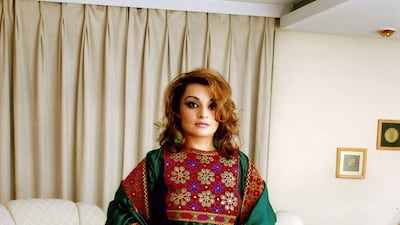
  • A woman poses in traditional Afghan attire, in Stavanger, Norway, in this picture obtained from social media. Sophia Moruwat/via Reuters
    A woman poses in traditional Afghan attire, in Stavanger, Norway, in this picture obtained from social media. Sophia Moruwat/via Reuters
  • Women have taken to Twitter and Instagram to rail against Taliban restrictions on Afghan attire. Instagram/@lemaafzal/via Reuters
    Women have taken to Twitter and Instagram to rail against Taliban restrictions on Afghan attire. Instagram/@lemaafzal/via Reuters
  • A woman poses in traditional Afghan attire, in Kabul, Afghanistan, 2018, in this picture obtained from social media. Twitter/@dressingsonnets/via Reuters
    A woman poses in traditional Afghan attire, in Kabul, Afghanistan, 2018, in this picture obtained from social media. Twitter/@dressingsonnets/via Reuters
  • A woman poses in traditional Afghan attire, in Kabul, Afghanistan, 2005, in this picture obtained from social media. Dr. Bahar Jalali/via Reuters
    A woman poses in traditional Afghan attire, in Kabul, Afghanistan, 2005, in this picture obtained from social media. Dr. Bahar Jalali/via Reuters
  • A woman poses in traditional Afghan attire, in Stockholm, Sweden, March 21, 2021, in this picture obtained from social media. Wazhma Sayle/via Reuters
    A woman poses in traditional Afghan attire, in Stockholm, Sweden, March 21, 2021, in this picture obtained from social media. Wazhma Sayle/via Reuters
  • A woman poses in traditional Afghan attire, in Rotterdam, Netherlands, 2015, in this picture obtained from social media. Sadaf Qutbyar/via Reuters
    A woman poses in traditional Afghan attire, in Rotterdam, Netherlands, 2015, in this picture obtained from social media. Sadaf Qutbyar/via Reuters
  • A woman poses in traditional Afghan attire, in the US in 1997, in this picture obtained from social media. Dr. Bahar Jalali/via Reuters
    A woman poses in traditional Afghan attire, in the US in 1997, in this picture obtained from social media. Dr. Bahar Jalali/via Reuters

“Everyone can see the way they deal with women, music and other basic human rights. All televisions stopped music shows and TV dramas, which are replaced with Islamic programmes,” said Ms Zeerak, an amateur painter who loves drawing with water colours and pencil.

"Entertainment shows have completely vanished from the country. If women don’t work and are active in the society, I can’t think of a stable society only led by men."

Ms Zeerak said she knows a lot of men and women who live in fear of saying what they really think now under the Taliban.

There will be a pandemic of self-silencing, she said. She has already started doing this with her decision to wear the chadari. She fears that departing publicly from the ideology pushed by Taliban will eventually put her life in danger

Ms Zeerak thinks that the Taliban might have become more diplomatic and politically savvy in the way they want to present themselves in 2021 to the world.

But since August 15, the hardline group has been imposing strict rules and its militants have been roaming the streets to enforce the new order.

Just days after the Taliban takeover, images of women on billboards and in shops around Kabul were covered up or vandalised.

Ms Zeerak loves drawing sketches. She fears that she will have now to practice her hobbies in secrecy. Photo: Faiza Zeerak

During that era, the Taliban banned girls from school, prevented women from working in contact with men and publicly stoned to death women accused of adultery.

Although many women over the past four weeks returned to wearing a niqab or chadari even before the hardline group established new dress rules, others simply stopped going outside the home.

The Taliban haven't yet issued a specific dress code for all women across the country.

Then, on Sunday, Higher Education Minister Abdul Baqi Haqqani ordered gender segregation and mandatory hijabs in higher education. On the same day, a group of pro-Taliban women, reportedly mostly students, gathered at Shaheed Rabbani Education University in Kabul to express support for the country's new rulers.

My mum used to tell me about the atrocities of the Taliban from the 1990s. She bought burqas for me and my sister two days before Kabul fell into the Taliban’s hands.
Ms Zeerak

Taliban militants were also seen in social media posts using whips and sticks against a group of women protesting in Kabul last Tuesday following the announcement of a male-only government.

“We were a bit hopeful before they announced their government but after Taliban announced their cabinet, we have lost hope. They cancelled the ministry of women's affairs from their lists and that says a lot about their outlook towards women, and of course they don’t have any respect for women’s rights,” said Ms Zeerak.

The National’s calls and WhatsApp messages to Taliban spokesmen Zubiullah Mujahid and Suhail Shaheen to respond to questions for this article went unanswered.


Results:

Men's wheelchair 800m T34: 1. Walid Ktila (TUN) 1.44.79; 2. Mohammed Al Hammadi (UAE) 1.45.88; 3. Isaac Towers (GBR) 1.46.46.

Who's who in Yemen conflict

Houthis: Iran-backed rebels who occupy Sanaa and run unrecognised government

Yemeni government: Exiled government in Aden led by eight-member Presidential Leadership Council

Southern Transitional Council: Faction in Yemeni government that seeks autonomy for the south

Habrish 'rebels': Tribal-backed forces feuding with STC over control of oil in government territory

2025 Fifa Club World Cup groups

Group A: Palmeiras, Porto, Al Ahly, Inter Miami.

Group B: Paris Saint-Germain, Atletico Madrid, Botafogo, Seattle.

Group C: Bayern Munich, Auckland City, Boca Juniors, Benfica.

Group D: Flamengo, ES Tunis, Chelsea, Leon.

Group E: River Plate, Urawa, Monterrey, Inter Milan.

Group F: Fluminense, Borussia Dortmund, Ulsan, Mamelodi Sundowns.

Group G: Manchester City, Wydad, Al Ain, Juventus.

Group H: Real Madrid, Al Hilal, Pachuca, Salzburg.

Jeff Buckley: From Hallelujah To The Last Goodbye
By Dave Lory with Jim Irvin

Ten tax points to be aware of in 2026

1. Domestic VAT refund amendments: request your refund within five years

If a business does not apply for the refund on time, they lose their credit.

2. E-invoicing in the UAE

Businesses should continue preparing for the implementation of e-invoicing in the UAE, with 2026 a preparation and transition period ahead of phased mandatory adoption. 

3. More tax audits

Tax authorities are increasingly using data already available across multiple filings to identify audit risks. 

4. More beneficial VAT and excise tax penalty regime

Tax disputes are expected to become more frequent and more structured, with clearer administrative objection and appeal processes. The UAE has adopted a new penalty regime for VAT and excise disputes, which now mirrors the penalty regime for corporate tax.

5. Greater emphasis on statutory audit

There is a greater need for the accuracy of financial statements. The International Financial Reporting Standards standards need to be strictly adhered to and, as a result, the quality of the audits will need to increase.

6. Further transfer pricing enforcement

Transfer pricing enforcement, which refers to the practice of establishing prices for internal transactions between related entities, is expected to broaden in scope. The UAE will shortly open the possibility to negotiate advance pricing agreements, or essentially rulings for transfer pricing purposes. 

7. Limited time periods for audits

Recent amendments also introduce a default five-year limitation period for tax audits and assessments, subject to specific statutory exceptions. While the standard audit and assessment period is five years, this may be extended to up to 15 years in cases involving fraud or tax evasion. 

8. Pillar 2 implementation 

Many multinational groups will begin to feel the practical effect of the Domestic Minimum Top-Up Tax (DMTT), the UAE's implementation of the OECD’s global minimum tax under Pillar 2. While the rules apply for financial years starting on or after January 1, 2025, it is 2026 that marks the transition to an operational phase.

9. Reduced compliance obligations for imported goods and services

Businesses that apply the reverse-charge mechanism for VAT purposes in the UAE may benefit from reduced compliance obligations. 

10. Substance and CbC reporting focus

Tax authorities are expected to continue strengthening the enforcement of economic substance and Country-by-Country (CbC) reporting frameworks. In the UAE, these regimes are increasingly being used as risk-assessment tools, providing tax authorities with a comprehensive view of multinational groups’ global footprints and enabling them to assess whether profits are aligned with real economic activity. 

Contributed by Thomas Vanhee and Hend Rashwan, Aurifer

Jawan
%3Cp%3E%3Cstrong%3EDirector%3A%20%3C%2Fstrong%3EAtlee%3C%2Fp%3E%0A%3Cp%3E%3Cstrong%3EStars%3A%3C%2Fstrong%3E%20Shah%20Rukh%20Khan%2C%20Nayanthara%2C%20Vijay%20Sethupathi%26nbsp%3B%3C%2Fp%3E%0A%3Cp%3E%3Cstrong%3ERating%3A%20%3C%2Fstrong%3E4%2F5%3C%2Fp%3E%0A
The lowdown

Rating: 4/5

Cricket World Cup League 2

UAE squad

Rahul Chopra (captain), Aayan Afzal Khan, Ali Naseer, Aryansh Sharma, Basil Hameed, Dhruv Parashar, Junaid Siddique, Muhammad Farooq, Muhammad Jawadullah, Muhammad Waseem, Omid Rahman, Rahul Bhatia, Tanish Suri, Vishnu Sukumaran, Vriitya Aravind

Fixtures

Friday, November 1 – Oman v UAE
Sunday, November 3 – UAE v Netherlands
Thursday, November 7 – UAE v Oman
Saturday, November 9 – Netherlands v UAE

Financial considerations before buying a property

Buyers should try to pay as much in cash as possible for a property, limiting the mortgage value to as little as they can afford. This means they not only pay less in interest but their monthly costs are also reduced. Ideally, the monthly mortgage payment should not exceed 20 per cent of the purchaser’s total household income, says Carol Glynn, founder of Conscious Finance Coaching.

“If it’s a rental property, plan for the property to have periods when it does not have a tenant. Ensure you have enough cash set aside to pay the mortgage and other costs during these periods, ideally at least six months,” she says. 

Also, shop around for the best mortgage interest rate. Understand the terms and conditions, especially what happens after any introductory periods, Ms Glynn adds.

Using a good mortgage broker is worth the investment to obtain the best rate available for a buyer’s needs and circumstances. A good mortgage broker will help the buyer understand the terms and conditions of the mortgage and make the purchasing process efficient and easier. 

Brown/Black belt finals

3pm: 49kg female: Mayssa Bastos (BRA) v Thamires Aquino (BRA)
3.07pm: 56kg male: Hiago George (BRA) v Carlos Alberto da Silva (BRA)
3.14pm: 55kg female: Amal Amjahid (BEL) v Bianca Basilio (BRA)
3.21pm: 62kg male: Gabriel de Sousa (BRA) v Joao Miyao (BRA)
3.28pm: 62kg female: Beatriz Mesquita (BRA) v Ffion Davies (GBR)
3.35pm: 69kg male: Isaac Doederlein (BRA) v Paulo Miyao (BRA)
3.42pm: 70kg female: Thamara Silva (BRA) v Alessandra Moss (AUS)
3.49pm: 77kg male: Oliver Lovell (GBR) v Tommy Langarkar (NOR)
3.56pm: 85kg male: Faisal Al Ketbi (UAE) v Rudson Mateus Teles (BRA)
4.03pm: 90kg female: Claire-France Thevenon (FRA) v Gabreili Passanha (BRA)
4.10pm: 94kg male: Adam Wardzinski (POL) v Kaynan Duarte (BRA)
4.17pm: 110kg male: Yahia Mansoor Al Hammadi (UAE) v Joao Rocha (BRA

Fifa Club World Cup quarter-final

Kashima Antlers 3 (Nagaki 49’, Serginho 69’, Abe 84’)
Guadalajara 2 (Zaldivar 03’, Pulido 90')

Why it pays to compare

A comparison of sending Dh20,000 from the UAE using two different routes at the same time - the first direct from a UAE bank to a bank in Germany, and the second from the same UAE bank via an online platform to Germany - found key differences in cost and speed. The transfers were both initiated on January 30.

Route 1: bank transfer

The UAE bank charged Dh152.25 for the Dh20,000 transfer. On top of that, their exchange rate margin added a difference of around Dh415, compared with the mid-market rate.

Total cost: Dh567.25 - around 2.9 per cent of the total amount

Total received: €4,670.30 

Route 2: online platform

The UAE bank’s charge for sending Dh20,000 to a UK dirham-denominated account was Dh2.10. The exchange rate margin cost was Dh60, plus a Dh12 fee.

Total cost: Dh74.10, around 0.4 per cent of the transaction

Total received: €4,756

The UAE bank transfer was far quicker – around two to three working days, while the online platform took around four to five days, but was considerably cheaper. In the online platform transfer, the funds were also exposed to currency risk during the period it took for them to arrive.

CHATGPT%20ENTERPRISE%20FEATURES
%3Cp%3E%E2%80%A2%20Enterprise-grade%20security%20and%20privacy%3C%2Fp%3E%0A%3Cp%3E%E2%80%A2%20Unlimited%20higher-speed%20GPT-4%20access%20with%20no%20caps%3C%2Fp%3E%0A%3Cp%3E%E2%80%A2%20Longer%20context%20windows%20for%20processing%20longer%20inputs%3C%2Fp%3E%0A%3Cp%3E%E2%80%A2%20Advanced%20data%20analysis%20capabilities%3C%2Fp%3E%0A%3Cp%3E%E2%80%A2%20Customisation%20options%3C%2Fp%3E%0A%3Cp%3E%E2%80%A2%20Shareable%20chat%20templates%20that%20companies%20can%20use%20to%20collaborate%20and%20build%20common%20workflows%3C%2Fp%3E%0A%3Cp%3E%E2%80%A2%20Analytics%20dashboard%20for%20usage%20insights%3C%2Fp%3E%0A%3Cp%3E%E2%80%A2%20Free%20credits%20to%20use%20OpenAI%20APIs%20to%20extend%20OpenAI%20into%20a%20fully-custom%20solution%20for%20enterprises%3C%2Fp%3E%0A
The specs: 2018 Nissan Patrol Nismo

Price: base / as tested: Dh382,000

Engine: 5.6-litre V8

Gearbox: Seven-speed automatic

Power: 428hp @ 5,800rpm

Torque: 560Nm @ 3,600rpm

Fuel economy, combined: 12.7L / 100km

The National Archives, Abu Dhabi

Founded over 50 years ago, the National Archives collects valuable historical material relating to the UAE, and is the oldest and richest archive relating to the Arabian Gulf.

Much of the material can be viewed on line at the Arabian Gulf Digital Archive - https://www.agda.ae/en

It Was Just an Accident

Director: Jafar Panahi

Stars: Vahid Mobasseri, Mariam Afshari, Ebrahim Azizi, Hadis Pakbaten, Majid Panahi, Mohamad Ali Elyasmehr

Rating: 4/5

THE SPECS


Engine: 1.5-litre


Transmission: 6-speed automatic


Power: 110 horsepower 


Torque: 147Nm 


Price: From Dh59,700 


On sale: now  

 
In-demand jobs and monthly salaries
  • Technology expert in robotics and automation: Dh20,000 to Dh40,000 
  • Energy engineer: Dh25,000 to Dh30,000 
  • Production engineer: Dh30,000 to Dh40,000 
  • Data-driven supply chain management professional: Dh30,000 to Dh50,000 
  • HR leader: Dh40,000 to Dh60,000 
  • Engineering leader: Dh30,000 to Dh55,000 
  • Project manager: Dh55,000 to Dh65,000 
  • Senior reservoir engineer: Dh40,000 to Dh55,000 
  • Senior drilling engineer: Dh38,000 to Dh46,000 
  • Senior process engineer: Dh28,000 to Dh38,000 
  • Senior maintenance engineer: Dh22,000 to Dh34,000 
  • Field engineer: Dh6,500 to Dh7,500
  • Field supervisor: Dh9,000 to Dh12,000
  • Field operator: Dh5,000 to Dh7,000
Updated: September 17, 2021, 11:51 AM