

Follow the latest Afghanistan updates
The Taliban on Wednesday said their Supreme Leader Hibatullah Akhundzada will be Afghanistan's top authority and a president or prime minister will run the country under his direction, local and international media reported.
“There is no doubt about the presence of the Commander of the Faithful [Akhundzada] in the government. He will be the leader of the government and there should be no question on this, “said Anamullah Samangani, a member of the Taliban’s cultural commission, according to ToloNews.
A senior Taliban official also told Reuters that Mr Akhundzada will have ultimate power over the governing council.
The supreme Taliban leader has three deputies: Mawlavi Yaqoob, son of the movement's late founder Mullah Omar; Sirajuddin Haqqani, leader of the powerful Haqqani network; and Abdul Ghani Baradar, one of the founding members of the group.
-
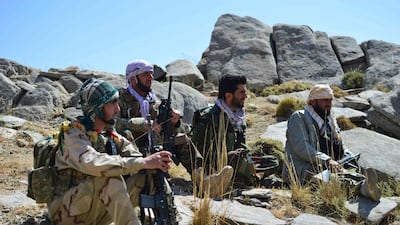
Fighters for the anti-Taliban forces rest during a patrol in the Anaba district of Afghanistan's Panjshir province. Taliban men and fighters loyal to local leader Ahmad Massoud fought in the valley on September 2. AFP -
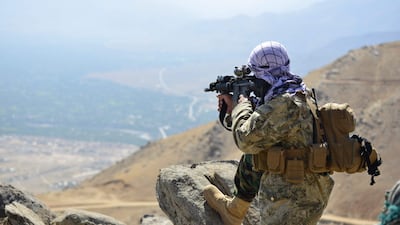
An anti-Taliban fighter takes a postion on a hilltop. Several thousand fighters are reported to be holding out against the Taliban in the region. AFP -
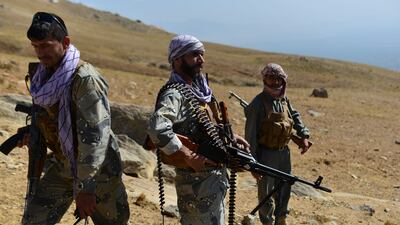
The Panjshir Valley stretches about 120 kilometres. AFP -
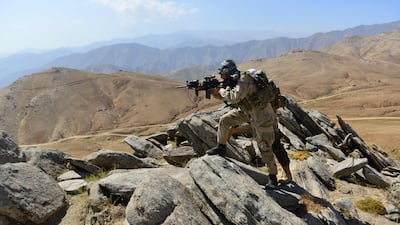
Resistance forces said on September 2 they had full control of all passes and entrances and had driven back Taliban efforts to take Shotul district at the entrance to the valley. AFP -
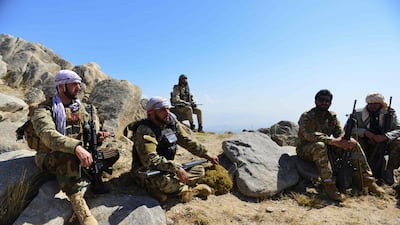
The valley is steep and its rocky terrain makes attacks from outside difficult. AFP -
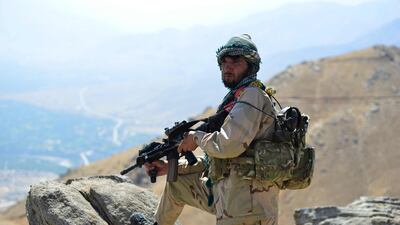
There is only one narrow road that winds in to the Panjshir Valley. AFP -
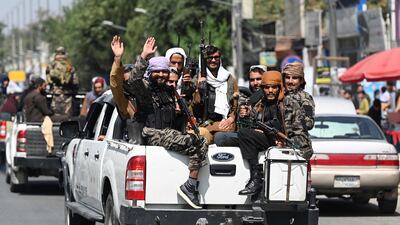
Taliban fighters wave as they patrol in a convoy along a street in Kabul. AFP -
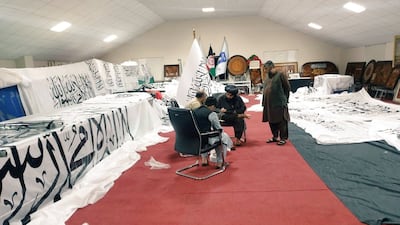
Unidentified people are surrounded by Taliban flags at an unidentified location, in this handout photo uploaded to social media. Reuters -
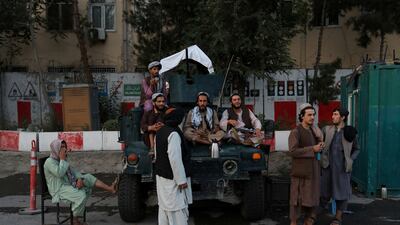
Taliban soldiers are seen at one of the main city squares of Kabul, Afghanistan. Reuters -
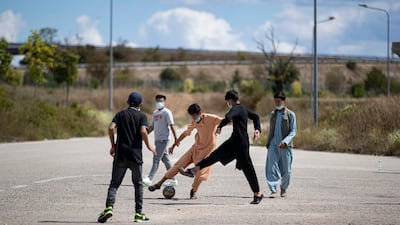
Afghan youth play football at a reception centre for Afghan refugees organised by the Italian Red Cross in Avezzano, Italy. Italy is hosting almost 5,000 Afghan refugees who were flown from Kabul after the Taliban claimed control of the capital. EPA -
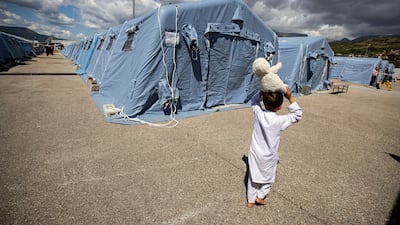
The reception centre for Afghan refugees organised by the Italian Red Cross in Avezzano, Italy. EPA -
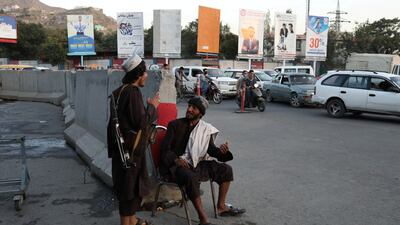
Taliban soldiers on duty in Kabul, Afghanistan. Reuters -
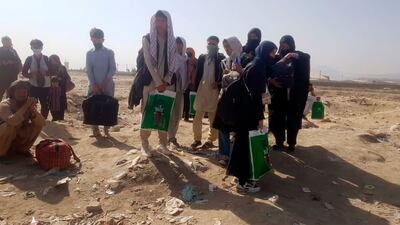
Members of the Afghanistan national girls youth football team and their families in Kabul. International efforts to rescue them and football federation staff suffered a crushing setback last week after a suicide bomb detonated near Kabul airport. AP -
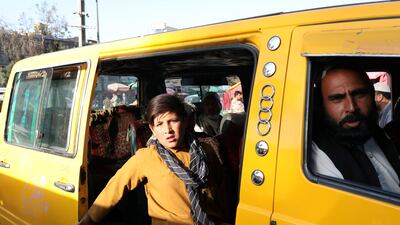
An Afghan child looks from inside a van in Kabul, Afghanistan. Reuters -
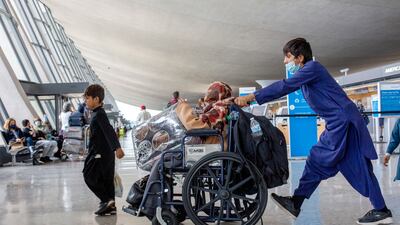
A child flown from Kabul pushes a wheelchair with a woman at Washington Dulles International Airport, in Chantilly, Virginia. AP -
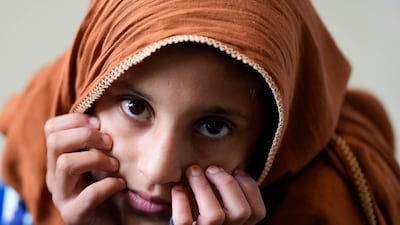
A girl from Afghanistan waits with others to fly to the US or another safe location in a makeshift departure gate inside a hanger at the US Air Base in Ramstein, Germany. AP -
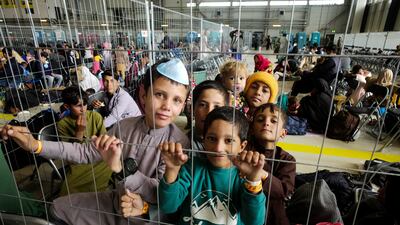
Children from Afghanistan wait to fly to the US or another safe location inside a hangar at the US Air Base in Ramstein, Germany. AP -
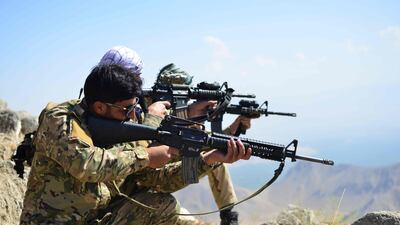
Anti-Taliban forces take positions in Darband, Anaba district, Panjshir province. AFP -
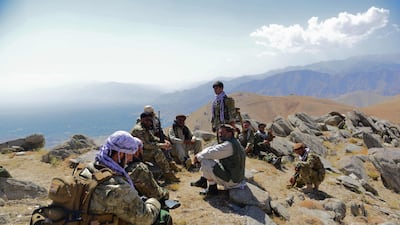
Afghan resistance movement and anti-Taliban uprising forces rest on a hilltop in Darband. AFP -
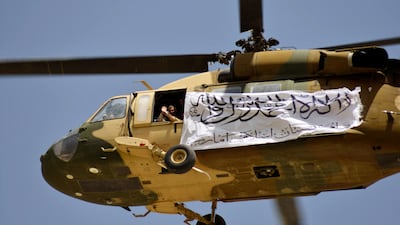
A helicopter displaying a Taliban flag flies above supporters gathered to celebrate the withdrawal of all US troops from Afghanistan, in Kandahar. AFP -
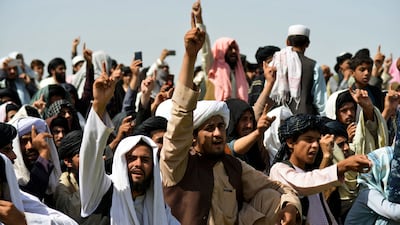
Taliban supporters gather in Kandahar to celebrate the withdrawal of all US troops from Afghanistan. AFP -
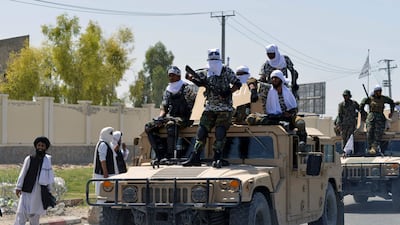
Taliban fighters on Humvee vehicles parade along a road in Kandahar to celebrate after the US pulled all its troops out of Afghanistan. AFP -
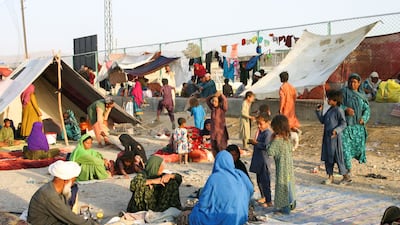
Families who arrived from Afghanistan are seen at their makeshift tents as they take refuge near a railway station in Chaman, Pakistan. Reuters -
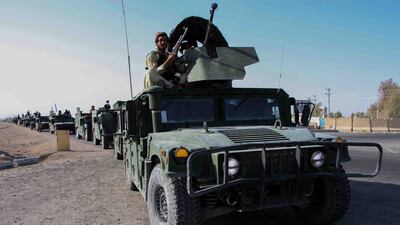
Taliban forces rally to celebrate the withdrawal of US forces in Kandahar, Afghanistan. EPA -
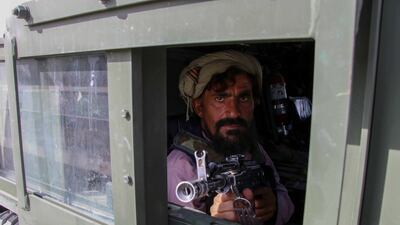
Taliban forces rally to celebrate the withdrawal of US forces in Kandahar, Afghanistan. EPA -
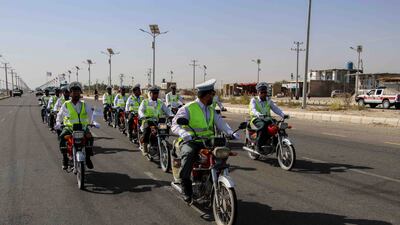
Traffic police escort Taliban forces as they rally to celebrate the withdrawal of US forces in Kandahar, Afghanistan. EPA -
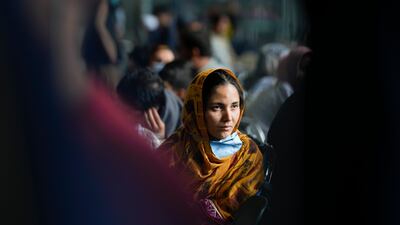
A woman from Afghanistan waits with other evacuees to fly to the US or another safe location inside a hanger at the US Air Base in Ramstein, Germany. AP Photo -
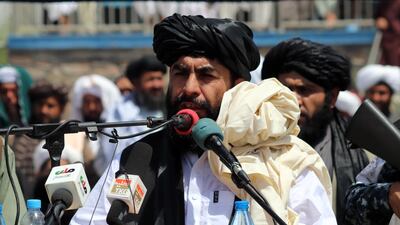
Haji Mohammad Yousaf, the Taliban's governor for Kandahar province, talks to supporters during a ceremony in Kandahar, Afghanistan. EPA -
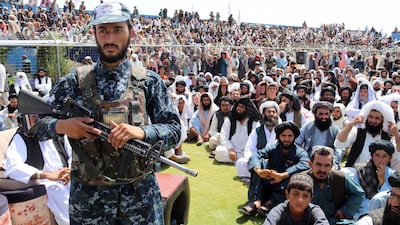
Supporters of the Taliban gather to listen to Haji Mohammad Yousaf, the governor for Kandahar province, in Kandahar, Afghanistan. EPA -
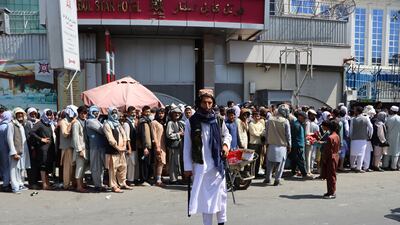
A Taliban fighter stands guard as people line up to withdraw money from banks as limits on withdrawals were set at only 200 US dollars per week, in Kabul, Afghanistan. EPA -
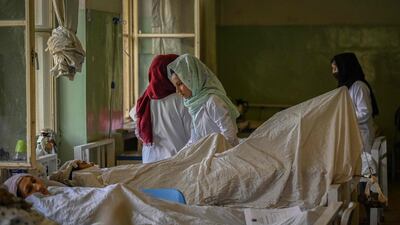
Female nurses takes care of patients at Wazir Akbar Khan hospital in Kabul. AFP -
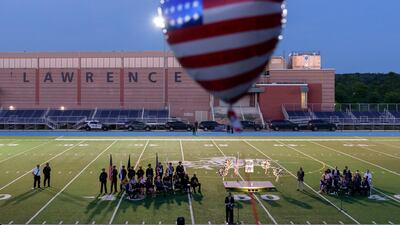
Loved ones and guests attend a vigil at Veterans Memorial Stadium in Lawrence, Massachusetts, for Sgt Johanny Rosario Pichardo, a US Marine who was among 13 service members killed in a suicide bombing in Afghanistan. AP Photo -
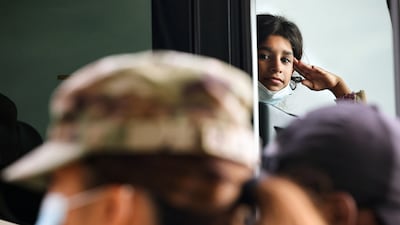
A young Afghan refugee salutes a member of the US Army as she waits on a bus after arriving at Dulles International Airport in Dulles, Virginia. Reuters -
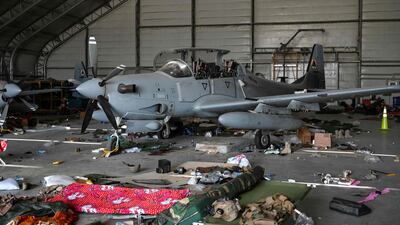
An Afghan Air Force A-29 attack aircraft is pictured inside a hangar at the airport in Kabul, after the US pulled all its troops out of the country, AFP -
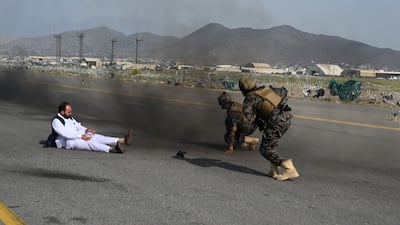
Taliban Badri special force fighters, right, and a journalist get up after they fell down from a vehicle at the airport in Kabul, after the US pulled all its troops out of the country. AFP -
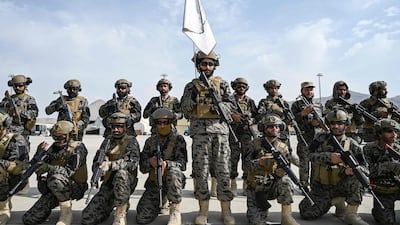
Taliban Badri special force fighters take a position at the airport in Kabul, after the US pulled all its troops out of the country. AFP -
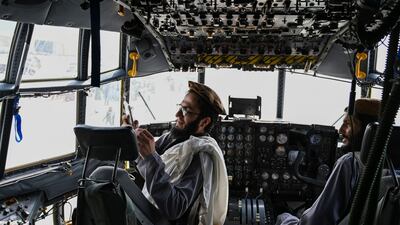
Taliban fighters sit in the cockpit of an Afghan Air Force aircraft at the airport in Kabul. AFP -
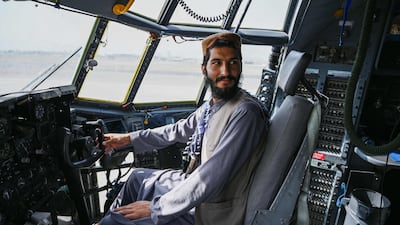
A Taliban fighter sits inside the cockpit of an Afghan Air Force aircraft at the airport in Kabul. AFP -
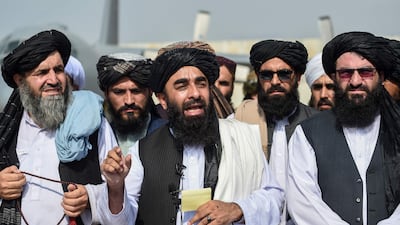
Taliban spokesman Zabihullah Mujahid, centre, addresses a media conference at the airport in Kabul. AFP -
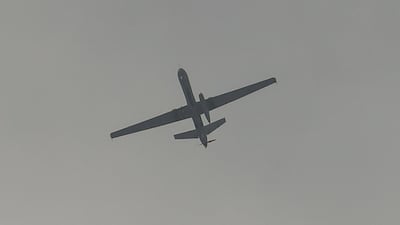
A US drone flies over the airport in Kabul. AFP -
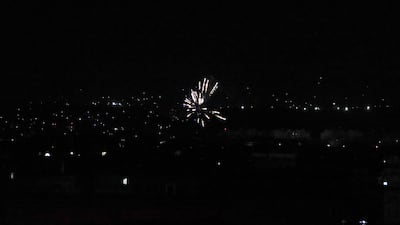
A view of the aerial firing by the Taliban as US withdrew its last soldiers from Kabul, Afghanistan. EPA -
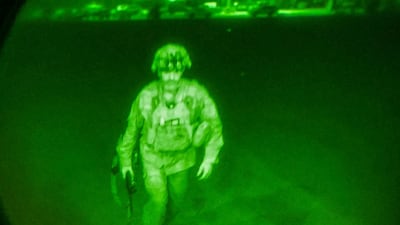
US Army Major Gen Chris Donahue, commander of the 82nd Airborne Division, steps on board a C-17 transport plane as the last US service member to leave Hamid Karzai International Airport in Kabul, Afghanistan. Reuters


The Taliban ran their first government with an unelected leadership council which brutally enforced a radical form of Sharia from 1996 until it was overpowered by US-led forces in 2001.
The Taliban have tried to present a more moderate face to the world since they swept aside the US-backed government and returned to power last month, promising to protect human rights and refrain from reprisals against old enemies.
But the US, European Union and others have cast doubt on such assurances, saying formal recognition of the new government - and the economic aid that would flow from that - is contingent on action.
“We're not going to take them at their word, we're going to take them at their deeds,” US Undersecretary of State Victoria Nuland told a news briefing on Wednesday.
Meanwhile, the militant group said discussions on who will be in the new government are almost finished and they will be making an announcement soon.
“Consultations are almost finalised on the new government, and the necessary discussions have also been held about the cabinet. The Islamic government that we will announce will be a … model for the people,” Mr Samangani said.
Analyst Mohammad Hassan Haqyar told ToloNews that the new government “should be neither republic nor emirate. It should be something like an Islamic government. Hebatullah [Akhundzada] should be at the top of the government, and he will not be the president. He will be the leader of Afghanistan. Below him there will be a prime minister or a president that will work under his oversight.”
The last US troops left Afghanistan just before midnight on Tuesday, ending the two-decade conflict, after the Taliban's lightning capture of much of the country led to the collapse of the government of Ashraf Ghani.
While the Taliban are cementing control of Kabul and provincial capitals, they are fighting with opposition groups and remnants of the Afghan army holding out in mountains north of the capital.
Mr Akhundzada has been more of a figurehead than a key player. He is the third person to fill the role of spiritual leader, often issuing fatwas or religious rulings on a range of topics.
He came to power in 2016 after his predecessor Akhtar Mansour was killed in a US drone strike.
Born in Kandahar's Panjwayi district in 1961, his family moved to Pakistan during the Soviet invasion of 1979 before Mr Akhundzada fought against the Soviets in the early 1980s.
In 1996, upon the Taliban capture of Kabul during the Afghan civil war of the 1990s, which ushered in Taliban rule until 2001, Mr Akhundzada became a member of the group's Department of the Promotion of Virtue and the Prevention of Vice, which enforced the Taliban's interpretation of Sharia.
-
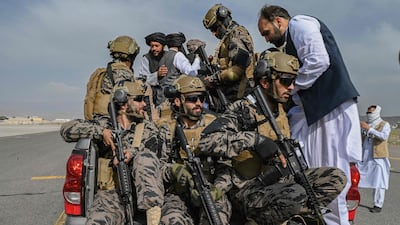
In recent days, the Taliban's Badri special forces unit has been in charge of security outside Kabul international airport. AFP -
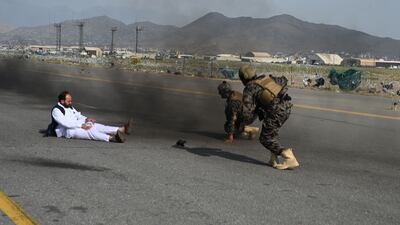
Taliban special force fighters and a journalist get up after they fell down from a vehicle at the airport in Kabul. AFP -
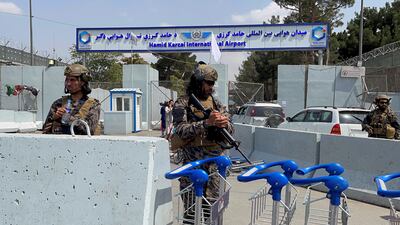
Taliban forces stand guard at the entrance gate of the airport a day after the withdrawal of US troops from Kabul. Reuters -
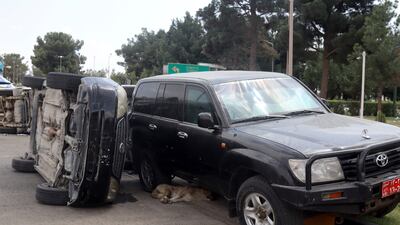
Vehicles are toppled inside the Hamid Karzai International Airport. AP -
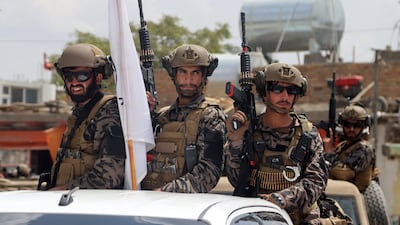
Taliban special force fighters arrive inside the Hamid Karzai International Airport. AP -

A commercial aircraft at the airport. Reuters -
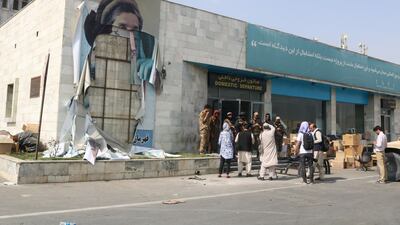
Journalists film a group of Taliban fighters a day after the US troop withdrawal. Reuters -
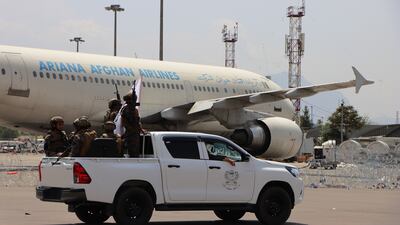
Taliban forces patrol the airport grounds. EPA -
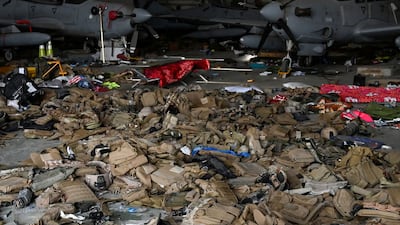
Afghan Air Force A-29 attack aircraft parked inside a hangar at the airport in Kabul, with armoured vests lying strewn on the ground. AFP -
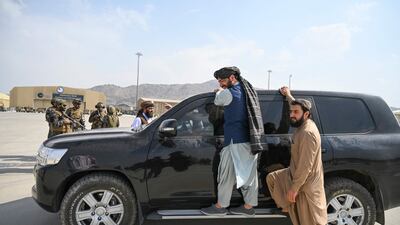
Taliban fighters stand on the footrest of an armoured vehicle. AFP -
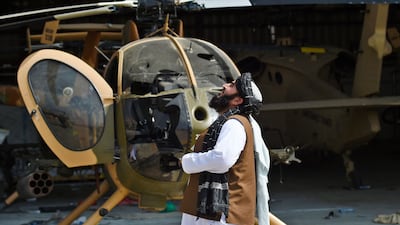
A Taliban member stands next to a damaged helicopter. AFP -
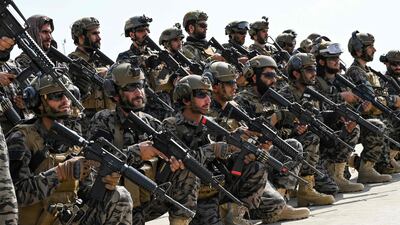
Taliban Badri special force fighters dressed in uniforms, boots, balaclavas and body armour similar to those worn by special forces around the world. AFP -
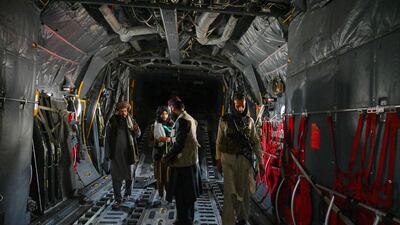
Taliban fighters inside an Afghan Air Force aircraft. AFP -
A Taliban fighter sits inside the cockpit of an Afghan Air Force aircraft. AFP -
The US Department of Defence has confirmed the Taliban are in possession of dozens of US-supplied and other aircraft. AFP -

A member of the Taliban walks out of an Afghan Air Force aircraft. AFP


He rose through the ranks, becoming a spiritual adviser to Mohammed Omar, the group's leader and co-founder, and then served as the group's deputy leader in 2015.
Omar is remembered for refusing to hand over wanted terrorist Osama bin Laden in 2001 after the September 11 attacks, leading the US to rally an international alliance against the Taliban.
Mr Akhundzada survived two assassination attempts — one in 2012 and another in 2019 by Afghan forces.

