

Located on a quiet tree-lined street at the edge of Hyde Park, La Suite West has become somewhat of a home from home for tourists from the Arabian Gulf.
Several of its staff speak Arabic and the menu is tailored for regional tastes.
Perhaps unique to La Suite West, a converted terrace of town houses which forms part of the hotel offers guests their own front door in London. Guests can pass from the street through a small courtyard to their room without entering the rest of the hotel.
For larger families, groups of rooms can be cordoned off, providing privacy during their typically long trips in the Gulf's long scorching summers.

London's growing appeal to Arab guests
La Suite West is among an increasing number of hotels in central London targeting Arab guests – including ultra-luxury – and capitalising on a growing and lucrative market.
Tourist organisation VisitBritain, like many hotels, is targeting the Gulf Co-operation Council (GCC) countries with specific campaigns in an effort to drive the post-pandemic recovery.
“Our goal is to attract high value GCC experience seekers who enjoy traveling and encourage them to consider visiting Britain within the next 12 months," said Carol Madisson, the organisation's deputy director for Asia-Pacific, Middle East and Africa, China and North-East Asia.
"We plan to achieve this by creating unique campaigns and activities that showcase Britain as a welcoming, safe, dynamic, diverse, and sustainable destination,” she told The National.

The economic impact of Gulf visitors on UK tourism
The reason for targeting visitors from the Gulf is simple: they stay longer and spend more than guests from other regions.
According to VisitBritain, visitors from the GCC spent an average of £2,578 ($3,255) on their trips to the UK in 2022 – more than three times the all-market average.
They also stayed for 16 nights, compared with a market-wide average of eight.
And when all six countries of the GCC are combined, they represent the second most valuable market for the UK in terms of visitor spending.
"The GCC countries are very important inbound tourism markets for the UK," Ms Madisson said.
"In 2022 there were 791,000 visits from the GCC to the UK, with those visitors spending £2 billion during their stays.
"VisitBritain’s research shows that visitors from the GCC enjoy dining in Britain’s wonderful restaurants, shopping, sightseeing at its famous monuments and buildings, visiting parks and gardens, museums and art galleries – all of which Britain caters for in abundance.
"[Our] research also shows travellers from the GCC are keen to roam around, visiting multiple destination types on their next international trip, as well as visiting large cities," she added.
The UAE is the 19th largest visitor market for the UK, but the 10th most important in terms of visitor spending, despite its small population, figures from VisitBritain show.
Because Arab guests typically come for long stays, often for the summer, they bring their cars, leaving the forecourts of many of London's top hotels crowded with supercars with Arab number plates.
Other popular hotels with Arab guests include London Marriott Hotel Park Lane and The Sheraton Grand London Park Lane, which recently launched an exclusive package to celebrate Emirati Women’s Day. The stay included an afternoon tea with an “Emirati twist” and an exclusive shopping experience at Fortnum & Mason, among other exclusive offerings.
Halal food is available at many of London’s luxury hotels, including Claridge’s, located in Mayfair, close to Buckingham Palace, and The Bulgari Hotel in Knightsbridge.
The Landmark London in Marylebone features Arabic TV channels and halal food, even offering a Middle East menu in peak season.
The Stafford London in Mayfair also offers Arabic TV channels and can arrange halal food, while The Dorchester, also in Mayfair with a view of Hyde Park, has a halal restaurant. A spokeswoman for The Dorchester told The National the hotel personalises all amenities according to guests’ personal preferences, which are determined by its guest experience team pre-arrival.
The Lanesborough London in Hyde Park has also long targeted the UAE market, hiring an Arab chef and introducing a luxury smoking area more than 14 years ago.
Apartments also tend to be popular with Arab guests, offering more space and longer stays.
The Apartments by the Sloane Club in Chelsea are already booked regularly by people living in the GCC, particularly in the summer. Christmas is another popular period.
It offers a range of apartments from studios to larger two bedrooms, which each have their own kitchenette. A classic two-bedroom apartment costs between £400 and £600 per night, depending on the season.
Stays start at three nights, but it has had some guests staying for up to a year.
Currently, on average about 15 per cent of its guests are Arab.
But it is just beginning to target guests from the Middle East and recently placed adverts in a magazine in the region.
“I see that as sort of a longer term strategy,” said Sophie Handley, a spokeswoman for The Sloane Club.
“There are certain things you can do to create immediate conversion. But what is more important is to raise brand awareness first and then we will see that trickling through at some point. So the first step was to say hey, we’re here.”
Challenges and opportunities in attracting Arab visitors
The adverts appeared in a magazine that is distributed in medical lounges in the region, targeting people who come to London for treatment, because they typically stay longer to convalesce.
These central London hotels are a stone's throw from some of the city's biggest attractions, including its exclusive boutiques and famed high-street shopping.
But data shows that London has become less attractive for shopping since the removal of tax-free shopping in January 2021.
The government predicted the move would provide revenue worth an estimated £2 billion for the UK Treasury.
However, critics suggest the benefits were vastly overblown, and the move has actually ended up in the loss of about two million visitors to the country.
According to data from Global Blue, spending by American visitors to the UK in 2022 had climbed to 101 per cent of 2019 levels.
But for visitors from Gulf states – Bahrain, Kuwait, Oman, Qatar, Saudi Arabia and the UAE – UK sales were at only 65 per cent of 2019 levels.

Forecasts by VisitBritain predict that spending by GCC visitors in the UK will return to 2019 levels by 2024. Visits will exceed 2019 levels by 2025.
It is working with the travel market to boost visitor numbers from the GCC, and hopes schemes such as the Electronic Travel Authorisation will further encourage more travellers to visit.
The ETA, which costs, £10 allows travellers to visit the UK numerous times over a two-year period.
Qatar is the first country to move on to the ETA scheme. But from February 1, 2024, it will be introduced for citizens of Bahrain, Kuwait, Oman, the UAE, Saudi Arabia and Jordan.
Whether it will lead to a boost in Arab visitors remains to be seen.
Much of the growth in La Suite West's Arab guests – who constitute 25 per cent of those who stay at the hotel – has been entirely the result of word-of-mouth recommendations after reopening last year following a refurbishment.
London hotels targeting guests from the Gulf - in pictures
-

The Sheraton Grand London Park Lane recently launched an exclusive package to celebrate Emirati Women’s Day. Getty Images -
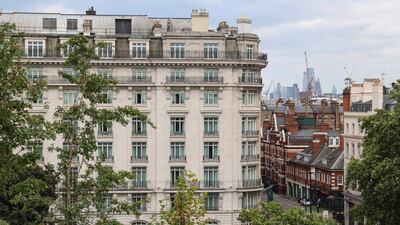
The London Marriott Hotel Park Lane. Getty Images -
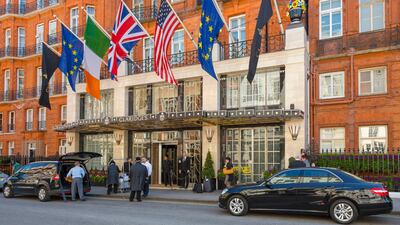
Halal food is popular at many of London’s luxury hotels, including Claridge’s. Getty Images -
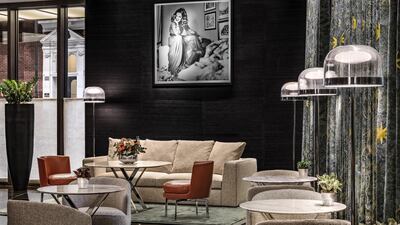
The Bulgari Hotel London also serves halal food. Photo: Bulgari -
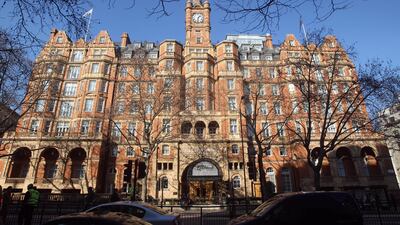
The Landmark London in Marylebone offers a Middle East menu in peak season. Getty Images -

The Apartments by the Sloane Club in Chelsea are regularly booked by people from the GCC, particularly in the summer. Photo: The Apartments by the Sloane Club -
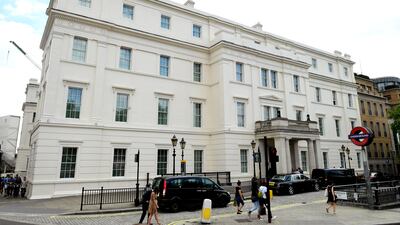
The Lanesborough London has hired an Arab chef and introduced a luxury smoking area more than 14 years ago. Getty Images -
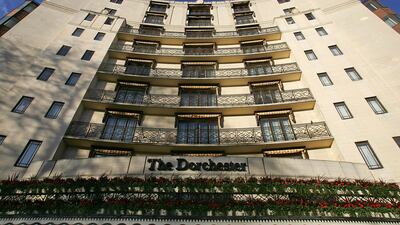
The Dorchester has a halal restaurant. Getty Images


It has not advertised in the UAE and it gets very few bookings through agencies. The vast majority of its bookings, about 90 per cent, are made via sites such as Booking.com and Expedia.
Rooms cost between £175 and £229 a night in the summer.
That makes it a lot more affordable than the likes of the Ritz, which can cost 10 times as much, especially during longer stays, which are typical among La Suite West's Arab guests.
But it does have something in common with the more luxurious London hotels that compete for Arab guests – an attention to detail and high levels of service that those living in the Gulf are used to.
"We recently introduced a WhatsApp service, so the guests can communicate directly with a team member," Kunal Mogla, the hotel’s general manager told The National. “At breakfast we serve hummus, dates, olives and pita bread for the guests.”
Focusing on the small details is working. Guest numbers from the region keep growing, he said.

