


When the Glazers bought Manchester United, the American family’s advisers gave it a codename: Project Hampstead.
If anyone wants to know why there is a disconnect between a game that millions hold dear, that occupies a place at the heart of communities all over the globe and those who run and own it, the name says everything.
Hampstead, one of the most expensive residential areas in London, chosen to label the purchase of the world’s most famous football club, that has its roots in a railway workers’ side and plays its games in post-industrial Manchester. That one.
In my book* I explore how the Glazers acquired the club and their behaviour since.
Malcolm Glazer and his family – he had six children – started buying shares in the club on the market in 2003. The Glazers owned the Tampa Bay Buccaneers in the NFL and were attracted to European football, which was poised for a boom in TV revenues.
At first, they were treated as friendly forces. The United board was more concerned with the friendship then enmity between Sir Alex Ferguson, the club’s manager and two major shareholders, the Irish billionaires John Magnier and JP McManus. Ferguson fell out with them over the ownership of the top racehorse, Rock of Gibraltar.
Malcolm Glazer steadily and quietly built a share stake. His past form in the US was to take a strategic holding and sell it at a handsome profit. On this occasion, he behaved differently. In 2005, the Glazers acquired the shares owned by Magnier and McManus, which gave the family control of the club.
They spent almost £800 million ($981 million). More than £500 million of that came from US hedge funds, loaned at onerous rates of interest and secured on Manchester United. The rest, the Glazers put in, but that was almost certainly borrowed as well, using their shopping malls in the US as collateral.
They took the club private. Subsequently, it floated again, this time in New York. For most of the past year, the Glazers have been engaged in protracted sale or funding negotiations which have valued United at north of £5 billion.
"Hampstead" was the project name their City advisers used, United was given the codename "Mercury" and the buyer was "Red Football".
Funnily enough, in my previous book, Too Big To Jail – Inside HSBC, the Mexican drug cartels and the greatest banking scandal of the century (Macmillan), code names also featured. That’s about how the US authorities wanted to charge bankers at HSBC for facilitating the laundering of billions of dollars in drug proceeds for the Sinaloa cartel led by El Chapo, and how a last-minute intervention by chancellor George Osborne saw them climb down and agree to a $1.8 billion fine, the largest in US history.
HSBC’s male bosses were desperate for their bank to be the biggest in the world, so they targeted an obscure Mexican bank to gain a presence in Latin America. No matter that the bank, Bital, was known for not adhering to compliance and was centred on northern Mexico, in the drugs country.
To galvanise their staff to get the deal done, HSBC chiefs, who clearly loved cowboy shoot-‘em-ups, called it "Project High Noon".

Of course, Hampstead may have been chosen because no one would suspect it related to Manchester United. But neither is it without sneery irony. There’s an underlying City machismo to the choice.
It was the same with another project involving the Glazers. This was "Big Picture". Again, apparently innocuous and ambiguous.
Project Big Picture was a plan put together by them and John Henry, the American owner of Liverpool FC. It appeared to be about making a fairer distribution of cash in the sport, giving £250 million to the lower tier English Football League clubs.
In return, the Premier League would be cut from 20 to 18 clubs and the Carabao Cup, the old League Cup, would be ditched. The voting structure of the Premiership members would be altered, so that just six votes were needed to pass changes in the regulations. The Football Association, which administers the game overall in England, would receive an ex-gratia payment of £100 million.

Closer inspection revealed the £250 million to the EFL clubs was not a donation but a loan; the Premiership clubs were to be allowed to sell their own TV rights for up to eight matches a season internationally, instead of them being sold collectively.
This would see the Big Six most powerful clubs – Liverpool, United, Manchester City, Chelsea, Arsenal, Tottenham – rake in more money from negotiating their own TV deals.
Reducing the size of the Premier League and scrapping the Carabao would remove fixtures against unglamorous teams that Liverpool and United could not sell hospitality against, free up the fixture list for more profitable European games should that competition widen and allow for more lucrative overseas pre-season tours.
Six clubs would determine the future of Premiership football (guess which six they would be). The other clubs saw through the scheme. At a Premier League meeting, 14 clubs voted down the plan.
Project Big Picture, which died a quick death and received relatively little publicity, betrayed a mindset that collectivity and democracy, expressed in the principle of one club, one vote, were anathema to the instigators. Equally, they were not moved by the thought that to fans of lesser clubs a match against the likes of United and Liverpool, playing them in the Carabao, means everything.

A year later, and United and other large clubs came out with the European Super League proposal. This would comprise 20 teams across Europe taking part in matches against each other. There were to be 12 founding clubs who would be permanent members, not subject to relegation for the length of their commitment to the league. The Super League clubs would share more than E10 billion in "solidarity payments" and the founders would receive an extra E3.5 billion to support "infrastructure investment".
The rest of football, media, politicians, erupted. Prince William even tweeted his opposition. Prime Minister Boris Johnson came out and said he would drop a "legislative bomb" on the idea.
Ed Woodward, the United chief executive at the time, had visited Downing Street shortly before the Super League plan was unveiled. Johnson saw him and, somewhat incongruously, expressed his pleasure at seeing Newcastle on the way back. Newcastle were then in the throes of a takeover by the Saudi state Public Investment Fund.
Fifa, the world footballing body, has now announced that Saudi Arabia will host the 2034 World Cup. This, after intensive Saudi lobbying and Fifa machinations.
They awarded the 2030 tournament jointly to Spain, Portugal and Morocco; while South America would also hold three games to mark the centenary of the first competition, held in Uruguay.
That immediately meant Europe, Africa, South America and North America (location for the 2026 World Cup) were barred from bidding for 2034.
The Glazer family's ownership of Manchester United - in pictures
-
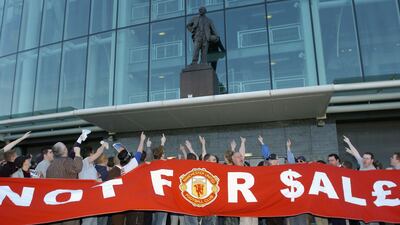
Fans outside Old Trafford show their feelings towards Malcolm Glazer's bid to purchase Manchester United in May 2005. All photos: Getty Images -
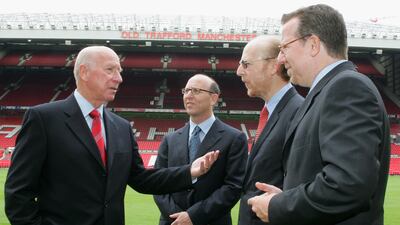
Manchester United director Bobby Charlton, left, speaks with Joel, Avram and Byran Glazer, sons of new Manchester United owner Malcolm Glazer and new members of the board of directors, at Old Trafford in June 2005 after the family completed their takeover -

Bryan Glazer chats with Manchester United manager Sir Alex Ferguson in June 2005 during a pre-season tour of China -
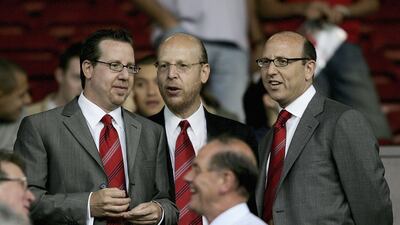
Joel Glazer, Avram Glazer and Bryan Glazer at Old Trafford to watch a match in August 2005 -
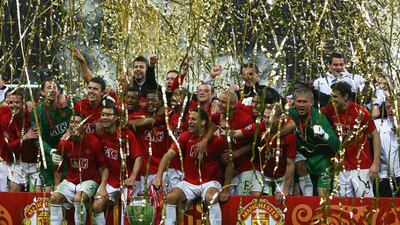
The early years of the Glazer family ownership saw Manchester United win a number of trophies, including the UEFA Champions League in May 2008, after defeating Chelsea in Moscow -
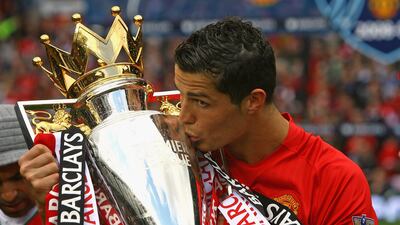
Cristiano Ronaldo lifts the Premier League trophy at Old Trafford in 2009 -

Manchester United fans make their feelings toward club owner Malcolm Glazer known during a Premier League match between Aston Villa and Manchester United at Villa Park in 2010 -
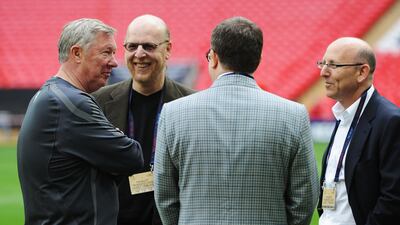
Sir Alex Ferguson speaks with Avram, Bryan and Joel Glazer during a training session prior to the UEFA Champions League final against Barcelona at Wembley Stadium in 2011 -
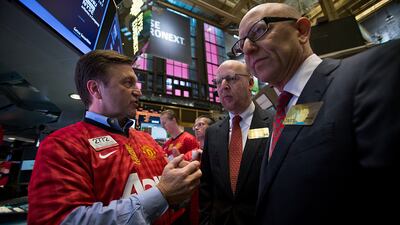
A trader wearing a Manchester United shirt speaks with Avram and Joel Glazer at the New York Stock Exchange in 2012 -
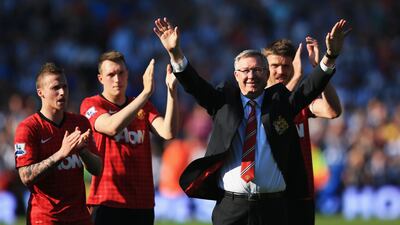
Sir Alex Ferguson is applauded by players after his 1,500th and final match in charge of the club in 2013. Manchester United were crowned Premier League champions as Ferguson retired, but have not won the league since -
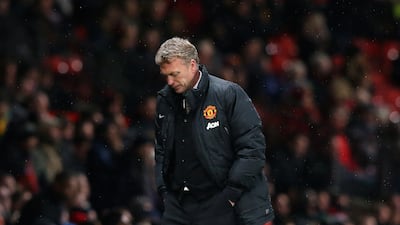
David Moyes was selected to take over from Sir Alex Ferguson as manager in 2013, but was sacked in April 2014 after only 10 months in charge -
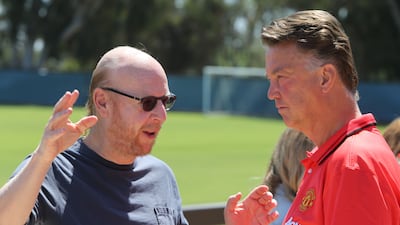
David Moyes was followed by Dutch manager Louis van Gaal, pictured here speaking with Avram Glazer, however he too was fired in May 2016 after winning the FA Cup -
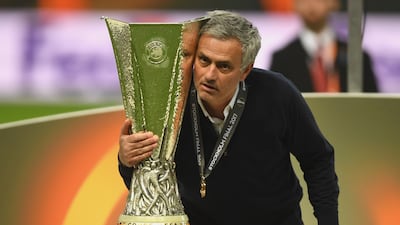
The next manager through the door at Manchester United was Jose Mourinho in May 2016. He won the Europa League (above), the League Cup, and the Community Shield as manager but was dismissed in December 2018 after a poor start to the season -
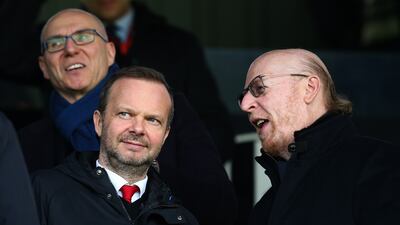
Manchester United chief executive Ed Woodward speaks to Avram Glazer in 2019 -
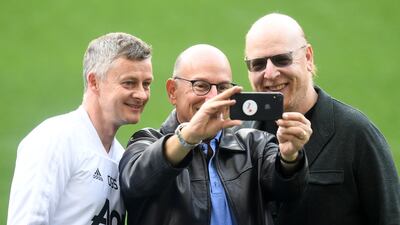
Former Manchester United player Ole Gunnar Solskjaer, posing above with Avram Glazer, was brought in as caretaker manager following Mourinho's sacking. After a bright start he was given the role on a permanent basis, before being sacked himself in November 2021 -

A plane trailing a banner that reads "2bn Stolen Glazers Out" is flown over the stadium prior to the Premier League match between Leeds United and Manchester United in April 2021 -
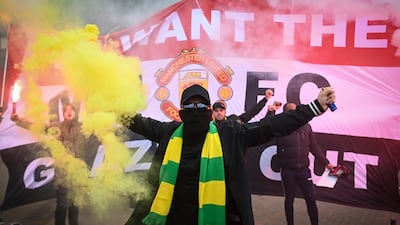
Fans protesting against the Glazer's ownership are seen outside Old Trafford prior to a Premier League match against Liverpool in May 2021 -
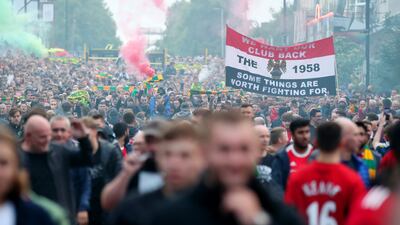
More anti-Glazer protests take place prior to another Premier League match against Liverpool in August 2022 -
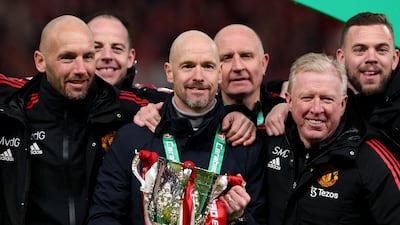
Dutchman Erik ten Hag was brought in as manager in April 2022, winning the League Cup, above, in his first season -
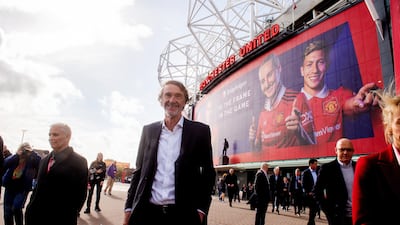
Potential buyer Sir Jim Ratcliffe tours Old Trafford in March, after the Glazer family announced in November 2022 that they were conducting a strategic review, with the sale of United one option being considered -
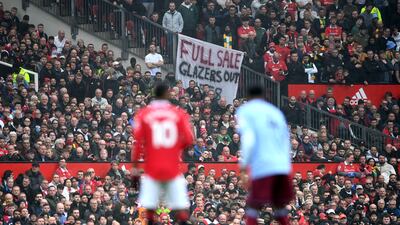
An anti Glazer banner is hung by Manchester United fans during a Premier League match in April


Asia and Oceania were then given just three weeks to submit expressions of interest for 2034. Saudi Arabia, which had been quietly working on a bid and pressing the flesh of Fifa delegates, said it would. Australia, which had wanted the 2034 World Cup, said it did not have enough time to formally prepare and withdrew. That left one bidder: Saudi Arabia.
As for football, it’s popularly referred to as the "beautiful game" and the "people’s game". But there’s little that is beautiful in the way it is administered and, likewise, the people do not count.
* Chris Blackhurst is the author of The World’s Biggest Cash Machine – Manchester United, the Glazers, and the struggle for football’s soul (Macmillan)

