


Choreographer Martha Graham, known as a pioneer of modern dance, has said that "dance is the hidden language of the soul". Her words suggest that it is a form of expression and storytelling that transcends culture, language and connects people through art.
Like all cultures around the word, this week’s Arabic Word of the Week, raqs, describes a rich and diverse tradition of dance in the region that is timeless and evolving.
Raqs is a noun made up of the three Arabic letters: rah, qaf and sad. It means dance and is derived from the verb raqsa which means to dance. Raqs is also used to define many forms of dance.
Raqs sharqi, which translates to oriental or eastern dance, describes the art of belly dancing. Raqs baladi describes the many forms of folk dance in the Arab world, often performed in rural areas. Raqs clasiki, which translates to classical dance, refers to any type of formal dance that includes structured choreography and movement and is more often performed on stage.
Raqs Arabi, which translates to Arabic dance, refers to any forms of dance – traditional or contemporary – that originate from the Arab region. Raqs al dabka, also known simply as dabka or dabke, is a popular traditional folk dance which has many different forms across the region, from the Kurdish people to the Levant and parts of the Gulf. There is also raqs al-samai, a form of traditional dance performed to a type of Arabic music called samai.
-
Hob is the Arabic word for love, but can be used in many contexts -

The Arabic word helu translates, in English, to sweet -

Nashef is the Arabic word for dry, but has many connotations, depending on the context in which you use it -
The Arabic word hurriyeh translates to freedom in English -
The Arabic word tayeb can mean delicious or good, depending on the context -
The Arabic word mustaqbal is best expressed as future in English -
Waqaa, the Arabic word for fall, can signify a loss of power, stature, health or grace -
Hudood means borders in English -
The Arabic word rooh translates to spirit or soul in English -

The Arabic word ain means eye in English -
Waraq, the Arabic word of the week means paper in English -
Bahr, the Arabic for sea, has a poetic lilt -
Kareem means generous in English -

Bab means door in English -
Eid means holiday or festival -

Najm means star for the night sky and cosmos, but also has plenty of other meanings, including ambition or fame -
Alwan, the Arabic word for colours, has many shades of meaning -

Akel can refer to home-cooked meals, embezzlement, fire and rust -

Jamal is the Arabic word for beauty, be it literal or figurative -

Herfe translates to profession or craft -

Tabiaa translates to nature and can frame landscapes and portraits -

Sehha is the Arabic word for health -

Ijaza is Arabic for holiday and shines in summer but is not stress-free -

Aamal is the Arabic word for work -
Al dahr translates to time -

Qalb is a word for heart, with poetic roots -
Lugha in Arabic translates to language in English -
Insaan means human being -
Na'eeman is an idiomatic expression used when someone has had a shower or bath, a haircut or had their beard trimmed -
The Arabic word for life touches on eternity, death and accomplishment -

Qamar is the Arabic for moon -
The Arabic word for strength or power is quwwa -

Burj is Arabic for tower -
The Arabic word for sun is shams -
Sabr in English can translate to patience -
Hayba is the Arabic word for prestige -
The Arabic term al shay'e translates as 'the thing' in English -

The Arabic word for road is tareeq -
The Arabic word for read has mystical and scholarly connotations -
Istikan is the Arabic word for a type of tea cup -
The Arabic word hanan means affection in English -
The Arabic word atlal means ruins in English -

Kura is the Arabic word for ball, in all its forms -
Janaah in Arabic means wing in English -
The Arabic word sana translates to year in English -
Qasida is the Arabic for poem, not poetry -
Ameer, the Arabic word for prince, which influenced another English title -
Nakhla translates to palm tree in English -
Al samt is the Arabic for silence -

Kalimaat translates to words in English -

Markaz is Arabic for centre -
Beshara is the Arabic word for good news -

Bayt is the Arabic for house or home -

Fann is the Arabic word for art, and can be either a verb or an adjective -
Isim, which means name, is made up of three letters, alif, seen and meem -
Dunya is the Arabic word for world -
Nazaafah translates to cleanliness in English -
Many traditions revolve around drinking coffee, including weddings, funerals and business meetings -
Fajr is the Arabic word for dawn -
Maghrib is the Arabic word for sunset -

The Arabic language is filled with idioms, quotes and colloquial quips involving the mirror -
Raei is the Arabic word for opinion -

Wa'ed is a multifaceted word for 'promise', as well as a female name -
Qussa is the Arabic word for story -
Sadaaka is the Arabic word for friendship -

Akhbaar is the Arabic word for news -
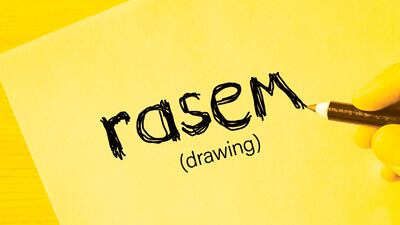
Rasem is made up of the three Arabic letters Rah, Seen and Meem. While it can simply mean a drawing or a sketch it’s also a malleable word whose definition can change depending on context and dialect – particularly between colloquial and classical Arabic. -

As well as finishing a task, khatem denotes a deeper sense of finality -
Commonly translated to blessed, mubarak is used as a popular greeting on auspicious days -

The Arabic word for lighthouse is also a term that has become closely associated with Islam -
Siyaam, the Arabic word for fasting is also connected to silence -

Tawbah, the Arabic word for repentance, is also connected to Ramadan -

Safar, the Arabic Word for travel can also refer to sunny days, a brighter-blazing fire or exile. The National


As a word, raqs can also be used in the context of choreography and musical pieces or even films that are intended for dancing or have dancing as a core component in their storytelling. The word for a dancer in Arabic, raqasa, is derived from the word raqs.
Perhaps the most famous forms of raqs is Raqs sharqi, the classic Egyptian style of belly dancing.
There have been many pioneering Egyptian belly dancers who not only popularised the art form into a grander scale in the region but also internationally. These dancers include Samia Gamal, Tahiya Karioka, Naima Akef and Soheir Zaki.
In the 1960s and 1980s it evolved thanks to dancers such as Nagwa Fouad, Fifi Abdou and Dina. These dancers were some of the first to perform with full orchestras on stage in front of a live audience and broadcast on television.
The basic dance form of raqis sharqi has not changed but continues to evolve, with many belly dancers known to have incorporated other forms of dance, such as ballet.
Over the years, many of the different forms of raqs that either originated in the Arab world or are associated with the region have intersected with each other and been influenced with other forms of dance and styles from around the globe.
An example of this is the Lebanese dance group The Mayyas who won season 17 of America's Got Talent. They are influenced by several dance forms, but mainly raqs sharqi.

