


A Polish architect who worked in the Emirates wants the global building sectors to do more to reduce their carbon footprint – and she thinks she knows how.
Sandra Piesik, who learnt about traditional construction methods in the UAE, says fellow architects should pay more attention to the building techniques of our ancestors.
Construction is responsible for 40 per cent of the world's carbon emissions, and the planet is edging ever closer to 1.5ºC of warming compared with pre-industrial levels.
Now based in the Netherlands, Ms Piesik advocates the adaptation of traditional building techniques and traditional materials as a way to boost local economies, minimise waste and emissions, and make structures that are better suited to their environments.
“The two biggest lessons of sustainability I learnt, one is from the indigenous people of the United Arab Emirates, and the second one is from the Paris Agreement,” she told The National, referring to the 2015 climate pact that set the target of limiting global warming to 1.5ºC above pre-industrial levels.
“There has never been a more important time to understand how to make the best use of local natural resources, and to produce buildings that connect to ecosystems and livelihoods and do not rely on stripping the environment or transporting materials across the globe.”
Ms Piesik's second impact edition of Habitat: Vernacular Architecture for a Changing Climate, examines traditional architectural techniques in different climate zones.
She describes “vernacular architecture” as architecture without architects, and her interest in it originated from personal experience.
Ms Piesik used to work for global companies in Dubai where she oversaw the construction of many high-rise buildings.
-
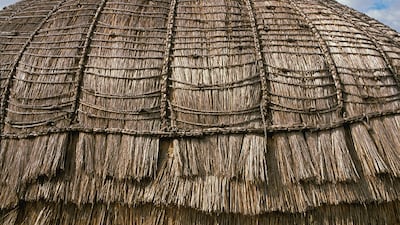
A Zulu ‘beehive’ in South Africa. Photo: Courtesy of Sandra Piesik -

The Technology School of Guelmim, Morocco. Photo: Courtesy of Sandra Piesik -
The Bangladeshi Meti Handmade School. Photo: Anna Heringer / Courtesy of Sandra Piesik -

A woven Waorani house in Ecuador. Photo: Courtesy of Sandra Piesik -
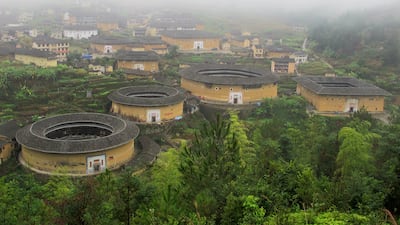
The tulou in coastal southern China. Photo: Courtesy of Sandra Piesik -

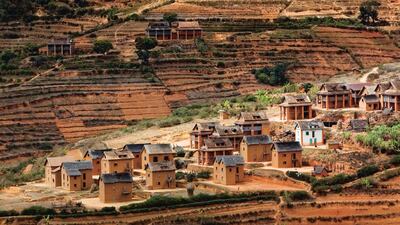
Village houses in the landscape of Madagascar. Photo: Courtesy of Sandra Piesik -
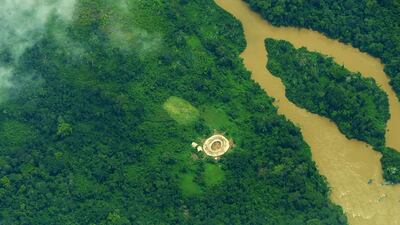
Yanomami village in the Catrimani Valley of northern Brazil. Photo: Courtesy of Sandra Piesik -

The Kam community in China. Photo: Amy Eisenberg and John Amato / Courtesy of Sandra Piesik -

The Bangladeshi Desi Centre. Photo: Anna Heringer / Courtesy of Sandra Piesik -
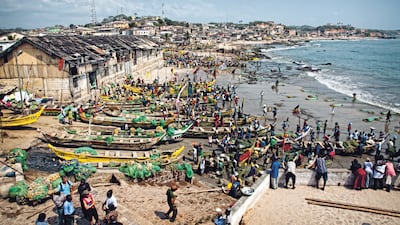
Cape Coast Beach, West Africa. Photo: Courtesy of Sandra Piesik -
Zulu ‘beehives’ in South Africa. Photo: Courtesy of Sandra Piesik -
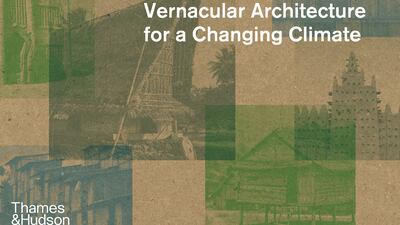
Sandra Piesik's book, Habitat: Vernacular Architecture for a Changing Climate


But fascination with anthropology and indigenous building methods compelled her to delve deeper into local construction methods, especially the innovative use of palm leaves in the UAE to create durable and lightweight shelters quickly.
Ms Piesik said the construction industry could make a significant impact in decreasing carbon emissions and tackling climate change,
She urged the international community to take decisive steps towards creating a sustainable future, saying “we must act now if we are to have any hope of a solution”.
According to the UN Environment Programme's 2022 Global Status Report for Buildings and Construction, the construction sector is falling behind in its efforts to achieve decarbonisation by 2050.
And the disparity between the industry's climate performance and the decarbonisation target is increasing.
Ms Piesik underscored the importance of using vernacular architecture to build sustainable, climate-adaptive structures that can endure the impact of a shifting climate.
Wider adoption of climate-sensitive architecture would greatly reduce the energy needed to cool buildings, yet it is often overlooked in favour of more modern techniques.

Ms Piesik said globalisation has had negative effects on architecture, particularly through the homogenisation of styles and the loss of local character.
“Westernisation and globalisation have affected development, not necessarily in a good way. It's not just about CO2 emissions, but this is also question of aesthetics and cultural identity,” she said.
She said globalisation had contributed to environmental degradation and social inequality.
As the demand for new buildings and infrastructure grows, architects and developers often give priority to short-term economic gains over long-term sustainability and social responsibility.
This has led to the destruction of natural habitats and the displacement of communities.
Ms Piesik said architects must be more aware of the effects of globalisation on the built environment and take a more holistic and responsible approach.
They should strive to create buildings and spaces that are aesthetically pleasing and socially and environmentally sustainable, she said.
By doing so, they can help to shape a more equitable and resilient future for our global society.
As the effects of climate change become more apparent, Ms Piesik said architects and builders were beginning to recognise the value of this approach.
The magic word for the future, she said, is “adaptation”, on a global, regional and local scale.

