Canada's climate minister Steven Guilbeault speaks to camera crews at Cop28 in Dubai. Demands for progress from the public and the media are a major pressure. Reuters

Why Cop28 is just the tip of the iceberg for climate negotiators


Daniel Bardsley
  • English
  • Arabic

The role of a climate change negotiator is arguably one of the most complex and challenging jobs around today.

Representing national governments or multinational institutions such as the EU, these negotiators are tasked with fine-tuning agreements aimed at reducing emissions and averting the severe impact of climate change.

Since November 30, hundreds of them have gathered in the UAE for Cop28, aiming to forge a path forward that campaigners envision to be more ambitious than the agreement reached at the conclusion of Cop27 in Sharm El Sheikh last year.

Difficult discussions

While the annual Cop events attract vast media attention, most of the work of climate officials happens at other times of the year, away from the public gaze.

“We have endless hours, days and nights of meetings … sometimes very technical, sometimes very political,” said Christina Voigt, a law professor at the University of Oslo, who for many years was one of the Norwegian government’s representatives in climate change negotiations.

“The issue is not difficult technically but the political sides are so controversial that it makes [for] very, very difficult discussions.”

An overarching principle with climate change is that of common but differentiated responsibilities (CBDR) – the idea that everyone is responsible for dealing with the issue, but not equally. Finding agreement within this framework is difficult.

Prof Christina Voigt is a former Norwegian climate change negotiator. Photo: Prof Christina Voigt

“There’s a strong recognition that developed countries take the lead and there’s an expectation that developed countries will assist developing countries with technology and finance,” said Dr Adrian Macey, New Zealand’s climate change ambassador from 2006 to 2010 and the chairman of UN climate change negotiations from 2010 to 2011.

While this broad principle has wide acceptance, wealthier nations may be concerned that they are paying several times over for their contribution to climate change.

They may have to take the lead in cutting emissions – known as mitigation – while also being expected to compensate poorer nations for the loss and damage caused by climate change.

“Where you set your goal from historical responsibility is pretty fraught,” said Dr Macey, who is now at Victoria University of Wellington.

An important factor, he said, is how much it will cost a country to transition away from fossil fuels. Major hydrocarbon producers may argue that they stand to lose more from the winding down of fossil fuels than nations whose economies have traditionally not depended on oil and gas sales.

Surging populations

As developing nations, notably in Africa, experience rapid population growth – the UN forecasts that sub-Saharan Africa’s population will nearly double to more than two billion by 2050 – and look to bring more citizens out of poverty, the question of whether they can grow their economies without increasing greenhouse gas emissions looms.

“The task in Africa is also not to try to embark on a trajectory which is locking you into fossil fuel emissions,” said Dr Artur Runge-Metzger, former director of the EU Commission's Directorate-General Climate Action. He was one of the commission’s negotiators from the late 1990s until the Paris Agreement was finalised in 2015.

“That is a very particular challenge for Africa, because a lot of gas and oil has been found in Africa. There’s still a discussion about whether it’s not a right of the nations not to use that opportunity in order to develop their industries.”

Dr Artur Runge-Metzger, a former German climate change negotiator, says growth in Africa should not lock the continent into fossil fuel emissions. Photo: Dr Artur Runge-Metzger

Growing economies sustainably

There has been increasing recognition that economic growth can be achieved without increasing emissions, according to Dr Runge-Metzger. He pointed to huge advances in renewable energy.

“If you said 30 years back that wind energy and solar energy were going to start dominating the investments, you would have been laughed out of the room, because windmills at the time were these tiny things that you sometimes see in the backyard of a farm,” he said.

“You can see how much has changed over time, how much bigger they have become and how little they cost now, compared to 25 or 20 years ago.”

Last year, the Paris-based International Energy Agency said solar power had become the “cheapest energy in history”, at about $40 per megawatt hour for new projects. Coal and natural gas projects cost approximately double this.

A shift to renewables has helped Europe in particular to reduce its contribution to climate change, with official figures indicating that the EU achieved a 24 per cent reduction in greenhouse gas emissions between 1990 and 2019.

Dr Runge-Metzger, who is now a fellow at the Mercator Research Institute on Global Commons and Climate Change, said that additional reductions may be harder to achieve.

“The EU will have a power sector that is out of emissions within the next 10 to 12 years, but then the EU will still have emissions in industry, in buildings, in transport, in agriculture that also need to be reduced, but that is not going to be easy,” he said.

“If you look at transport and the internal combustion engine, the first decisions have already been made to phase out the internal combustion engine and that will have an effect internationally that others will follow. So, from that point of view, I am optimistic.

“The question still is, ‘Are we fast enough?’ That’s something I wouldn’t dare to make a bet on. But everybody understands the faster we are, the less damage we will have from climate change.”

Dr Adrian Macey is a former New Zealand climate change negotiator. Photo: Dr Adrian Macey

Outsourcing emissions

Another important issue is emissions “outsourcing”. With many manufactured goods used in Europe now made in China and other places, it is slowly becoming an important aspect of climate policy and regulation in Europe.

“It’s not so difficult to reduce your emissions if you just buy the stuff that causes emissions somewhere else,” Prof Voigt said.

Looking ahead, Dr Runge-Metzger said that China, the world’s biggest emitter, has “a particular responsibility when it comes to new power projects, new industrial projects” to ensure that they are as green as possible.

A recent report by Global Energy Monitor and the Centre for Research on Energy and Clean Air found that the country permitted the construction of an average of two new coal-fired power plants a week last year, while many other nations are winding down coal use.

China is said to have six times as many coal-fired power stations beginning construction than the rest of the world combined.

Beyond negotiations between governments and international institutions, Dr Macey said it is no longer just governments dictating the pace of change because many companies have aligned themselves to net-zero policies.

About 80 per cent of the investment needed for the energy transition is expected to come from the private sector, he added.

The many other issues surrounding climate change, including the thorny question of loss and damage – compensating nations for the harm they experience because of climate change – kept officials representing national governments and international institutions busy in the build-up to Cop28 and throughout.

Prof Voigt knows well how tough such negotiations can be.

“That’s usually something people don’t see, when you sit there all night and you’re tired and there’s little food,” Prof Voigt said.

“It’s a tiresome process but if, by the end of the day, there’s a multilateral outcome, there’s a consensus, there’s a little step forward in this global fight on climate, then it’s worth it because that really is the only way. You can only solve it by getting states together and agreeing on some sort of level playing field.”

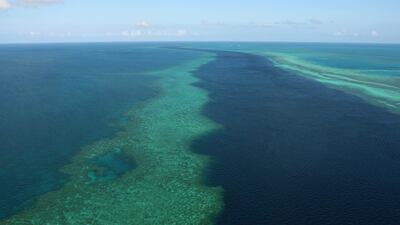
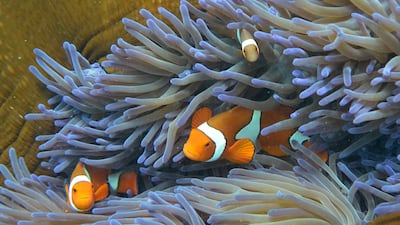
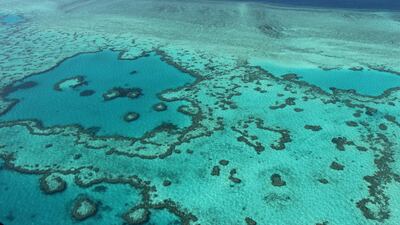
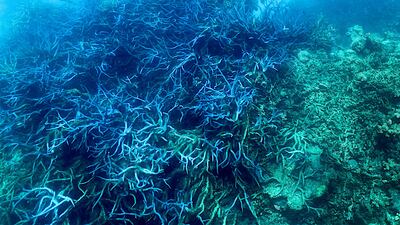
Australia's endangered Great Barrier Reef – in pictures

The specs

Engine: Dual 180kW and 300kW front and rear motors

Power: 480kW

Torque: 850Nm

Transmission: Single-speed automatic

Price: From Dh359,900 ($98,000)

On sale: Now

The specs: 2018 Ford F-150

Price, base / as tested: Dh173,250 / Dh178,500

Engine: 5.0-litre V8

Power: 395hp @ 5,000rpm

Torque: 555Nm @ 2,750rpm

Transmission: 10-speed automatic

Fuel consumption, combined: 12.4L / 100km

Labour dispute

The insured employee may still file an ILOE claim even if a labour dispute is ongoing post termination, but the insurer may suspend or reject payment, until the courts resolve the dispute, especially if the reason for termination is contested. The outcome of the labour court proceedings can directly affect eligibility.


- Abdullah Ishnaneh, Partner, BSA Law 

The specs: 2018 Mercedes-Benz GLA

Price, base / as tested Dh150,900 / Dh173,600

Engine 2.0L inline four-cylinder

Transmission Seven-speed automatic

Power 211hp @ 5,500rpm

Torque 350Nm @ 1,200rpm

Fuel economy, combined 6.4L / 100km

The specs

Price: From Dh529,000

Engine: 5-litre V8

Transmission: Eight-speed auto

Power: 520hp

Torque: 625Nm

Fuel economy, combined: 12.8L/100km

England squad

Goalkeepers: Jordan Pickford, Nick Pope, Aaron Ramsdale 

Defenders: Trent Alexander-Arnold, Conor Coady, Marc Guehi, Reece James, Harry Maguire, Tyrone Mings, Luke Shaw, John Stones, Ben White

Midfielders: Jude Bellingham, Conor Gallagher, Mason Mount, Jordan Henderson, Declan Rice, James Ward-Prowse

Forwards: Tammy Abraham, Phil Foden, Jack Grealish, Harry Kane, Bukayo Saka, Emile Smith Rowe, Raheem Sterling

Lexus LX700h specs

Engine: 3.4-litre twin-turbo V6 plus supplementary electric motor

Power: 464hp at 5,200rpm

Torque: 790Nm from 2,000-3,600rpm

Transmission: 10-speed auto

Fuel consumption: 11.7L/100km

On sale: Now

Price: From Dh590,000

In numbers

- Number of children under five will fall from 681 million in 2017 to 401m in 2100

- Over-80s will rise from 141m in 2017 to 866m in 2100

- Nigeria will become the world’s second most populous country with 791m by 2100, behind India

- China will fall dramatically from a peak of 2.4 billion in 2024 to 732 million by 2100

- an average of 2.1 children per woman is required to sustain population growth

Straightforward ways to reduce sugar in your family's diet
  • Ban fruit juice and sodas
  • Eat a hearty breakfast that contains fats and wholegrains, such as peanut butter on multigrain toast or full-fat plain yoghurt with whole fruit and nuts, to avoid the need for a 10am snack
  • Give young children plain yoghurt with whole fruits mashed into it
  • Reduce the number of cakes, biscuits and sweets. Reserve them for a treat
  • Don’t eat dessert every day 
  • Make your own smoothies. Always use the whole fruit to maintain the benefit of its fibre content and don’t add any sweeteners
  • Always go for natural whole foods over processed, packaged foods. Ask yourself would your grandmother have eaten it?
  • Read food labels if you really do feel the need to buy processed food
  • Eat everything in moderation
WHAT%20START-UPS%20IS%20VISA%20SEEKING%3F
%3Cp%3E%3Cstrong%3EEnablers%20of%20digital%20services%3C%2Fstrong%3E%3Cbr%3E%E2%80%A2%20Blockchain%20and%20cryptocurrency%3Cbr%3E%E2%80%A2%20Crowdfunding%3Cbr%3E%E2%80%A2%20Banking-as-a-service%3Cbr%3E%E2%80%A2%20Banking%20identification%20number%20sponsors%3Cbr%3E%E2%80%A2%20Issuers%2Fprocessors%3Cbr%3E%E2%80%A2%20Programme%20managers%3C%2Fp%3E%0A%3Cp%3E%3Cstrong%3EDigital%20issuance%3C%2Fstrong%3E%3Cbr%3E%E2%80%A2%20Blockchain%20and%20cryptocurrency%3Cbr%3E%E2%80%A2%20Alternative%20lending%3Cbr%3E%E2%80%A2%20Personal%20financial%20management%3Cbr%3E%E2%80%A2%20Money%20transfer%20and%20remittance%3Cbr%3E%E2%80%A2%20Digital%20banking%20(neo%20banks)%3Cbr%3E%E2%80%A2%20Digital%20wallets%2C%20peer-to-peer%20and%20transfers%3Cbr%3E%E2%80%A2%20Employee%20benefits%3Cbr%3E%E2%80%A2%20Payables%3Cbr%3E%E2%80%A2%20Corporate%20cards%3C%2Fp%3E%0A%3Cp%3E%3Cstrong%3EValue-add%20for%20merchants%2Fconsumers%3C%2Fstrong%3E%3Cbr%3E%E2%80%A2%20Data%20and%20analytics%3Cbr%3E%E2%80%A2%20ID%2C%20authentication%20and%20security%3Cbr%3E%E2%80%A2%20Insurance%20technology%3Cbr%3E%E2%80%A2%20Loyalty%3Cbr%3E%E2%80%A2%20Merchant%20services%20and%20tools%3Cbr%3E%E2%80%A2%20Process%20and%20payment%20infrastructure%3Cbr%3E%E2%80%A2%20Retail%20technology%3C%2Fp%3E%0A%3Cp%3E%3Cstrong%3ESME%20recovery%3C%2Fstrong%3E%3Cbr%3E%E2%80%A2%20Money%20movement%3Cbr%3E%E2%80%A2%20Acceptance%3Cbr%3E%E2%80%A2%20Risk%20management%3Cbr%3E%E2%80%A2%20Brand%20management%3C%2Fp%3E%0A%3Cp%3E%3Cstrong%3ENew%20categories%20for%202023%3C%2Fstrong%3E%3Cbr%3E%E2%80%A2%20Sustainable%20FinTechs%3Cbr%3E%E2%80%A2%20Risk%3Cbr%3E%E2%80%A2%20Urban%20mobility%3C%2Fp%3E%0A
NATIONAL%20SELECTIONS
%3Cp%3E6pm%3A%20Falling%20Shadow%3Cbr%3E6.35pm%3A%20Quality%20Boone%3Cbr%3E7.10pm%3A%20Al%20Dasim%3Cbr%3E7.45pm%3A%20Withering%3Cbr%3E8.20pm%3A%20Lazuli%3Cbr%3E8.55pm%3A%20Tiger%20Nation%3Cbr%3E9.30pm%3A%20Modern%20News%3C%2Fp%3E%0A
COMPANY%20PROFILE
%3Cp%3E%3Cstrong%3ECompany%20name%3A%3C%2Fstrong%3E%20Clinicy%3Cbr%3E%3Cstrong%3EStarted%3A%3C%2Fstrong%3E%202017%3Cbr%3E%3Cstrong%3EFounders%3A%3C%2Fstrong%3E%20Prince%20Mohammed%20Bin%20Abdulrahman%2C%20Abdullah%20bin%20Sulaiman%20Alobaid%20and%20Saud%20bin%20Sulaiman%20Alobaid%3Cbr%3E%3Cstrong%3EBased%3A%3C%2Fstrong%3E%20Riyadh%3Cbr%3E%3Cstrong%3ENumber%20of%20staff%3A%3C%2Fstrong%3E%2025%3Cbr%3E%3Cstrong%3ESector%3A%3C%2Fstrong%3E%20HealthTech%3Cbr%3E%3Cstrong%3ETotal%20funding%20raised%3A%3C%2Fstrong%3E%20More%20than%20%2410%20million%3Cbr%3E%3Cstrong%3EInvestors%3A%3C%2Fstrong%3E%20Middle%20East%20Venture%20Partners%2C%20Gate%20Capital%2C%20Kafou%20Group%20and%20Fadeed%20Investment%3C%2Fp%3E%0A
How to protect yourself when air quality drops

Install an air filter in your home.

Close your windows and turn on the AC.

Shower or bath after being outside.

Wear a face mask.

Stay indoors when conditions are particularly poor.

If driving, turn your engine off when stationary.

Asia Cup Qualifier

Final
UAE v Hong Kong

TV:
Live on OSN Cricket HD. Coverage starts at 5.30am

The specs

Engine: 5.2-litre twin-turbo V12

Transmission: eight-speed automatic

Power: 715bhp

Torque: 900Nm

Price: Dh1,289,376

On sale: now

The specs

Engine: 3.5-litre twin-turbo V6

Power: 380hp at 5,800rpm

Torque: 530Nm at 1,300-4,500rpm

Transmission: Eight-speed auto

Price: From Dh299,000 ($81,415)

On sale: Now

RESULTS

6.30pm: Meydan Sprint Group 2 US$175,000 1,000m
Winner: Ertijaal, Jim Crowley (jockey), Ali Rashid Al Raihe (trainer)

7.05pm: Handicap $60,000 1,400m
Winner: Secret Ambition, Richard Mullen, Satish Seemar

7.40pm: Handicap $160,000 1,400m
Winner: Raven’s Corner, Richard Mullen, Satish Seemar

8.15pm: Dubai Millennium Stakes Group 3 $200,000 2,000m
Winner: Folkswood, William Buick, Charlie Appleby

8.50pm: Zabeel Mile Group 2 $250,000 1,600m
Winner: Janoobi, Jim Crowley, Mike de Kock

9.25pm: Handicap $125,000 1,600m
Winner: Capezzano, Mickael Barzalona, Salem bin Ghadayer

2018 ICC World Twenty20 Asian Western Sub Regional Qualifier

Event info: The tournament in Kuwait is the first phase of the qualifying process for sides from Asia for the 2020 World T20 in Australia. The UAE must finish within the top three teams out of the six at the competition to advance to the Asia regional finals. Success at regional finals would mean progression to the World T20 Qualifier.

Teams: UAE, Bahrain, Saudi Arabia, Kuwait, Maldives, Qatar

Friday fixtures: 9.30am (UAE time) - Kuwait v Maldives, Qatar v UAE; 3pm - Saudi Arabia v Bahrain

Royal wedding inspired menu

Ginger, citrus and orange blossom iced tea

Avocado ranch dip with crudites

Cucumber, smoked salmon and cream cheese mini club sandwiches

Elderflower and lemon syllabub meringue

if you go

The flights

Etihad, Emirates and Singapore Airlines fly direct from the UAE to Singapore from Dh2,265 return including taxes. The flight takes about 7 hours.

The hotel

Rooms at the M Social Singapore cost from SG $179 (Dh488) per night including taxes.

The tour

Makan Makan Walking group tours costs from SG $90 (Dh245) per person for about three hours. Tailor-made tours can be arranged. For details go to www.woknstroll.com.sg

Formula Middle East Calendar (Formula Regional and Formula 4)
Round 1: January 17-19, Yas Marina Circuit – Abu Dhabi
 
Round 2: January 22-23, Yas Marina Circuit – Abu Dhabi
 
Round 3: February 7-9, Dubai Autodrome – Dubai
 
Round 4: February 14-16, Yas Marina Circuit – Abu Dhabi
 
Round 5: February 25-27, Jeddah Corniche Circuit – Saudi Arabia
Maestro
%3Cp%3E%3Cstrong%3EDirector%3A%20%3C%2Fstrong%3EBradley%20Cooper%3C%2Fp%3E%0A%3Cp%3E%3Cstrong%3EStarring%3A%20%3C%2Fstrong%3EBradley%20Cooper%2C%20Carey%20Mulligan%2C%20Maya%20Hawke%3C%2Fp%3E%0A%3Cp%3E%3Cstrong%3ERating%3A%3C%2Fstrong%3E%203%2F5%3C%2Fp%3E%0A
Company Profile

Name: JustClean

Based: Kuwait with offices in other GCC countries

Launch year: 2016

Number of employees: 130

Sector: online laundry service

Funding: $12.9m from Kuwait-based Faith Capital Holding

The biog

Favourite films: Casablanca and Lawrence of Arabia

Favourite books: Start with Why by Simon Sinek and Good to be Great by Jim Collins

Favourite dish: Grilled fish

Inspiration: Sheikh Zayed's visionary leadership taught me to embrace new challenges.

Indian construction workers stranded in Ajman with unpaid dues
Asia Cup 2018 final

Who: India v Bangladesh

When: Friday, 3.30pm, Dubai International Stadium

Watch: Live on OSN Cricket HD

'Unrivaled: Why America Will Remain the World’s Sole Superpower'
Michael Beckley, Cornell Press

Scores

Day 2

New Zealand 153 & 56-1
Pakistan 227

New Zealand trail by 18 runs with nine wickets remaining

THE SPECS

Engine: 3.6-litre V6

Transmission: eight-speed automatic

Power: 285bhp

Torque: 353Nm

Price: TBA

On sale: Q2, 2020

What vitamins do we know are beneficial for living in the UAE

Vitamin D: Highly relevant in the UAE due to limited sun exposure; supports bone health, immunity and mood.Vitamin B12: Important for nerve health and energy production, especially for vegetarians, vegans and individuals with absorption issues.Iron: Useful only when deficiency or anaemia is confirmed; helps reduce fatigue and support immunity.Omega-3 (EPA/DHA): Supports heart health and reduces inflammation, especially for those who consume little fish.

Updated: December 08, 2023, 9:17 AM