

British author David Almond once wrote that “a good bookshop is not just about selling books from shelves, but reaching out into the world and making a difference”. This is precisely the foundation of the dream behind Sham Bookstore in Aleppo, Syria.
When founder Zain Hakim first had the idea in early 2015, she wanted to make a difference in her war-weary city, something to help the development of its people and cultural identity.
“Witnessing first hand the destruction of Aleppo’s cultural heritage and historical monuments, yet being defenceless in protecting these sites, I wanted to recreate the city’s rich cultural history, via the most powerful tool I knew: books,” she tells The National.
As is so often the case in war, humanitarian focus is limited to food and medical aid, while psychological and emotional struggles are not as big a priority ― this is something else Hakim wanted to address.
Hakim, a psychological counselling graduate, was working as a social support officer with a local charity funded by the UN when one day, as she walked through a busy market in Aleppo, she saw street vendors “piling books on the street pavement and selling them to people who were standing in a long queue just so that they get the book they wanted”. That is when it struck her, that despite all the hardship and struggles people are dealing with, they still love reading.
She understood the urge. Hakim often found solace in a good book. “Whenever things got tough for me, I found an escape through reading or … I search for answers and solutions in books,” she says.
She shared the idea with her friends, the idea of using books to help people ― in particular children ― deal and cope with post-traumatic stress disorder. Most of them laughed it off ― except one. Rula, an Iraqi who spent most of her youth in Syria and left during the war, was as excited as Hakim by the idea and provided moral support at first, and then financial. She asked only one thing from Hakim: to name the bookshop Sham, because of her deep love for Syria and the reference Bilad Al Sham, the historical name for the Syria region. It symbolises memories of the country that remain with her more than a decade after leaving.
But to open a bookshop that offers psychological support through books and reading required major funding, and it took three years for Hakim to get the project off the ground, and the implementation was not easy. She kept working and saving her wages, she gained the financial support of her elder brother, but she was still way off her target.
After many applications and submissions, Hakim finally got a financial grant from the European Institute for Co-operation and Development, a French organisation, which also provided her with training in business marketing.
And so, Sham Bookstore was finally opened on on July 17, 2018, providing reading therapy or psychological counselling through books. It’s the first of its kind in Syria, if not the Arab region.

“Sham Bookstore was never intended to be a mere bookstore,” she says. “Usually bookstores in the Arab region in general and Syria in particular sell books and school supplies or stationery, and that is where Sham Bookstore is unique as it focuses primarily on selling books and using books to counsel children.”
Hakim, who was in her early twenties when it opened, says her shop “is not distinguished by the sale of books, but rather the creation of new customers or book lovers ― those for whom reading was an alien concept and never bought books before. These customers are children.”
Hakim eventually established a children’s book club as a place for young people in the area to gather. She says it was initially meant to target schools, but she decided to start it in the bookstore because “not many schools would have trusted me without any knowledge of my background”.
“I also hoped that through the bookstore and children's book club, people and schools would recognise the importance and difference of this club.”
The book club, Hakim says, “aims to change people's lives by reading; it is the weapon that can solve any problem you encounter if you read the right book”.
Soon, local television channels took notice and even international media organisations, such as the BBC, were interested in Hakim’s project.

Then Covid-19 hit. Constant struggles were part of the shop's journey but nothing could have prepared Hakim for the devastation of the pandemic. As it paralysed every aspect of life, it also had a negative effect on the book club, although book sales were boosted because Hakim offered an online service called “book to your door”, delivering tomes to people’s homes during lockdowns that had forced the shop to close.
Hakim describes the period as “impressive”. “It emptied the bookshelves completely.”
Then came other challenges, such as inflation, lack of transport, frequent power cuts and the difficulty of finding heating or cooling facilities. Then there were the usual obstacles of running a business.
But no matter what it cost her, Hakim persevered.
She felt the children’s book club was having a real positive effect. “Not only with reading, it was deeper than that. It was a big change on the level of personality and on the level of the Arabic language of the children.”
She enlisted the help of Ghaith Eido, an Amu Hakawati (an old Arab tradition of storytellers children call Uncle), who has a master’s degree in teaching Arabic to non-native speakers.
“We worked on different aspects,” Hakim says. “In each club session we focused on various things, such as the Arabic language, exploring Arabic poems and their meaning, and other times it is creative writing or comprehension and grammar.”
During the summer, the bookstore’s activities turned to teaching history or leadership skills. All of these activities have played a major role in the therapy of these children who had known only death and destruction in the conflicts that have destroyed Syria for the past 11 years.
Last year, Sham Bookstore was, for the first time, able to join the Arab Reading Challenge, which was launched in 2015 by Sheikh Mohammed bin Rashid, Vice President and Ruler of Dubai, to encourage a million young people to read at least 50 books in a year. The challenge is active in nearly 50 countries.

This opportunity was a major turning point in Sham Bookstore’s journey. First, because Sham is the unofficial media sponsor of the reading challenge, and second because the shop focuses on reading, especially in the Arabic language. So Hakim approached private schools to hold a joint book club, which meant she saw an influx of children to the store.
In one month, Sham Bookstore supported, presented and selected books for nearly 300 children and 90 per cent of the book club’s members qualified for the UAE reading challenge, which is approximately 25 who have been there since the club launched.
Today, for Hakim, Sham Bookstore is much more than a shop that sells books, it's become a community.
“It’s a long-term project designed specifically to revive the culture of reading,” she says. “So far, in the fifth year of the project, we have managed to reach more than 1,000 children and make reading an essential element of their daily life.”
Now she plans to expand beyond Aleppo’s borders and become a regional, or even international, bookstore that can inspire other projects and initiatives to help boost the culture of reading in the Arab world, especially among children. Naturally that dream includes simultaneously bringing the idea of therapy via books to help young people overcome or deal with traumatic experiences, so she continue reaching out into the world and making a difference.
Eight of the best libraries in the Middle East and North Africa, from Baghdad to Dubai — in pictures
-
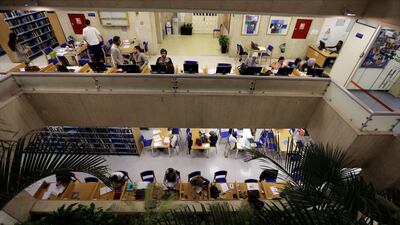
Abdul Hameed Shoman Foundation Public Library, Jordan. Alamy -
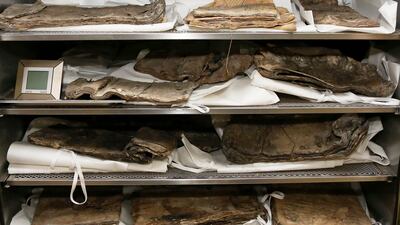
Damaged books and documents at Iraq National Library and Archive, Baghdad, in 2015. AP -
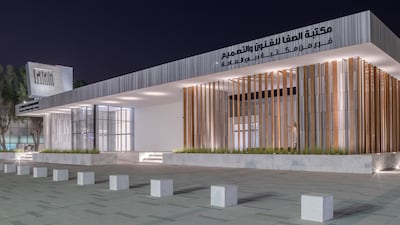
Al Safa Art & Design Library, Dubai. Photo: Al Safa Art & Design Library -

Al Safa Art & Design Library. Reem Mohammed / The National -
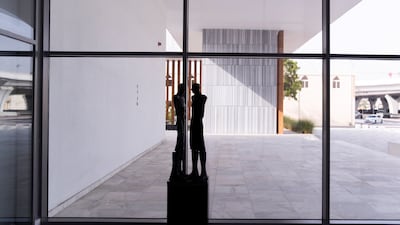
Al Safa Art & Design Library. Reem Mohammed / The National -

Qatar National Library. Photo: Haytham Alsmadi -
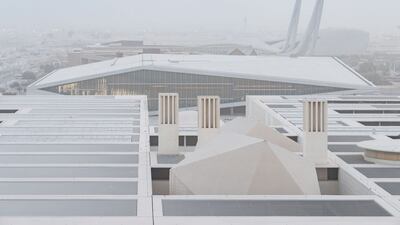
Qatar National Library. Photo: OMA -
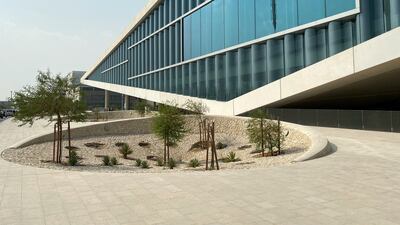
Qatar National Library. Photo: Michael Toler -
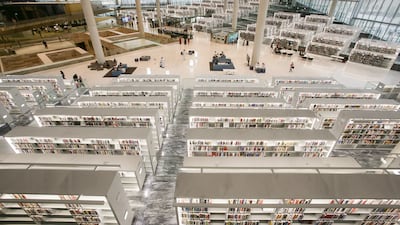
Qatar National Library. Getty -
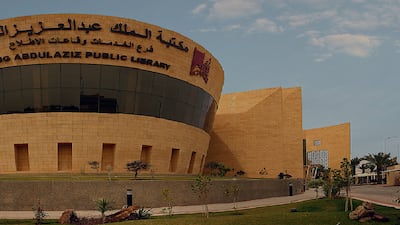
King Abdul Aziz Public Library. Photo: King Abdul Aziz Public Library -
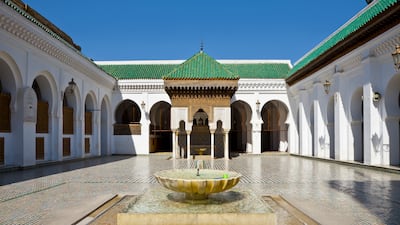
Al Qarawiyyin Library, Tunisia. -
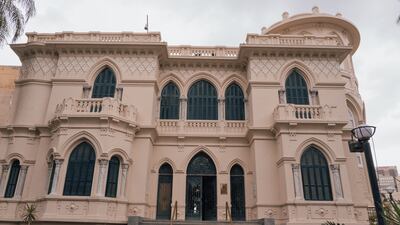
The Greater Cairo Library. Mahmoud Nasr / The National -
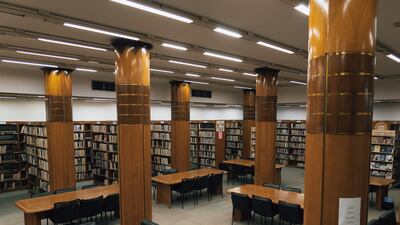
The Greater Cairo Library. Mahmoud Nasr / The National -

Orient Institute Beirut. Photo: Orient Institute Beirut -
Orient Institute Beirut. Photo: Orient Institute Beirut



