



In July 1989, Sheikh Zayed bin Sultan Al Nahyan, the Founding Father of the UAE, was warmly welcomed by Britain’s Queen Elizabeth II on an official state visit to the UK.
The four-day state visit ended with a 21-gun salute as a sign of the two countries’ special relationship.
During the visit, Sheikh Zayed pressed British officials to help find solutions to the Iraq-Iran negotiations that were happening at the time, as well as the restoration of Palestinian rights. Away from politics, he attended several state dinners, inspected military guards and laid a wreath at the tomb of The Unknown Warrior.
During a royal banquet held at Buckingham Palace, the queen praised Sheikh Zayed for creating a flourishing country.
“We admire the wise and experienced leadership you have given as president and the economic success of your country is there for all to see … it is not just to material things that you have devoted the country’s wealth, imagination and energy; but the foundations have been laid for what is now a comprehensive, modern educational system, preparing for the needs of the 21st century,” she said.
“We in Britain are proud of the part we have played in your country’s history and our citizens are no strangers to each other."
Sheikh Zayed thanked the queen for the UK’s friendship.
“The relations of friendship and co-operation prosper between our two countries and peoples in multiple fields. Those are privileged relations that thrived through many centuries of warm contacts. It gives me pleasure to register my deepest gratitude for and recognition of the valuable services and assistance rendered us by the United Kingdom over many years in various fields,” he said.
Exactly 20 years earlier, in 1969, Sheikh Zayed was the guest of honour for the Trooping the Colour ceremony, which has been held annually since 1748 and marks the reigning British monarch's official birthday.
Following the 1989 visit, there was not another official state visit to the UK until 2013, when Sheikh Zayed’s son, President Sheikh Khalifa, made the trip.
More than 50 years after the formation of the UAE, ministers from both countries regularly travel for meetings. Britain may now be just one of many to enjoy good relations with the UAE, but it is the only nation bonded by such a long and shared story.
Sharjah's first flight touched down 90 years ago — in pictures:
-
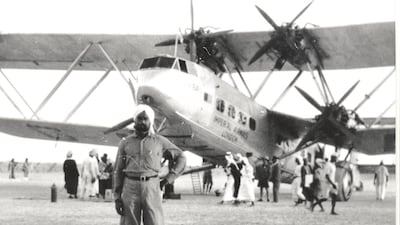
The Hanno, the first plane to land in Sharjah, touches down from Gwadar on October 5, 1932. All photos by: Kenneth Mackay / Dr Sultan Al Qasimi Centre for Gulf Studies - Al Darah, unless otherwise specified -
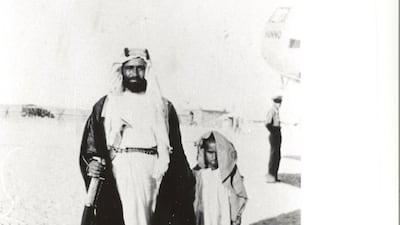
Sheikh Sultan bin Saqr Al Qasimi stands under one of the wings of the Hanno after the plane made its arrival. -
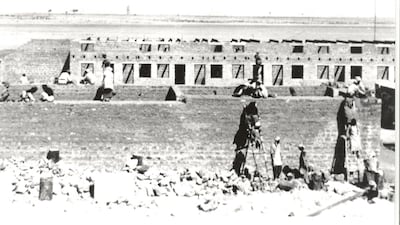
As well as becoming the UAE's first airport, Al Mahatta was also home to the nation's first hotel, featuring a guesthouse for travellers and crew on an overnight stopover. The location also featured a meteorological centre, a cinema, telegraph and postal services and a control tower. Pictured here under construction in September 1932. -
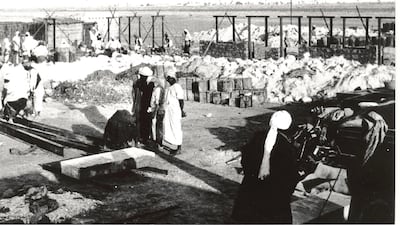
This image shows the construction of the foundations of Al Mahatta's rest house in August 1932. -
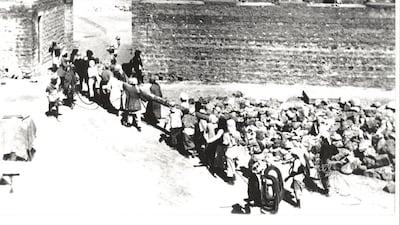
Workers carry a palm trunk into the rest house during building work in September 1932. -

The rest house next to the airport was completed in April 1933. -
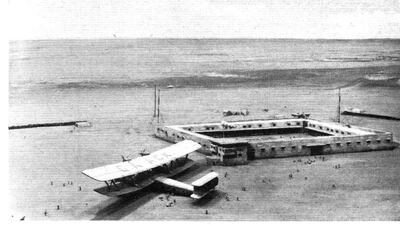
An extension was added to the rest house in 1939 as a result of increased personnel during the Second World War. This image shows the landing of a Hannibal class plane in 1933. The runway was converted into a road, now known as King Abdul Aziz Street, in the 1960s, while the airstrip remained in use until the Sharjah International Airport opened in 1977. Photo: Flight Magazine



