



Amid the frenetic atmosphere of the final days of Expo 2020 Dubai, Abdo Fall is a picture of calm and poise.
Nearly every day of the world's fair, the Senegalese artist can be found outside the gates of his country’s pavilion, painting a mix of handsome portraits and vibrant impressionist images.
During the opening few weeks of the Expo visitors considered him a bit of a curiosity, but over time, he says, people began to approach him to share stories and experiences.
“It is interesting because, before, they would be curious about the work I do and I would sell them some pieces,” he says while snacking on a sandwich.
“What happened was that by seeing me coming here every day and painting, I think they felt a sense of respect because here is someone working every day because he loves what he does.”

Fall says much of that is down to an uplifting attitude intrinsic to Senegalese culture, something I begin to appreciate when visiting the pavilion as part of my tour of African countries represented at the world fair.
For someone with roots in the continent — my parents are from Eritrea — visiting Expo's African pavilions is inspiring.
Many lack the high-tech features of their European and Asian counterparts, but they are replaced with heartfelt interactions between fellow Africans working behind the stalls and counters, and those visiting Expo.

I spot Baddy Oosha at his native Nigerian pavilion, dressed for the occasion, in a dark, free-flowing agbada and a black traditional embroidered headpiece.
A regular visitor to the expo, the popular Afro-pop singer, who lives in Dubai, turned his experiences into the song Africa.
Released in November, the party ode to the motherland has been a mainstay of his club sets ever since and the return trips to the African pavilions are a muse for him, too.
“It feels like I have been travelling through Africa even by not being there. To learn about the countries and experience some of the cultures in places like Rwanda, Tanzania and South Africa gave me great inspiration,” he says.
“So I wanted to touch these countries in the song and like the pavilions show people more about Africa and maybe even change some perceptions.”
This is the enduring goal behind the majestic Angola Pavilion at the Mobility District.
Inspired by sona geometry, an ancient form of sand drawing linked to Angola and neighbouring Zambia and the Democratic Republic of the Congo, the pavilion resembles an amphitheatre with an outdoor area housing a music stage.
Inside, you see various terracotta-coloured rooms featuring Angolan floral and art installations, digital displays of the southern African country's resources and a mini theatre screening various programmes about Angolan culture.
That audiovisual work and short films are shot by Paulo Azevedo, a gentle bespectacled filmmaker I find at the pavilion's in-house restaurant.
He confirms that the pavilion will be a permanent fixture once the Expo closes on March 31.
“This has always been the goal because we still want to tell our stories and our culture,” he says.
“Our country is only 46 years old, even younger than the UAE, and after our civil war we are still picking up the pieces. We are ready to share with the world who we really are.”
It is a sentiment that resonates with both of us.
Azevedo fled the civil war in Angola, arriving in Portugal in the late 1980s aged 17, while my parents escaped the conflict in Eritrea to Abu Dhabi in 1979, where I was born two years later.
“To be showing my country in a positive light is a powerful thing,” he says.
“We are bringing awareness of Angola to other people and with the Expo we are learning about other countries and even finding some things in common.”

While the Angola and Egyptian pavilions are arguably the biggest from the continent, the smaller ones pack an experiential punch of their own.
Ethiopia, in the Opportunity District, has a serene coffee ceremony where I taste the rich brew the country is renowned for.
Botswana’s dimly lit interiors and cool temperatures are spa-like and offer a moment of convalescence after a day walking in the blazing sunshine.
trader
This is just as well, because the Tanzania pavilion, a few doors down in the Mobility District, is information overload.
The interior walls are filled with essays on the history of the East African country, from its founding president Julius Nyerere to its DAR Rapid Transit bus network, complete with local bus routes.
In the corner is a jewellery booth that could have come from Deira’s Gold Souq, selling all sorts of Tanzanian gemstones.
It is all a bit too much for me, so I venture on a longer walk across the Expo site until I find myself at the Lesotho Pavilion in the Sustainability District.

There you'll find Tamila Hushe, who was only a baby when Expo opened its doors in October, as she lay in her cot beside mother Emma’s souvenir stand.
Now Tamila sits snug in a baby sling on mum's back, while Emma conducts business.
“This girl has grown up in the Expo and took her first steps right here in the pavilion,” Emma says.
“This was important for me because I want her to learn about the world from a young age and this is the perfect opportunity. She has already made so many friends.”
Emma is a veteran of Expos, having represented her southern African country in the past two world's fairs, starting in Shanghai in 2010.
I ask if she experiences the same fatigue when people ask where exactly she is from.
“People don’t know because the world is a big place,” she says.
“I have met people in Africa and China who never even left their provinces, let alone the country.
“So we should tell them about our experiences because it helps us get close and know each other better.”
50 things to do at Expo 2020 Dubai before it ends — in pictures
-
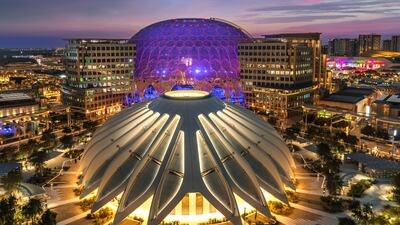
Expo 2020 Dubai will finish on March 31, 2022. Here are 50 things to do at the world fair between now and then. Photo: Expo 2020 Dubai. -

The Singapore Pavilion at Expo is a must-visit. Reuters -

From the inside and outside, Switzerland Pavilion is worth exploring. Photo: Expo 2020 Dubai -

The spectacle of the Saudi Arabia Pavilion is clearly visible from the outside. Photo: Expo 2020 Dubai -

The Spain Pavilion's striking architecture serves as a metaphor for the cultural links between Spain and the Arab world. Photo: Expo 2020 Dubai -
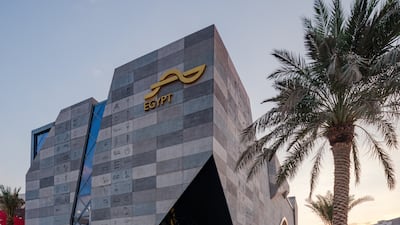
The fascinating past of ancient Egypt is the central focus of the country’s Expo 2020 Dubai pavilion. Photo: Expo 2020 Dubai -

It's more than just about Thai food at Long Chim restaurant in Expo 2020 Dubai. Photo: Long Chim -
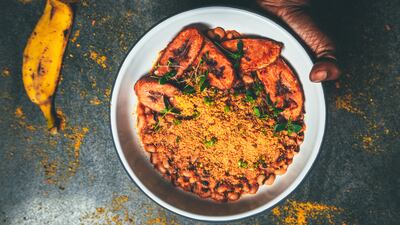
Alkebulan African Dining Hall at Expo 2020 Dubai is putting the focus on an as-yet untapped cuisine. Photo: Alkebulan African Dining Hall -
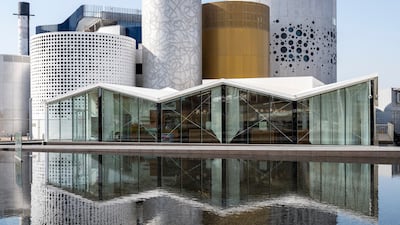
Sushiro is in the Japan Pavilion restaurant at Expo 2020 Dubai. Photo: Expo 2020 Dubai -

Bread Ahead, a British concept that specialises in doughnuts and gluten-free sourdough breads, is a must-try at Expo. Photo: Expo 2020 Dubai -

Burgers, such as this DM Burger, are among the popular offerings at Adrift Burger Bar in Expo 2020 Dubai. Photo: Josh Telles -
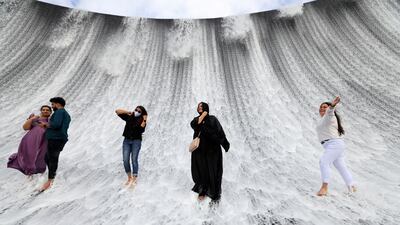
Children and grown-ups alike love the Expo 2020 Dubai Water Feature. Reuters -
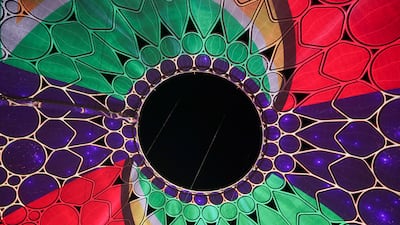
There's an impressive light show every evening at Al Wasl Dome, the world's largest 360-degree projection dome. Khushnum Bhandari / The National -

Jubilee Park is where all the best performances take place. Victor Besa / The National -
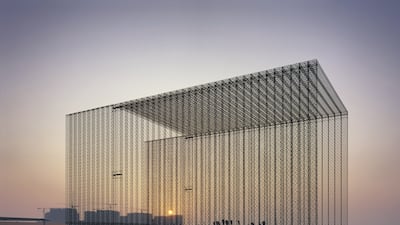
The Expo 2020 entry portals were designed by British architect Asif Khan. -
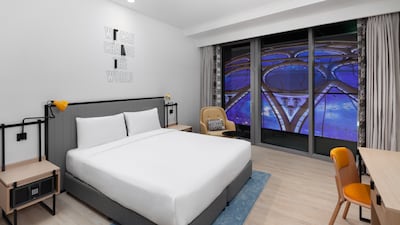
Al Wasl Dome is visible from almost every room in Rove Expo 2020, the only hotel at the site. -

Take a look inside Expo 2020's Sports, Fitness and Wellbeing Hub and its various facilities. Photo: Expo 2020 Dubai -
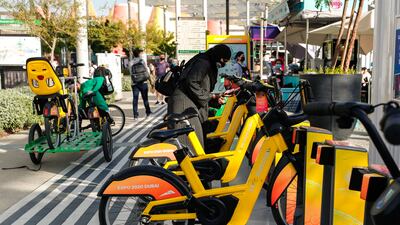
A bike tour around Expo 2020 Dubai is a lovely way to spend an afternoon. Victor Besa / The National -
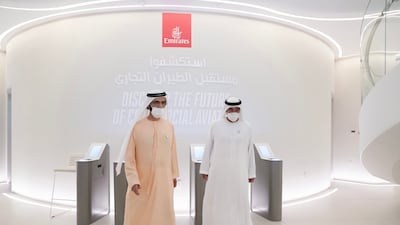
At Emirates Airlines’ futuristic pavilion, visitors get the chance to design their own aircraft. Wam -
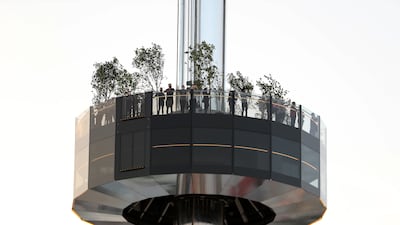
Go up 55 metres on this 360-degree observation tower and enjoy sweeping views of Expo 2020 on Garden in the Sky. Pawan Singh / The National -
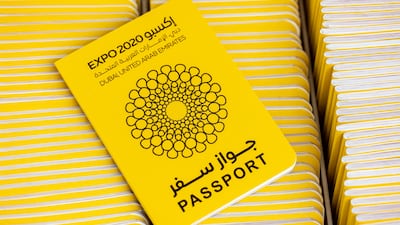
The Expo 2020 passport is a must-have for visitors. Go around the pavilions and collect those passport stamps before it's too late. Photo: Expo 2020 Dubai -
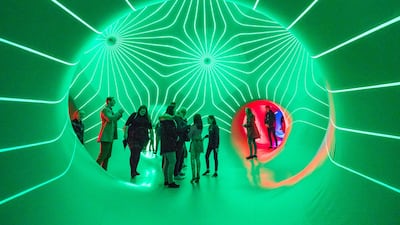
Kaleidoscope presents Dodecalis Luminarium by Architects of Air: a dazzling immersive art installation at Expo 2020 Dubai. Photo: Expo 2020 Dubai -

Created by British artist Mat Collishaw and curated by the cultural agency Futurecity, the work 'Equinox' has been commissioned by Expo 2020 Dubai specifically to be shown in Terra. Photo: Mahmoud Khaled / Expo 2020 -

'A point in time' by Khalil Rabah enlarged 11th-century implements used for determining location. Look closely: a small black circule below the gold-coloured spindle shows Dubai on the map the objects create. Photo: Thorsten Arendt -

'Garden' by Hamra Abbas, the artist's marble recreation of a garden, used five tonnes of lapis lazuli. Photo: Roman Mensing -

Faissal El Malak and Alia bin Omair's 'Nahel' fountain features motifs of humankind, nature and technology connecting in harmony. Photo: Expo 2020 Dubai -

With popular restaurants in both Dubai and Abu Dhabi, the Lebanese spot Iris Lounge has become a firm favourite at Expo 2020. Antonie Robertson / The National -
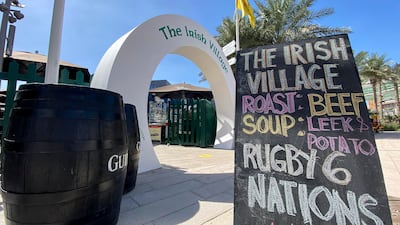
One of the liveliest late-night spots at Expo 2020 is, unsurprisingly, The Irish Village at Jubilee Park. Antonie Robertson / The National -

Expo 2020’s resident sports lounge Garden on 1, found at the Mobility District, offers regular themed nights such as curry night and quiz night, regular drinks deals, and shows the biggest sporting events. Antonie Robertson / The National -

Jubilee Mixology bar overlooks Al Wasl Dome, which features the world’s largest 360-degree projection surface. Pawan Singh / The National -
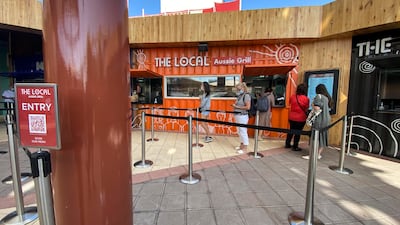
Everyone’s a local at this Australian corner, which has proved a firm favourite with Expo 2020 visitors. Antonie Robertson / The National -

Once a month, experience a Khaleeji-led jam session at Jubilee Stage in the form of Jalsat Nights. Photo: Expo 2020 Dubai -
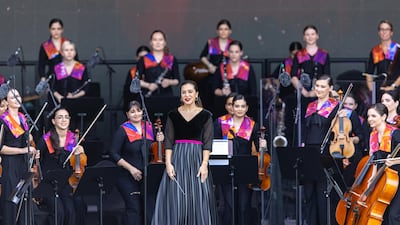
Specially created for Expo 2020 Dubai by Oscar-winning composer AR Rahman, the all-female Firdaus Orchestra features musicians from 23 nationalities across the Arab world, with some as young as 15. Photo: Expo 2020 Dubai -
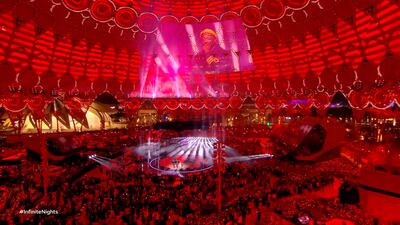
The monthly Infinite Nights concert series takes place at Al Wasl Plaza and is streamed to a global audience. Past acts that have performed so far include Kadim Al Sahir, Nancy Ajram and Ragheb Alama, Alicia Keys and the Black Eyed Peas, with two more to come. -

Emirati composer Mohammed Fairouz has composed music for the Al Wasl Opera. Every week or two, a student choir takes to the Jubilee Stage for a series of 30-minute concerts where they perform extracts from Al Wasl Opera. Photo: Expo 2020 Dubai -

A 10-minute light show takes place daily at the China Pavilion. It's a must-see. Photo: Expo 2020 Dubai -
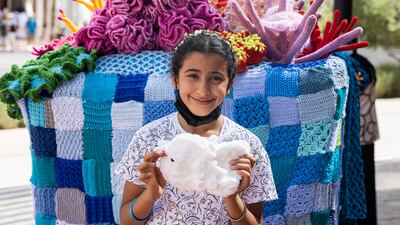
Hammour House is a community art project that is popular among children. Photo: Expo 2020 Dubai -
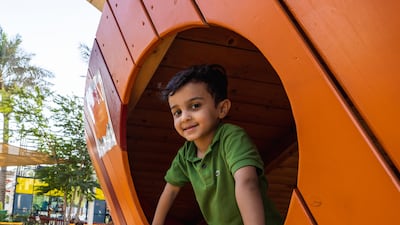
A child plays at Latifa's Adventures playground, a great spot for families during a visit to Expo 2020 Dubai. Photo: Expo 2020 Dubai -

The indoor slide at the Luxembourg Pavilion at Expo 2020 Dubai is very popular among children and families. -
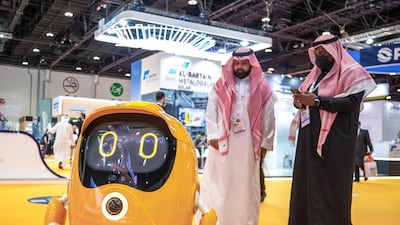
No visit to Expo 2020 Dubai is complete without interacting with a robot. Victor Besa / The National -
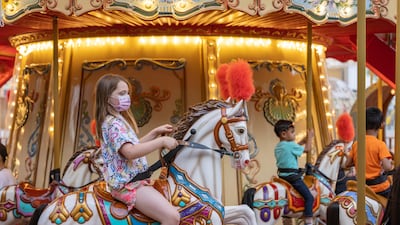
The carousel in the Mobility District at Expo 2020 Dubai is a great stop for children. Photo: Expo 2020 Dubai -

An exhibition focusing on the work of French fashion designer Jean Paul Gaultier will open at Expo on February 28. AFP -

The know-how of the Piemonte region will be highlighted in a showcase at the Italian pavilion. Photo: Andrea Rapuzzi -
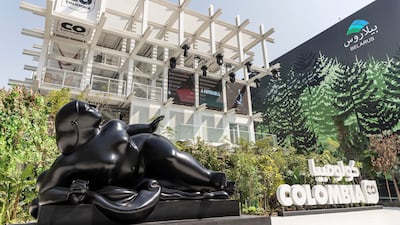
The Colombia Pavilion will host a multimedia installation called The Infinitos. Antonie Robertson / The National -
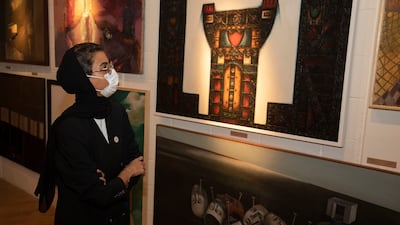
Noura Al Kaabi, Minister for Culture and Youth, at the Kosovo Pavilion, home to a permanent collection of artworks that traces the country’s culture and history. Photo: Ministry of Culture and Youth -
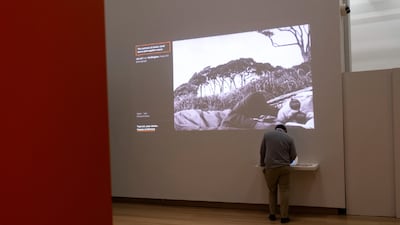
The New Zealand Pavilion features a digital Art Wall curated by the country’s national museum. Photo: Expo 2020 Dubai -
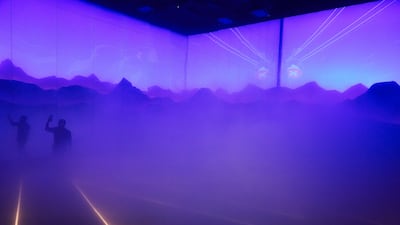
At the Swiss pavilion, you’re instantly transported to the Alps thanks to an indoor mountainscape. AP Photo -

Experience indoor rain at the Netherlands Pavilion. Khushnum Bhandari / The National -
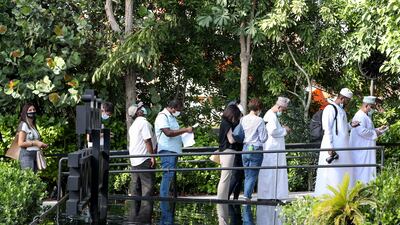
Don't miss the Sky Market at the Singapore Pavilion, an open, multipurpose deck. Khushnum Bhandari / The National -

There's a ball pit and swings at the Germany Pavilion. Photo: Expo 2020 Dubai -
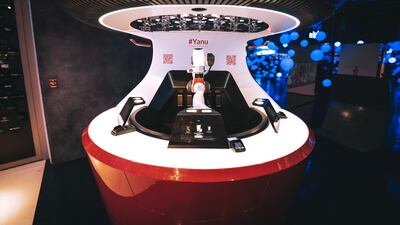
Robot bartender Yanu makes mocktails at the Estonia Pavilion. Photo: Estonia Pavilion



