



The instantly recognisable Palm Jumeirah has been captured on camera from space in a set of new pictures released by the Dubai Media Office.
KhalifaSat, the first entirely Emirati-made satellite, captured the impressively clear image, along with an array of other shots of some of Dubai’s most popular destinations.
Among the images released on Twitter included a full view of Downtown Dubai, with the shadow of the Burj Khalifa, the world’s tallest building, cast over the Dubai Mall.
Several images of the Dubai Canal also featured among the snaps shared online on Friday.
KhalifaSat has been putting together a stellar photo album since blasting off into the skies in October 2018. And Dubai has been captured from space on many occasions.
In August last year, US astronaut Shane Kimbrough posted a picture of Dubai from onboard the International Space Station.
Mr Kimbrough was on his third trip to space and tweeted a picture of Emirates Golf Club and Dubai Airport with a fact-filled caption.
“Hello, Dubai! I spy the Emirates Golf Club, a 36-hole golf course that was the first golf course in the region and was built in 1988,” he wrote.
From dramatic dunes and eye-catching lakes to coral reefs and huge dust storms, astronauts in space have been capturing the wonders of the Middle East for many years.
The Earth Observatory by Nasa has hundreds of images on its website taken from the International Space Station, including those of the UAE.
The UAE's first astronaut, Hazza Al Mansouri, tweeted a selection of striking photos of his homeland and other countries in the region during his time in space in 2019.
Photos of places taken by KhalifaSat
-
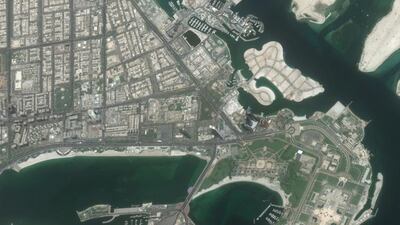
Abu Dhabi, UAE. All photos: Mohammed bin Rashid Space Centre -
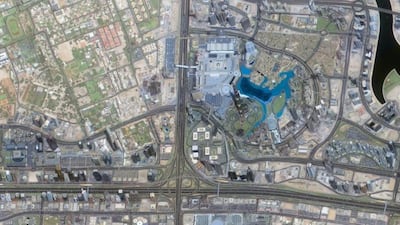
Dubai Expo 2020. -
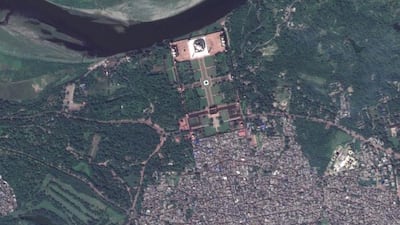
Taj Mahal, India. -
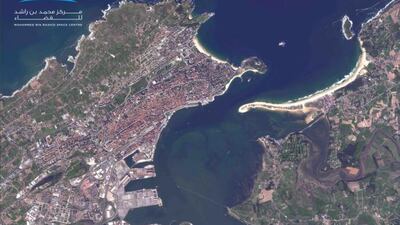
Maliano, Spain. -
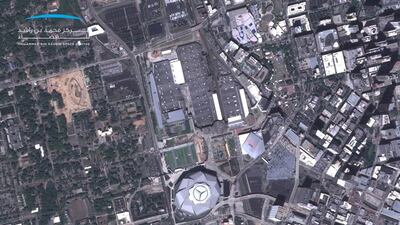
Atlanta USA, Mercedes-Benz Stadium. -

Wellington, New Zealand. -
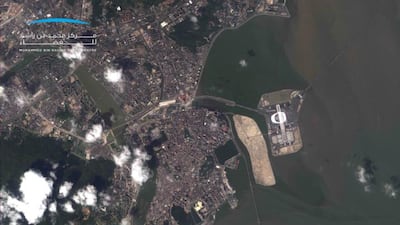
Macau, China. -
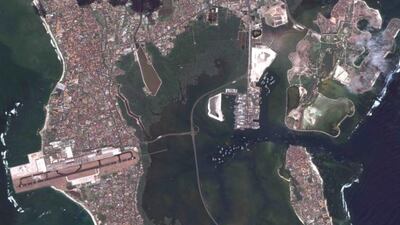
Denpasar, Indonesia. -
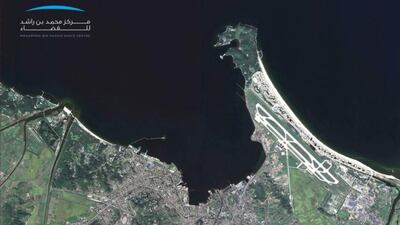
Wonsan, North Korea.



