

Latest: UAE's 50 projects: Ministers set out 'new era of prosperity and development'
A new visa aimed at business owners, investors and entrepreneurs in the UAE will offer expanded benefits for sponsoring family members.
The "green visa" is to cater for people who have their own businesses and are not working for, or sponsored by, an employer.
Dr Thani Al Zeyoudi, Minister of State for Foreign Trade, unveiled the visa on Sunday as he set out broader plans to attract top talent and boost foreign investment.
The owners of SMEs and high-performing students will also be eligible.
To be eligible, an applicant requires a monthly salary of Dh15,000 along with a bachelor's degree in certain skilled fields, including science, law, education, culture or social sciences, among others.
Someone who currently holds a two or three-year trade licence for freelance work may find this option attractive, but the costs have not yet been set out.
A Green Visa holder can sponsor relatives for residency for five years. Previously, this was typically allowed for two years.
Dr Al Zeyoudi said the new visa was aimed at the "self-dependent" investor who needed to sponsor family members.
"He's not going to be attached to companies. He's going to sponsor his parents, sponsor his children up to 25 – instead of 18 years old, like nowadays," he told The National.
The ability to sponsor a son to live in the Emirates into his mid-twenties is significant. Although a parent can sponsor their daughter's residency visa until she is married, male children cannot be sponsored once they leave school at 18. And although universities provide student visas, graduates often find themselves quickly looking for a residency visa once they graduate.
The new visa offers a grace period of 90 to 180 days in the event of cancellation – significantly longer than the current 30-day period.
A new flexible freelance visa, which was not detailed in full on Sunday, is also aimed at highly skilled people in "new sectors that we want to bring new ideas to", Dr Al Zeyoudi said.
He also pointed out a "humanitarian aspect" in the new visa regulations. Divorcees and widows may now stay in the UAE for a year as they try to find a job or find some other way of settling. As of now, they are allowed to remain in the UAE for 30 days.
Teenagers allowed to work part-time jobs for first time
Thirdly, a further change will allow children over the age of 15 to work for the first time.
A temporary work permit would allow them to secure a part-time job and get a taste for the workplace, without interrupting their studies.
The decision could be hugely significant and bring about a culture of part-time and temporary work.
"Anyone who's living here, who's above 15 years old, can apply for a temporary job," Dr Al Zeyoudi said.
"We don't want them to stop their education but it's a temporary visa to give them access to their market, shape up their skills and see the sectors they want to study and want to have a future in.
"It's a relaxation from us to ensure students have access to the market."
This story was updated on April 20, 2022.
-
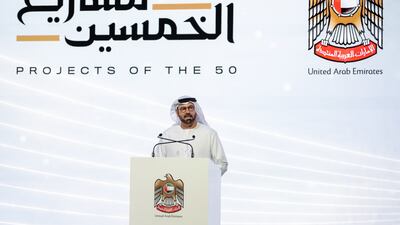
Emirati Minister of Cabinet Affairs Mohammad Al Gergawi. UAE Government Media -
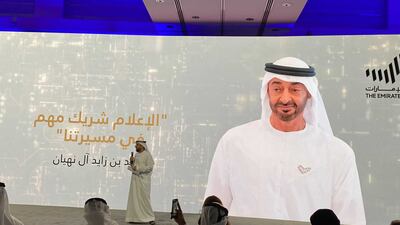
Saeed Al Eter, chairman of the UAE Government Media Office, addresses the audience at Emirates Towers in Dubai where he revealed 50 new projects for the UAE. All photos: Suhail Akram / The National -
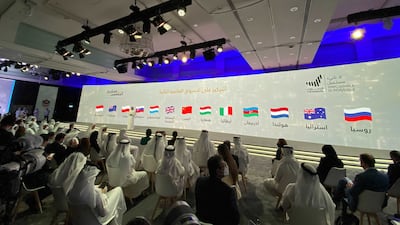
The country will seek $150 billion in inward investment by 2030. -
Senior officials set out a bold new vision for the country as it prepares to mark 50 years since the Union was formed. -
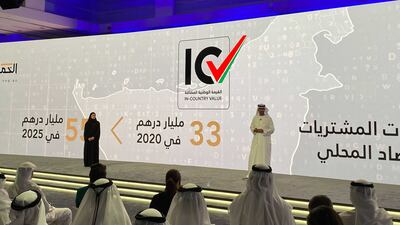
The drive will see billions pumped into the economy and hundreds of thousands of people trained and reskilled. -
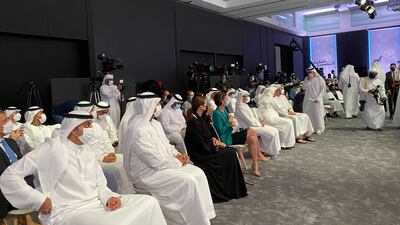
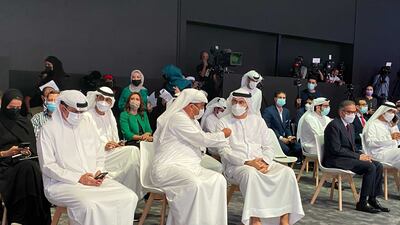
Officials, along with local and international media, listen intently as the projects and initiatives are unveiled. -
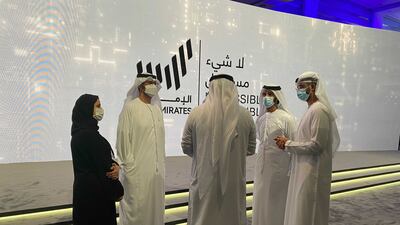
Ministers set out 'new era of prosperity and development'.



