

Parking fees will return to normal in Abu Dhabi from next month after they were suspended for three months due to the coronavirus pandemic.
The charges will come into effect on Wednesday, July 1, from 8am.
The announcement was made by the Integrated Transport Centre, a company that manages public transport in the capital.
People were advised to pay for their parking electronically to avoid spreading the virus.
Parking has been free in the capital since the Department of Municipalities and Transport announced the suspension of fees in late March.
The Mawaqif parking timings are from 8am to 12am from Saturday to Thursday.
Premium parking (blue and white colours) is Dh3 per hour with a maximum stay of four hours.
Standard parking (blue and black colours) is Dh2 per hour or Dh15 for a day.
Parking is free on Fridays, official holidays and for disabled people.
Parking spaces near mosques are exempt from fees for 45 minutes from the call to prayer.
Abu Dhabi is inching back to normal life after the emirate shut all its malls and attractions in March to curb the spread of the coronavirus.
It has since reopened some attractions with extra precautions to protect the public.
Malls, restaurants and cafes reopened up to 40 per cent capacity, but people over the age of 70 and children under 12 are not permitted to enter.
The age limit was changed last week after previously placing restrictions on people aged 60 and over, as well as children under 12.
-

Tables are spread out at the Cafe Milano at the Four Seasons Hotel, Abu Dhabi. Victor Besa / The National -

Maximum occupancy sign at the reception of Cafe Milano. Victor Besa / The National -

American father-son duo Raj and Sebastian Dagstani last year opened a pizza restaurant in Abu Dhabi. Victor Besa / The National -
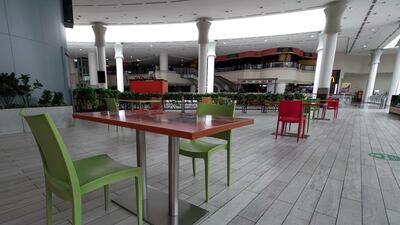
Tables are placed at least two metres apart at the food court. in Al Wahda Mall, which reopened after a coronavirus-enforced shutdown. Victor Besa / The National -

Tables are placed at least two metres apart at the food court. in Al Wahda Mall, which reopened after a coronavirus-enforced shutdown. Victor Besa / The National -
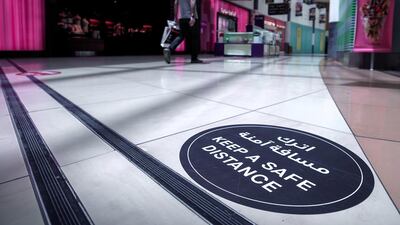
Al Wahda Mall in Abu Dhabi is now open after a coronavirus-enforced shutdown. Victor Besa / The National -
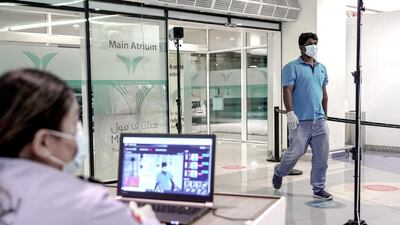
Wearing of masks has been made compulsory to beat the coronavirus. Victor Besa / The National -
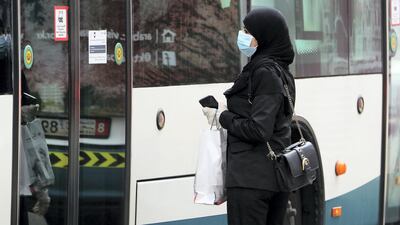
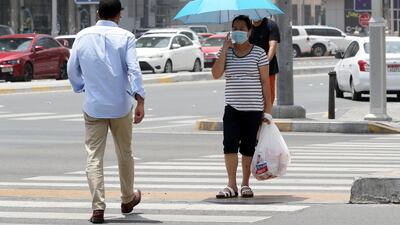
A woman wearing protective face mask as a preventive measure against the spread of coronavirus arrives at a bus stop in Abu Dhabi. UAE government has eased the coronavirus restriction for residents and businesses around the country. Pawan Singh / The National -
A ban on driving in and out of Abu Dhabi emirate came into force on Tuesday, June 2 to prevent the spread of Covid-19. Pawan Singh / The National -
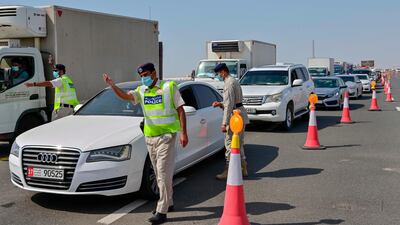
Emirati security officers at a checkpoint at the entrance of Abu Dhabi, on the motorway linking Dubai to the capital, on June 2, 2020, after authorities cordoned off the city to fight the coronavirus. AFP


The capital’s museums and cultural venues have been given permission to reopen at 40 per cent capacity from June 24, with safety measures in place.
The UAE's capital currently has some of the strictest measures in place across the country with a movement ban limiting travel between Abu Dhabi's main regions as well as entering and leaving the emirate.
Emiratis and residents can now leave Abu Dhabi but cannot return unless they are issued a permit by police.
Movement between the emirate's regions (Abu Dhabi, Al Ain and Al Dhafra) also requires a permit.
The order is in force until June 23, but could be extended.

