


The number of deaths on UAE roads fell by two thirds in the space of a decade, a new study found.
Tighter traffic regulations, awareness campaigns and improvements in vehicle safety were cited as key to the “remarkable” drop in fatalities from 2010 to 2019.
Research by Injury Prevention, a peer-reviewed publication by the British Medical Journal, revealed the country's fatality rate from road traffic injuries fell from 10 per 100,000 people in 2010 to 7.4 in 2015 and 3.5 in 2019. Researchers used official figures in their analysis.
The study’s authors, from the College of Medical and Health Sciences at UAE University in Al Ain, said the results “indicate the effectiveness” of measures to improve road safety.
“These measures effectively helped to curb speedy driving, tailgating, cell phone use and other forms of careless driving, and to reduce the magnitude and severity of RTI in the UAE,” they wrote.
The study shows that not only that road death rates in the UAE fallen heavily, but also the numbers of people who were injured but survived.
The non-fatal injury rate was 92.5 per 100,000 people in 2010, 75.2 per 100,000 in 2015 and 40.9 per 100,000 in 2019.
Road safety is a national priority
-

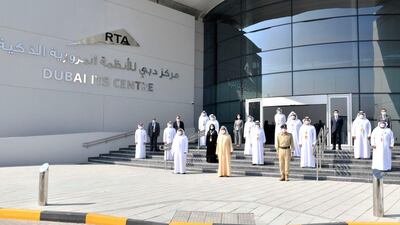
Sheikh Mohammed bin Rashid, Vice President and Ruler of Dubai, inaugurates the Smart Centre for Traffic Management. All photos: Dubai Media Office -

The Intelligent Traffic System cost Dh590 million ($160.6m) and centralises a network of smart cameras linked to databases. -

The traffic centre is one of the biggest and most sophisticated in the world. -

It was developed to meet the needs of Dubai's rapid urban growth, the infrastructure expansion required for Expo 2020 Dubai, and also to support current and future transport systems. -

The centre expands the coverage of intelligent traffic systems from 11 per cent to 60 per cent of the road network in the emirate and improves detection times for accidents. -
More than 110 cameras were installed to measure the average speed of cars, while 17 weather-sensing stations were also established. All data is put into a system monitored by officers who can also issue important messages to the public from the centre.


Thomas Edelmann, managing director of Road Safety UAE, said the fall in death rates was “quite remarkable”.
“The UAE government takes the matter very seriously,” he said. “In the ‘UAE Vision 2021’ a target of three fatalities per 100,000 population was announced, which was a catalyst for many government entities and other stakeholders to put in massive efforts to try to reach this.”
The reduction in death rates came, he said, at a time of “massive efforts” to improve safety by the UAE government, vehicle suppliers, media and initiatives such as his.
Laws around road safety were tightened in 2007 and 2017, with the latter year seeing the introduction of the black points system, under which a person can be banned from driving if they accumulate sufficient points from violations.
Rules around seat belts, using a mobile phone while driving, reckless driving, ignoring traffic lights and driving under the influence of drugs or alcohol have all been strengthened, with violators risking punishments including fines and, for some offences, jail time on top of black points.
Other improvements, Mr Edelmann said, came from the emergency services, through more resources and better response times. Better road infrastructure, education and data were also made a contribution, he added.
Figures provided by Road Safety UAE indicate that the fatality rate per 100,000 vehicles in the UAE fell from 100 in 2006, to 57 in 2010, 32 in 2015 and just 11 in 2021. This data suggests that death rates per vehicle have, in 15 years, dropped nearly 90 per cent.
Fostering a better driving culture
While saying that the various statistics on road safety “are great testimony” to how the country’s roads have become safer, Mr Edelmann said the challenge remains “the composition of the UAE road users”, who mostly come from the Arab world, Indian subcontinent, other parts of Asia and the West.
“We all come with different driving cultures and it seems not to melt together properly in terms of creating a UAE safety-orientated road culture,” he said. “We still observe more driving against each other rather than driving with each other.
“About 50 per cent of fatalities are caused by young drivers aged 18 to 30 and this segment needs a strong focus.”
Further improvements could come, he suggested, from “surprise” road safety monitoring, rather than just fixed radar speed checks, along with average speed checks, and the mandatory inclusion of road safety in the school curriculum.
Previous research indicated that poor road safety practice was a major factor in deaths and serious injuries in the country.
A 2013 study of road accident victims, also by UAE University researchers, found that 98 per cent of passengers killed or hospitalised for more than 24 hours were not wearing a seat belt.
Ministry of Interior statistics show the 381 road deaths in the UAE last year was up on the 2020 figure of 256, but that number is likely to have been low because the pandemic reduced traffic levels.

