• Work to upgrade facilities at Al Bateen Executive Airport in Abu Dhabi is complete. Photo: Abu Dhabi Airports
    Work to upgrade facilities at Al Bateen Executive Airport in Abu Dhabi is complete. Photo: Abu Dhabi Airports
  • The airport is scheduled to reopen on Saturday. Photo: Abu Dhabi Airports
    The airport is scheduled to reopen on Saturday. Photo: Abu Dhabi Airports
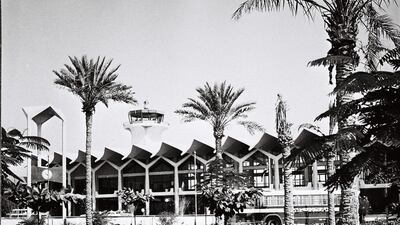
  • The airport in the 1970s. Photo: Ron McCulloch
    The airport in the 1970s. Photo: Ron McCulloch
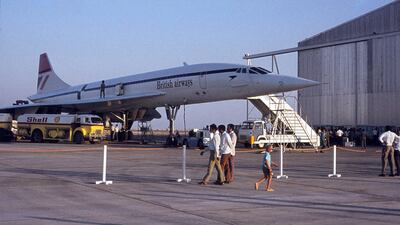
  • Concorde at Al Bateen Airport in July 1974. Photo: Peter Alvis
    Concorde at Al Bateen Airport in July 1974. Photo: Peter Alvis
  • Al Bateen Executive Airport has ambitious plans for the future. Photo: Abu Dhabi Airports
    Al Bateen Executive Airport has ambitious plans for the future. Photo: Abu Dhabi Airports
  • The runway during upgrade works. Photo: Abu Dhabi Airports
    The runway during upgrade works. Photo: Abu Dhabi Airports
  • The refurbishments mean the airport will be able to accommodate larger aircraft. Photo: Abu Dhabi Airports
    The refurbishments mean the airport will be able to accommodate larger aircraft. Photo: Abu Dhabi Airports
  • Key upgrades were made while the airport was closed. Photo: Abu Dhabi Airports
    Key upgrades were made while the airport was closed. Photo: Abu Dhabi Airports
  • Al Bateen Executive Airport. Photo: Abu Dhabi Airports
    Al Bateen Executive Airport. Photo: Abu Dhabi Airports
  • The revamp included the building of a substantial new boundary wall, runway resurfacing, improved ground lighting and landscaping. Photo: Abu Dhabi Airports
    The revamp included the building of a substantial new boundary wall, runway resurfacing, improved ground lighting and landscaping. Photo: Abu Dhabi Airports

Abu Dhabi's Al Bateen airport to welcome wide-body aircraft as it looks to new era


John Dennehy
  • English
  • Arabic

Al Bateen Executive Airport in Abu Dhabi will reopen on Saturday following the completion of a major upgrade project.

A senior official at Abu Dhabi Airports on Wednesday told The National that the expansion ― particularly widening the runway ― will allow the airport to formally handle larger aircraft.

Other works undertaken since the private jet facility closed for all but helicopters on May 11 include a substantial new boundary wall, runway resurfacing, upgraded ground lighting, enhanced signage and landscaping.

“It has been a major project involving different elements of the airport,” said Matar Al Suwaidi, senior vice president of terminal operations at Abu Dhabi Airports.

“Everything you can see and touch is being enhanced.”

Airport ushers in new era

The refurbishments mark a new era for an airport that was the first modern international facility in Abu Dhabi.

Al Bateen opened in the late 1960s to cater for a surge in people arriving into Abu Dhabi after oil was found. It replaced the sand airstrip, had a distinctive concrete-roofed terminal and even gave its name to “Airport Road”, which has since been renamed Sheikh Rashid bin Saeed Street.

But it was clear even by the 1970s that demand in Abu Dhabi was likely to necessitate a much larger facility. “Al Bateen is at the heart of Abu Dhabi and on the island, so expansion would be limited. The leadership foresaw the airport [needed] to be moved away from[the] island,” Mr Al Suwaidi said.

The current main airport opened in 1982 to cater for increased demand, and, in the years since, Al Bateen functioned as a military base before becoming a dedicated airport for private jets.

Works at Al Bateen Executive Airport include runway resurfacing. Photo: Abu Dhabi Airports

It is also getting ready to host Abu Dhabi Air Expo from November 1 to 3. The event is expected to attract more than 18,000 visitors and host more than 300 manufacturers and suppliers.

The project has been timely in this regard because the runway will change from a 4C to a 4D ― in airport terminology ― which means it can handle twin aisle jets, such as Boeing 767s, whereas before it could only accommodate single aisle planes such as Boeing 737s or Airbus A320s.

Twin aisle jets would have landed at Bateen before but this required permission from the UAE's General Civil Aviation Authority. Certifying the airport as a 4D means certain types of twin-aisles can land without needing this permission.

But the works alone do not award the certification and the authority will give its final approval.

“It is not a switch-on and switch-off decision,” Mr Al Suwaidi said. “There is documentation to provide and testing to conclude. It will take some time.”

It is also planned to rename the three existing terminals before the end of the year as part of a branding initiative to further boost the airport.

“There is a very high demand for a [private jet] facility,” Mr Al Suwaidi said.

Al Bateen can accommodate 50 parked jets and the people who use the facility include government delegations, business people and high-net-worth individuals from across the world who prize discretion and do want the hassle of flying through a main airport.

"The business model is you have more privacy and the moment you get off the plane [at Bateen] and into the car is 100 metres,” Mr Al Suwaidi said.

“[Some people] are not interested in going to the duty free and from one terminal to another. Here everything is done in one place. A one-stop shop.”

The airport can also accommodate helicopters, with Abu Dhabi Police, a search-and-rescue service and private operator among those based there.

A cost for the works was not disclosed, while final tests are now being carried out before Saturday’s opening.

Abu Dhabi's rich aviation history - in pictures

  • An aerial shot of a plane over Abu Dhabi in the early 1960s after taking off from a sand runway close to Sultan bin Zayed the First (Muroor Road) and 17th Street. Photo: David Riley
    An aerial shot of a plane over Abu Dhabi in the early 1960s after taking off from a sand runway close to Sultan bin Zayed the First (Muroor Road) and 17th Street. Photo: David Riley
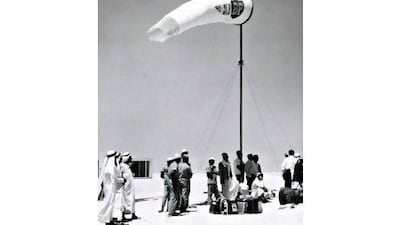
  • Passengers wait with their suitcases for a flight at Abu Dhabi's sand airstrip. Photo: BP Archive
    Passengers wait with their suitcases for a flight at Abu Dhabi's sand airstrip. Photo: BP Archive
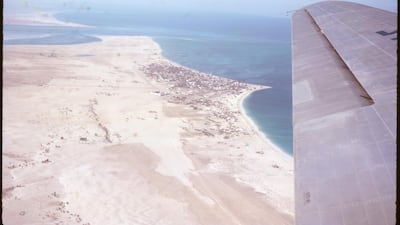
  • On approach to Abu Dhabi's first airfield. The photograph was taken in the mid-1960s. Photo: Michael Stokes
    On approach to Abu Dhabi's first airfield. The photograph was taken in the mid-1960s. Photo: Michael Stokes
  • Al Bateen Airport, pictured in the 1970s, replaced the sand strip. Photo: Al Ittihad
    Al Bateen Airport, pictured in the 1970s, replaced the sand strip. Photo: Al Ittihad
  • Concorde makes an appearance at Al Bateen Airport in August, 1974. The visit was part of a demonstration tour to drum up new customers but also to prove the jet’s capability in hot weather. Photo: Peter Alvis
    Concorde makes an appearance at Al Bateen Airport in August, 1974. The visit was part of a demonstration tour to drum up new customers but also to prove the jet’s capability in hot weather. Photo: Peter Alvis
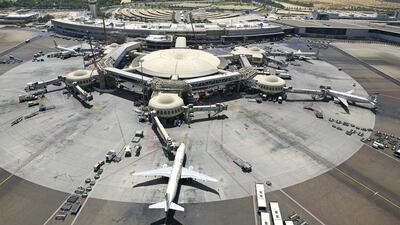
  • Abu Dhabi International Airport opened in 1982. It was designed by French architect Paul Andreu with the idea that planes would surround a satellite, so they could arrive and depart quickly. Photo: Abu Dhabi Airports
    Abu Dhabi International Airport opened in 1982. It was designed by French architect Paul Andreu with the idea that planes would surround a satellite, so they could arrive and depart quickly. Photo: Abu Dhabi Airports
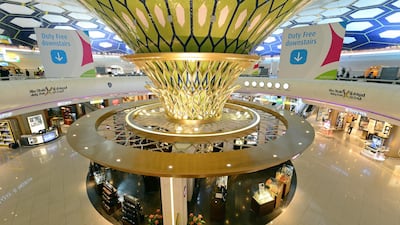
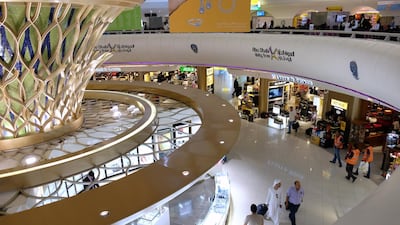
  • The ceiling of Abu Dhabi airport, said to be designed like a palm tree against the sky. Photo: Abu Dhabi Airports
    The ceiling of Abu Dhabi airport, said to be designed like a palm tree against the sky. Photo: Abu Dhabi Airports
  • The circular design of Abu Dhabi airport's terminal placed the gates close to each other so people could access planes quickly. Delores Johnson / The National
    The circular design of Abu Dhabi airport's terminal placed the gates close to each other so people could access planes quickly. Delores Johnson / The National
COMPANY%20PROFILE
%3Cp%3E%3Cstrong%3EName%3A%20%3C%2Fstrong%3ESmartCrowd%0D%3Cbr%3E%3Cstrong%3EStarted%3A%20%3C%2Fstrong%3E2018%0D%3Cbr%3E%3Cstrong%3EFounder%3A%20%3C%2Fstrong%3ESiddiq%20Farid%20and%20Musfique%20Ahmed%0D%3Cbr%3E%3Cstrong%3EBased%3A%20%3C%2Fstrong%3EDubai%0D%3Cbr%3E%3Cstrong%3ESector%3A%20%3C%2Fstrong%3EFinTech%20%2F%20PropTech%0D%3Cbr%3E%3Cstrong%3EInitial%20investment%3A%20%3C%2Fstrong%3E%24650%2C000%0D%3Cbr%3E%3Cstrong%3ECurrent%20number%20of%20staff%3A%3C%2Fstrong%3E%2035%0D%3Cbr%3E%3Cstrong%3EInvestment%20stage%3A%20%3C%2Fstrong%3ESeries%20A%0D%3Cbr%3E%3Cstrong%3EInvestors%3A%20%3C%2Fstrong%3EVarious%20institutional%20investors%20and%20notable%20angel%20investors%20(500%20MENA%2C%20Shurooq%2C%20Mada%2C%20Seedstar%2C%20Tricap)%3C%2Fp%3E%0A
What can victims do?

Always use only regulated platforms

Stop all transactions and communication on suspicion

Save all evidence (screenshots, chat logs, transaction IDs)

Report to local authorities

Warn others to prevent further harm

Courtesy: Crystal Intelligence

Avatar: Fire and Ash

Director: James Cameron

Starring: Sam Worthington, Sigourney Weaver, Zoe Saldana

Rating: 4.5/5

SPECS
%3Cp%3E%3Cstrong%3EEngine%3C%2Fstrong%3E%3A%202-litre%20direct%20injection%20turbo%20%0D%3Cbr%3E%3Cstrong%3ETransmission%3C%2Fstrong%3E%3A%207-speed%20automatic%20%0D%3Cbr%3E%3Cstrong%3EPower%3C%2Fstrong%3E%3A%20261hp%20%0D%3Cbr%3E%3Cstrong%3ETorque%3C%2Fstrong%3E%3A%20400Nm%20%0D%3Cbr%3E%3Cstrong%3EPrice%3C%2Fstrong%3E%3A%20From%20Dh134%2C999%26nbsp%3B%3C%2Fp%3E%0A
Key findings of Jenkins report
  • Founder of the Muslim Brotherhood, Hassan al Banna, "accepted the political utility of violence"
  • Views of key Muslim Brotherhood ideologue, Sayyid Qutb, have “consistently been understood” as permitting “the use of extreme violence in the pursuit of the perfect Islamic society” and “never been institutionally disowned” by the movement.
  • Muslim Brotherhood at all levels has repeatedly defended Hamas attacks against Israel, including the use of suicide bombers and the killing of civilians.
  • Laying out the report in the House of Commons, David Cameron told MPs: "The main findings of the review support the conclusion that membership of, association with, or influence by the Muslim Brotherhood should be considered as a possible indicator of extremism."
WWE Super ShowDown results

Seth Rollins beat Baron Corbin to retain his WWE Universal title

Finn Balor defeated Andrade to stay WWE Intercontinental Championship

Shane McMahon defeated Roman Reigns

Lars Sullivan won by disqualification against Lucha House Party

Randy Orton beats Triple H

Braun Strowman beats Bobby Lashley

Kofi Kingston wins against Dolph Zigggler to retain the WWE World Heavyweight Championship

Mansoor Al Shehail won the 50-man Battle Royal

The Undertaker beat Goldberg


Who has been sanctioned?

Daniella Weiss and Nachala
Described as 'the grandmother of the settler movement', she has encouraged the expansion of settlements for decades. The 79 year old leads radical settler movement Nachala, whose aim is for Israel to annex Gaza and the occupied West Bank, where it helps settlers built outposts.

Harel Libi & Libi Construction and Infrastructure
Libi has been involved in threatening and perpetuating acts of aggression and violence against Palestinians. His firm has provided logistical and financial support for the establishment of illegal outposts.

Zohar Sabah
Runs a settler outpost named Zohar’s Farm and has previously faced charges of violence against Palestinians. He was indicted by Israel’s State Attorney’s Office in September for allegedly participating in a violent attack against Palestinians and activists in the West Bank village of Muarrajat.

Coco’s Farm and Neria’s Farm
These are illegal outposts in the West Bank, which are at the vanguard of the settler movement. According to the UK, they are associated with people who have been involved in enabling, inciting, promoting or providing support for activities that amount to “serious abuse”.

RESULTS

Light Flyweight (48kg): Alua Balkibekova (KAZ) beat Gulasal Sultonalieva (UZB) by points 4-1.

Flyweight (51kg): Nazym Kyzaibay (KAZ) beat Mary Kom (IND) 3-2.

Bantamweight (54kg): Dina Zholaman (KAZ) beat Sitora Shogdarova (UZB) 3-2.

Featherweight (57kg): Sitora Turdibekova (UZB) beat Vladislava Kukhta (KAZ) 5-0.

Lightweight (60kg): Rimma Volossenko (KAZ) beat Huswatun Hasanah (INA) KO round-1.

Light Welterweight (64kg): Milana Safronova (KAZ) beat Lalbuatsaihi (IND) 3-2.

Welterweight (69kg): Valentina Khalzova (KAZ) beat Navbakhor Khamidova (UZB) 5-0

Middleweight (75kg): Pooja Rani (IND) beat Mavluda Movlonova (UZB) 5-0.

Light Heavyweight (81kg): Farida Sholtay (KAZ) beat Ruzmetova Sokhiba (UZB) 5-0.

Heavyweight (81 kg): Lazzat Kungeibayeva (KAZ) beat Anupama (IND) 3-2.

Bridgerton%20season%20three%20-%20part%20one
%3Cp%3E%3Cstrong%3EDirectors%3A%20%3C%2Fstrong%3EVarious%3C%2Fp%3E%0A%3Cp%3E%3Cstrong%3EStarring%3A%3C%2Fstrong%3E%20Nicola%20Coughlan%2C%20Luke%20Newton%2C%20Jonathan%20Bailey%3C%2Fp%3E%0A%3Cp%3E%3Cstrong%3ERating%3A%20%3C%2Fstrong%3E3%2F5%3C%2Fp%3E%0A

Mercer, the investment consulting arm of US services company Marsh & McLennan, expects its wealth division to at least double its assets under management (AUM) in the Middle East as wealth in the region continues to grow despite economic headwinds, a company official said.

Mercer Wealth, which globally has $160 billion in AUM, plans to boost its AUM in the region to $2-$3bn in the next 2-3 years from the present $1bn, said Yasir AbuShaban, a Dubai-based principal with Mercer Wealth.

Within the next two to three years, we are looking at reaching $2 to $3 billion as a conservative estimate and we do see an opportunity to do so,” said Mr AbuShaban.

Mercer does not directly make investments, but allocates clients’ money they have discretion to, to professional asset managers. They also provide advice to clients.

“We have buying power. We can negotiate on their (client’s) behalf with asset managers to provide them lower fees than they otherwise would have to get on their own,” he added.

Mercer Wealth’s clients include sovereign wealth funds, family offices, and insurance companies among others.

From its office in Dubai, Mercer also looks after Africa, India and Turkey, where they also see opportunity for growth.

Wealth creation in Middle East and Africa (MEA) grew 8.5 per cent to $8.1 trillion last year from $7.5tn in 2015, higher than last year’s global average of 6 per cent and the second-highest growth in a region after Asia-Pacific which grew 9.9 per cent, according to consultancy Boston Consulting Group (BCG). In the region, where wealth grew just 1.9 per cent in 2015 compared with 2014, a pickup in oil prices has helped in wealth generation.

BCG is forecasting MEA wealth will rise to $12tn by 2021, growing at an annual average of 8 per cent.

Drivers of wealth generation in the region will be split evenly between new wealth creation and growth of performance of existing assets, according to BCG.

Another general trend in the region is clients’ looking for a comprehensive approach to investing, according to Mr AbuShaban.

“Institutional investors or some of the families are seeing a slowdown in the available capital they have to invest and in that sense they are looking at optimizing the way they manage their portfolios and making sure they are not investing haphazardly and different parts of their investment are working together,” said Mr AbuShaban.

Some clients also have a higher appetite for risk, given the low interest-rate environment that does not provide enough yield for some institutional investors. These clients are keen to invest in illiquid assets, such as private equity and infrastructure.

“What we have seen is a desire for higher returns in what has been a low-return environment specifically in various fixed income or bonds,” he said.

“In this environment, we have seen a de facto increase in the risk that clients are taking in things like illiquid investments, private equity investments, infrastructure and private debt, those kind of investments were higher illiquidity results in incrementally higher returns.”

The Abu Dhabi Investment Authority, one of the largest sovereign wealth funds, said in its 2016 report that has gradually increased its exposure in direct private equity and private credit transactions, mainly in Asian markets and especially in China and India. The authority’s private equity department focused on structured equities owing to “their defensive characteristics.”

Updated: August 19, 2022, 10:33 AM