• Display boards of the outdoor exhibition 'Moscow meets the first!' in Moscow celebrate the 60th anniversary of the first human flight into space. On 12 April 1961, Soviet cosmonaut Yuri Gagarin performed a space flight aboard the Vostok-1 spacecraft, orbiting Earth in 108 minutes and landing safely. EPA
    Display boards of the outdoor exhibition 'Moscow meets the first!' in Moscow celebrate the 60th anniversary of the first human flight into space. On 12 April 1961, Soviet cosmonaut Yuri Gagarin performed a space flight aboard the Vostok-1 spacecraft, orbiting Earth in 108 minutes and landing safely. EPA
  • Yuri Gagarin orbited earth one time at an altitude of 187 3/4 miles (302 kilometres) for 108 minutes at 18,000 miles an hour. AFP
    Yuri Gagarin orbited earth one time at an altitude of 187 3/4 miles (302 kilometres) for 108 minutes at 18,000 miles an hour. AFP
  • This undated picture shows a Russian Vostok rocket on its launcher. It was the Soviet Union's own giant leap for mankind, one that would spur a America to race for the moon. It happened on Tuesday, April 12, 1961 when an air force pilot named Yuri Gagarin, travelling in a Vostok, became the first human in space. AP Photo
    This undated picture shows a Russian Vostok rocket on its launcher. It was the Soviet Union's own giant leap for mankind, one that would spur a America to race for the moon. It happened on Tuesday, April 12, 1961 when an air force pilot named Yuri Gagarin, travelling in a Vostok, became the first human in space. AP Photo
  • The Vostok-1 spacecraft blasts off on top of Rocket R-7 from the Baikonur Cosmodrome. AFP
    The Vostok-1 spacecraft blasts off on top of Rocket R-7 from the Baikonur Cosmodrome. AFP
  • Russia is now trying to modernise its space programme through commercial space launches. AFP
    Russia is now trying to modernise its space programme through commercial space launches. AFP
  • A Czech postage stamp commemorating Mr Gagarin's flight in 'Vostok', 12 April 1961. Getty Images
    A Czech postage stamp commemorating Mr Gagarin's flight in 'Vostok', 12 April 1961. Getty Images
  • Anatoliy Krasnikov, the Gulf representative of Roscosmos, said the space agency is open to sending the next Emirati astronaut into space. The first Emirati astronaut, Hazza Al Mansouri flew on a Russian Soyuz in 2019. AFP
    Anatoliy Krasnikov, the Gulf representative of Roscosmos, said the space agency is open to sending the next Emirati astronaut into space. The first Emirati astronaut, Hazza Al Mansouri flew on a Russian Soyuz in 2019. AFP
  • The Vostok 3KA-2 Russian space capsule, which was sent into space on March 23, 1961. It was sold at Sotheby's auction house in 2011 for $2.9 million.
    The Vostok 3KA-2 Russian space capsule, which was sent into space on March 23, 1961. It was sold at Sotheby's auction house in 2011 for $2.9 million.
  • From left to right, Soviet cosmonauts Gherman Titov (1935 - 2000), Yuri Gagarin (1934 - 1968), Andriyan Nikolayev (1929 - 2004) and Pavel Popovich (1930 - 2009) pose on the Tribune of the Lenin Mausoleum in Moscow, August 1962. Nikolayev and Popovich have just returned to Moscow after the Vostok 3 and 4 space missions. Getty Images
    From left to right, Soviet cosmonauts Gherman Titov (1935 - 2000), Yuri Gagarin (1934 - 1968), Andriyan Nikolayev (1929 - 2004) and Pavel Popovich (1930 - 2009) pose on the Tribune of the Lenin Mausoleum in Moscow, August 1962. Nikolayev and Popovich have just returned to Moscow after the Vostok 3 and 4 space missions. Getty Images

‘Yuri Gagarin lives in our hearts’: 60 years since the first human spaceflight


Sarwat Nasir
  • English
  • Arabic

An era of space exploration, innovation and the first space race kicked off when Russian Cosmonaut Yuri Gagarin became the first man in space.

Sixty years on, Russia continues to launch humans into orbit and is commercialising its space activities for a more sustainable space programme.

Russian diplomats in the UAE marked the 60th anniversary of Gagarin’s flight, where he spent 108 minutes in space aboard the Vostok-1 spacecraft on April 12, 1961.

“Gagarin is living in our hearts like a national hero,” said Yuri Vidakas, Charge d’Affaires of Russia in the UAE, on Thursday.

“All of the country, the former Soviet Union at that time, were extremely happy when they came to know the first cosmonaut was in orbit.”

Yury Vidakas (left), Charge d’Affaires of Russia in the UAE and Anatoliy Krasnikov, Roscosmos representative to Gulf Region, at the celebration of the 60th anniversary for the first human spaceflight at the Russian Embassy in Abu Dhabi. Khushnum Bhandari / The National

Gagarin continues to be a national hero and cultural icon in Russia today.

Huge statues of the cosmonaut and different space museums across Russia commemorate the nation’s rich space history.

Anatoliy Krasnikov, a representative of Russian space agency Roscosmos in the UAE, said “every minute of the flight helped discovery the unknowing”.

“It was something new for us and for all of humanity. It was very important for the Soviet USSR and for the world,” he said.

“Now, we can say that Hazza Al Mansouri [the first Emirati man in space] is a colleague of Yuri Gagarin because they launched from the same site.”

How Vostok 1 worked
How Vostok 1 worked

Mr Al Mansouri launched into space from the Gagarin’s Start in Kazakhstan’s Baikonur Cosmodrome.

As Russia continues to honour its space heritage, its space agency is also trying to modernise its space programme through commercialisation.

The 21st century space race is in full swing, as Russia’s American rival Nasa launches humans into space again through commercial partnerships and sets its sight on the landing the next man and first woman on the Moon.

Russia is also increasing international collaboration. It has partnered with China to build a lunar research station and it is operating fully commercial flights by launching foreign satellites.

The country also hopes to dedicate the Gagarin’s Start launch pad for commercial spaceflights.

A trilateral agreement between Russia, the UAE and Kazakhstan is expected to be signed next month on “modernising” the launch site, with an investment of $87 million.

“After that move, maybe, there will be profit from the commercial launches. So, profit for each side,” said Mr Krasnikov.

Roscosmos also hopes to send the next Emirati into space.

“It’s our interest to get more commercial activities in our cosmodromes,” said Mr Krasnikov.

“American partners have their own spacecraft but now we have three places [seats] in our spacecraft. Now, we can propose somebody to fly with us. If it is the UAE side, it will be nice… we are ready.”

UAE astronauts' intense training in Russia - in pictures 

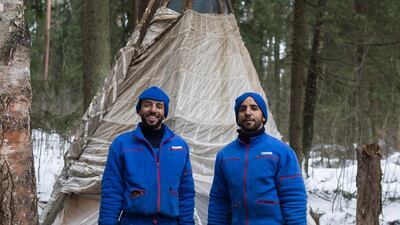
  • Sultan Al Neyadi (left) and Hazza Al Mansouri during winter survival training in Russia. Courtesy: Dubai Media Office
    Sultan Al Neyadi (left) and Hazza Al Mansouri during winter survival training in Russia. Courtesy: Dubai Media Office
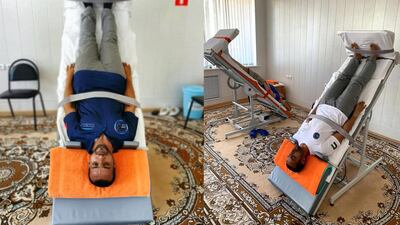
  • Maj Al Mansouri had to dock in an inverted position to prepare himself for the launch.
    Maj Al Mansouri had to dock in an inverted position to prepare himself for the launch.
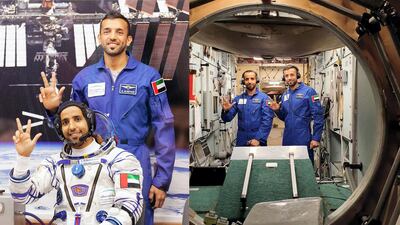
  • Maj Hazza Al Mansouri and his back-up Dr Sultan Al Neyadi had to undergo rigorous physical and technical training in zero gravity conditions for the mission.
    Maj Hazza Al Mansouri and his back-up Dr Sultan Al Neyadi had to undergo rigorous physical and technical training in zero gravity conditions for the mission.
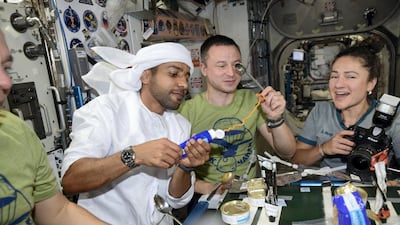
  • Maj Hazza Al Mansouri with other astronauts during their training days.
    Maj Hazza Al Mansouri with other astronauts during their training days.
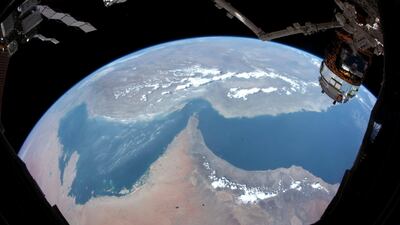
  • A view of Earth from space.
    A view of Earth from space.
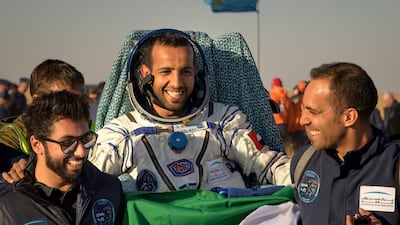
  • Maj Al Mansouri returned to Earth on October 2, 2019.
    Maj Al Mansouri returned to Earth on October 2, 2019.
  • Maj Hazza Al Mansouri and Dr Sultan Al Neyadi would sleep in an inverted bed for hours.
    Maj Hazza Al Mansouri and Dr Sultan Al Neyadi would sleep in an inverted bed for hours.
Who's who in Yemen conflict

Houthis: Iran-backed rebels who occupy Sanaa and run unrecognised government

Yemeni government: Exiled government in Aden led by eight-member Presidential Leadership Council

Southern Transitional Council: Faction in Yemeni government that seeks autonomy for the south

Habrish 'rebels': Tribal-backed forces feuding with STC over control of oil in government territory

Kanguva
Director: Siva
Stars: Suriya, Bobby Deol, Disha Patani, Yogi Babu, Redin Kingsley
Rating: 2/5
 

Russia's Muslim Heartlands

Dominic Rubin, Oxford