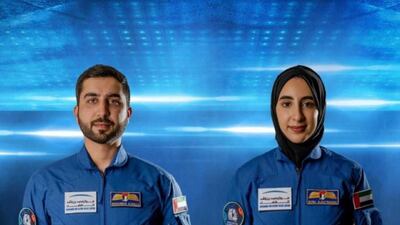

Related: Who are the UAE's new astronauts?
The UAE has selected two new Emiratis to be part of its astronaut corps, including the Arab world’s first female astronaut.
Sheikh Mohammed bin Rashid, Vice President and Ruler of Dubai, announced on Saturday that Nora Al Matrooshi, 27, had been selected to be part of the country's astronaut corps.
Mohammed Al Mulla was also chosen.
"We announce today ... two new Emirati astronauts ... among them the first Arab [woman] astronaut Nora Al Matrooshi and Mohammed Al Mulla," Sheikh Mohammed tweeted.
"They have been chosen from among more than 4,000 applicants and their training will soon begin with the Nasa astronaut programme. We congratulate the country. We count on them to raise the name of the UAE in the sky."
The duo are now colleagues of Hazza Al Mansouri, the first Emirati in space, and reserve astronaut Sultan Al Neyadi.
They were chosen from 4,305 Emiratis who applied – including 1,400 female applicants.
Progress is being made by different space agencies to create gender equality in the space sector, which has been male-dominated since the early days of space exploration in the 1960s.
As of 2020, of more than 550 astronauts who had gone to space, only 65 were women.
The selection of the two new astronauts echoes the UAE’s focus on equal opportunities for women.
-
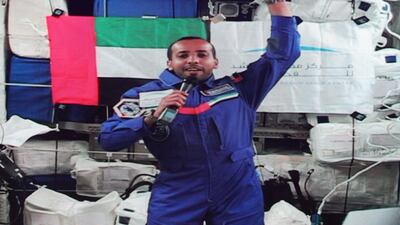
The UAE's first astronaut, Maj Hazza Al Mansouri, takes part in a Q&A session from the International Space Station with an audience at the Mohammed bin Rashid Space Centre, Dubai, in 2019. Chris Whiteoak / The National -
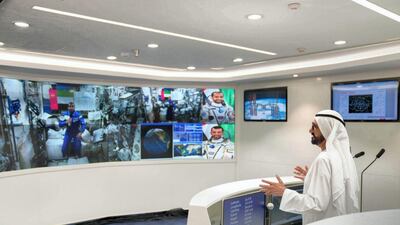
Sheikh Mohammed bin Rashid, Vice President and Ruler of Dubai, talks with Emirati astronaut Maj Hazza Al Mansouri, during a live satellite feed from the International Space Station. Courtesy: Dubai Media Office -
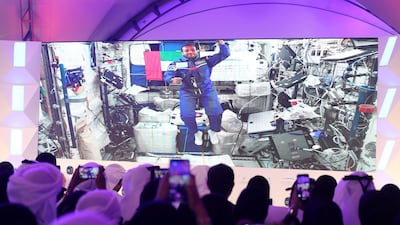
The Emirati astronaut takes questions from the audience gathered at the Mohammed bin Rashid Space Centre. Chris Whiteoak / The National -
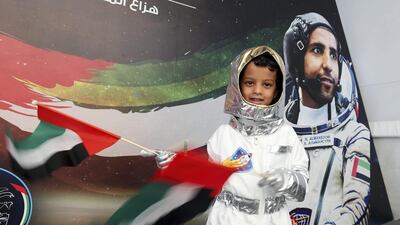
An aspiring young astronaut poses in front of a picture of the first Emirati in space, Maj Hazza Al Mansouri. Chris Whiteoak / The National -
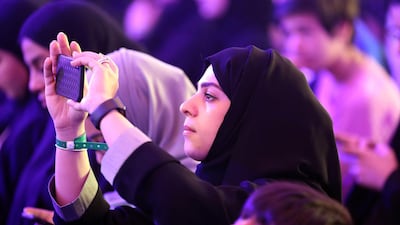
A woman films the Q&A session with Maj Hazza Al Mansouri from the International Space Station. Chris Whiteoak / The National -
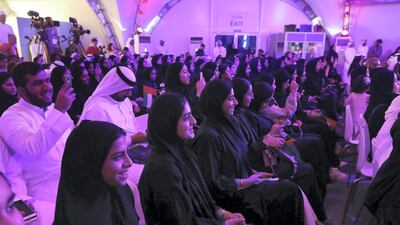
The audience at the Mohammed bin Rashid Space Centre are delighted to hear from Maj Hazza Al Mansouri. Chris Whiteoak / The National -
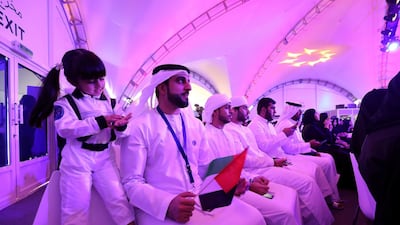
An aspiring young astronaut and her family at the Mohammed bin Rashid Space Centre event. Chris Whiteoak / The National -
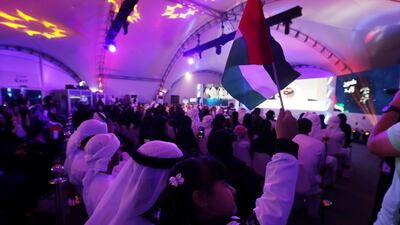
A young audience member celebrates the first Emirati in space. Chris Whiteoak / The National -
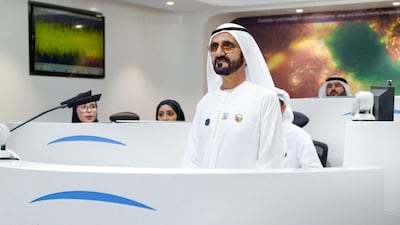
Sheikh Mohammed bin Rashid talks to Maj Hazza Al Mansouri. Courtesy Dubai Media Office -
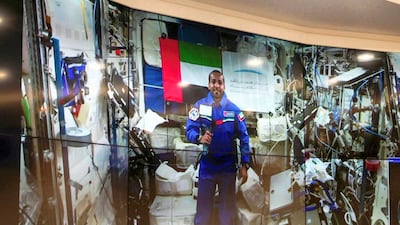
Emirati astronaut Hazza Al Mansouri, during a live satellite feed from the International Space Station. Courtesy Dubai Media Office -
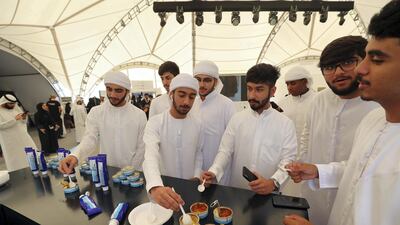
Audience members at the Mohammed bin Rashid Space Centre event sample space food. Chris Whiteoak / The National -
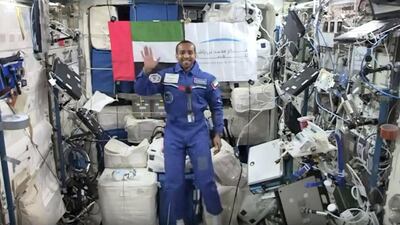
Emirati astronaut Maj Hazza Al Mansouri gives his audience on Earth a tour of the International Space Station. Screengrab via Youtube Live -
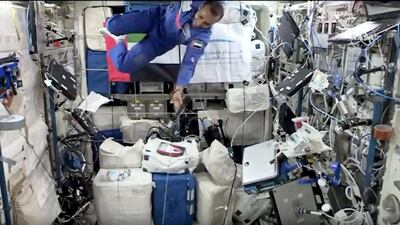
Maj Hazza Al Mansouri demonstrates the effects of weightlessness. Screengrab via Youtube Live -
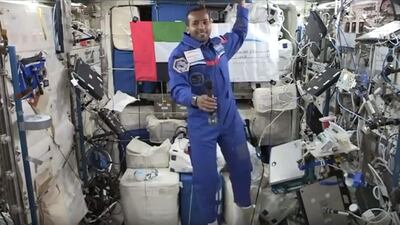
Hazza Al Mansouri takes a live Q&A from space. He spent eight days on the International Space Station, in a mission from September 25 to October 3, 2019. Screengrab via Youtube Live -
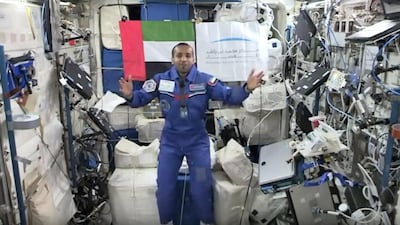
Emirati astronaut, Hazza Al Mansouri, takes live Q&A from space and gives a station tour. Screengrab via Youtube Live


Selection process
The 4,305 applicants were chosen based on age and educational background. A total of 2,099 candidates then passed the IQ, personality and technical assessments.
Only 122 made it to the interview round. Of these, 61 candidates took part in preliminary and advanced medical examinations.
Fourteen passed a final round of interviews and evaluations, which the UAE's first two astronauts and two female Nasa astronauts participated in.
Four candidates passed fitness, communications and teamwork tests, from whom the new astronauts were selected.
Salem Al Marri, head of the astronaut programme at the Mohammed bin Rashid Space Centre (Mbrsc), said the space centre's goal was pick the best out of the lot.
"The team at Mbrsc has worked tirelessly after receiving applications to evaluate them according to specific criteria and standards, and then conducted successive evaluations to ensure the selection of the best candidates, until we reached this point to announce the new astronauts," he said.
Training stage
Ms Al Matrooshi and Mr Al Mulla will join the first two astronauts for training at Nasa's Johnson Space Centre in Houston, Texas, US.
The start of their journey into the UAE's Astronaut Programme will be different to that undertaken by Maj Al Mansouri and Mr Al Neyadi, who were trained by the Russians after they were selected.
The two Emiratis spent a year training in Star City, in western Russia, for the first space mission, that included a week for Maj Al Mansouri on the International Space Station.
Now the Mohammed bin Rashid Space Centre and Nasa have signed an agreement to train four Emirati astronauts.
Maj Al Mansouri and Mr Al Neyadi have already completed six months of training under Nasa’s Astronaut Candidate Training Programme.
The two new astronauts will begin their training once the new class begins at the end of the year.
Once completed, all of four them will be qualified for Nasa-led space missions.
Yousuf Al Shaibani, director-general of Mbrsc, said the selection of the two new astronauts would help the nation continue to write a new scientific history for the Arab region in the field of space exploration.
"With the first batch of the UAE Astronaut Programme, we were able to catch the world's attention, by raising the UAE flag on the International Space Station," he said.
"We still remember the pride that swept the country when the first Emirati astronaut took off to space. Today, we are moving towards achieving another momentous occasion by announcing the second batch and will continue on our plans to enhance the capabilities of Emirati youth in the space sector.”
Female firsts in the space sector
-
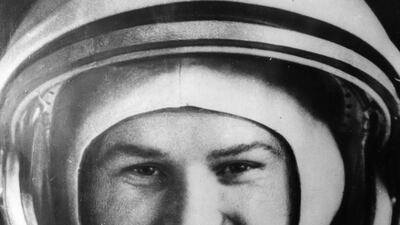
Women in space: Valentina Tereshkova, the first woman in space, photographed in her space suit shortly before take off in 1963. Central Press / Getty Images -

Soviet cosmonaut Valentina Tereshkova during preparations for her flight on Vostok 6 on June 16, 1963. Getty Images -

Svetlana Savitskaya travelled into space in 1982 and was the first woman to perform a spacewalk. AFP -
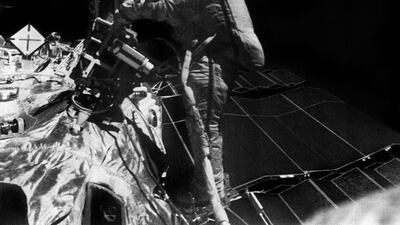
This picture, taken by Soviet commander Vladimir Dzhanibekov, shows the first ever walk into outer space by a woman, Svetlana Savitskaya on July 25, 1984. AFP -

Sally Ride made her mark as the first American female astronaut in 1983. Nasa -
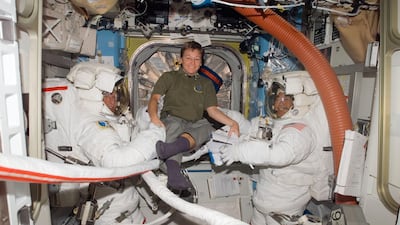
US astronaut Peggy Whitson, pictured with astronauts Scott Parazynski (left), STS-120 mission specialist, and Daniel Tani, became the first female commander of the International Space Station in 2007. Nasa -
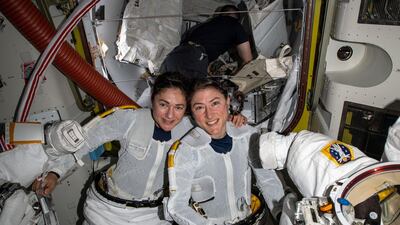
Nasa astronauts Jessica Meir (left) and Christina Koch (right) put on their spacesuits as they prepare to leave the hatch of the International Space Station and begin the historical first-ever all-female spacewalk in 2019. Nasa -

Nasa astronaut Christina Koch conducts maintenance activities aboard the International Space Station. Ms Koch set the record for the single longest spaceflight by a woman, after spending 328 days on the ISS. Nasa -
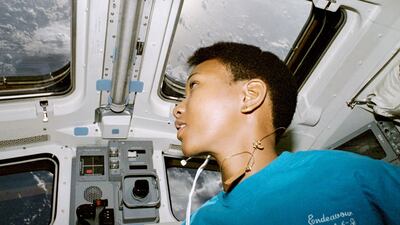
Mae Jemison was the first African American woman to go to space in 1992. Nasa


• In 1963, Russian cosmonaut Valentina Tereshkova was the first woman in space. She was selected from more than 400 applicants.
• The former Soviet Union sent the second woman to space in 1982. Svetlana Savitskaya was also the first woman to perform a spacewalk.
• US space agency Nasa sent Sally Ride into space in 1983. She was the first American female astronaut.
• The International Space Station had its first female commander in 2007, when Nasa astronaut Peggy Whitson took charge.
• The first all-female spacewalk took place in 2019, by Nasa astronauts Jessica Meir and Christina Koch.
• Ms Koch also set the record for the single longest spaceflight by a woman, after spending 328 days on the ISS.
• In 1992, Mae Jemison was the first African-American woman to go to space.

